
Results
-
 £44.95
Sweet Name (Flugel Horn Solo with Brass Band - Score and Parts)
The music was written at the request of Richard Woodrow of The International Staff Band in 2018. It is a big band setting of William Henry Rudd's melody The Saviour's name (T.B. 119), to which we associate the following words by Frederick Whitfield (S.A.S.B. 94):There is a name I love to hear,I love to sing its worth;It sounds like music in mine ear,The sweetest name on earth.O how I love the Saviour's name!The sweetest name on earth.
Estimated dispatch 7-14 working days
-
 £34.95
Behold the Power of God - Christopher Bond
Behold the Power of God (2010) was written for and premiered by the Cornwall Youth Brass Band in dedication to their Musical Advisor at the time; the late Cornish composer Goff Richards who later described the work as 'a remarkable piece of writing'. The work's title, while implying a religious meaning, actually references Goff's name, with his full name Godfrey translating as 'God-peace' and Richards meaning 'Power'. Two energetic outer sections fall either side of a more lyrical middle section featuring the solo cornet. The perfect opening item at any concert.
Estimated dispatch 10-14 working days
-
£35.00
Land of the Living Skies - Peter Meechan
From the composer:aCommissioned by tuba virtuoso Patrick Sheridan, Land of the Living Skies is inspired by the love of photography shared by both Patrick and I.After moving from the UK to Saskatchewan, Canada, there were many changes, but perhaps the most striking of all were the skyscapes that my new home produced; stunning sunsets, incredible views of the Milky Way, amazing moonlit landscapes, and - of course - the Northern Lights.This piece was the last I wrote before moving away from Saskatchewan and. given that the Province calls itself the aLand of the Living Skiesa, it seemed only fitting to name the work after its amazing skies that had provided a lifetimeas worth of inspiration.The piece is dedicated to Patrick Sheridan, an amazing tubist, musician, educator and friend.aPete Meechan, January 2018
Estimated dispatch 12-14 working days
-
 £44.83
City of David (Brass Band) Philip Rayment
This engaging major Christmas work features three carols or songs associated with the place of Christ's birth: Once In Royal David's City, O Little Town of Bethlehem (Forest Green) and How Far Is It To Bethlehem? During Old Testament times, the city of Jerusalem had been considered the 'City of David', as the political and spiritual capital of Israel. However, after Christ's birth, that name was given to the town of Bethlehem - a quiet farming village in the countryside. This new designation is first mentioned in the Gospel of Luke: ''For unto you is born this day in the City of David a Saviour, which is Christ the Lord.' (Luke 2:11) A variety of moods are used to express:- The crowds of people arriving in Bethlehem to be taxed, overtaking the town, leaving no room for a young, pregnant Mary and her husband.- The stillness of the countryside on the eve of Christ's birth.- The excitement of worshippers celebrating the birth of a Saviour. To view performances of the work please visit: Canadian Staff Band: www.youtube.com/watch?v=0UC-j9jBsx4 Five Lakes Silver Band: www.youtube.com/watch?v=aCn4JjQCe9A Duration: 7.30 minutes approx. Difficulty Level: 2nd Section + PDF download includes parts and score. Sheet music available here. Instrumentation: Soprano Cornet Eb Solo Cornet Bb 1st Cornet Bb 2nd Cornet Bb Flugel Horn Bb Solo Horn Eb 1st Horn Eb 2nd Horn Eb 1st Baritone Bb 2nd Baritone Bb 1st Trombone Bb 2nd Trombone Bb Bass Trombone Euphonium Bb Bass Eb Bass BbTimpani Percussion 1-3
In Stock: Estimated dispatch 1-3 working days
-
 £40.00
Reflections of Freedom. Andrew Duncan
Recommended - Championship & 1st Section Reflections of Freedom depicts the feelings and emotions of the many migrant farmers who left 19th Century Scotland to set up a new life in the 'New World'. In particular, the joy experienced on reaping their first harvest, so the American folk tune, Bringing in the Sheaves in featured throughout the piece. Reflections of Freedom was Written for the US Army Brass Band in Washington DC and premiered by them in 1997. Reflections of Freedom was the title track on the Whitburn Band CD of the same name, recorded in 2004. Suitable as a test piece for 1st section brass bands. Includes score & parts
-
 £40.00
Reflections of Freedom - Andrew Duncan
Reflections of Freedom depicts the emotions and feelings of the many migrant farmers who left 19th Century Scotland to set up home and begin a new life in the 'New World'. In particular, the joys experienced on the reaping of their first harvest.Use is made of the American folk tune, Bringing in the Sheaves. Written for the US Army Brass Band in Washington DC and premiered by them in 1997.'Reflections of Freedom' was the title track on the Whitburn Band CD of the same name, recorded in 24.
In Stock: Estimated dispatch 3-5 working days
-
 £89.95
Judd: Visions of Geronitus
The hymn tune Gerontius was written by John Bacchus Dykes (1823-1876), an Anglican clergyman and prolific hymn writer. The composer chose to write variations this hymn tune which is invariably associated with Cardinal John Henry Newmans words taken from his visionary poem The Dream of Gerontius, which deals with the journey of the soul from this world to the next. The stanzas of the hymn are taken from the poem which Elgar set to music in his great masterpiece of the same name.
Estimated dispatch 7-14 working days
-
 £34.95
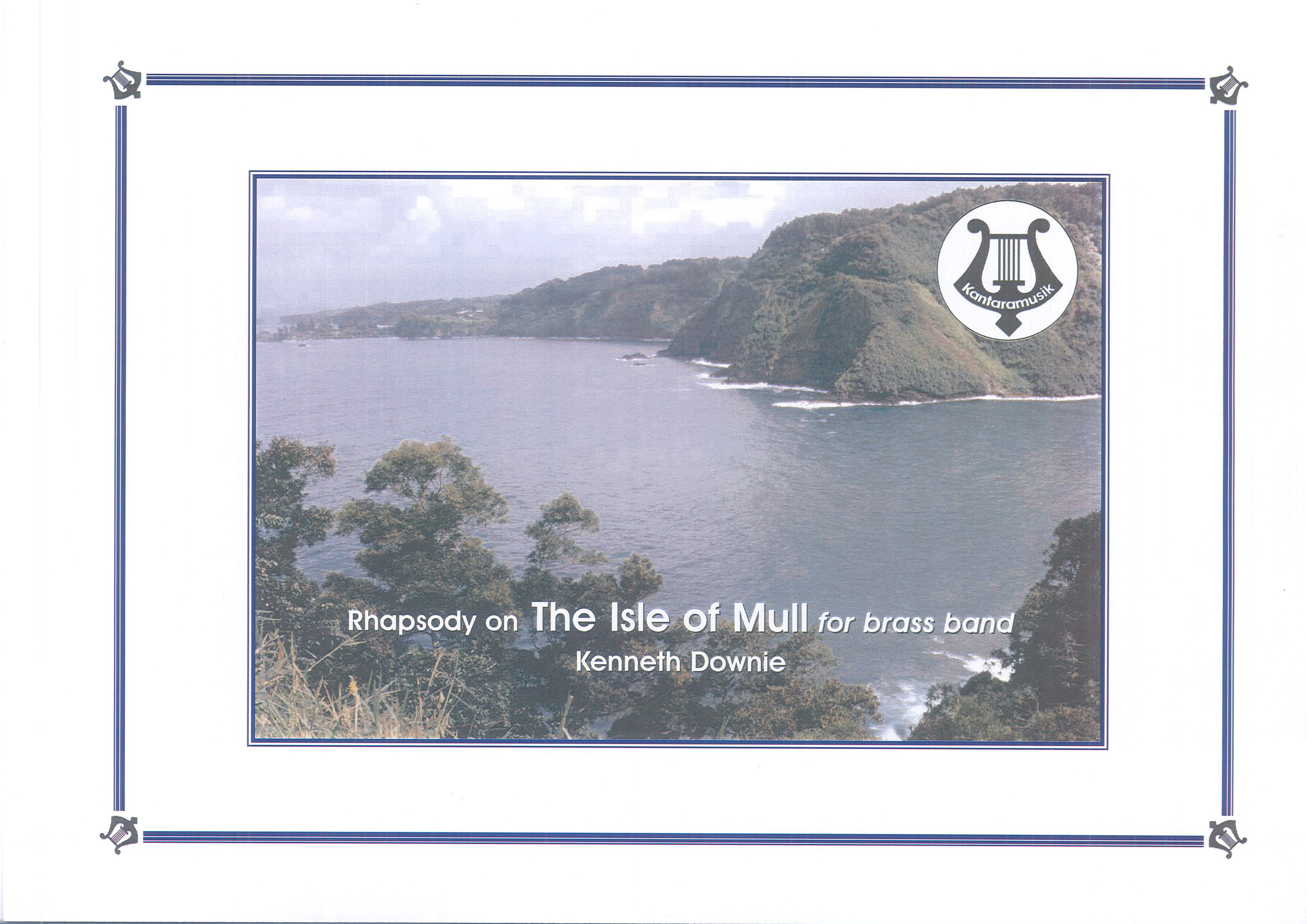
Rhapsody on the Isle of Mull (Brass Band - Score and Parts)
Mull is an island off the west coast of Scotland and it gives its name to the lovely tune which forms the basis of this music. It is very scenic, with some beautiful mountains and the composer has tried to suggest something of the atmosphere of grandeur in his score. The largely pentatonic nature of the tune heavily colours the musical texture.
Estimated dispatch 7-14 working days
-
 £44.95
The Name (Trombone or Euphonium Solo with Brass Band)
Solo for Trombone (or Euphonium Bb). Recorded by Brett Baker with the Black Dyke Band on Call of the Cossacks - Music of Peter Graham Vol II.
Estimated dispatch 7-14 working days
-
 £15.00
Visions of Gerontius (Brass Band - Study Score)
Visions of Gerontius is a set ofvariations on a hymn tune which is invariably associated with Cardinal John Henry Newman 's words taken from his visionary poem "The Dream of Gerontius", which deals with the journey of the soul from this world to the next. The stanzas of the hymn are taken from the poem which Elgar set to music in his great masterpiece of the same name, for soloists, chorus and orchestra, first performed in Birmingham in 1900. The dramatic setting of those words provides some of the most memorable moments in the music
Estimated dispatch 7-14 working days