
Results
-
 £104.99
The Divine Right (Brass Band - Score and Parts) - Harper, Philip
At the time of composing this piece, the Arab Spring was sweeping through the Middle East. It seemed that almost every week a new country's people had risen up against the regimes and dictatorships which had prevailed for generations, leaving many nations at a defining crossroads in their history. There were so many possible ways ahead: so many hopes, yet so many uncertainties.This music is a depiction of these revolutionary times, and several musical themes are in turn presented, discussed, considered, fought over, altered, rejected or accepted.Most nations have had, or probably will have, their own Arab Spring, including the United Kingdom. Events of 17th Century Britain provide the context for this piece, particularly those following the execution of the tyrant King Charles I on 30 January 1649. The regicide was in part due to Charless steadfast belief in the Divine Right of Kings, and led to a tumultuous interregnum, where England stood at its own defining crossroads. The music begins turbulently, before King Charles appears and is led to the gallows outside Banqueting House in central London where he is brutally decapitated. From the assembled crowd rose, according to one observer,a moan as I never heard before and desire I may never hear again.The music descends to emptiness.The musical argument which follows is not strictly programmatic, but a number of musical themes are all thrown into the melting pot, representing ideas such as: religion; military force; reasoned Parliamentary debate; and the chattering, irrepressible voice of the people. Additionally, there are some quotations from the music of royalist composer Thomas Tomkins (1572-1656), who was often in tune with the feeling of the times.This defining episode in England's history was brought to a close with the Restoration of the monarchy in 1660, and as the exiled King Charles II rode back into London the diarist John Evelyn wrote:Never was so joyful a day seen in this nation. I stood in the Strand and beheld it, and blessed God.At the end of the piece the bells ring out, and the musical appearance of the King has transformed from turbulent to triumphant.Duration: 17.00
Estimated dispatch 7-14 working days
-
 £79.99
Sambezi (Trombone Solo with Brass Band - Score and Parts) - Sparke, Philip
Sambezi is the brass band version of the last movement of Philip Sparke's Trombone Concerto. It starts in a joyful and outgoing mood with the soloist playing a carefree samba tune. A jazz-induced central tune explores the higher ranges of the trombone before the samba rhythms set up a 'contest' between the soloist and the band's trombone section. The soloist is the eventual 'winner' and he celebrates by reintroducing the samba melody before bringing the work to a virtuosic close. A real treat for your trombone soloist.Duration: 6:00
Estimated dispatch 7-14 working days
-
 £48.00
Red Vest Man (Brass Band - Score and Parts) - Waterman, Steve
Red Vest Man was composed as a dedication to cornet player Buddy Bolden, one of the first jazz musicians. He was reputed to always perform wearing a red vest. The piece is a New Orleans funeral march, something Bolden would have been called to do many times in his career. It starts with a slow mournful march, featuring solos from trumpet and trombone and finishes with a joyful 2nd line New Orleans rhythm. Duration: 8.00. Suitable for 2nd Section Bands and above.
Estimated dispatch 7-14 working days
-
 £29.95
Psalm Of Thanks (Brass Band - Score and Parts) - Sharman, Paul
The composer is a former member of Birmingham Citadel Band and was asked to compose this piece for the band's 115th anniversary reunion weekend. It is a joyful expression of thanks using the well-known tune, 'Now thank we all our God'.
Estimated dispatch 7-14 working days
-
£14.95
Psalm Of Thanks (Brass Band - Score only) - Sharman, Paul
The composer is a former member of Birmingham Citadel Band and was asked to compose this piece for the band's 115th anniversary reunion weekend. It is a joyful expression of thanks using the well-known tune, 'Now thank we all our God'.
Estimated dispatch 7-14 working days
-
 £94.99
Dublin Pictures - Marc Jeanbourquin
Ireland is a multi-faceted country that has developed a popular and distinctive musical culture. The first movement of Dublin Pictures reflects Irish festivals where there is dancing and traditional beer flowing.More tranquil in its feel, the second movement illustrates the landscape that can be seen from the Ha'penny Bridge, a bridge that crosses the River Liffey in Dublin. This movement highlights the wide range of the orchestra's sound colours as the musicians' voices combine with the wind and percussion to accompany the soloist. The lively and joyful rhythms of the last movement take the listener to Temple Bar, the famoustourist quarter of the city, well known for its vibrant nightlife.The music's energy and virtuosic motifs are in contrast to the previous movement and provide a spirited and festive finale.Marc Jeanbourquin wrote this piece in three movements for Azimuts Brass in 2011. He then arranged it for Concert, Fanfare or Brass Band.
Estimated dispatch 5-14 working days
-
 £39.99
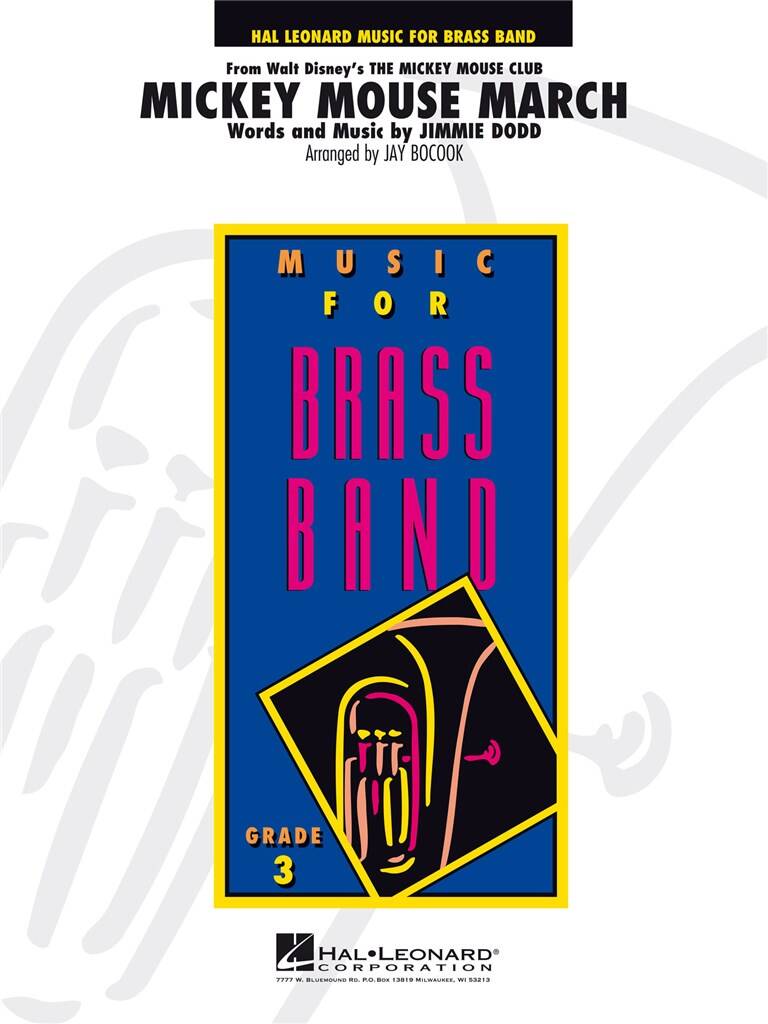
Mickey Mouse March - Jimmie Dodd
The Mickey Mouse March goes back to the early 20's, but almost everybody knows it, whether you're 8 years old or 80 years old! This fresh arrangement was made by Philip Sparke and is a funny and joyful moment for your next concert!
Estimated dispatch 5-14 working days
-
 £72.70
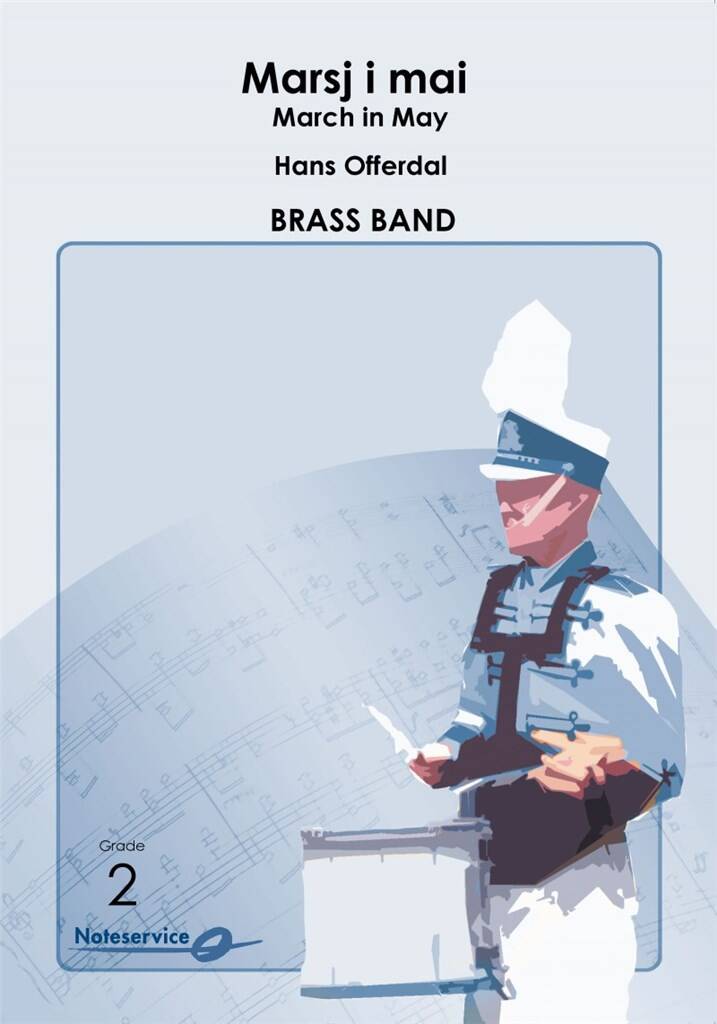
Marsj i mai - March in May - Hans Offerdal
March in May is a fun and joyful march with challenges in all instrumental groups! Composed for Haugen skolekorps and their 40 years anniversary in 2017. Playing time: approx. 2:10 min
Estimated dispatch 5-14 working days
-
 £70.95
Mars Hill Fantasia - Eric Ewazen
Says Ewazen, The work is scored for two combined ensembles ? an 8-part low brass ensemble of trombones, euphoniums, and tubas, and an 8-part percussion ensemble of both mallet and non-pitched percussion instruments. The music contains rich, sonorous, and joyful gestures, with stentorian fanfares, resonant chords, and lyrical melodies. It was given a truly exciting and festive premiere in October 2006 by the combined low brass and percussion ensembles of the music department of Mars Hill.
Estimated dispatch 5-14 working days
-
 £34.95
Song of the Night Sky - Christopher Bond
Orpheus is known as the most talented music player of the ancient times. It is said that god Apollo was his father, from whom took his extreme talent in music, and the Muse Calliope was his mother. Tragedy struck when his wife, Eurydice stepped on a viper which in turn bit her, injecting its fatal venom. Nothing could stop his cries of anguish and sheer pain and sorrow upon realizing his beautiful Eurydice was dead. Orpheus decided to go into the Underworld to get his wife back. Apollo, his father, would talk to Hades, the god of the Underworld to accept him and hear his plea. And so Orpheus set off into the Underworld and was warned that for no reason must he look back while his wife was still in the dark, for that would undo everything he hoped for. As Orpheus was reaching the exit of the Underworld, he could hear the footfalls of his wife approaching him. As his was approaching the exit, his heart was beating faster and faster. The moment he stepped on the world of the living, he turned his head to hug his wife. Unfortunately, he got only a glimpse of Eurydice before she was once again drawn back into the underworld. When Orpheus turned his head, Eurydice was still in the dark, she hadn't seen the sun and, was drowned back to the dark world of the dead. Waves of anguish and despair swept over him and shuddering with grief he approached the Underworld again but this time, he was denied entry, the gates were standing shut and god Hermes, sent by Zeus, wouldn't let him in. His songs were no more joyful but extremely sad. His only comfort was to lay on a huge rock and feel the caress of the breeze, his only vision were the open skies. Song of the Night Sky was recorded by Tom Hutchinson and the Cory Band in June 2015, featuring on his debut solo album.
Estimated dispatch 10-14 working days
 View Music