
Results
-
 £25.50
Fanfare and The Star Spangled Banner (Brass Band - Score and Parts) - Wilkinson, Keith M.
A short, stirring fanfare leads to an inspirational presentation of The Star-Spangled Banner which is designed for audience participation.This setting was prepared for the Summer concerts presented by Brass Band of the Western Reserve in 2007.
Estimated dispatch 7-14 working days
-
 £29.95
Little Lord Jesus (Soprano Cornet Solo with Brass Band - Score and Parts) - Silfverberg, Niels
This is a fairly simple arrangement of 'Away in a manger' in the form of a solo for soprano cornet and brass band.
Estimated dispatch 7-14 working days
-
£14.95
Little Lord Jesus (Soprano Cornet Solo with Brass Band - Score only) - Silfverberg, Niels
This is a fairly simple arrangement of 'Away in a manger' in the form of a solo for soprano cornet and brass band.
Estimated dispatch 7-14 working days
-
£44.95
None Other Name (Brass Band - Score and Parts) - Leidzen, Erik
None Other Name was written for the 1960 tour of England by the New York Staff Band of The Salvation Army and can justifiably be termed a classic of brass band repertoire. It is best described as a symphonic medley of six songs focused on the name of Christ; The Saviour's Name; Jesus is the Sweetest Name I know; There's a Wonderful Name, 'tis Jesus; He's the Lily of the Valley; Jesus, the Very Thought of Thee (St. Agnes); All Hal the Power of Jesus' Name (Diadem).
Estimated dispatch 7-14 working days
-
£22.50
None Other Name (Brass Band - Score only) - Leidzen, Erik
None Other Name was written for the 1960 tour of England by the New York Staff Band of The Salvation Army and can justifiably be termed a classic of brass band repertoire. It is best described as a symphonic medley of six songs focused on the name of Christ; The Saviour's Name; Jesus is the Sweetest Name I know; There's a Wonderful Name, 'tis Jesus; He's the Lily of the Valley; Jesus, the Very Thought of Thee (St. Agnes); All Hal the Power of Jesus' Name (Diadem).
Estimated dispatch 7-14 working days
-
 £46.50
Semper Fidelis (Brass Band - Score and Parts) - Sousa, John Philip - Wilkinson, Keith M.
This march was written in 1888 and dedicated to the US Marine Corps, later being adopted as its official march. At the time of its composition Sousa was director of the US Marine Band.This brass band version contains a small amount of optional movement around the stage and a percussion feature. These will enhance the presentation.The arrangement was prepared for the Summer concerts presented by Brass Band of the Western Reserve, musical director Keith M Wilkinson, in 2008.
Estimated dispatch 7-14 working days
-
£44.95
Themes from The New World Symphony (Brass Band - Score and Parts) - Steadman-Allen, Ray
For three years the Czech composer Dvorak lived and worked in America and this, his ninth and last symphony, contains impressions of that continent. This arrangement for brass band follows the scheme of the original in movement order and theme presentation although a certain amount of 'condensing' of material has naturally been inevitable.
Estimated dispatch 7-14 working days
-
£22.50
Themes from The New World Symphony (Brass Band - Score only) - Steadman-Allen, Ray
For three years the Czech composer Dvorak lived and worked in America and this, his ninth and last symphony, contains impressions of that continent. This arrangement for brass band follows the scheme of the original in movement order and theme presentation although a certain amount of 'condensing' of material has naturally been inevitable.
Estimated dispatch 7-14 working days
-
 £59.99
The Conqueror (Brass Band - Score and Parts) - Sparke, Philip
This fantastic contest march was composed for the Alexander Brass Band from Stavanger, Norway, who wanted a brand new march to play when they took part in the world-renowned Whit Friday March Contest. In the march Philip Sparke has followed the traditional brass band contest march format and it is named as a tribute to Alexander the Great, rather than the Alexander brass band, who were actually named after their local pub!Duration: 3:00
Estimated dispatch 7-14 working days
-
 £59.99
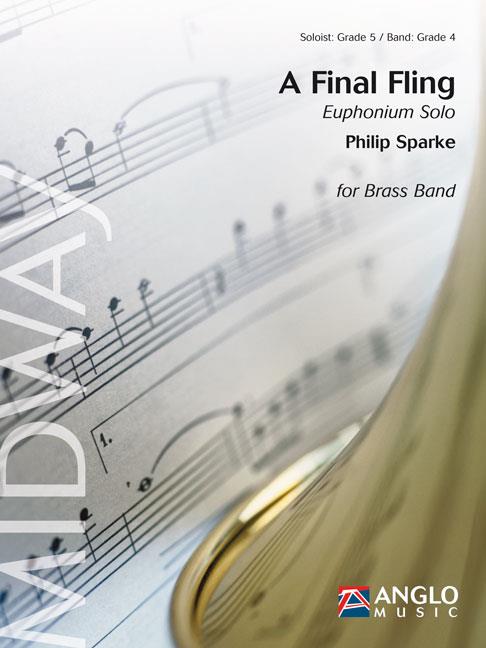
A Final Fling (Euphonium Solo with Brass Band - Score and Parts) - Sparke, Philip
A Final Fling was written at the request of David Childs for a CD recording with a Celtic theme, which he released in 2007. The phrase 'a final fling' means a last quick effort at doing something, perhaps when this item is used as an encore, and also, a fling is a type of Scottish Highland dance, which tied in with the Celtic theme. A light- hearted piece, A Final Fling starts in the mood of a folk dance and quotes from The Irish Washerwoman before flying to a close. A perfect way to put your euphonium player in the spotlight.Duration: 2:00
Estimated dispatch 7-14 working days
 View Music