Results
-
£37.95Connotations (Brass Band - Score only) - Gregson, Edward
Connotations was commissioned for the 1977 National Brass Band Championship finals, held in the Royal Albert Hall, London (the winner, incidentally, of that particular competition was the famous Black Dyke Mills Band).At the age of 32 Gregson was the youngest composer to have received the honour of such a commission. It came at the end of a productive five years writing for the brass band publisher R Smith. Some of those works - The Plantagenets, Essay and Patterns for example, with their direct and tuneful style, have remained popular with brass bands the world over.For Gregson, these were the means by which he sharpened the tools of his trade, preparing the ground, as it were, for his finest work to date - Connotations. He thought of calling the piece Variations on a Fourth, but with due deference to Gilbert Vinter perhaps (Variations on a Ninth), he chose a more appropriate one. As Gregson has written, 'Connotations suggests more than one way of looking at something, an idea, and this is exactly what the piece is about'.Writing a competition piece brought its own problems. 'It has to be technically difficult and yet musically satisfying. I didn't like being kept to an eleven-minute maximum. The inclusion of short cadenzas for less usual solo instruments seems to signify a certain test-piece mentality'.Gregson solved the problems admirably by adopting a symphonic approach to variation form: Introduction - fanfares, a call to attention, in effect Variation 1; Theme - a six-note motif, given a lyrical and restrained first statement; Variation 2 - a delicate toccata; Variation 3 - typically robust in melody and rhythm; Variation 4 - lyrical solos; Variation 5 - a scherzo; Variation 6 - cadenzas; Variations 7-9 - an introduction, fugato and resounding restatement of the theme.Duration: 10.30
Estimated dispatch 7-14 working days
-
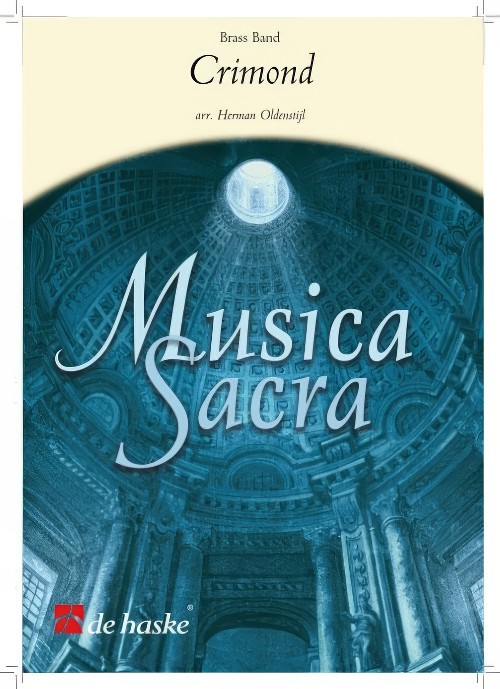
£74.95Connotations (Brass Band - Score and Parts) - Gregson, Edward
Connotations was commissioned for the 1977 National Brass Band Championship finals, held in the Royal Albert Hall, London (the winner, incidentally, of that particular competition was the famous Black Dyke Mills Band).At the age of 32 Gregson was the youngest composer to have received the honour of such a commission. It came at the end of a productive five years writing for the brass band publisher R Smith. Some of those works - The Plantagenets, Essay and Patterns for example, with their direct and tuneful style, have remained popular with brass bands the world over.For Gregson, these were the means by which he sharpened the tools of his trade, preparing the ground, as it were, for his finest work to date - Connotations. He thought of calling the piece Variations on a Fourth, but with due deference to Gilbert Vinter perhaps (Variations on a Ninth), he chose a more appropriate one. As Gregson has written, 'Connotations suggests more than one way of looking at something, an idea, and this is exactly what the piece is about'.Writing a competition piece brought its own problems. 'It has to be technically difficult and yet musically satisfying. I didn't like being kept to an eleven-minute maximum. The inclusion of short cadenzas for less usual solo instruments seems to signify a certain test-piece mentality'.Gregson solved the problems admirably by adopting a symphonic approach to variation form: Introduction - fanfares, a call to attention, in effect Variation 1; Theme - a six-note motif, given a lyrical and restrained first statement; Variation 2 - a delicate toccata; Variation 3 - typically robust in melody and rhythm; Variation 4 - lyrical solos; Variation 5 - a scherzo; Variation 6 - cadenzas; Variations 7-9 - an introduction, fugato and resounding restatement of the theme.Duration: 10.30
Estimated dispatch 7-14 working days
-
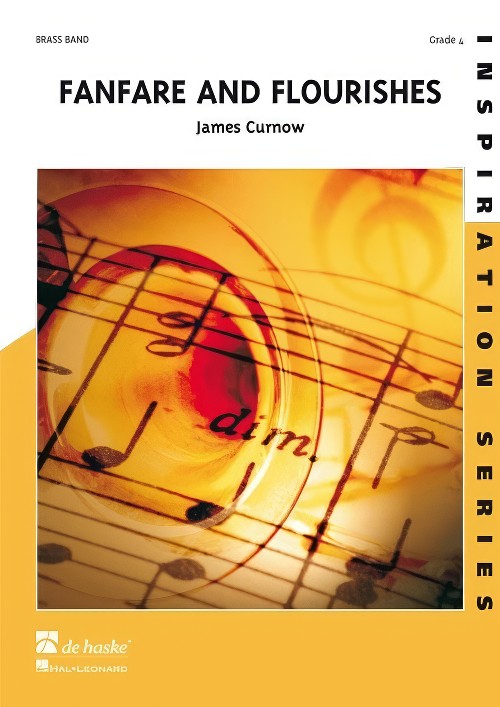
£59.95Un Vie de Matelot (Brass Band - Score and Parts) - Farnon, Robert
A Sailor's Life. Theme and Variations for Brass BandThis work was specially composed as the test piece for the National Brass Band Championships of Great Britain, held at the Royal Albert Hall, London, on 11th October, 1975Duration: 10.00
Estimated dispatch 7-14 working days
-
£29.95Un Vie de Matelot (Brass Band - Score only) - Farnon, Robert
A Sailor's Life. Theme and Variations for Brass BandThis work was specially composed as the test piece for the National Brass Band Championships of Great Britain, held at the Royal Albert Hall, London, on 11th October, 1975Duration: 10.00
Estimated dispatch 7-14 working days
-
£30.00Presley In Mind
Includes: "Are You Lonesome Tonight?", "Can't Help Falling in Love", and "Wonder of You".Whether you like Elvis or not, audiences will love this medley. Three of his well known ballads, to which the audience can sing along.Talking of singing, the middle section of the band get their chance too! A very popular medley, which has also been included in 'entertainment contests'. The Parr Band won their section at Wychavon in 2004, judged by Goff Richards."Presley in Mind" is featured on Flixton Band's CD (order from [email protected] price �10).Robert Childs commented:"The brass writing is very accessible. The third tune in this triptych of Presley's pop songs requires the entire horn, baritone, trombone and euphonium sections to sing as well - all good fun I'm sure".
In Stock: Estimated dispatch 3-5 working days
-
Walk, Don't Run - Johnny Smith - Len Jenkins
"Walk, Don't Run" is an instrumental composition written and first recorded by jazz guitarist Johnny Smith in 1954. Chet Atkins also recorded it. However, the most well-known version is by a rock band called The Ventures from Tacoma (near Seattle) who released their version of the tune as a single in spring 1960. It was an instant success. In 1964, The Ventures released an updated version called "Walk Don't Run '64," which also made the Top 10 in the US, and there were 4 further editions up until 2000. In the UK, the tune was covered by the John Barry Seven. Rolling Stone magazine rated the Ventures' version of "Walk, Don't Run" as number 82 on their list of the 100 Greatest Guitar Songs of All Time.
-
£42.00A French Suite (Score only) - Boely
Boely (1785-1858) was a French organist who preferred the traditions of Bach to the varying influences of the French Revolution. The five movements that make up this refreshing suite demand clarity of line, a fine balance in ensemble, and purity of tone and intonation - the classical style. Duration: 10:00
Estimated dispatch 7-9 working days
-
£52.00A French Suite (Parts only) - Boely
Boely (1785-1858) was a French organist who preferred the traditions of Bach to the varying influences of the French Revolution. The five movements that make up this refreshing suite demand clarity of line, a fine balance in ensemble, and purity of tone and intonation - the classical style. Duration: 10:00
Estimated dispatch 7-9 working days
-
£10.00Infinity (Brass Band - Study Score)
In the post-modern age in which we live, 'absolutes' are difficult for many to comprehend. Yet infinity, which means absolute, total, all-embracing, having no limits or boundaries in time, space, extent, or magnitude, has always been central to the Christian's concept of God.Through the ages, as human understanding has grown, particularly at a remarkable rate from the latter part of the twentienth century, Christianity has been continually challenged to interpret traditional beliefs in the light of new discoveries, but always within the reality of the infinite Being. In addition, scripture tells us that 'humanity was made in God's image'. Humankind is part of God's creation and as such, responsible for its upkeep. Such a commission has never been more relevant than in this present age. Psalm 8 creates a great picture of the majesty, eternal, infinte quality of God and yet reveals the desire of God to share in spirit with humankind. It recognises humankind as being, not a tool of the infinite, but as a creative contributing part of the ongoing movement and activity of the infinite. The music is deliberately melodic in context, creating a sense of unity with the infinite, in tandem with the varying expressions of individuality. It is not based on the Psalm but reflects some of the sentiments lying therein. The 'hymn-like' theme expresses the nature of the Divine using the Old Testament image of the infinite God coming to finite humankind, not in the 'wind', the 'earthquake', the 'fire', but in the 'still small voice' of quietness (1 Kings 19: 11-13). The ensuing musical development, in different styles and patterns, expresses this continual link between infinite and finite. Thus the conclusion, rather than being a symbol of might, power and magnificence, reflects the same sentiment as the opening.
Estimated dispatch 7-14 working days
-
£10.00Isaiah 40 (Brass Band - Study Score)
Commissioned for the final of the 1996 National Brass Band Championships of Great Britain. The timeless truths contained in Isaiah 40 were written to encourage a people facing very intimidating circumstances. The Jewish people of the 5th Century BC were preparing to make an arduous journey though the desert to return to their ravaged homeland after a lengthy exile in the sophisticated society of Babylon. Both Scripture and music sound out a message of hope, as they view life from an eternal perspective, thus placing change in its proper context. Because 'the Lord is the everlasting God' his word 'stands forever' and 'those who hope in the Lord will renew their strength'. They will not merely get through somehow but 'they will soar on wings like eagles'.
Estimated dispatch 7-14 working days