
Results
-
 £34.95
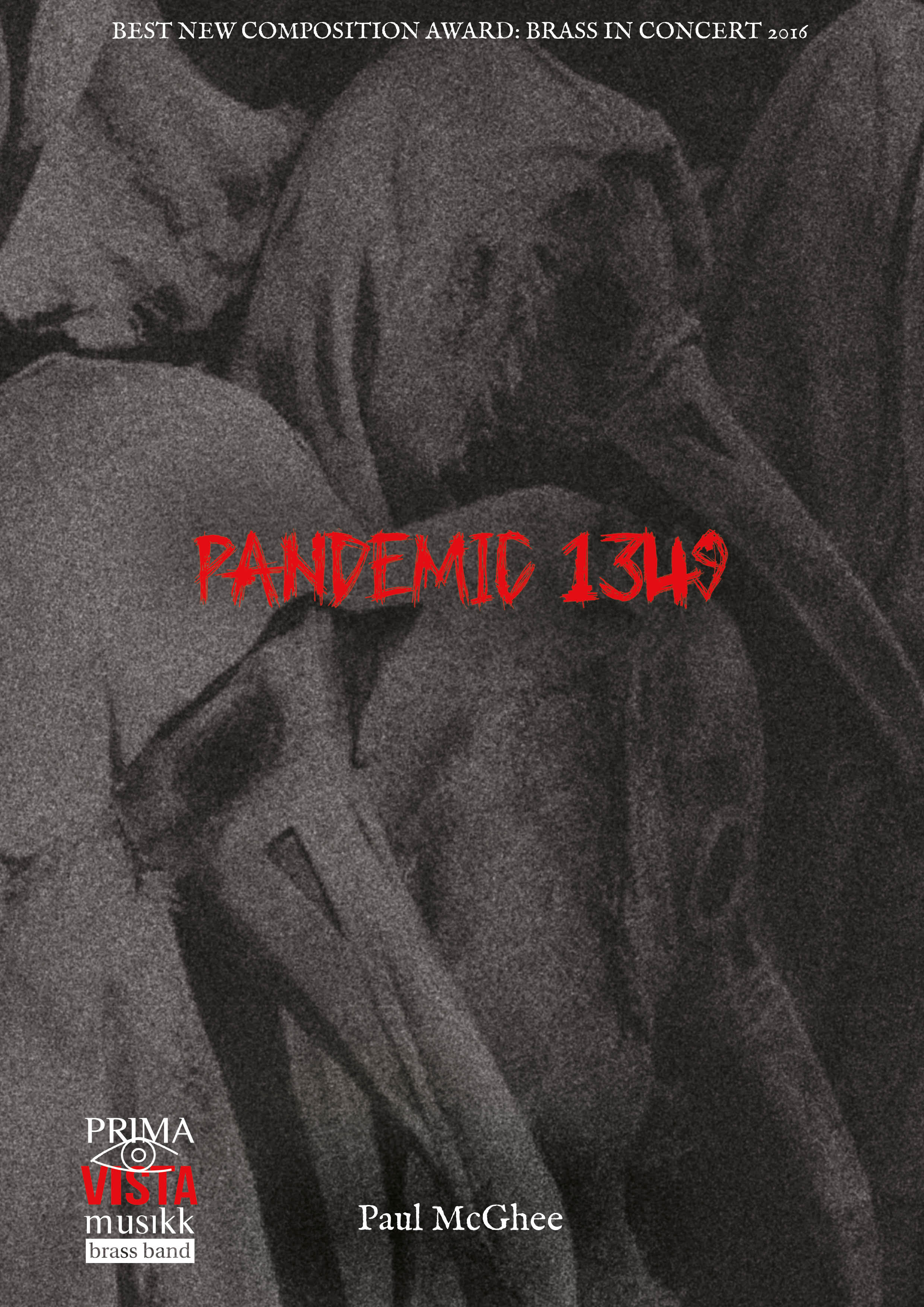
Pandemic 1342 (Brass Band - Score and Parts)
'Pandemic 1349' was written during September and October 2016 and received its premiere on Sunday 20 th November at the 40 th Brass in Concert Championships at the Sage, Gateshead where it received the best new composition/arrangement award.'Pandemic 1349' is a concert work that aims to capture the atmosphere of fear and terror as the plague spreads throughout the city. The cries and screams get louder and reach a chaotic climax, before a calmer and reflective passage takes over - although the chaos and fear never totally leaves as the melodic material is played against the backdrop of what has gone before.London lost almost half of its population during the Black Death, making this one of the single most devastating events in the city's dark history. The outbreak not only shaped the number of inhabitants in London but also changed their mind-sets with many turning to religion - even the English language was to be forever altered.
Estimated dispatch 7-14 working days
-
 £14.95
Pandemic 1342 (Score Only)
'Pandemic 1349' was written during September and October 2016 and received its premiere on Sunday 20 th November at the 40 th Brass in Concert Championships at the Sage, Gateshead where it received the best new composition/arrangement award.'Pandemic 1349' is a concert work that aims to capture the atmosphere of fear and terror as the plague spreads throughout the city. The cries and screams get louder and reach a chaotic climax, before a calmer and reflective passage takes over - although the chaos and fear never totally leaves as the melodic material is played against the backdrop of what has gone before.London lost almost half of its population during the Black Death, making this one of the single most devastating events in the city's dark history. The outbreak not only shaped the number of inhabitants in London but also changed their mind-sets with many turning to religion - even the English language was to be forever altered.
Estimated dispatch 7-14 working days
-
 £89.95
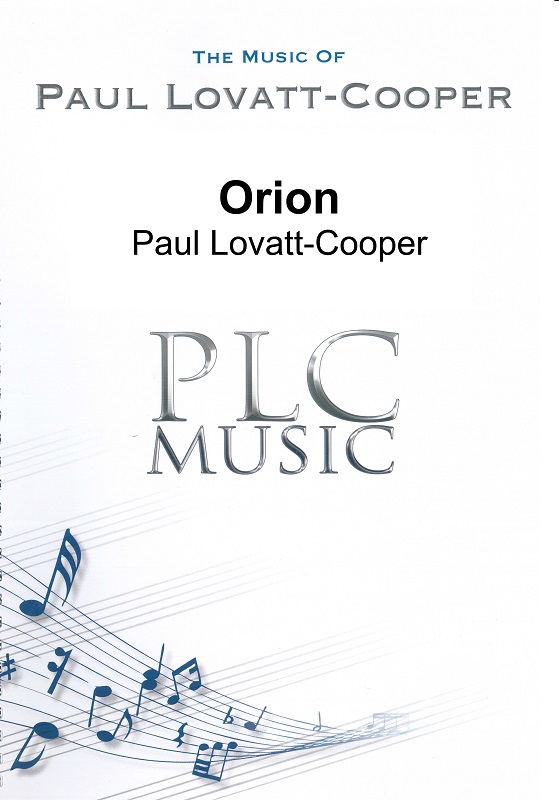
Orion (Brass Band - Score and Parts)
Orion was named after the giant huntsman in Greek mythology and is a prominent constellation located on the celestial equator and visible throughout the world. It is one of the most conspicuous and recognisable constellations in the night sky. This piece and its inspiration were composed as a tone poem creating a musical picture of this amazing phenomenon.The opening introduces the constellation. Starting mysteriously with the percussion and basses this section develops a series of rhythmic and harmonic interludes from the upper brass. As this introduction develops, the melodic line lead by the Solo Cornet and Euphonium builds as the accompanying instruments increase in their rhythmic complexity. This section climaxes with a short fanfare motif which will be a prominent theme throughout this piece.The fast rhythmic section that follows serves as a technical test for the players. The thematic device introduced by the Solo Cornets is passed around various soloists and sections within the ensemble. This part of the tone poem gives the opportunity for the ensemble to highlight their technical prowess. The fanfare motif returns to conclude this section and takes the piece into the slow middle movement.Motifs heard earlier are mixed with new ideas in this slow section which give an opportunity for a variety of soloists to demonstrate their musical prowess. After the various solo passages and cadenzas, the mood shifts dramatically to a more ominous section that builds in texture and dynamic. Concluding with our returning fanfare motif the piece then builds in momentum towards our finale section.This finale is a technical showcase which will further test the playing ability and stamina of soloists, small groups and the full ensemble. Using prominent musical themes heard throughout this piece the music builds to a glorious conclusion fitting with wonderful constellation.
Estimated dispatch 7-14 working days
-
 £38.95
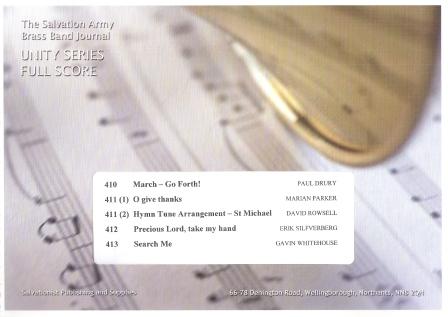
Unity Series Band Journal October 2013 Numbers 410 - 413
No. 410 March - Go Forth! (Paul Drury)This march was written as a tribute to Bandmaster Jack Spowart and the Bo'ness Salvation Army Band. The composer lives in the twon of Bo'ness and has had numerous opportunities to share with the band and the wider corps at various events. This march serves as recognition of the faithful service given in the Lord's name in the town by The Salvation Army for over 100 years. Two tunes are featured, both well-known and instantly recognisable, namely, Forward! be our watchword and We're marching on.No.411 (1) O give thanks (Marian Parker)The composer, Marian Parker, is a new contributor and is the Recruiting Sergeant at Leicester South Corps. This simple, yet rhythmic piece should not pose any technical problems for most bands and features the attractive arrangement of Joanne Pond's contemporary song, 'O give thanks'.No.411 (2) Hymn Tune Arrangement - St Michael (David Rowsell)The hymn tune 'St Michael' was composed in 1551 by French composer Louis Bourgeois and the composer provides a very useful arrangement of this historic hymn.No. 412 Precious Lord, take my hand (Erik Silfverberg O.F.)This well-known Gospel Song is a favourite of many. It has been recorded by many great artists, including Rosetta Tharpe, Elvis Presley and Aretha Franklin. The words were written by Reverend Thomas A. Dorsey, who is often known as the 'Father of Gospel song'.No. 413 Search Me (Gavin Whitehouse)The second new contributor to this journal is Gavin Whitehouse. gavin is the Assistant Music Director for the Greater New York Division and is also the USA Eastern Territorial Songster Leader. This piece combines two songs - one old and one new - which speak of a God who knows us intimately. 'Search me, O God and know my heart today' (associated with the beautiful Maori melody, 'Now is the hour') is woven with a contemporary setting of Psalm 139 by Rebecca St James, the first line of which says, 'You searchme, you know me'.
Estimated dispatch 7-14 working days
-
 £34.99
Love Divine (Brass Band - Score and Parts)
One of Howard Goodalls most popular choral settings, Love Divine has been skilfully arranged for brass band by Andrew Wainwright, with the approval of the composer. This version is based on the setting with piano and strings and can be performed as a self-standing concert work or as an accompaniment for performance by a large choir.
Estimated dispatch 7-14 working days
-
 £110.00
Diversions After Benjamin Britten (Brass Band - Score and Parts)
Suite by Lucy Pankhurst, Simon Dobson, Paul McGhee and Gavin HigginsHaving devised a collective centenary tribute for Michael Tippett at the 2006 RNCM Festival of Brass (Variations on a Theme of Michael Tippett by five eminent composers of brass band music, PHM002), I commissioned this companion piece as a Benjamin Britten tribute for the 2013 festival. In the late 1970s, while researching a book about the English composer, and Britten's first teacher, Frank Bridge (1879 - 1941), I came across a copy of the printed score of Benjamin Britten's Variations on a Theme of Frank Bridge (Op.10) for string orchestra, in which Britten had written descriptive titles for each of the variations suggesting appropriate character traits of his much loved mentor and guide. The character variations are cast in march, song and dance forms.Taking inspiration from Britten's youthful tribute, I invited four award-winning composers, who have all made significant contributions to the brass band medium, to create their own personal reflections on four aspects of Britten's character and music, designed to form a suite of Diversions after Benjamin Britten, but which can also be played separately.Lucy Pankhurst's hauntingly lyrical Prelude: His Depth refers to the emotional and symbolic subtexts that underpin Britten's operas, taking its musical cue from Britten's many arrangements of folk songs. The flugel horn takes a prominent role throughout.Simon Dobson's breathless Scherzo: His Vitality reminds us with its rapid passage work and leaping bass 'groove' that Britten loved tennis and fast cars in his younger days.Paul McGhee's evocative interpretation of the March: His Sympathy represents Benjamin Britten's pacifism, as the composer writes: 'We view the music through the eyes of a pacifist. Whilst war and violence surround us, we do not engage in it and though it continues to happen around us. With the use of muted effects in most of the band throughout the piece, the flugel horn is the lone voice of reason, standing firm against the mechanical and destructive society in which it is forced to live. As the machine of war continues around the lone voice, the voice is gradually dismissed and mocked as the war machine rumbles on into the distance.'In an extended finale, entitled Toccata: His Skill, Gavin Higgins celebrates Benjamin Britten's consummate creativity. For the RNCM Festival of Brass premiere, the four contrasting movements were framed and connected by Britten's Fanfare for St. Edmundsbury for three trumpets, with the trumpet soloists spaced round the hall. I am grateful to the Britten Estate and publishers Boosey & Hawkes for giving permission for the elements of Britten's fanfare to be incorporated in the collective work.- Paul HindmarshDuration: 19.30
Estimated dispatch 7-14 working days
-
£45.00
Diversions After Benjamin Britten (Brass Band - Score only)
Suite by Lucy Pankhurst, Simon Dobson, Paul McGhee and Gavin HigginsHaving devised a collective centenary tribute for Michael Tippett at the 2006 RNCM Festival of Brass (Variations on a Theme of Michael Tippett by five eminent composers of brass band music, PHM002), I commissioned this companion piece as a Benjamin Britten tribute for the 2013 festival. In the late 1970s, while researching a book about the English composer, and Britten's first teacher, Frank Bridge (1879 - 1941), I came across a copy of the printed score of Benjamin Britten's Variations on a Theme of Frank Bridge (Op.10) for string orchestra, in which Britten had written descriptive titles for each of the variations suggesting appropriate character traits of his much loved mentor and guide. The character variations are cast in march, song and dance forms.Taking inspiration from Britten's youthful tribute, I invited four award-winning composers, who have all made significant contributions to the brass band medium, to create their own personal reflections on four aspects of Britten's character and music, designed to form a suite of Diversions after Benjamin Britten, but which can also be played separately.Lucy Pankhurst's hauntingly lyrical Prelude: His Depth refers to the emotional and symbolic subtexts that underpin Britten's operas, taking its musical cue from Britten's many arrangements of folk songs. The flugel horn takes a prominent role throughout.Simon Dobson's breathless Scherzo: His Vitality reminds us with its rapid passage work and leaping bass 'groove' that Britten loved tennis and fast cars in his younger days.Paul McGhee's evocative interpretation of the March: His Sympathy represents Benjamin Britten's pacifism, as the composer writes: 'We view the music through the eyes of a pacifist. Whilst war and violence surround us, we do not engage in it and though it continues to happen around us. With the use of muted effects in most of the band throughout the piece, the flugel horn is the lone voice of reason, standing firm against the mechanical and destructive society in which it is forced to live. As the machine of war continues around the lone voice, the voice is gradually dismissed and mocked as the war machine rumbles on into the distance.'In an extended finale, entitled Toccata: His Skill, Gavin Higgins celebrates Benjamin Britten's consummate creativity. For the RNCM Festival of Brass premiere, the four contrasting movements were framed and connected by Britten's Fanfare for St. Edmundsbury for three trumpets, with the trumpet soloists spaced round the hall. I am grateful to the Britten Estate and publishers Boosey & Hawkes for giving permission for the elements of Britten's fanfare to be incorporated in the collective work.- Paul HindmarshDuration: 19.30
Estimated dispatch 7-14 working days
-
 £24.95
Judd: Ave Verum
During his brief career, Mozart wrote much music of various types, but some of his most valuable contributions were dedicated to the Church. Here is his beautiful 'Ave Verum'. The music simply breathes adoration and reverence, and because of this, if handled sympathectically, can hardly fail to stir within us deeply spiritual emotions. Adopt a vocal style of playing and observe intelligently the degrees of force and treat accordingly.
Estimated dispatch 7-14 working days
-
 £24.95
Judd: Away in a Manger
A beautifully crafted two verse arrangement of one of the most loved carols of all.
Estimated dispatch 7-14 working days
-
 £29.95
Judd: Beaumont
Written in the late 1920s, this is the most well-known march by the former Melbourne Staff Bandmaster .
Estimated dispatch 7-14 working days