
Results
-
 £131.00
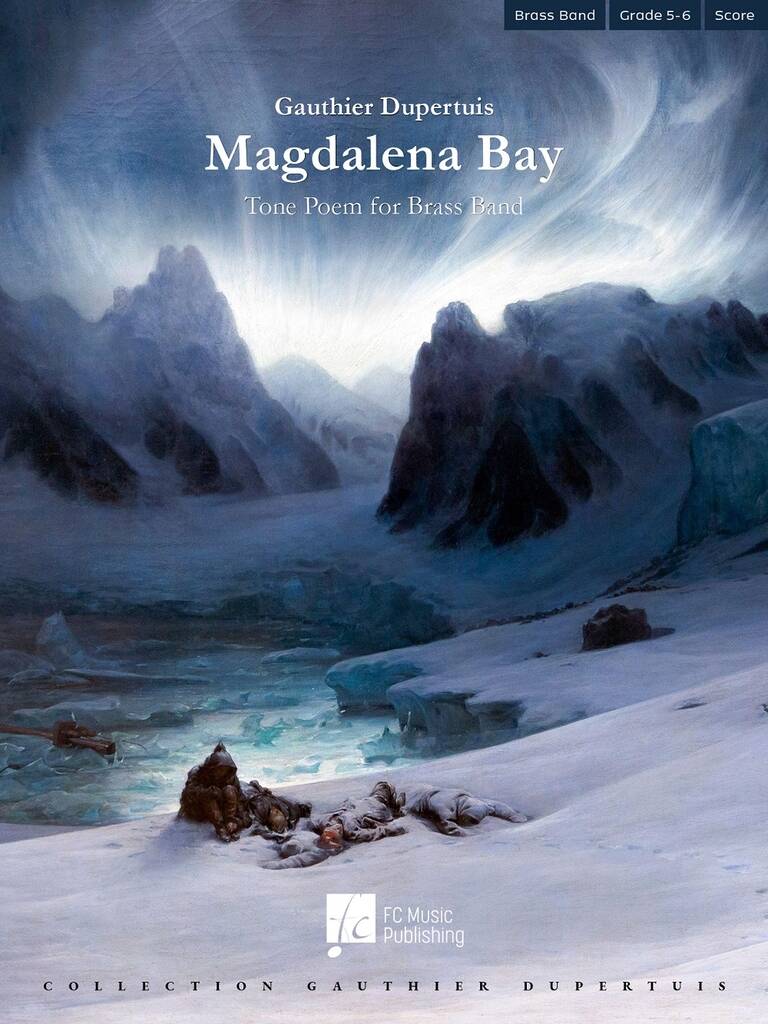
Magdalena Bay - Gauthier Dupertuis
While admiring many masterpieces at the Louvre Museum in Paris, Gauthier Dupertuis' attention was drawn to a less famous painting: Magdalena Bay, by French painter Francois-Auguste Biard (1799-1882).The work depicts a magnificent snowy landscape on the Norwegian island of Spitsbergen. However, in the foreground, the presence of the wreckage of a ship, bodies covered in snow and a visibly dying character make us understand that tragic events took place there. Thus, a strong contrast is formed between death and the sublime, between the desolation of the survivors of the shipwreck and the magnificence of the landscape. When we look in more detail at the painting, we notice that footprints have been made in the snow: so, could someone have gone to get help? This little glimmer of hope makes the picture even more touching. In this work, Gauthier Dupertuis tried to describe the different elements of the painting, using contrasting sections and dissonances (in particular, the conflict between the minor and the major) to convey the duality between death and the sublime. The work also attempts to highlight a wide palette of orchestral colors, from the most shimmering lines to the darkest low brass colours. In 2024, Magdalena Bay was awarded the first Prize as well as the band Prize at the 9th European Composition Competition for Brass Band, which was held in Palanga (LT). It was premiered on May 2, 2024 by The Cory Band, conducted by Philip Harper.
Estimated dispatch 5-14 working days
-
 £183.20
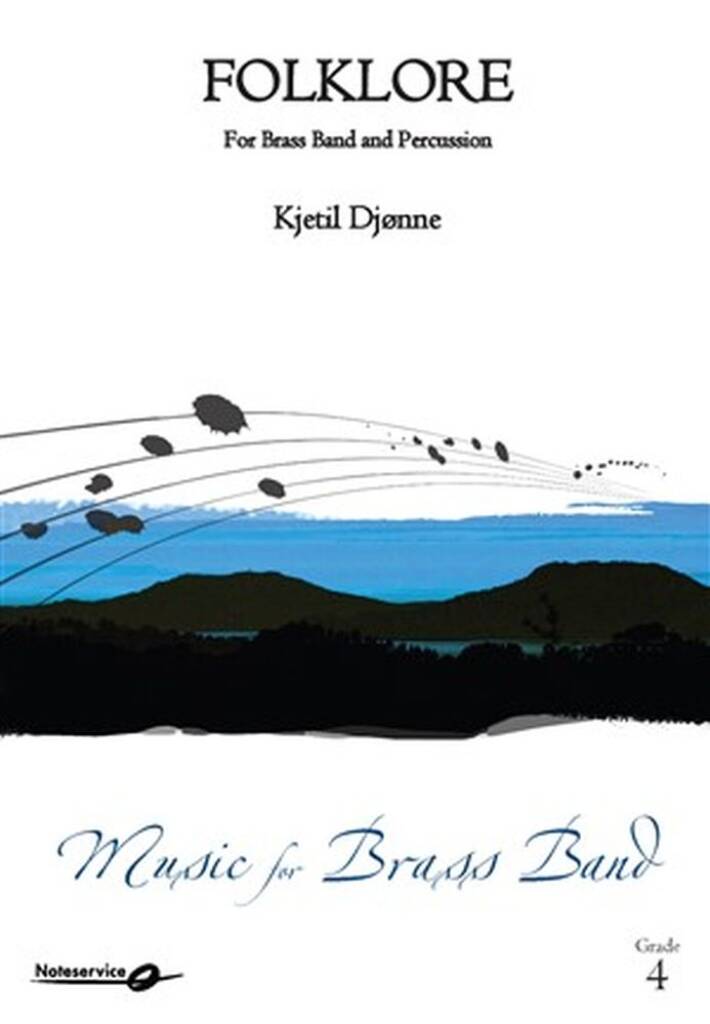
Folklore - Kjetil Djønne
"Folklore" is a work for brass band and percussion loosely based on the story of the Norwegian woman accused of witchcraft, Anne Pedersdotter. She was sentenced to be burned at the stake in Bergen in the spring of 1590 and has since been frequently highlighted as Norway's most famous and talked-about witch.The work begins with the movement "Lyderhorn," depicting the mountain outside Bergen where witches gathered to plan magical actions against the city. Here, we hear the quietness of nature and the wind blowing through the trees before a new theme appears, which will come to life in the next movement. In the distance, the witches have started their ceremony.In the next movement, "Walpurgis Night," the witches perform their rituals to afflict the city with fire, disease, and natural disasters. The ceremony becomes more and more chaotic, violent, and compelling until the darkness of the night envelops us, concluding the section.The third movement describes the women's inner struggle against the harassment they faced when the people of Bergen suspected them of being witches. Rumors often turned into formal accusations from the legal system, and many were sentenced to death after undergoing trial. "From life to death through the fire."The fourth and final movement, "The Pyre," depicts the actual death sentence. You can hear the pyre being ignited and the flames growing and intensifying. It all culminates in a chorale as a memorial to the lives that were taken.
Estimated dispatch 5-14 working days
-
 £104.99
Sinfonietta No. 4 - Etienne Crausaz
This work was composed for the occasion of the 28. Fete Cantonale des Musiques Vaudoises (28th Music Festival of the Canton Vaud), taking place in the Valley of Joux in June 2018. The music begins with a very simple fanfare consisting of five ascending legato notes which constitute the fundamental framework of the piece. This contrasts with the more cantabile sounding theme we hear after. The following Allegro section uses the sequence in a contrapuntal style reminding us of the Renaissance period, but with more modern day harmonies. Two solo cadenzas played by cornet and euphonium initiate the middle section, in which a theme also based on the sequence builds uptowards the climax of the piece. The sequence in the last section is played in time but gives the feeling of a "one to the bar" beat. Shortly before the festive finale, the music heard in the middle part resumes.
Estimated dispatch 5-14 working days
-
 £76.99
Catedrales - Bert Appermont
Cathedrals have always appealed to the imagination. Hundreds of years of manpower have been invested in their building and it is not for nothing that today they represent imposing symbols of architecture and history. The cathedral is also a great source of inspiration for compositions, drawing on a full palette of acoustic echo effects, Gregorian melodies and organ based choral themes.The work "Catedrals" opens with a five tone motif using double tonguing which resonates through space. Then comes a Gregorian antiphonal theme "Salve Regina" which is heard in the euphonium and later combines with the opening motif. The quicker passage that follows is basedentirely on the intervals in the motif which by now has added rhythmic variations and develops in different forms, including a fugue. The work then builds towards its first climax, from which unusual muted sounds emerge creating an atmosphere shrouded in mystery.Gradually, more melodious fragments are added to the Gregorian antiphonal theme which develops into an expansive choral, emulating the organ and which rises above the sound mass. The work grows more powerful and brilliant in sound until it culminates in a short and explosive finale wherein elements from the whole work come together.
Estimated dispatch 5-14 working days
-
£47.50
Largo - Georg Friedrich Händel - James Curnow
This arrangement of Handels beautiful melody was created as an educational tool for teaching students both the legato (sustained) style and the expressive quality of playing. Though these qualities of performance are not generally considered fun by younger students, compared to playing fast, exciting music with more technical demands, it actually requires a great deal more musical maturity and ability.
Estimated dispatch 5-14 working days
-
 £59.99
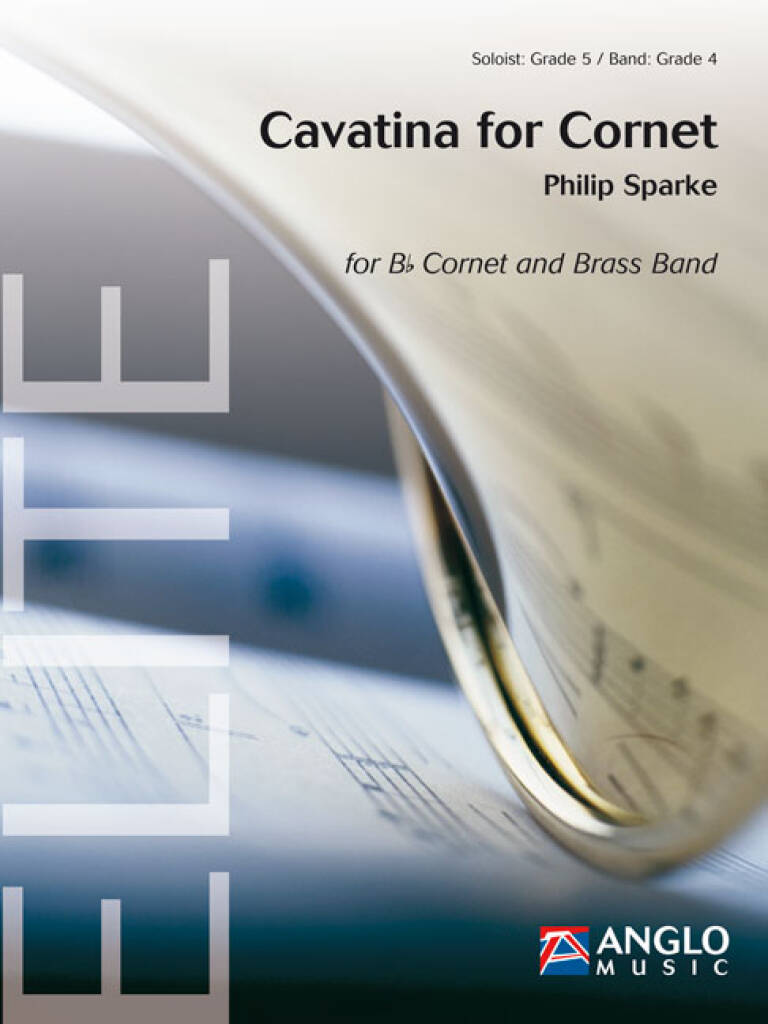
Cavatina for Cornet - Philip Sparke
In this solo work - a commission for an 18th birthday present - the opening mood of a brooding modal blues gives way momentarily to a more optimistic central section.Following an emotional climax and reflective cadenza, the opening material returns, but now tying in with the central section, and the piece fi nally ends in a more positive mood.
Estimated dispatch 5-14 working days
-
£84.99
Utopia - Jacob de Haan
Utopia is the name of a book written by the English author Thomas More and was published in 1516. The title is a word thought up by More himself, after the Greek language, meaning "Nowhereland" and leading to the invention of the words utopian scheme and utopian. Utopia pictured an ideal state on an island far from the inhabited world. This idea was the basis of the composition. It makes one think of Oregon in variety of themes and style. Utopia also exists of a combination of styles that breathe the atmosphere of film music. However, Utopia sounds less American. The slow and stirring middle part for example is closer to the European romanticism: the chord signals in the brasssection remind of Wagner's music.
Estimated dispatch 5-14 working days
-
 £60.99
Emerald Jubilee - Jan de Haan
An Emerald Jubilee celebrates a 40th anniversary. Jan de Haan composed this colourfully orchestrated concert march to celebrate Will van der Beek's 40th anniversary as conductor of the Deutsche Musikverein Haaren. As publisher of van der Beek's transcriptions of classical works Jan de Haan can look back on many years of successful collaboration with the knowledge that there will be many more to come. Unusually cast in a minor key, the main theme provides an interesting contrast to the more melodic major key of the second movement. The relatively slow theme gives this march a dignified stately and subdued quality.
Estimated dispatch 5-14 working days
-
 £54.99
Ding Dong it's Christmas - Bruce Fraser
In 'Ding Dong it's Christmas' Scottish composer Bruce Fraser makes a sport of misleading his audience time and again. The title already indicates that this piece has been based on the well-known Carol 'Ding Dong Merrily on High', even if the melody makes a somewhat halting start. When it gathers pace, however, also due to the percussion section, suddenly various other carols may be recognized. Peace and quiet reign in the middle part, during which we can enjoy Bach's charming 'O Jesulein suss'. 'Ding Dong it's Christmas' ends in the same way it began, even if more and more Carols put in an appearance. Merry Christmas!
Estimated dispatch 5-14 working days
-
 £83.60
Los Hermanos de Bop - Mark Taylor - Sandy Smith
Los Hermanos De Bop is a composition by Mark Taylor (arr. Sandy Smith). In the Obrasso webshop are the Sheet Music for Brass Band with the article no. 16198 available. The sheet music is classified in Difficulty level C (medium). More Music for entertainment for Brass Band can be found using the flexible search function. Use the free trial score for Los Hermanos De Bop and get a musical impression from the audio samples and videos available for the Brass Band piece. With the user-friendly search function in the Obrasso webshop, you can find in just a few steps more sheet music from Mark Taylor for Brass Band. So that you can complete your concert program, show all music sheets can be displayed with one click on Music for entertainment in Difficulty level C (medium) . Los Hermanos De Bop is one of many brass music compositions that have been published by Musikverlag Obrasso. Next to Mark Taylor over 100 composers and arrangers work for the Swiss music publishing house. In addition to the notes for Brass Band you will also find literature in other formats such as Brass Band, Concert Band, Junior Band, Brass Ensemble, Woodwind Ensemble, Symphony Orchestra as well as CDs and Music Education. A large part of the publisher's own literature from top brass bands such as the Black Dyke Band, Cory Band, Brighouse & Rastrick Band or the Oberaargauer Brass Band was recorded on Obrasso Records. All sound carriers are also available digitally on the popular portals of Apple, Amazon, Google, Spotify and other providers worldwide. All Obrasso sheet music is produced on high quality paper. The slightly yellowish note paper offers a good contrast and is easy on the eyes in difficult lighting conditions. Delivery to private customers worldwide is free of shipping costs. Order your sheet music now directly from Obrasso Verlag.
Estimated dispatch 5-14 working days
 View Music