
Results
-
 £59.99
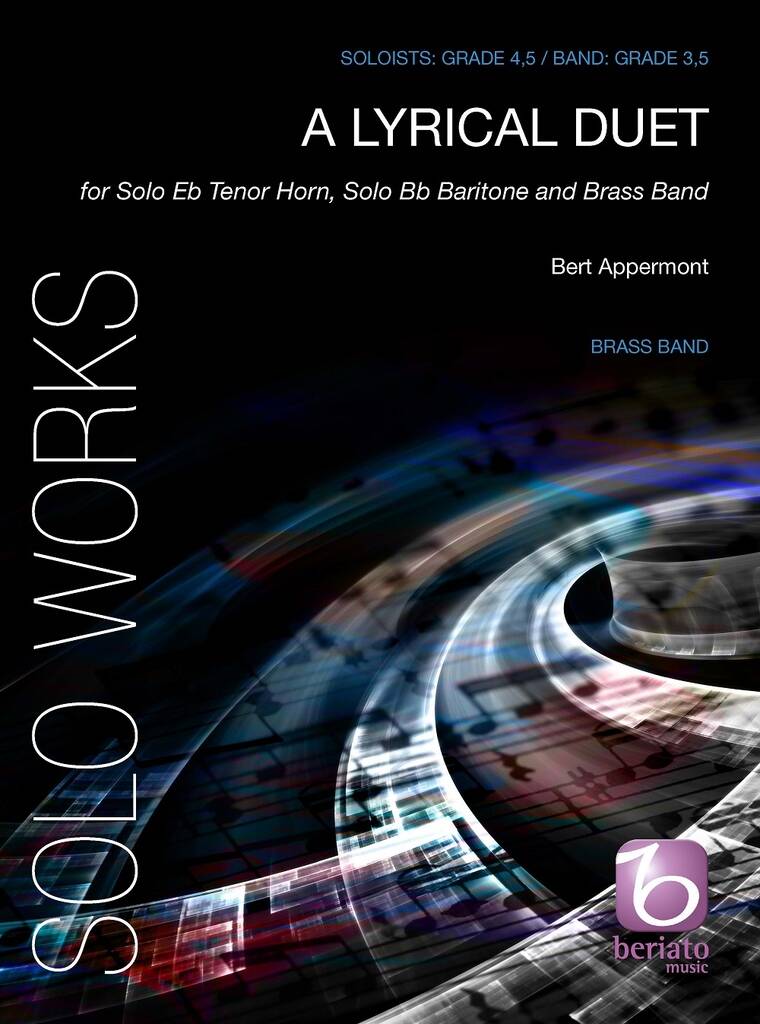
A Lyrical Duet - Bert Appermont
This attractive composition focuses on the lyrical qualities of two solo instruments: tenor horn and baritone. An expressive theme is initially performed by the baritone; then the tenor horn takes over this melody. A rich dialogue arises, in which the soloists make music in sweet harmony, and then in a 'call-and-response game'. In the B section, the lyricism becomes more virtuosic, and a more playful character comes to light. There is then a gradual build-up to a grand tutti in which the opening theme resounds again. The work ends in a reverie, echoing the dreamy beginning.A Lyrical Duet was commissioned by tenor horn artist, conductor, and teacher Tim De Maeseneer, and is dedicated to him and Katrina Marzella. The work can be heard on Tim's solo CD, Beyond the Paradox, a project that was created in collaboration with Brass Band Willebroek and its conductor Frans Violet.
Estimated dispatch 5-14 working days
-
 £127.30
Joyful Joyful - Ludwig van Beethoven - Bjorn Morten Kjaernes
Beethoven's everlasting melody keeps popping up in different arrangements. This one is inspired by the version made to the movie "Sister Act". Gospel at its best!You may use this piece both in church concerts and entertainments shows.This is a fine number to practice sixteenths syncopations. Often, most players have similar rhythm and phrasing, but with different pitches. Extended harmonies and ensemble balance are also elements to work on. Two groups have special roles:- If you perform the arrangement instrumental, 1st Solo Cornet and Solo Horn are both important. The solos may be played as written or improvised. There is also an optional womens choir arrangement (SSAA)included in the set. - The bass line is also challenging and very important. Make it groove!
Estimated dispatch 5-14 working days
-
£188.50
Fansa da Matasa - Reid Gilje
"Fansa da Matasa" was written for Norwegian Brass Band Felleskorpset Askoy, today named Ravnanger Brass.The piece is divided into six main parts where the last one includes the hymn "Colne";Part 1 starts slowly, but rhythmically where the intensity grows towards a virtuosic Part 2.Part 2 feature a demaning solo for xylophone (bars 55 to 63). A simplified version of this solo is included in the part.Part 3 starts with some declamatory cadences and continue with several solos before it closed with a larger tutti-part.Part 4 has to be played well firmly and rhythmically. The melody is more of a cantabile style.Part 5 is a beautiful and quiet one with a touch of melancholy. (Small notes in Baritone to played if necessary).Part 6 has to be played with a rhythmic drive and intensity. The hymn "Colne" starts at bar 248 and should be played with a sostenuto-style.
Estimated dispatch 5-14 working days
-
 £79.99
Variants on an English Hymn Tune - Philip Sparke
This set of variations on the well-known hymn tune Holy, holy, holy! will make a most satisfying addition to the solo repertoire for euphonuim and brass band. It is in the traditional air varie form with an introduction, theme and 3 variations. The original melody (known as Nicaea) was composed by John Bacchus Dykes' especially for Reginald Heber's renowned hymn of praise and became universally popular when it was included in Hymns Ancient and Modern in 1861. A beautiful solo that will test the soloists ability to show true emotion.
Estimated dispatch 5-14 working days
-
 £60.99
Only One Glimpse - Agathe Backer-Grøndahl - Tom Brevik
A gem from the Norwegian folk music. No difficult and complicated matter but music based on sounds and atmosphere. The melody is one of pure beauty and mystical characteristic of the tranquil scenery of Norway. Solo for 2 B-flat instruments. Een juweeltje uit de Noorse volksmuziek. Geen moeilijke, ingewikkelde materie maar muziek gebaseerd op klank en sfeer. De melodie is er een van pure schoonheid en karakteristiek voor het mystieke verstilde Noorse landschap. Solo voor 2 bes instrumenten.
Estimated dispatch 5-14 working days
-
 £154.99
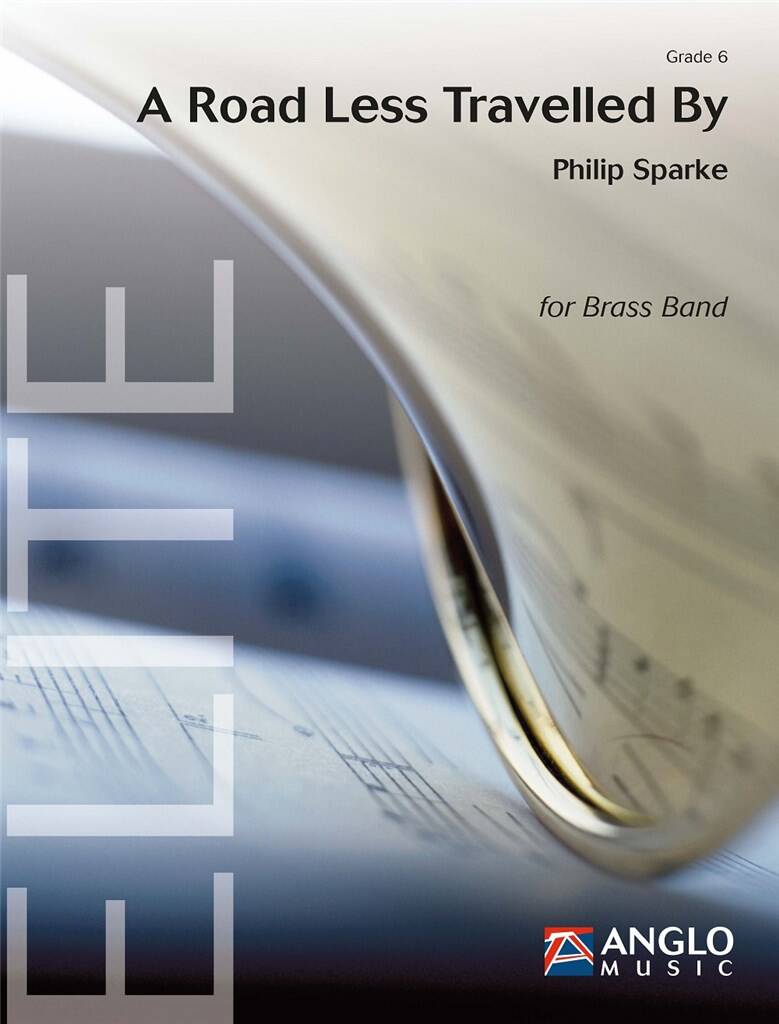
A Road Less Travelled By - Philip Sparke
A Road Less Travelled By was commissioned by Palangos Orkestras for the Championship Section of the 2020 European Brass Band Championships held in Palanga, Lithuania. The title alludes to a poem by American author, Robert Frost, which appeared in his 1916 collection, Mountain Intervals. In common with most of the composer's larger works, the piece is not programmatic, but purely abstract. The choice of title shares Sparke's view of how composers can often develop. There can be no 'destination' in a composer's career, but rather a continuing journey to an unknown place. Set in three movements, which play without a break, A Road Less Travelled By opens with a Moto Perpetuo firmly rooted in classical language, form and syntax. A continuous river of semiquavers, veering from melody to accompaniment and back again, adds drive, energy and motion. The second movement, Nocturne, is in the form of a free fantasia; solos for vibraphone, flugel horn and euphonium set the stage for a central cornet solo, quietly echoed by the full band. A triumphal climax is reached before the movement dissolves into a Scherzo Finale. A brief coda based on earlier material drives the piece to a close.
Estimated dispatch 5-14 working days
-
 £59.99
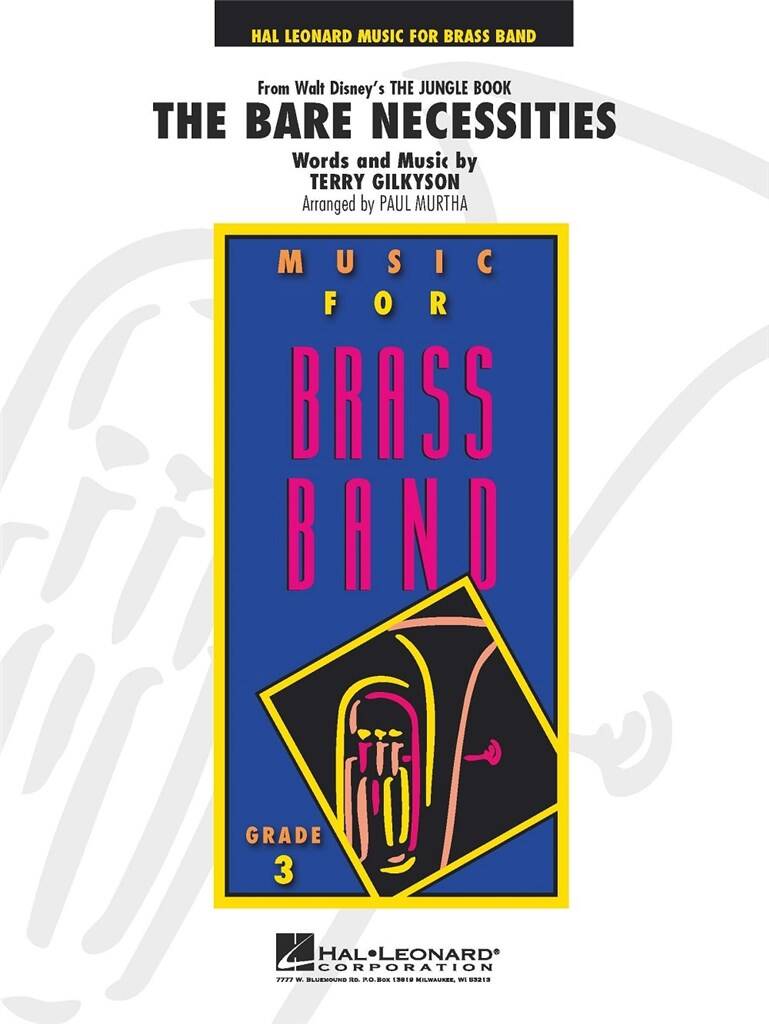
The Bare Necessities - Paul Murtha
First heard in the original 1967 movie, this familiar tune is featured again in the acclaimed 2016 version. In this clever arrangement for band, Paul Murtha utilizes a peppy 2-beat style, beginning with the trombones taking the melody. Every section of the band soon gets into the act, including a solo or soli for tuba, and a brief slower section for a Dixieland combo leading to the rousing finish. This song is guaranteed to be a highlight at any concert.
Estimated dispatch 5-14 working days
-
 £127.30
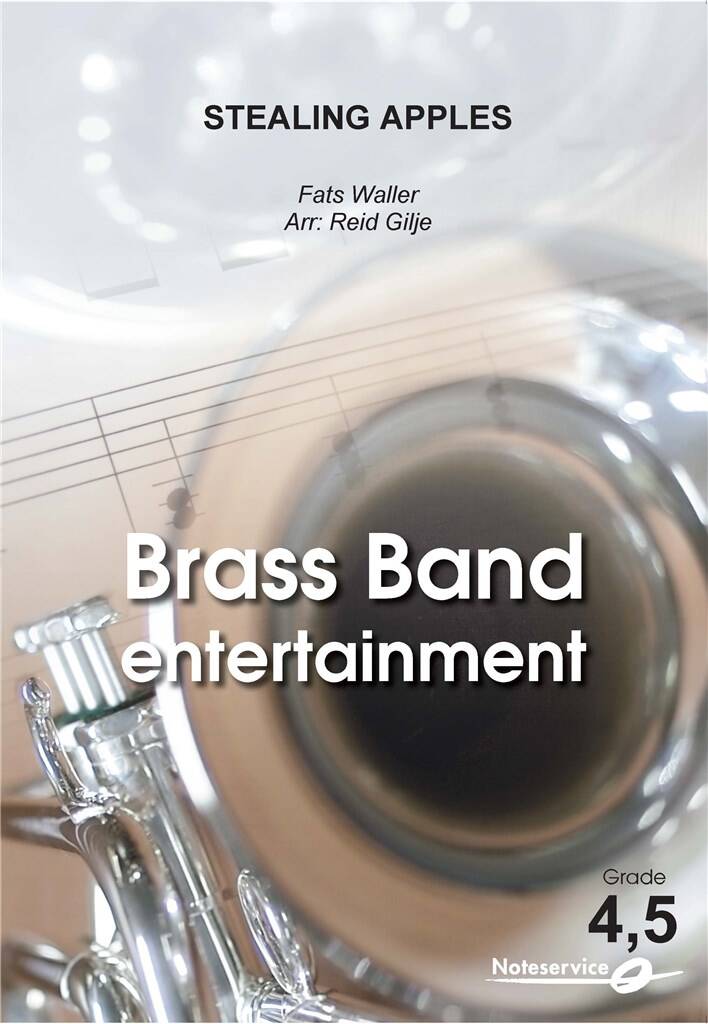
Stealing Apples - Fats Waller - Reid Gilje
Stealing Apples is an old swing-tune written by Fats Waller. Performances by Benny Goodman and his big band made the song very popular. In this arrangement for brass band, the mallet percussion is very essential. Mallet Percussion presents the melody from letter A and is also featured as soli-instruments from letter L to P. These parts can alternatively be played as vibraphone solo. Please be aware of the balance at letter A. Horn and Trombones must play piano but well articulated. Letter D must sound sparkling and fresh with articulated and powerful trombones and cornets (using straight-mute). Make shue that the 8th-notes are not played too dotted two bars before letterG. Almost even 8th-notes accentuated on the start of the slur is a good tip. Watch the balance at letter H. This part have to sound homogeniously. The soloistic Soprano Cornet at letter Q must be played in the style of Benny Goodan. The accompaniment must not be too powerful from letter R to S. Best of luck with the performance!
Estimated dispatch 5-14 working days
-
 £69.99
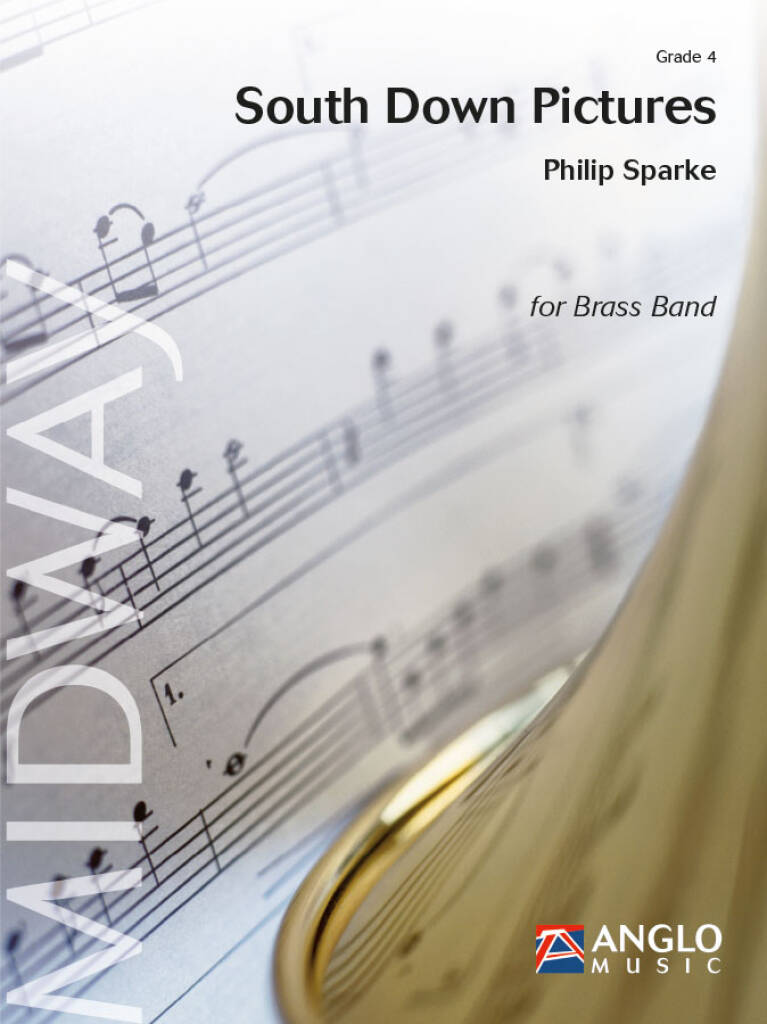
South Down Pictures - Philip Sparke
South Down Pictures was commissioned by Millenium Brass 2000, an organisation comprising three brass bands from the county of Sussex, England.The bands (Patcham Silver, Hangleton and Brighton Silver) had got together to organise many events to mark the new millennium and these culminated in a concert in Hove Town Hall on July 9th 2000 when all three bands combined to give the first performance of South Down Pictures. The composer spent much of his childhood amongst the South Downs, a range of hills in Sussex which runs parallel to the sea.Opening with a strong unison passage, interrupted briefly by faster figures based on the interval of a fifth, South Down Picturesdevelops with an often-passionate legato melody. Reaching a climax, this is then followed by the main vivo section of the work, whose main theme is based on the earlier 'fifth' figures. A bridge passage leads to a short chorale figure and a rhythmic climax which dissolves into a plaintive cornet solo over staccato chords. This theme is taken up by the whole band and leads back to a recapitulation of the main theme and earlier material. The cornet tune returns triumphantly in the major key before the opening unison passage reappears to provide a stirring coda.
Estimated dispatch 5-14 working days
-
 £15.99
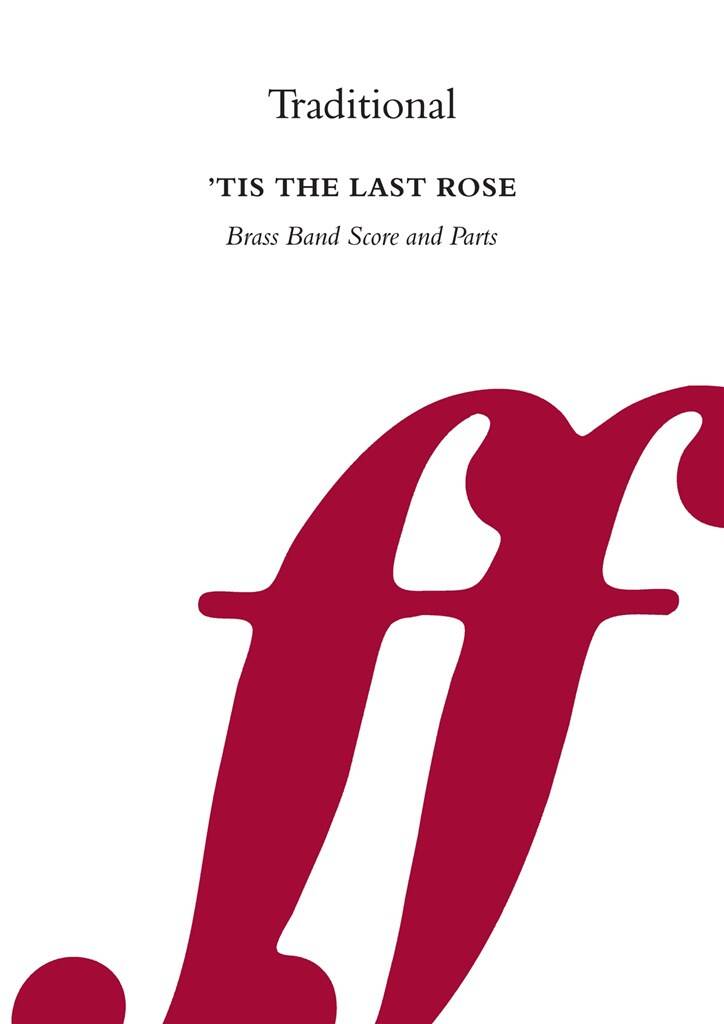
'tis The Last Rose Brass Band - Traditional
It is often thought that this melody came from the Victorian era, when Irish songs were very popular, however this Air was first published in 1813 and has been adapted and arranged by many composers and arrangers over theyears. This arrangement, as a Flugel Horn solo, by Gary Westwood is a new treatment and shows off this tender and wistful love song.
Estimated dispatch 5-14 working days
 View Music