
Results
-
 £29.95
Ave Maria - Johann Sebastian Bach, Charles Gounod - Ray Farr
There have been several settings of this Roman Catholic prayer to music, with the Bach/Gounod version being the most famous. It consists of the first prelude of Bach's The Well-Tempered Clavier plus a melody that Gounod wrote over this. Gounod...
Estimated dispatch 5-7 working days
-
 £84.95
Brass Triumphant - Gareth Wood
Brass Triumphant is a four-movement work and was composed for the Cory Band during their 125th anniversary year of 2009. The first movement is a celebratory fanfare featuring a strong melody as the thread which runs throughout the whole work....
Estimated dispatch 5-7 working days
-
 £29.95
First Light - Ben Hollings
First Light was written for Kirsty Abbotts and Carlton Main Frickley Colliery Band. A slow lilting melody is presented in the cornet solo and passed between the band and the soloist to create images of the tranquil night before the...
Estimated dispatch 5-7 working days
-
 £44.95
Fun and Games - Gareth Wood
Fun and Games is an overture for band in a festive mood, rich in melody and powerfully rhythmic. Written for the Pencampwriaeth Pres BBC Radio Cymru competition, it has all the technical challenges of a test-piece, but is just good...
Estimated dispatch 5-7 working days
-
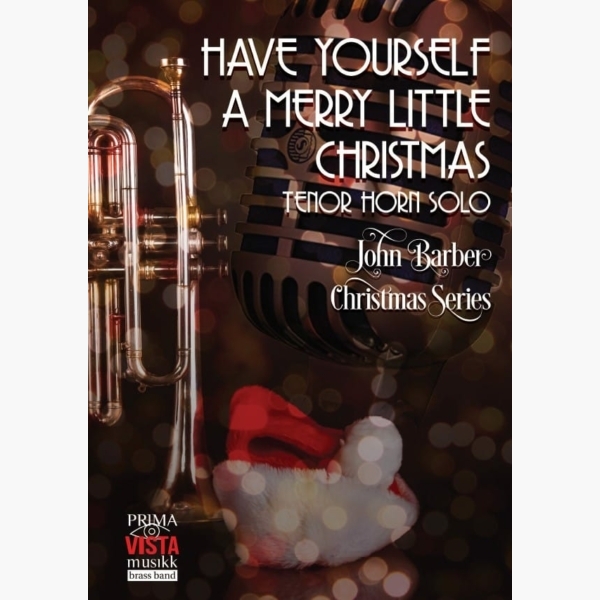 £34.95
Have Yourself a Merry Little Christmas - Hugh Martin & Ralph Blane - John Barber
Have Yourself a Merry Little Christmas was composed by Hugh Martin and Ralph Blane and first introduced by Judy Garland in the 1944 MGM musical Meet Me in St. Louis. The beautiful melody has stood the test of time and...
Estimated dispatch 5-7 working days
-
 £34.95
Highland Cathedral - Ulrich Roever & Michael Korb - Simon Kerwin
This lovely melody was composed by two German musicians who tried to emulate the popularity of the famous Scottish tune 'Amazing Grace'. The piece was an instant success and achieved a substantial degree of popularity after it was featured in...
Estimated dispatch 5-7 working days
-
 £29.95
Idyll on an Irish Folk Hymn - Ralph E Pearce
Idyll on an Irish Folk Hymn was originally written for a concert of Irish music given by the Phoenix-based Salt River Brass. It was made at the request of a close friend of the composer, whose favourite melody this is....
Estimated dispatch 5-7 working days
-
 £29.95
Lisa Lan - Welsh Traditional - Dan Price
Lisa Lan or Fair Lisa is a traditional Welsh folk song. It is a lover's lament about his lost dead love, Lisa. Lisa Lan is a hauntingly beautiful melody and has been covered by several popular artists, including Cerys Matthews...
Estimated dispatch 5-7 working days
-
 £44.95
Overture on God Save the Queen - Jonathan Bates
Composer Jonathan Bates describes his Overture on God Save the Queen as "a messed up take on the UK national anthem!" The work takes the well-known melody and goes as wildly different from the original as possible. Much of the...
Estimated dispatch 5-7 working days
-
 £29.95
Russian Folk Festival - Jonathan Bates
Russian Folk Festival is a virtuoso entertainment item for brass band, with shades of the famous Russian melody Kalinka in the backdrop. A lot of fun for both bands and audiences alike! The piece features on the Prima Vista Musikk...
Estimated dispatch 5-7 working days