
Results
-
£37.50
Brass Monkey's Selection II - Various
This selection contains four cracking little pieces from the pen of Jonathan Bates, Liam Riley and Martin Geovess. Each piece poses a different challenge for your training band, whilst ensuring they're fun to play and great to listen too. Jonathan Bates composed the 'Summer Hymn' and 'White Rose Dances' after being commissioned by the Deepcar, Thurlestone and Skelmanthorpe training bands for a massed event and are now available within this publicationaASONG OF THE VOLGA BOATMENSUMMER HYMNWHITE ROSE DANCESWENSLEYDALE RAG
In Stock: Estimated dispatch 1-3 working days
-
£24.50
Sailor's Hymn - Amber Hooton
Sailor's Hymn depicts a scene of sailors preparing to depart from the port of Liverpool, looking out over the docks as the Blue Peter flag flies,beckoning the sailors aboard to begin their long journey. It is a piece about saying goodbye to what was once familiar, moving on and pushing towards new horizons.This piece was written for a cultural exchange between brass and wind bands from St Helens (Valley Brass Band) and Normandy (Harmonie Courselles Sur Mer), culminating in a massed bands concert in Normandy during April 2024. The piece was one of several arrangements and original compositions written especially for the exchange, supported by grants from the Victoria Wood Foundation and Johnson Foundation. The concert celebrated the local cultures of Merseyside and Normandy, as well as the wider national cultures of the United Kingdom and France.
In Stock: Estimated dispatch 1-3 working days
-
 £115.60
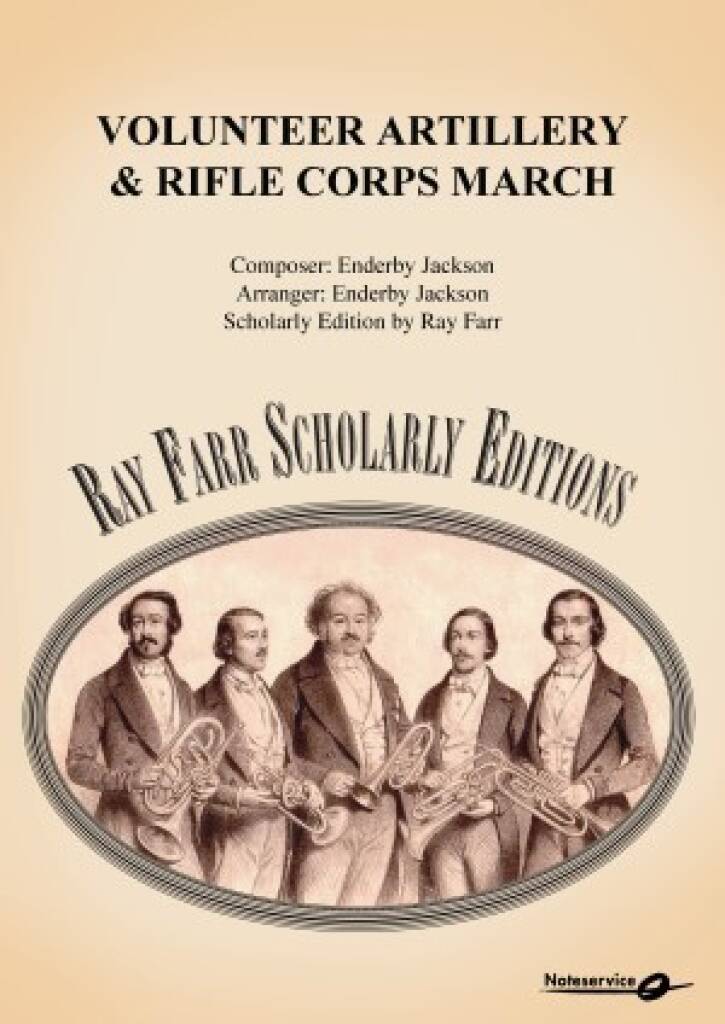
Voluntary Artillery & Rifle Corps March - Endeerby Jackson - Ray Farr
The march was written by Enderby Jackson and performed during a series of brass band events which took place at the Crystal Palace, London 1860 - 1863. Enderby Jackson was the organiser of these historically important events, and also conducted the massed band concerts. The Volunteer Force was a part-time, citizen army created in May 1859 by the British government as a result of increasing tensions between Britain and France. By 1862 more than 200,000 men had enlisted and were paid when on duty however, each member of the corps had to provide his own weapon and equipment.Some of the volunteer corps had bands which normally numbered between six and twelve players plus percussion1 and these bands became an important stimulant to the development of brass band.2 The corps were heavily subsidised by the government and considerable funding was spent on the bands3 which were often local brass bands. These bands were often provided with rehearsal rooms, instruments and uniforms,4 furthermore, the volunteer movement created and saved many brass bands.5Most of the musicians performing at the Crystal Palace Contests were affiliated to the Volunteer Force.
Estimated dispatch 5-14 working days
-
 £115.60
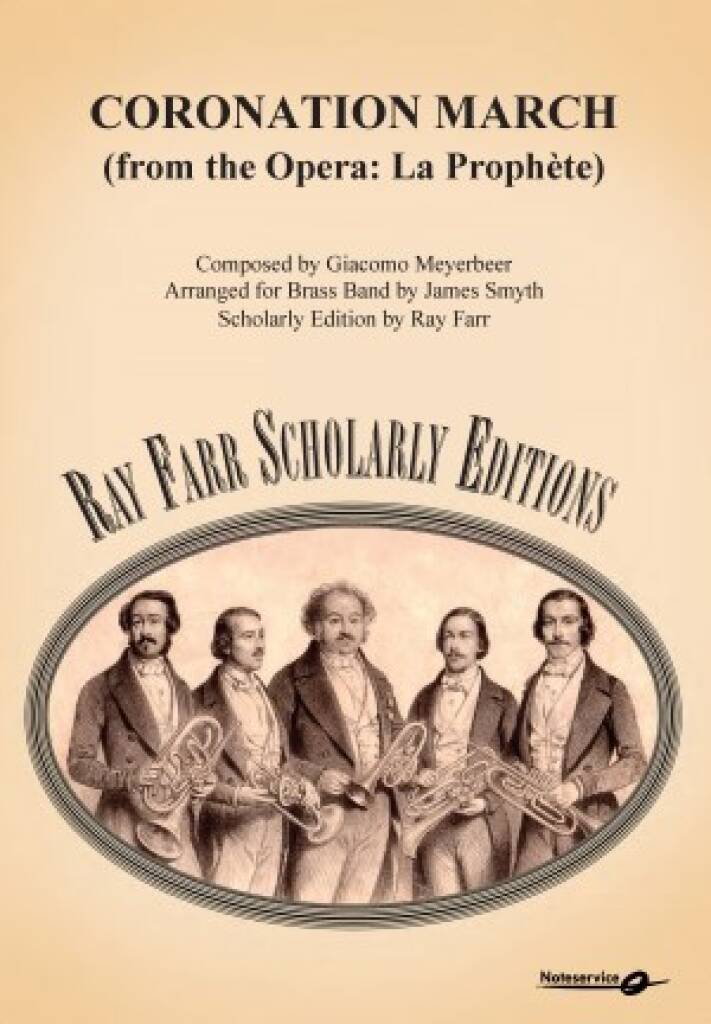
Coronation March - Giacomo Meyerbeer - Ray Farr
This Coronation March is from the opera Le Prophete (The Prophet) by Giacomo Meyerbeer and was arranged for brass band by James Smyth. The march was performed during a series of brass band events which took place at the Crystal Palace, London 1860 - 1863. Enderby Jackson was the organiser of these historically important occasions and also conducted the massed band concerts.The purpose of this scholarly edition is to produce a performing version, clearing ambiguities and errors, that can be enjoyed by today's performers and listeners, bearing in mind the original function and context. At the same time the edition is an analytical, musicological study of one of the rare treasures of the brass band repertory.
Estimated dispatch 5-14 working days
-
 £115.60
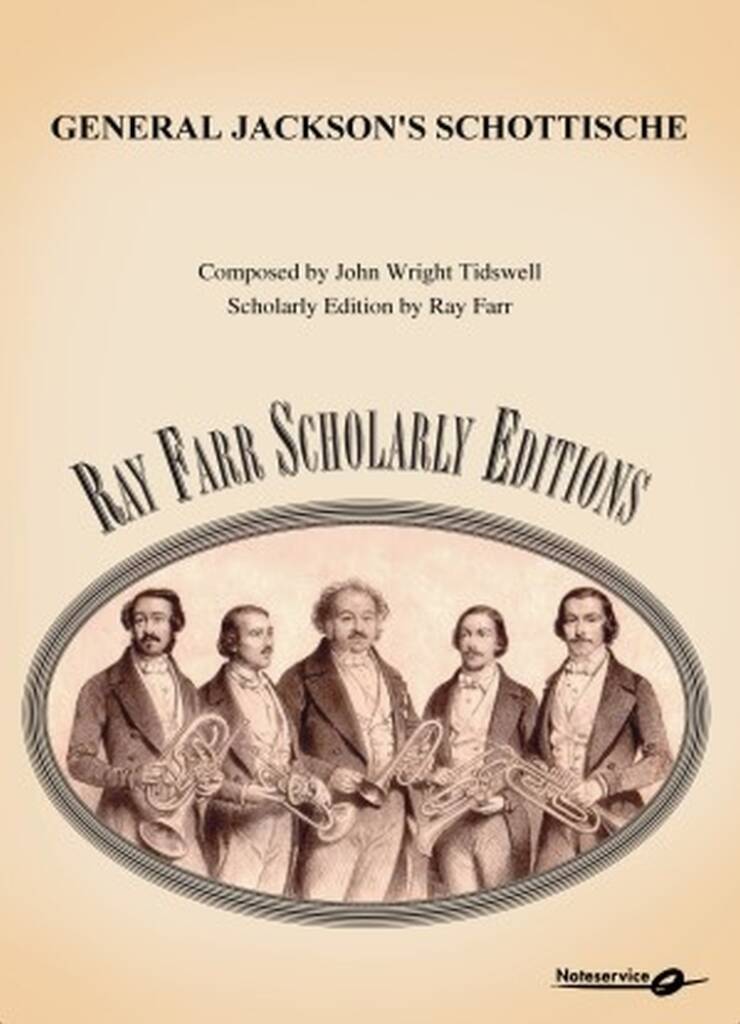
General Jackson's Schottische - John Wright Tidswell - Ray Farr
The piece was written by John Wright Tidswell and performed during Enderby Jackson's series of brass band events which took place at the Crystal Palace, London 1860 - 1863. Enderby Jackson was the organiser of these historically important occasions and also conducted the massed band concerts.The purpose of this scholarly edition is to produce a performing version, clearing ambiguities and errors, that can be enjoyed by today's performers and listeners, bearing in mind the original function and context. At the same time the edition is an analytical, musicological study of one of the rare treasures of the brass band repertory.
Estimated dispatch 5-14 working days
-
 £33.62
Fanfare Prelude on 'Richmond' (Brass Band) Charles Wesley arr. Andrew Wainwright
Fanfare Prelude on 'Richmond' was written for the inaugural Texas Brass Fest, held at Round Top Festival Institute on 27 May 2023, for the four premier brass bands in Texas - Austin, Dallas, Houston and San Antonio Brass Bands. It is based on the much loved hymn of the church by Charles Wesley, which is also known as 'O For a Thousand Tongues to Sing', the first verse of which reads: O for a thousand tongues to sing my great Redeemer's praise, the glories of my God and King, the triumphs of his grace! For maximum effect it is suggested that cornets and trombones are staged stood around the band, although if this is not possible then traditional band formation will be acceptable. To view a video of the premiere performance featuring the massed bands of Austin, Dallas, Houston and San Antionio at Texas Brass Fest 2023, please visit www.youtube.com/watch?v=22GJM4A6mbM or the Chicago Staff Band at www.youtube.com/watch?v=Gjp8N_U9U2c PDF download includes score and full set of parts. Sheet music available from: UK - www.brassband.co.uk USA - www.solidbrassmusic.com Difficulty Level: 2nd Section + Instrumentation: Soprano Cornet Eb Cornets 1-5 Bb Flugel Horn Bb Solo Horn Eb 1st Horn Eb 2nd Horn Eb 1st Baritone Bb 2nd Baritone Bb 1st Trombone Bb 2nd Trombone Bb Bass Trombone Euphonium Bb Bass Eb Bass Bb Timpani Percussion 1-3
In Stock: Estimated dispatch 1-3 working days
-
 £37.35
Fanfares and Proclamations (Brass Band) Steven Ponsford
Fanfares and Proclamations was originally written in 2015 by Steven Ponsford for the massed bands of the International Staff and Melbourne Staff Bands of The Salvation Army. This piece of music, suitable as a concert opener, makes use of the hymn tunes Miles Lane and Diadem, both of which are associated with the words 'All hail the power of Jesus name'. To view a video of the International Staff and Melbourne Staff Bands performing the work please visit: www.youtube.com/watch?v=kzm4Mn1tdw8 PDF download includes score and full set of parts. Sheet music available from: UK - www.brassband.co.uk USA - www.solidbrassmusic.com Difficulty Level: Third Section + Instrumentation: Soprano Cornet Eb Solo Cornet Bb 1st Cornet Bb 2nd Cornet Bb Flugel Horn Bb Solo Horn Eb 1st Horn Eb 2nd Horn Eb 1st Baritone Bb 2nd Baritone Bb 1st Trombone Bb 2nd Trombone Bb Bass Trombone 1st Euphonium Bb 2nd Euphonium Bb Bass Eb Bass Bb Timpani Percussion 1-2
In Stock: Estimated dispatch 1-3 working days
-
 £34.95
Puffing Devil, The - Christopher Bond
The Puffing Devil (2013) was commissioned by Camborne Trevithick Day Committee on the occasion of Camborne's 30th Trevithick Day celebration. The premiere performance of the work, written for brass band and children's choir, saw a massed performance by six brass bands and children from nine local schools. With the intention of being an educational work as well as a musical work, The Puffing Devil reflects the story of Richard Trevithick both in the lyrics and the musical material.A mysterious opening sees running semiquavers in the euphoniums as the flugel horn introduces the work with a solo, before the entry of the horns playing rhythmic quavers. The addition of the voices at the outset is for effect - working with the instruments to create the sound of a steam engine gathering pace simply to the words 'Trevithick'. Once a steady tempo is reached, themes are introduced and sung by the choir, where the vocal writing is a very simple singular-melody; easy for any primary school aged children to learn. An ending of grandeur in a majestic nature is presented, to create a big finish to a feel-good educational work.
Estimated dispatch 10-14 working days
-
 £29.95
Here Comes Tomorrow - Jonathan Bates
DIFFICULTY: 4th+. DURATION: 3'00". . 'Here Comes Tomorrow' was composed for the St Helens Youth Band in 2020 as part of one of the many projects the band undertook during the COVID-19 pademic to keep their members across all 3 bands engaged and making music. The original performance was recorded virtually with members of all ages and abilities contributing video performances which were combined into one massed video. .
In Stock: Estimated dispatch 1-3 working days
-
 £8.50
£8.50ABOUT & AROUND CHARLIE BROWNS from Redbridge Sketches (score) - Wilcox, Chris
From Redbridge Sketches, composed for the Redbridge Music Service and first performed at Ilford Town Hall on 2nd February 2006 with a massed band of over 80 players.
In Stock: Estimated dispatch 1-3 working days
 Listen to MP3
 View Music