Searching for Wind Band Music? Visit the Wind Band Music Shop
We've found 624 matches for your search. Order by

Results

  • £59.99

    Sandstone Centennial (Brass Band - Score and Parts) - Sparke, Philip

    Sandstone Centennial was commissioned by the Frodsham Silver Band from north-west England, to celebrate their centenary. The title refers to the fact that Frodsham is situated at one end of The Sandstone Trail, a hiking route which was opened in 1974 and traces a ridge of sandstone. The march is in traditional English 'contest march' style.Duration: 3:15

    Estimated dispatch 7-14 working days

     PDF View Music

  • £44.95

    Princethorpe Variations (Brass Band - Score and Parts) - Downie, Kenneth

    Colourful harmony, rhythmic flair and melodic invention are the hallmarks of this excellent set of variations by Kenneth Downie, based on the well known church tune, Princethorpe.This major work demonstrates the well-known characteristics of the composer: colourful harmony, rhythmic flair and melodic invention, all encapsulated in scoring which is engulfing both to players and listeners alike. Following a presentation of the theme there are five variations culminating in what can be described as either a finale or coda.Theme. The composer shows his originality in the harmonic sense of this introduction. Perhaps it could be suggested that over-indulgence of rubato may be a temptation to be avoided.Sections A to F. Relentless rhythmic drive is of paramount importance in this first variation. Conscientious observance of dynamics is of course an essential requirement in conveying the exciting quality of the music; there are moments of sudden contrast of which all will need to be aware. Moving between the time-signatures of 5/4 and 6/4 these sections are built from strong easily-identifiable fragments of the theme. These is a significant increase in temp at letter F which will further the exciting impact of the music.Sections G & H. In a pastorale style this short, gentle variation affords a contrast in style between the previous and succeeding ones. The gentle undulating character of the melodic lines is governed by the Allegretto grazioso directive.Sections I to M. Commencing two bars before letter I the music is now exuberant and the tempo and style is that of a march in compound time. In this exhilarating movement there are moments of contrast and indeed of delicacy which are a foil to the more energetic moments. Rhythmic control will be essential to maintain a consistent tempo. As elsewhere in the work, the percussion section will contribute much to the success of the performance there are bars where this section alone is heard and there are important entries for glockenspiel.Sections N & O. With emotional content this Adagio variation has the first two notes of the melody as its melodic impetus. Apart from just over two bars at O (where there is an interpolatory phrase from Cornets and Trombones), the melodic line is entrusted to the plaintive sounds of the horn section. Cornets and Trombones provide a change of tone colour at the beginning of section O. Under a poco rall, this very expressive variation is concluded; there is an important link supplied by Eb Bass.Sections P & Q. A lively march-tempo is launched immediately and these sections are in the nature of an introduction to the final variations. There is a quickening of pace at Q which assists the generation of excitement which should be an essential part of the performance. Solo Cornets introduce a melodic line at Q which anticipates the compound time of the following section.Sections R & S. The Solo Cornet theme of the previous section is now a contrapuntal line accompanying the theme tune. With an elongation of the notes in the melody, the conductor will need to call on the sustaining powers of the band and at no time should the interesting accompanying lines be allowed to detract from the sonorous presentation of the basic theme.Sections T, U & V. Following a poco rit, the finale begins at letter T with the directive, molto vivace. There is much detail to be rehearsed, not least being the dynamic contrasts which are encountered. As throughout the work, the listener should have no difficulty in identifying the thematic sources of the composer's music.

    Estimated dispatch 7-14 working days

     PDF View Music

  • £22.50

    Princethorpe Variations (Brass Band - Score only) - Downie, Kenneth

    Colourful harmony, rhythmic flair and melodic invention are the hallmarks of this excellent set of variations by Kenneth Downie, based on the well known church tune, Princethorpe.This major work demonstrates the well-known characteristics of the composer: colourful harmony, rhythmic flair and melodic invention, all encapsulated in scoring which is engulfing both to players and listeners alike. Following a presentation of the theme there are five variations culminating in what can be described as either a finale or coda.Theme. The composer shows his originality in the harmonic sense of this introduction. Perhaps it could be suggested that over-indulgence of rubato may be a temptation to be avoided.Sections A to F. Relentless rhythmic drive is of paramount importance in this first variation. Conscientious observance of dynamics is of course an essential requirement in conveying the exciting quality of the music; there are moments of sudden contrast of which all will need to be aware. Moving between the time-signatures of 5/4 and 6/4 these sections are built from strong easily-identifiable fragments of the theme. These is a significant increase in temp at letter F which will further the exciting impact of the music.Sections G & H. In a pastorale style this short, gentle variation affords a contrast in style between the previous and succeeding ones. The gentle undulating character of the melodic lines is governed by the Allegretto grazioso directive.Sections I to M. Commencing two bars before letter I the music is now exuberant and the tempo and style is that of a march in compound time. In this exhilarating movement there are moments of contrast and indeed of delicacy which are a foil to the more energetic moments. Rhythmic control will be essential to maintain a consistent tempo. As elsewhere in the work, the percussion section will contribute much to the success of the performance there are bars where this section alone is heard and there are important entries for glockenspiel.Sections N & O. With emotional content this Adagio variation has the first two notes of the melody as its melodic impetus. Apart from just over two bars at O (where there is an interpolatory phrase from Cornets and Trombones), the melodic line is entrusted to the plaintive sounds of the horn section. Cornets and Trombones provide a change of tone colour at the beginning of section O. Under a poco rall, this very expressive variation is concluded; there is an important link supplied by Eb Bass.Sections P & Q. A lively march-tempo is launched immediately and these sections are in the nature of an introduction to the final variations. There is a quickening of pace at Q which assists the generation of excitement which should be an essential part of the performance. Solo Cornets introduce a melodic line at Q which anticipates the compound time of the following section.Sections R & S. The Solo Cornet theme of the previous section is now a contrapuntal line accompanying the theme tune. With an elongation of the notes in the melody, the conductor will need to call on the sustaining powers of the band and at no time should the interesting accompanying lines be allowed to detract from the sonorous presentation of the basic theme.Sections T, U & V. Following a poco rit, the finale begins at letter T with the directive, molto vivace. There is much detail to be rehearsed, not least being the dynamic contrasts which are encountered. As throughout the work, the listener should have no difficulty in identifying the thematic sources of the composer's music.

    Estimated dispatch 7-14 working days

     PDF View Music

  • £25.00 £25.00
    Buy from Wobbleco Music

    All for One! - Caradog, Hughes & Forslund - Maurice Forslund

    'All for One' is a road march based on two well-known Welsh melodies 'Rachie' by Caradog Roberts and 'Calon Lan' by John Hughes. Supporters of Welsh Rugby Union will probably have sung them on more than one occasion. The two melodies have been assembled, added to, and arranged by our colleague Maurice Forslund in Stockholm, and the resulting march is one that is straightforward, in the traditional Brass Band genre, and well within the capabilities of most bands. It works equally well as a concert opener or a processional march for the village fete.

  • £38.95

    Unity Series Band Journal - Numbers 506 - 509, June 2022

    506: Lord of all hopefulness (Gary Rose)The hymn Lord of all hopefulness, Lord of all Joy (S.A.S.B. 772) and its associate tune, Slane, creates a reflective work beautifully penned by Gary Rose507: Carol Arrangement - Glory in the highest (Sam Creamer)This Christmas favourite is given the classic Count Basie big band swing style - a perfect addition to your December concerts.508: Meditation - In Holiness (Dean Jones)Written for Merthyr Tydfil Corps band, this expressive work pieces together the tunes Hereford (T.B. 16) and Beethoven (T.B. 5).509: March - Ellan Vannie (Paul Sharman)The opening statement of this march reference the tune Ellan Vannin (T.B. 366) which gives rise to the title. 'Ellan Vannin' is Manx Gaelic for 'Isle of Man' and this music was written for a musician's weekend at Douglas Corps

    Estimated dispatch 7-14 working days
  • £38.95

    Unity Series Band Journal February 2018 Numbers 462 - 465

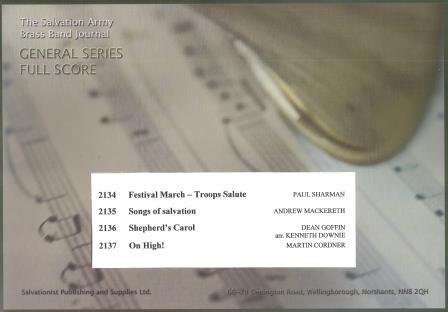
    We hope you enjoyed listening to the sound files for the 2017 Unity series.If you are interested in purchasing the music, each set contains 4 of the works.Festival March - To Victory (Andrew Blyth); A quiet moment (William Himes); Rivers of Mercy (Kenneth Downie); March - Tell! (Stephen Gibson).The sets contain a score and full set of parts.

    Estimated dispatch 7-14 working days
  • £19.95

    First Things First Vol.2 Full Score

    Following the success of Volume 1, here is Volume 2 containing 20 new pieces:Chorus Arrangement - Clap your Hands (Derick Kane)Easter Intrada (Nicholas Samuel)Father, we adore you ((Ralph Pearce)March - Give thanks to the Lord (Trevor Davis)Happy all the time (Martin Cordner)March - Hold On! (Erik Silfverberg)Holy Ground (Trevor Davis)Prelude - In this place (Nicholas Samuel)Marching Saints (Ralph Pearce)New Life (Ray Steadman-Allen)Intrada - O come. all ye faithful (Andrew Blyth)Send the Fire! (Erik Silfverberg)Soon and very soon (Derick Kane)March - Stand up for Jesus (Noel Jones)Song Arrangement - Thank You! ((Andrew Blyth)The Lord's my shepherd (Ray Steadman-Allen)There is a redeemer (Dean Jones)We give thanks (Ralph Pearce)Winter's Rock! (Andrew Blyth)Wonderful Lord (Martin Cordner)

    Estimated dispatch 7-14 working days
  • £39.00

    El Capitan (Brass Band - Score and Parts)

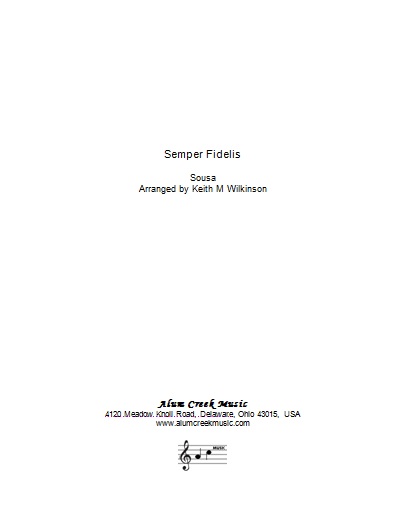
    El Capitan was originally an operetta which was first produced in Boston in 1896. It was initially very popular and there are occasional revivals even to this day. The march of the same title uses themes from the opera and was also published in 1896. One notable feature - resulting from the use of themes from the operetta - is the abrupt transition from 6/8 to 2/4 half way through the march.This arrangement was prepared for the 2013 Summer concerts of Brass Band of the Western Reserve, musical director Dr Keith M Wilkinson.

    Estimated dispatch 7-14 working days
  • £33.51

    Disinformation! (Brass Band) Joe Galuszka

    This atmospheric work by English composer Joe Galuszka is set in three movements: I. Fear II. Hope III. Solidarity (March for Truth) The composer writes: 'All around us is mistrust in the information we receive. Chinese misinformation. Russian disinformation. 'Fake News' in the United States. At every turn we doubt what we hear, what we see. Disinformation was composed in response to the ever-growing and all powerful misinformation campaigns worldwide that reached dizzying levels of influence, coming from some of the most eminent heads of states, during the turn of the 21st century. With division and disillusionment now rife and engrained in Western democracies, the unravelling of the social order is reflected in this short work for brass band. Opening with Fear, Disinformation starts with vast amounts of noise taking over the establishment and paints a world with people coming to terms with the cacophony of sound that is 'false information'. With a retreat to a brief moment of solace, Hope conjures up a calm escapism where on the outside, the brave and the wise look on to what is becoming of our new world. Maybe there is chance to pull together? Ending with a frenzied, brazen climax, the piece concludes with Solidarity - where people and the politicians come to loggerheads in a battle - where those who seek division are called out and the lies are laid bare for all to see, as we enter, once more, the unknown.' To listen to a recording of Solna Brassperforming the work please visit https://open.spotify.com/track/2gvPdCsvmykdWpm2yjz3Uk?si=68cc33805d16449c To view a rolling score video of this work please visit www.youtube.com/watch?v=z-0I47yfvM0 PDF download includes score and parts. Sheet music available from www.brassband.co.uk Difficulty Level: 1st Section + Length: 4.35 minutes Instrumentation: Soprano Cornet Eb Solo Cornet Bb Repiano Cornet Bb 2nd Cornet Bb 3rd Cornet Bb Flugel Horn Bb Solo Horn Eb 1st Horn Eb 2nd Horn Eb 1st Baritone Bb 2nd Baritone Bb 1st Trombone Bb 2nd Trombone Bb Bass Trombone Euphonium Bb Bass Eb Bass Bb Timpani Percussion 1-4 (Part 2 optional)

    In Stock: Estimated dispatch 1-3 working days
  • £7.44

    Euphonium Concerto with Brass Band (Karl Whelan) Soloist Copy

    *Karl Whelan's Euphonium Concerto with Brass Band is written in three linked movements: I: Prelude II: Aria III: Scherzo The first movement, Prelude, is in a mirror image sonata form and with its menacing ostinato sets the tone for the entire concerto and also introduces material on which the concerto is based. During this movement, the soloist has the opportunity to display their technical ability as well as the extremes of the instruments range. A chord based on the notes of the ostinato signal the beginning of the second movement, Aria. Here, material from the first movement has been weaved together and moves through a multitude of keys, the soloist is able to show the expressive side of the instrument to create an almost yearning, operatic aria. A reiteration of the 1st subject takes us into an almost march like figure at the beginning of the third movement, Scherzo. This is then interrupted both times by dance-like scherzo which, as with the rest of the concerto navigates itself through different keys leading to the cadenza that even the temple blocks have the the chance of participating in! The concerto concludes with almost a battle between the band (playing fragments of the first and second subjects from the first movement), and soloist who is attempting to have the last word! To view a follow-the-score video of the work please visit: www.youtube.com/watch?v=aEnou67XHqA To purchase the full band set please visit www.brookwrightmusic.com/product-page/euphonium-concerto-with-brass-band-karl-whelan *Please note this download only includes the soloist copy. Sheet music available from: UK - www.brassband.co.uk USA - www.solidbrassmusic.com Instrumentation: Euphonium Soloist Bb Soprano Cornet Eb Solo Cornet Bb 2nd Cornet Bb 3rd Cornet Bb Flugel Horn Bb Solo Horn Eb 1st Horn Eb 2nd Horn Eb 1st Baritone Bb 2nd Baritone Bb 1st Trombone Bb 2nd Trombone Bb Bass Trombone Euphonium Bb Bass Eb Bass Bb Timpani Percussion 1-3

    In Stock: Estimated dispatch 1-3 working days