
Results
-
 £34.95
A New Dawn (Tenor Horn Solo with Brass Band - Score and Parts)
Tenor Horn Solo with Brass BandA New Dawn (2013) was commissioned by and written for British tenor horn virtuoso Owen Farr in late 2013, to provide the title track of his new CD album. With a specific brief, the work was to include a bold ear-catching fanfare-esque opening to bring maximum impact to the opening of the album, before settling in a rhythmic groove which allows the new tempo and reduced texture to settle before the entry of the tenor horn, who's initial four bar motif is what forms the basis of much of the work. Following this, structurally, the work follows with a set of variations, carefully demonstrating the capabilities of the instrument and indeed the player. Bar 90 sees the return of the bold opening gestures, this time followed with a harmonic transformation, before a recapitulation at bar 120 which sees a return to the original tenor horn material and an increase in intensity, volume and virtuosity through to the close.A New Dawn was premiered by Owen Farr and the Cornwall Youth Brass Band on 30th December 2013, and was recorded by Owen and the Cory Band in March 2014, featuring as the title track on his CD release of the same name.
Estimated dispatch 7-14 working days
-
 £75.00
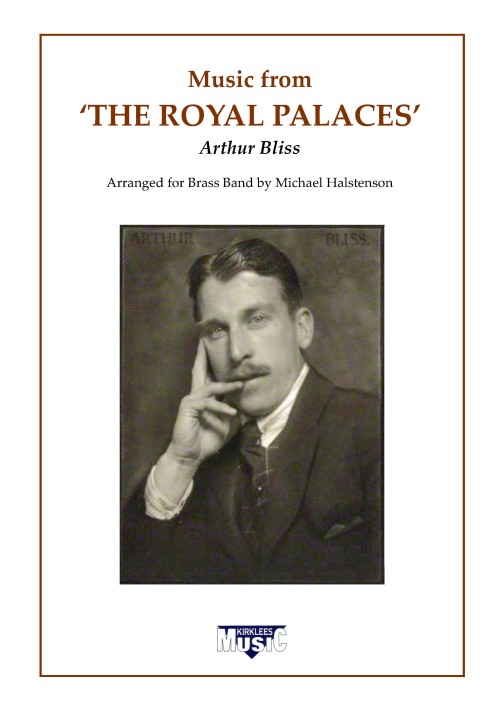
Music from The Royal Palaces (Brass Band - Score and Parts)
Selected as the Section 3 test piece for the National Brass Band Championships of Great Britain 2025Music from 'The Royal Palaces', arranged by Michael Halstenson in 2023, is also cast in five movements: the quietly regal 'Queen Victoria's Call to the Throne'; 'The Ballroom in Buckingham Palace' waltz evoking the gaiety of functions at Buckingham Palace; 'Joust of the Knights in Armour' (George V's reign) depicting knights preparing to joust; 'Melodrama' characterising the murder at Holyrood House (Edinburgh) of Mary, Queen of Scots' Secretary, David Rizzio; and the majestic 'The Royal Palace Theme' march.
Estimated dispatch 7-14 working days
-
£29.95
Music from The Royal Palaces (Brass Band - Score only)
Selected as the Section 3 test piece for the National Brass Band Championships of Great Britain 2025Music from 'The Royal Palaces', arranged by Michael Halstenson in 2023, is also cast in five movements: the quietly regal 'Queen Victoria's Call to the Throne'; 'The Ballroom in Buckingham Palace' waltz evoking the gaiety of functions at Buckingham Palace; 'Joust of the Knights in Armour' (George V's reign) depicting knights preparing to joust; 'Melodrama' characterising the murder at Holyrood House (Edinburgh) of Mary, Queen of Scots' Secretary, David Rizzio; and the majestic 'The Royal Palace Theme' march.
Estimated dispatch 7-14 working days
-
 £112.00
March Slav (Brass Band - Score and Parts) - Tchaikovsky, Peter Ilyich - Wilkinson, Keith M.
March Slav was composed in 1876 for a charity concert to support the war in the Balkans. It was completed in the remarkably short time of 5 days and was encored twice at its first performance! The themes are based loosely on Serbian folk songs and there is also a reference to the Russian national anthem. The mood is funereal in style at the opening but this gives way to a very triumphant style by the end.This arrangement was prepared for the 2007 Summer concerts of Brass Band of the Western Reserve, musical director Dr Keith M Wilkinson (www.bbwesternreserve.org). It has been recorded by BBWR on the CD Slides Rule!
Estimated dispatch 7-14 working days
-
£24.50
Wedding Music (Selections For A Wedding) - Various - Gavin Somerset
With more and more brass bands performing at weddings, having the correct music is essential for the couple's perfect day. With most of the traditional wedding music coming from large overtures & operas etc, this unique pack of music has been specially designed to minimise fuss (all 4 pieces are printed on just one sheet per part) and have just the "famous" bits included. Specially arranged by Gavin Somerset so that the pieces included can be performed from anything ranging from a full brass band to a brass quintet group and with repeats that can be cut or performed to tailor to each event. The pieces areaABRIDAL CHORUS (from Lohengrin) By Richard Wagner"Here comes the bride"aA is the standard march played for the bride's entrance at many formal weddings. The wedding between Elsa and Lohengrin however was almost an immidiate failure!PACHELBEL'S CANON By Johann PachelbelFormally known as the Canon & Gigue in D and originally composed for a string quartet, the Canon part of the composition has become a favorite at weddings, either as an alternative to the Bridal Chorus (above) or used during the signing of the register. The convention in the Baroque era would have been to play a piece of this type in the moderate to fast tempo, however at weddings it has become fashionable to play the work at a slow tempo.WEDDING MARCH (from "A Midsummer Night's Dream") By Felix MendelsshonPopularized by Princess Victoria's wedding to Prince Frederick William of Prussia and coupled with the Bridal Chorus for the entry of the bride, this Wedding March is often for the recessional at the end. Prelude to "Te Deum" By Charpentier Another item now popular in its use during weddings for its bright fanfares. Many composers have written music to the "Te Deum" text (Te Deum being an early Christian hymn of praise, used still regularly in the R.C Church). The prelude by Charpentier is by far one of the most famous
In Stock: Estimated dispatch 1-3 working days
-
 £29.50
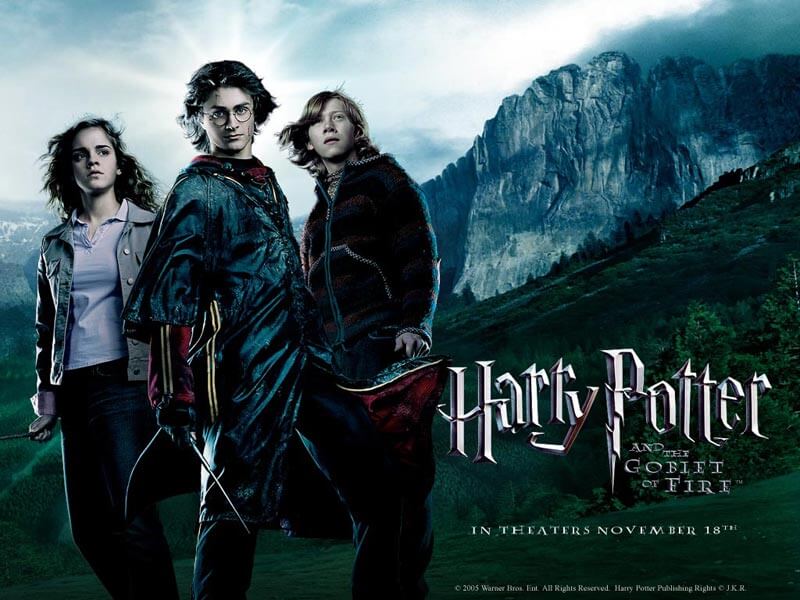
Hogwart's March - Patrick Doyle - George Marshall
From the fourth installation of the Harry Potter series comes 'Harry Potter & The Goblet of Fire'. This was the first of the Harry Potter films not to be scored by John Williams. Instead, Scottish Composer, Patrick Doyle was handed the gauntlet and he produced a gem of a score that lived up to the magic on screen. Although darker than the previous three films, the light-hearted 'Hogwart's March' featured predominantly at the Triwizard tournament. Now available for band, this work is perfect for band's looking to add a little magic to their programme. Instantly recognisable by the younger players and audience, and a different take on the traditional Brass Band march. To download the Solo Cornet part, please CLICK HERE . To download the Solo Horn part, please CLICK HERE . To download the Solo Euphonium part, please CLICK HERE . To download the playback audio to play along to, please RIGHT CLICK HERE & Save As .
In Stock: Estimated dispatch 1-3 working days
-
£24.50
Northwold - The ELB March - William Elsom
Sub-titled "The ELB March" as it was composed for the East London Brass band, this is a nice catchy march, ideal for the opening of a concert or 2nd half opener to a concert.
In Stock: Estimated dispatch 1-3 working days
-
 £24.50
White Rose March - J.P. Sousa - Rob Westacott
John Philip Sousa needs little introduction, however this lesser known March of his may do. Perhaps appealing to the bands of Yorkshire, Slaithwaite MD, Rob Westacott penned this arrangement for Slaithwaite brass band following their qualification to the National Championships in 2015. The traditional March format combined with Sousa's familiar style ensures that the work will be a favourite amongst both players and audiences alike.
In Stock: Estimated dispatch 1-3 working days
-
 £29.50
Friends of the Band - Ron Glynn
This lively new Concert March, "Friends of the Band", was written in recognition of those friends and supporters of all Brass Bands whose help financially and in all other ways, are invaluable in the successful running of the organisations. There is a slight hint of the song, "Dear Old Pals, Jolly Old Pals" in the first section which again embeds the feelings all players and conductors have towards our band's supporters. The work was originally composed for the Hook Norton Brass Band, when the composer's wife gave so much of her time encouraging supporters to become friends. This is a great addition to all bands' libraries and a way to pay tribute and thanks.
In Stock: Estimated dispatch 1-3 working days
-
 £37.35
March - The Stewards (Brass Band) Dave Collins
This rousing march by Dave Collins is a dedication to the remarkable group of volunteers - the unsung heroes - who, each year, organise and run the iconic Whit Friday brass band contests. They ensure that the heritage and tradition of this uniquely special event is not lost, preserving its ongoing and continued success. BrookWright is offering a 25% discount for bands who perform this march at the Whit Friday Contest. To claim the discount, please send a scan or photo of your band's adjudication card after the event to [email protected] Whit Friday, 'The Greatest Free Show on Earth', is synonymous with the brass band tradition. Its importance in the annual calendar to the players, supporters and spectators is vital to the Tameside and Saddleworth community. However, this mighty contest simply could not take place without the willing volunteers who dedicate their services year after year to keep this unique banding tradition going.Traditionally, on Whit Friday Morning, Hail! Smiling Morn (Roud #1346), also known as Praise Ye the Lord, is heard across the Saddleworth villages. This is where I have taken my inspiration, and the entire march is built upon quotes and references of this joyous work.The Stewards has many traditional elements drawing on the vast repertory of well-known marches, as well as some untraditional techniques and harmonies. The work aims to be a good test for the bands in its performance, but also fun and entertaining for the players and audiences alike - featuring a cheeky cornet solo, thunderous bass feature, and lyrical euphonium melodies, before concluding with a triumphant quote from the original source material.To you all who perform or hear this work, the stewards of the brass band tradition, HAIL! To view a follow-the-score video featuring Tredegar Town Band performing the work please visit www.youtube.com/watch?v=-CNgqvc534s PDF download includes score and parts, and comes in both A4 size and A5 landscape parts for marching purposes. A single page A5 conductor reduced score is also included. Sheet music available from: UK - www.brassband.co.uk USA - www.solidbrassmusic.com Difficulty Level: 3rd Section + Instrumentation: Soprano Cornet Eb Solo Cornet Bb Repiano Cornet Bb 2nd Cornet Bb 3rd Cornet Bb Flugel Horn Bb Solo Horn Eb 1st Horn Eb 2nd Horn Eb 1st Baritone Bb 2nd Baritone Bb 1st Trombone Bb 2nd Trombone Bb Bass Trombone Euphonium Bb Bass Eb Bass Bb Cymbals Side Drum Bass Drum
In Stock: Estimated dispatch 1-3 working days
 View Music