
Results
-
 £37.95
I Know Him so Well (Horn Feature with Brass Band - Score and Parts) - Wilkinson, Keith M.
A vibrant horn feature that puts your flugel and solo horn players in the spotlight, with the full horn section adding rich colour throughout.
Estimated dispatch 7-14 working days
-
 £37.37
El Camino A Belen - Trumpet Solo with Brass Band (Nick Simmons-Smith)
VIEW SCORE PDF This trumpet solo was written by Nick Simmons-Smith at the request of Dallas Brass Band for a Christmas concert featuring Elmer Churampi, international trumpet soloist. The solo features three Christmas songs: i. Mi Burrito Sabanero voy camino de Belen (With my donkey of the Savannah, I'm going to Bethlehem) ii. Noche de paz (Silent night) iii. Campana Sobre Campana (Bell above bells, O bells of Bethlehem) These songs are all very popular in Central and South America - including Peru, where Elmer Churampi is originally from. Each tune has been given a different Latin treatment producing a fast-slow-fast festive concert solo. The solo is not long, but each movement could be played individually. To view a video of Elmer Churampi performing the solo with Dallas Brass Band, please visit: www.youtube.com/watch?v=cpQCFXReEJg PDF download includes score and full set of parts. Sheet music available from: UK - www.brassband.co.uk USA - www.solidbrassmusic.com Instrumentation: Trumpet Soloist Bb Soprano Cornet Eb Solo Cornet Bb Repiano Cornet Bb 2nd Cornet Bb 3rd Cornet Bb Flugel Horn Bb Solo Horn Eb 1st Horn Eb 2nd Horn Eb 1st Baritone Bb 2nd Baritone Bb 1st Trombone Bb 2nd Trombone Bb Bass Trombone Euphonium Bb Bass Eb Bass Bb Percussion 1-3
In Stock: Estimated dispatch 1-3 working days
-
 £30.00
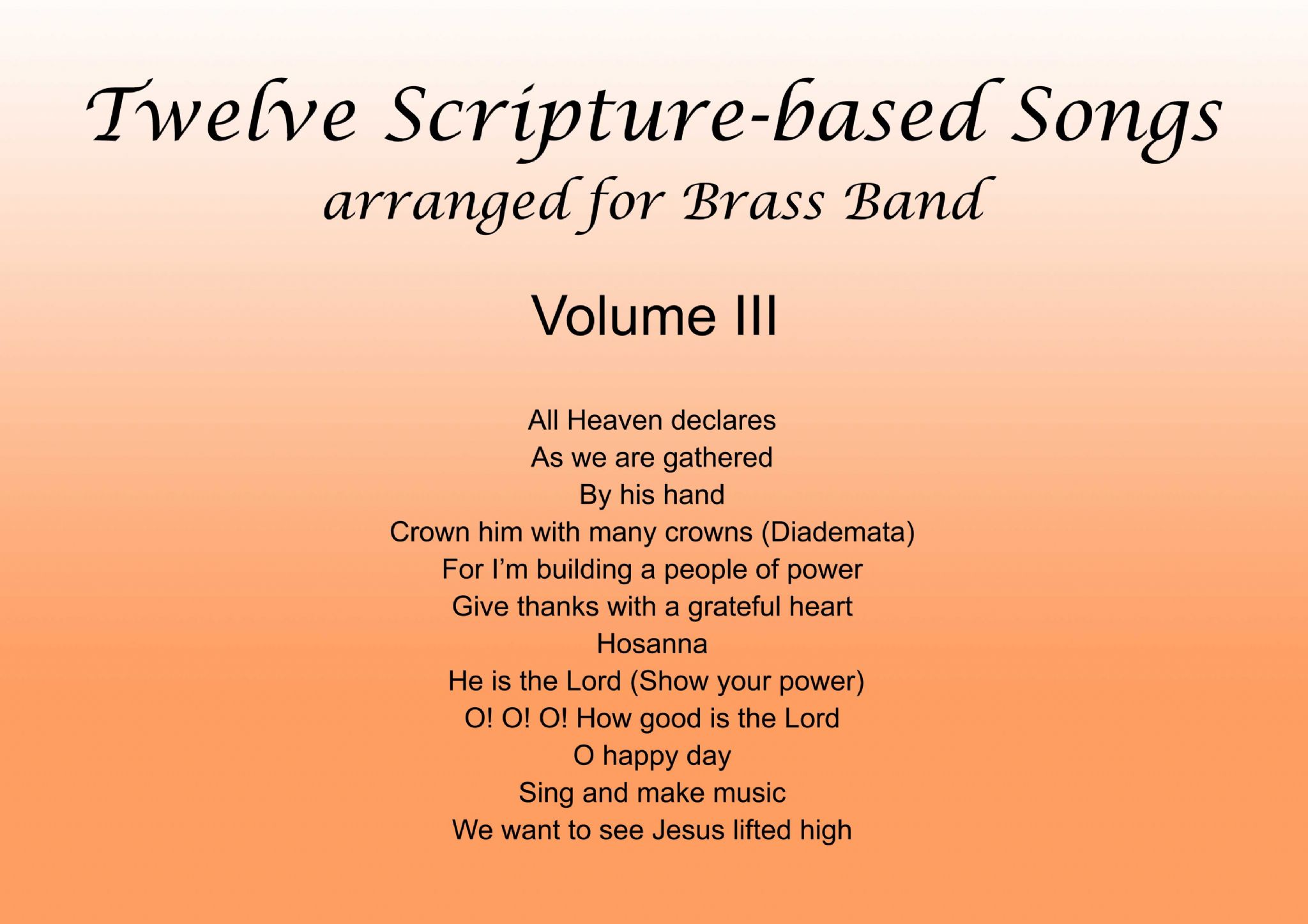
Twelve Scripture-Based Songs Volume III
Twelve scripture-Based Songs arranged for Brass Band (Volume III) are packaged and marketed in complete sets which include a full score and a set of master parts. It is intended that these parts be used as 'masters', for the purpose of photocopying a quantity of parts to accommodate the precise instrumentation needs of the band for which this has been purchased. All Heaven declaresAs we are gatheredBy his handCrown him with many crowns (Diademata)For I'm building a people of powerGive thanks with a grateful heartHosanna He is the Lord (Show your power)O! O! O! How good is the LordO happy daySing and make musicWe want to see Jesus lifted high
Estimated dispatch 7-14 working days
-
£35.00
I'M A BRASS BAND - Cy Coleman arr. A. Morrison
In Stock: Estimated dispatch 3-5 working days
-
 £154.60
Circius - Torstein Aagaard-Nilsen
The work is important for me because it was my first piece to be performed outside Norway. Black Dyke Band/David King performed it and did a recording of it in 1991. In the original score I quote a Swedish bishop (Olaus Mangnus) who lived in the 15th century. He travelled around Scandinavia and drew maps - very important historic material. When he came to the north of Norway (where I come from) he decribed the wind from the north as Ciricus: (something like) Worst of all winds is Circius, that revolves (?= turn upside down) heaven and earth. (Well, not a good translation Im afraid). The fast sections reflects the mighty winds from the north. In the middle section, I borrowed afolksong-like tune (by C. Elling, a Norwegian composer). The text (by Kristoffer Janson) tells about old times when the fishermen used open boats: they had to put their lives in the hands of God.
Estimated dispatch 5-14 working days
-
£74.99
Brilliant Beatles - Peter Kleine Schaars
There have been many arrangements of Beatles' songs for various kinds of ensembles, so rather than just producing a further medley of Beatles' hits, Peter Kleine Schaars has added a new twist to them with this excellent new work. All You Need Is Love and With a Little Help from my Friends pass by in a swing march, Michelle sounds like a newly composed ballad and When I'm Sixty Four is played in Dixie swing style. A Hard Day's Night is transformed into a funk theme with a samba interlude, Let It Be into a slowmarch, and Ob-La-Di, Ob-La-Da in a rock beat. Experience The Beatles as you have never heard them before.
Estimated dispatch 5-14 working days
-
 £84.99
Gandalf the Wizard - Johan de Meij
Johan de Meij's first symphony The Lord of the Rings is based on the trilogy of that name by J.R.R. Tolkien. This book has fascinated many millions of readers since its publication in 1955. The symphony consists of five separate movements, each illustrating a personage or an important episode from the book. This transcription for brass band, arranged by the composer has the following movements: I. GANDALF (The Wizard), IV. JOURNEY IN THE DARK (The Mines of Moria and The Bridge of Khazad-D m), V. HOBBITS. The symphony was written in the period between March 1984 and December 1987, and had its premiere in Brussels on 15th March 1988, performed by the The Royal Band ofthe Belgian Guides under the baton of Norbert Nozy. In 1989, the symphony The Lord of the Rings was awarded a first prize in the Sudler International Wind Band Composition Competition in Chicago, and a year later, the symphony was awarded a grant by the Dutch Composers Fund. In 2001, the orchestral version was premiered by the Rotterdam Philharmonic Orchestra and recorded by the London Symphony Orchestra.
Estimated dispatch 5-14 working days
-
 £89.99
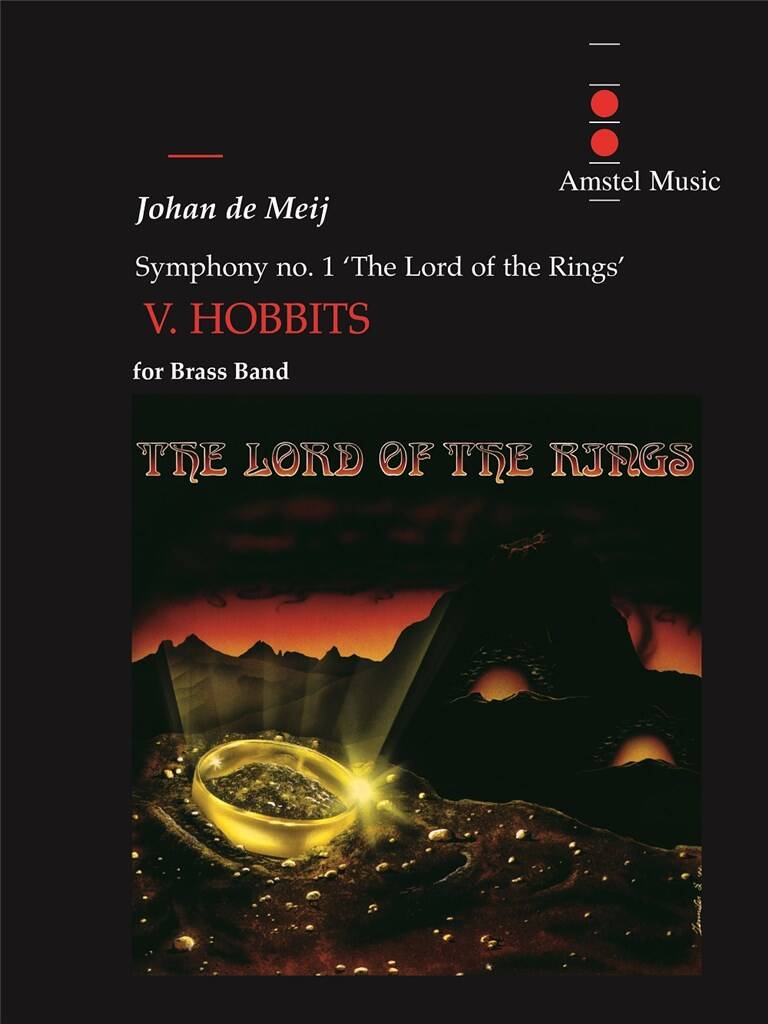
Hobbits - Johan de Meij
Johan de Meij's first symphony The Lord of the Rings is based on the trilogy of that name by J.R.R. Tolkien. This book has fascinated many millions of readers since its publication in 1955. The symphony consists of five separate movements, each illustrating a personage or an important episode from the book. This transcription for brass band, arranged by the composer has the following movements: I. GANDALF (The Wizard), IV. JOURNEY IN THE DARK (The Mines of Moria and The Bridge of Khazad-D m), V. HOBBITS. The symphony was written in the period between March 1984 and December 1987, and had its premiere in Brussels on 15th March 1988, performed by the The Royal Band ofthe Belgian Guides under the baton of Norbert Nozy. In 1989, the symphony The Lord of the Rings was awarded a first prize in the Sudler International Wind Band Composition Competition in Chicago, and a year later, the symphony was awarded a grant by the Dutch Composers Fund. In 2001, the orchestral version was premiered by the Rotterdam Philharmonic Orchestra and recorded by the London Symphony Orchestra.
Estimated dispatch 5-14 working days
-
 £89.99
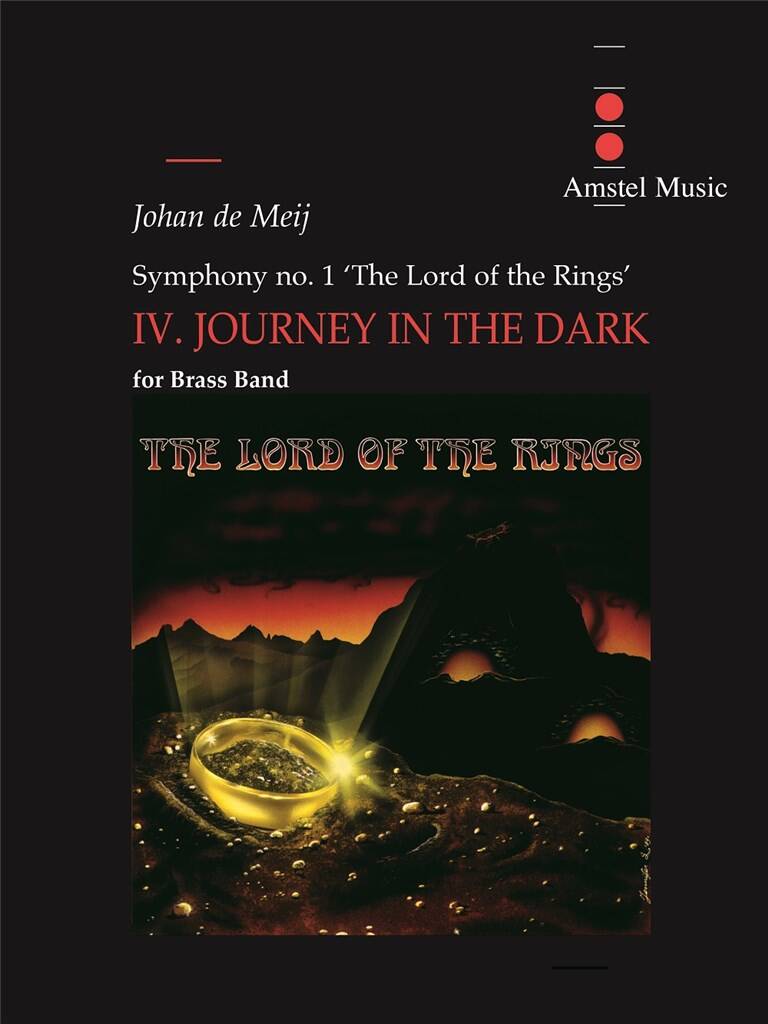
Journey in the Dark - Johan de Meij
Johan de Meij's first symphony The Lord of the Rings is based on the trilogy of that name by J.R.R. Tolkien. This book has fascinated many millions of readers since its publication in 1955. The symphony consists of five separate movements, each illustrating a personage or an important episode from the book. This transcription for brass band, arranged by the composer has the following movements: I. GANDALF (The Wizard), IV. JOURNEY IN THE DARK (The Mines of Moria and The Bridge of Khazad-D m), V. HOBBITS. The symphony was written in the period between March 1984 and December 1987, and had its premiere in Brussels on 15th March 1988, performed by the The Royal Band ofthe Belgian Guides under the baton of Norbert Nozy. In 1989, the symphony The Lord of the Rings was awarded a first prize in the Sudler International Wind Band Composition Competition in Chicago, and a year later, the symphony was awarded a grant by the Dutch Composers Fund. In 2001, the orchestral version was premiered by the Rotterdam Philharmonic Orchestra and recorded by the London Symphony Orchestra.
Estimated dispatch 5-14 working days
-
 £54.99
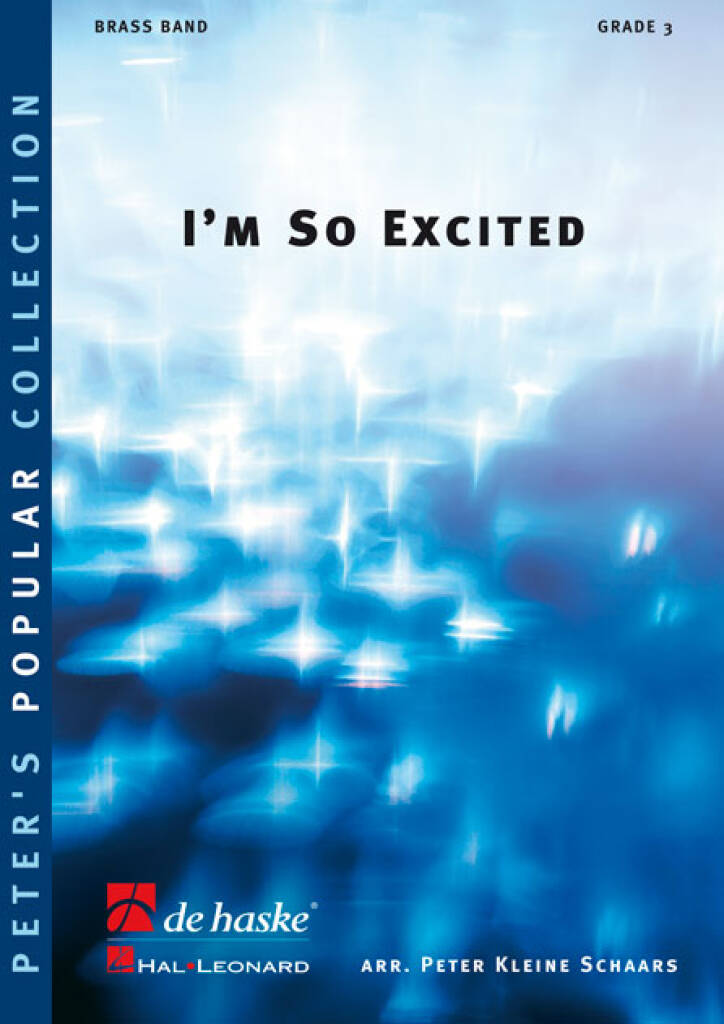
I'm So Excited - Peter Kleine Schaars
The sisters Ruth, Anita and June Pointer from West Oakland in California learned how to sing in the sixties in church where their father was a minister. At the beginning of the 1970s they entered the music business, where they proved to have a mastery of many styles - including rhythm & blues, jazz, and country. However, the Pointer Sisters acquired international fame at the beginning of the eighties with their soul-like pop music. A great hit was the up-tempo number I'm So Excited, which is still a success on every dance floor. This sparkling arrangement by Peter Kleine Schaars certainly provides the excitement that is suggested in the title.
Estimated dispatch 5-14 working days
 View Music