
Results
-
 £40.00
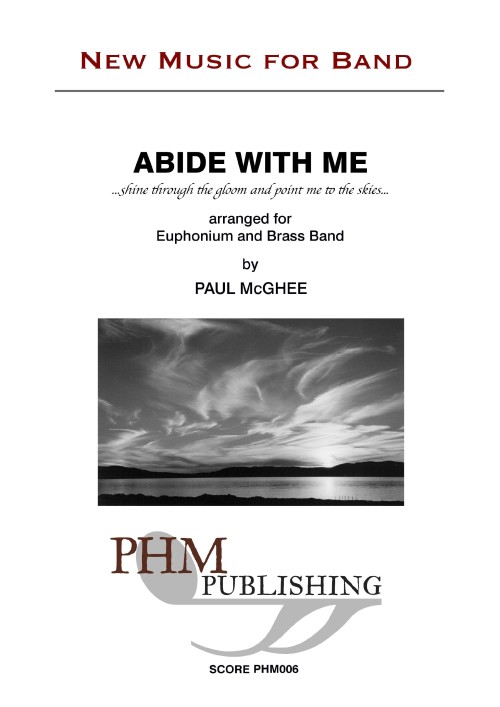
Abide With Me (Euphonium Solo with Brass Band - Score and Parts) - McGhee, Paul
My arrangement of William H. Monk's tune of 1861, uses the euphonium soloist as the central figure for the melodic line in the three verses. Surrounding the solo line is an irregular pulsed figure in the percussion to give the music an unsettled feel whilst the muted ensemble lightly colour the melodic contour of the soloist. From the low beginnings of the piece, where no high instrumentation is used, we are led through the darkened texture to a bright finale, although the sense of the forbidding is always present.Abide With Me has always been a favourite hymn of mine and it was when watching the film 28 Days Later that I believed it would make a rather striking arrangement for brass band. This was confirmed further when the hymn was used at the 2012 opening ceremony of the London Olympics. The juxtaposition between the static, slow moving melody and the rhythmic effects of the dancers was something that I thought could be captured in an arrangement.- Paul McGheeDuration: 5.00
Estimated dispatch 7-14 working days
-
 £87.99
Centennial Salute (Brass Band - Score and Parts) - Sparke, Philip
Just based on its title, this piece has to be celebratory and up-beat, which it is! It opens with a stately fanfare, first played on the low brass before the entire band joins in. This gives way to a contrasting lyrical theme which develops until it joins up with the fanfare to complete the opening section. A lively and heavily syncopated vivo follows, cast as a traditional march, complete with a 'bass strain' and trio. After the original march theme returns, a climax leads back to a reprise of the majestic opening, which brings the piece to an appropriately triumphant close.Duration: 7:30
Estimated dispatch 7-14 working days
-
 £89.95
The Trumpets of the Angels (Brass Band - Score and Parts) - Gregson, Edward
The Trumpets of the Angels was commissioned by the Fodens (Courtois) Band for their centenary concert at The Bridgewater Hall in 2000. It is based on a work written for the BBC Philharmonic and Huddersfield Choral Society in 1998, the starting point of which was a quotation from the Book of Revelation:and I saw the seven angels which stood before God; and to them were given seven trumpetsThus the idea behind the work is dramatic and I have tried to achieve this by the spatial deployment of seven solo trumpets around the band, four on-stage, the others off-stage. Six of the solo trumpets eventually join the band, but Trumpet 7 remains off-stage and, indeed, has the most dramatic and extended cadenza representing the words of the seventh angel ...and time shall be no more.The Trumpets of the Angels is a large-scale work, scored for seven solo trumpets, brass band, organ and percussion (deploying 'dark' instruments such as tam-tams, bass drum and two sets of timpani). The work opens with a four-note motif announced by off-stage horns and baritones and answered by fanfare figures on solo trumpets. In turn, each of the first four solo trumpets play cadenzas and then all four join together, independently playing their own music. The organ enters dramatically with its own cadenza, leading to the entry of solo trumpets 5 and 6 with music that is more urgent and rhythmic, describing the horsemen of the Apocalypse.The music reaches another climax, more intense this time, with the horns and baritones (now on-stage) again sounding the transformed motif, before subsiding into what might be described as a lament for humanity, slow music which builds from low to high, from soft to loud, with a melody that is both simple and poignant. At the climax, Trumpet 7 enters playing the opening four-note motif, dramatically extended to almost three octaves. This cadenza (to the partial accompaniment of tam-tams) introduces new material and foreshadows the ensuing scherzo which is fast and aggressive. Despite the somewhat desolate mood of this music, it slowly moves towards an optimistic conclusion, transforming the 'humanity' music into an affirmative and triumphant statement.- Edward Gregson
Estimated dispatch 7-14 working days
-
 £44.95
The Trumpets of the Angels (Brass Band - Score only) - Gregson, Edward
The Trumpets of the Angels was commissioned by the Fodens (Courtois) Band for their centenary concert at The Bridgewater Hall in 2000. It is based on a work written for the BBC Philharmonic and Huddersfield Choral Society in 1998, the starting point of which was a quotation from the Book of Revelation:and I saw the seven angels which stood before God; and to them were given seven trumpetsThus the idea behind the work is dramatic and I have tried to achieve this by the spatial deployment of seven solo trumpets around the band, four on-stage, the others off-stage. Six of the solo trumpets eventually join the band, but Trumpet 7 remains off-stage and, indeed, has the most dramatic and extended cadenza representing the words of the seventh angel ...and time shall be no more.The Trumpets of the Angels is a large-scale work, scored for seven solo trumpets, brass band, organ and percussion (deploying 'dark' instruments such as tam-tams, bass drum and two sets of timpani). The work opens with a four-note motif announced by off-stage horns and baritones and answered by fanfare figures on solo trumpets. In turn, each of the first four solo trumpets play cadenzas and then all four join together, independently playing their own music. The organ enters dramatically with its own cadenza, leading to the entry of solo trumpets 5 and 6 with music that is more urgent and rhythmic, describing the horsemen of the Apocalypse.The music reaches another climax, more intense this time, with the horns and baritones (now on-stage) again sounding the transformed motif, before subsiding into what might be described as a lament for humanity, slow music which builds from low to high, from soft to loud, with a melody that is both simple and poignant. At the climax, Trumpet 7 enters playing the opening four-note motif, dramatically extended to almost three octaves. This cadenza (to the partial accompaniment of tam-tams) introduces new material and foreshadows the ensuing scherzo which is fast and aggressive. Despite the somewhat desolate mood of this music, it slowly moves towards an optimistic conclusion, transforming the 'humanity' music into an affirmative and triumphant statement.- Edward Gregson
Estimated dispatch 7-14 working days
-
 £76.99
The Haunter of the Dark (Brass Band - Score and Parts) - Cesarini, Franco
The Haunter of the Dark is based on a tale by the author Howard Phillips Lovecraft (1890-1937) about a deserted church, where according to an old legend a monster had been lying low for years. A scientist who studies ancient religions visits this church. Besides some ancient writings he discovers a box, which contains a luminous stone. Every time the stone sheds its light, the scientist experiences all sorts of weird visions. The church in the tale actually exists, and can be found in Providence (USA). Franco Cesarini has visited it and sketches the mysterious and occult atmosphere in The Haunter of the Dark.Duration: 9:30
Estimated dispatch 7-14 working days
-
 £54.99
Festive (Brass Band - Score and Parts)
Bertrand Moren originally composed this march for the brass band Concordia of Bagnes in Switzerland, of which he is the conductor. Festive develops a sparkling and playful melodic line over a strong theme in the low brass section. This version for concert band is full of vitality and will bring a touch of liveliness to any concert. Festive is also suitable for an outdoor performance. 02:50
Estimated dispatch 7-14 working days
-
 £59.70
Gospels Go Rock (Brass Band - Score and Parts) - Woodfield, Ray
Slightly reduced Brass Band instrumentation (no rep cornet, no 2nd horn, no 2nd trombone part)Medley including:Joshua Fought the Battle of JerichoSinner, You KnowNobody Knows, the Trouble I've SeenSwing Low, Sweet ChariotCotton Need a-Pickin'Kumbayah
Estimated dispatch 7-14 working days
-
£89.95
TRUMPETS OF THE ANGELS - 2016 Edition (Gregson) (Brass Band - Score and Parts) - Gregson, Edward
The Trumpets of the Angels is a large-scale work, scored for seven solo trumpets (or cornets), brass band and percussion (deploying 'dark' instruments such as three tam-tams, bass drum and two sets of timpani). The genesis of the work is a quotation from the Book of Revelation ... and I saw the seven angels which stood before God; and to them were given seven trumpets.Thus the idea behind the work is highly dramatic and I have tried to achieve this by the spatial deployment of seven solo trumpets around the band. Trumpet 7 remains separate from the band throughout and, indeed, has the most dramatic and extended cadenza, representing the words of the seventh angel ... and time shall be no more.The work opens with a four-note motif announced by off-stage horns and baritones and answered by fanfare figures on four solo trumpets. In turn, each then play cadenzas before joining together, independently playing their own music. This leads to a sung Kyrie Eleison with accompanying solos for Flugel Horn and Baritone, after which we hear the entry of solo trumpets 5 and 6 with music that is more urgent and rhythmic, describing the Horsemen of the Apocalypse.The music reaches another climax, more intense this time, with the horns and baritones (now on-stage) again sounding the transformed motif, before subsiding into what might be described as a lament of humanity - slow, yearning music, which builds from low to high, from soft to loud, with a melody that is both simple and poignant. At its climax, Trumpet 7 makes a dramatic entry, playing the opening four-note motif, but expanded to almost three octaves. This cadenza (to the partial accompaniment of 3 tam-tams, representing the Holy Trinity) introduces new material and foreshadows the ensuing Scherzo, introduced by antiphonal timpani before the band enters with music that is fast and foreboding. Despite the somewhat desolate and 'unstable' mood of this music, it slowly moves towards an optimistic conclusion, transforming the 'humanity' music into an affirmative and triumphant statement.The original version of The Trumpets of the Angels was commissioned by the Fodens Band for their centenary concert at The Bridgewater Hall, Manchester, in 2000, and contained an important part for organ. In 2015 I was asked by Nicholas Childs to create a New Performing Edition for the Black Dyke Band; without organ, and including newly composed material. This New Performing Edition was given its first performance at the European Brass Band Festival in Lille in April 2016. The work is dedicated In tribute to Olivier Messiaen.- Edward Gregson
Estimated dispatch 7-14 working days
-
£44.95
TRUMPETS OF THE ANGELS - 2016 Edition (Gregson) (Brass Band - Score only) - Gregson, Edward
The Trumpets of the Angels is a large-scale work, scored for seven solo trumpets (or cornets), brass band and percussion (deploying 'dark' instruments such as three tam-tams, bass drum and two sets of timpani). The genesis of the work is a quotation from the Book of Revelation ... and I saw the seven angels which stood before God; and to them were given seven trumpets.Thus the idea behind the work is highly dramatic and I have tried to achieve this by the spatial deployment of seven solo trumpets around the band. Trumpet 7 remains separate from the band throughout and, indeed, has the most dramatic and extended cadenza, representing the words of the seventh angel ... and time shall be no more.The work opens with a four-note motif announced by off-stage horns and baritones and answered by fanfare figures on four solo trumpets. In turn, each then play cadenzas before joining together, independently playing their own music. This leads to a sung Kyrie Eleison with accompanying solos for Flugel Horn and Baritone, after which we hear the entry of solo trumpets 5 and 6 with music that is more urgent and rhythmic, describing the Horsemen of the Apocalypse.The music reaches another climax, more intense this time, with the horns and baritones (now on-stage) again sounding the transformed motif, before subsiding into what might be described as a lament of humanity - slow, yearning music, which builds from low to high, from soft to loud, with a melody that is both simple and poignant. At its climax, Trumpet 7 makes a dramatic entry, playing the opening four-note motif, but expanded to almost three octaves. This cadenza (to the partial accompaniment of 3 tam-tams, representing the Holy Trinity) introduces new material and foreshadows the ensuing Scherzo, introduced by antiphonal timpani before the band enters with music that is fast and foreboding. Despite the somewhat desolate and 'unstable' mood of this music, it slowly moves towards an optimistic conclusion, transforming the 'humanity' music into an affirmative and triumphant statement.The original version of The Trumpets of the Angels was commissioned by the Fodens Band for their centenary concert at The Bridgewater Hall, Manchester, in 2000, and contained an important part for organ. In 2015 I was asked by Nicholas Childs to create a New Performing Edition for the Black Dyke Band; without organ, and including newly composed material. This New Performing Edition was given its first performance at the European Brass Band Festival in Lille in April 2016. The work is dedicated In tribute to Olivier Messiaen.- Edward Gregson
Estimated dispatch 7-14 working days
-
 £54.95
WORLD WITHIN, A (Brass Band Parts) - Scott, Andy
Brass Band parts only. 'A World Within' is a one-movement work that starts with a simple theme stated by the Soprano Cornet before an ostinato figure in 6/8 time emerges (Vibraphone, Horns and muted 2nd and 3rd Cornets) over which firstly Solo Cornet, and then both Solo Cornets (1 & 2), play a sustained melody. A shift between major and minor harmonies characterises the 'B' section, before making way for a virtuosic Flugel solo. When the Flugel leaves centre stage the front line Cornets take over, leading to a full bodied reprise of the 'B' section. The low brass bridge the gap between what is in effect the end of the first main section of the piece and the second section. The constant time shift between 3/4 and 6/8 that has been prevalent through-out 'A World Within', re-emerges towards the end of the 'slow, heavy blues' section, leading into an intricate almost fugue-like passage (Horn and Baritone leading the way). Out of this comes a short transitional bridge section that leads us back to the (transposed) original 6/8 time theme and feel, this time scored with a bold directness that leads to a powerful 2/4 time passage. The climax of 'A World Within' is heralded by one dark and dissonant chord that is repeated three times. A flashback moment occurs where the 'hymn' is stated (muted Cornets) in a bitonal harmonic world. A final statement emerges from the denseness of sound, a re-working of the initial theme (Solo Cornet), with the last work being left to Solo Eb Bass. Dur: 13:00
Estimated dispatch 7-14 working days
 View Music