
Results
-
 £60.99
Everybody Needs Somebody (Brass Band - Score and Parts) - Oud, Thijs
Sadly Solomon Burke, King of Soul and outstanding rhythm-and-blues singer, passed away in 2010, leaving behind many unforgettable hits. One of his most well-known songs is Everybody Needs Somebody. Thijs Oud's arrangement captures all the swing and funk that was the spirit of Burke!Duration: 2:45
Estimated dispatch 7-14 working days
-
 £94.95
Dances and Arias (Brass Band - Score and Parts) - Gregson, Edward
This work was commissioned by Boosey & Hawkes Band Festivals (with funds provided by the Arts Council of Great Britain) for the National Brass Band Championships of Great Britain, held at the Royal Albert Hall, London, on 7th October 1984.Dances and Arias is in one continuous movement, but as the title suggests is a series of alternating fast and slow sections as follows: Dance - Aria I - Dance (scherzo) - Aria II - Dance. The opening dance is energetic and introduces a four-note motif (on trombones) which is the basis for much of the melodic material in the work. Throughout, there is a continuous process of thematic cross-reference and transformation.The first aria unfolds a long melody on solo cornet, eventually continued by all the solo cornets, and dissolving into a shimmering harmonic background (muted cornets, horns and baritones) over which is heard a brief self-quotation on solo tuba. This leads into the second dance, a frenetic scherzo, followed by the second aria, in the style of a lament (solo euphonium, followed by two flugel horns). This builds to a powerful climax which subsides, leaving the percussion to introduce the final toccata-like dance. It transforms material from the opening before a coda brings the music to a triumphant close. The large percussion section is an integral part in the work and uses a wide variety of instruments including timpani, glockenspiel, vibraphone, xylophone, tubular bells, tom-toms, snare drum, bongos and tam-tam.The work is dedicated to my brother and sister.- Edward GregsonDuration: 14.00
Estimated dispatch 7-14 working days
-
 £44.95
Dances and Arias (Brass Band - Score only) - Gregson, Edward
This work was commissioned by Boosey & Hawkes Band Festivals (with funds provided by the Arts Council of Great Britain) for the National Brass Band Championships of Great Britain, held at the Royal Albert Hall, London, on 7th October 1984.Dances and Arias is in one continuous movement, but as the title suggests is a series of alternating fast and slow sections as follows: Dance - Aria I - Dance (scherzo) - Aria II - Dance. The opening dance is energetic and introduces a four-note motif (on trombones) which is the basis for much of the melodic material in the work. Throughout, there is a continuous process of thematic cross-reference and transformation.The first aria unfolds a long melody on solo cornet, eventually continued by all the solo cornets, and dissolving into a shimmering harmonic background (muted cornets, horns and baritones) over which is heard a brief self-quotation on solo tuba. This leads into the second dance, a frenetic scherzo, followed by the second aria, in the style of a lament (solo euphonium, followed by two flugel horns). This builds to a powerful climax which subsides, leaving the percussion to introduce the final toccata-like dance. It transforms material from the opening before a coda brings the music to a triumphant close. The large percussion section is an integral part in the work and uses a wide variety of instruments including timpani, glockenspiel, vibraphone, xylophone, tubular bells, tom-toms, snare drum, bongos and tam-tam.The work is dedicated to my brother and sister.- Edward GregsonDuration: 14.00
Estimated dispatch 7-14 working days
-
 £39.95
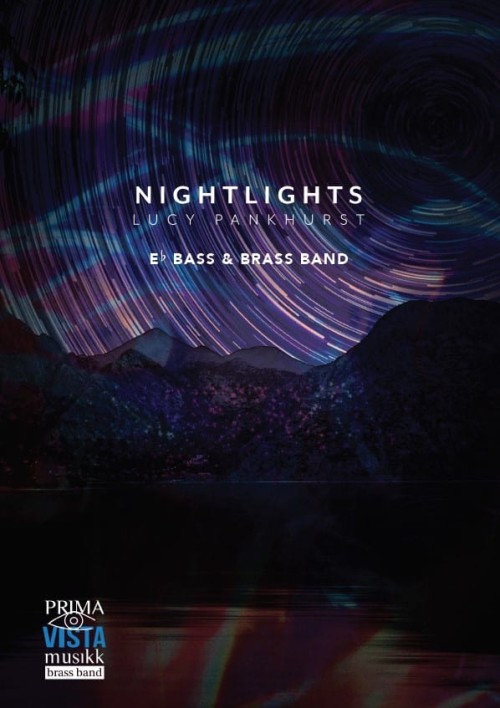
Nightlights (Eb Bass Solo with Brass Band - Score and Parts) - Pankhurst, Lucy
Nightlights was commissioned by Chris Jeans and Don Collins for Youth Brass 2000, to be used as part of their programme at the 2019 European Championships. Written during January 2019, Nightlights received its world premiere by Youth Brass 2000, conducted by Chris Jeans with Siobhan Bates as soloist, at the 2019 European Brass Band Championships in Montreux, Switzerland.Originally written as a Tenor Horn solo, this version for Tuba was arranged for and is dedicated to Dr Joanna Ross Hersey.Nightlights is intended to illustrate a winter's evening looking out across Lake Geneva from Montreux. Tiny lights appear beneath the mountains from faraway homes and vehicles, flickering in the distance and shimmering in the reflections on the water. Tiny, blinking nightlights against the inky blue of the clear sky. Thousands of stars shine above, blurring the boundaries between land, water, and the heavens into a sparkling ether. Transfixed, the bustle of sounds and lights from Montreux seems a lot further away than it is in reality. Eventually, each little light blinks out, one at a time, leaving the chill of the cold night air and an empty sky.Duration: 4.30
Estimated dispatch 7-14 working days
-
 £39.95
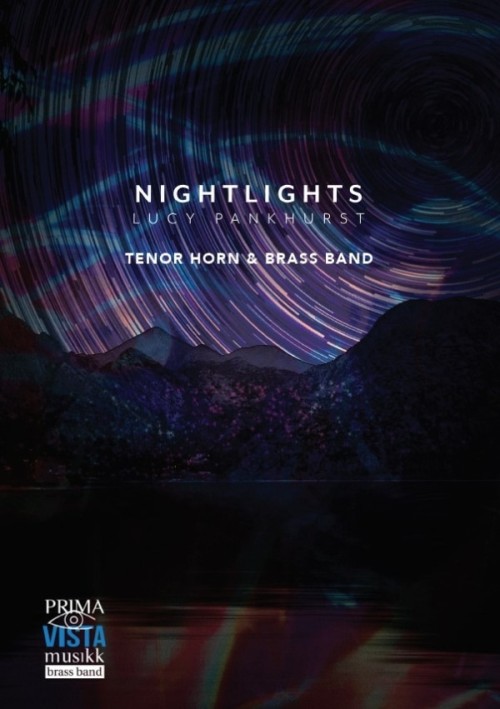
Nightlights (Tenor Horn Solo with Brass Band - Score and Parts) - Pankhurst, Lucy
Nightlights was commissioned by Chris Jeans and Don Collins for Youth Brass 2000, to be used as part of their programme at the 2019 European Championships. Written during January 2019, Nightlights received its world premiere by Youth Brass 2000, conducted by Chris Jeans with Siobhan Bates as soloist, at the 2019 European Brass Band Championships in Montreux, Switzerland.Nightlights is intended to illustrate a winter's evening looking out across Lake Geneva from Montreux. Tiny lights appear beneath the mountains from faraway homes and vehicles, flickering in the distance and shimmering in the reflections on the water. Tiny, blinking nightlights against the inky blue of the clear sky. Thousands of stars shine above, blurring the boundaries between land, water, and the heavens into a sparkling ether. Transfixed, the bustle of sounds and lights from Montreux seems a lot further away than it is in reality. Eventually, each little light blinks out, one at a time, leaving the chill of the cold night air and an empty sky.Duration: 4.30
Estimated dispatch 7-14 working days
-
 £30.00
O Mio Babbino Caro (from Gianni Schicchi) (Cornet Solo with Brass Band - Score and Parts) - Puccini, Giacomo - Littlemore, Phillip
O Mio Babbino Caro (Oh My Dear Papa) is taken from the opera Gianni Schicchi by Giacomo Puccini. It is sung by Lauretta after tensions between Schicchi and his prospective in-laws have reached a breaking point that threatens to separate her from Rinuccio, the boy she loves. It provides a contrasting interlude expressing lyrical simplicity and single-hearted love in the atmosphere of hypocrisy, jealousy, double-dealing and feuding in medieval Florence. The story of Gianni Schicchi concerns a rich old man who dies leaving all his possessions to the local monastery. His outraged relatives persuade Gianni Schicchi to impersonate the dead man and to dictate a new will. It is the second opera of Puccini's operatic triptych, which also includes?Il Tabarro?and?Suor Angelica. Duration: 2:00
Estimated dispatch 7-14 working days
-
 £30.00
O Mio Babbino Caro (from Gianni Schicchi) (Vocal Solo (Soprano) with Brass Band - Score and Parts) - Puccini, Giacomo - Littlemore, Phillip
O Mio Babbino Caro (Oh My Dear Papa) is taken from the opera Gianni Schicchi by Giacomo Puccini. It is sung by Lauretta after tensions between Schicchi and his prospective in-laws have reached a breaking point that threatens to separate her from Rinuccio, the boy she loves. It provides a contrasting interlude expressing lyrical simplicity and single-hearted love in the atmosphere of hypocrisy, jealousy, double-dealing and feuding in medieval Florence. The story of Gianni Schicchi concerns a rich old man who dies leaving all his possessions to the local monastery. His outraged relatives persuade Gianni Schicchi to impersonate the dead man and to dictate a new will. It is the second opera of Puccini's operatic triptych, which also includes?Il Tabarro?and?Suor Angelica. Duration: 2:00
Estimated dispatch 7-14 working days
-
 £99.95
SEA PICTURES (Brass Band - Score and Parts) - Sparke, Philip
An atmospheric and descriptive work, Sea Pictures is in three sections. The quiet but very difficult opening describes the sea at dawn when all is still save for the cries of the early-morning gulls and deep movements of the sea itself. The sun rises and the next section pictures it glistening and sparkling on the waves. A school of playful dolphins passes. As they swim into the distance we are alone again with the sun and the waves. But there are distant rumblings; from far away a storm approaches. Cool breezes disturb the surface of the sea as it clouds over. And then the storm is upon us, turning the sea into the most awful force in all nature. Then, as suddenly as it had begun, it abates, leaving the sea once again serene in sunlight. All is calm but, as the work fades to a close, distant claps of thunder remind us that we are always at the mercy of the power and ficklesness of nature. Championship section. Duration 20:13
Estimated dispatch 7-14 working days
-
£57.95
SEA PICTURES (Brass Band - Score only) - Sparke, Philip
An atmospheric and descriptive work, Sea Pictures is in three sections. The quiet but very difficult opening describes the sea at dawn when all is still save for the cries of the early-morning gulls and deep movements of the sea itself. The sun rises and the next section pictures it glistening and sparkling on the waves. A school of playful dolphins passes. As they swim into the distance we are alone again with the sun and the waves. But there are distant rumblings; from far away a storm approaches. Cool breezes disturb the surface of the sea as it clouds over. And then the storm is upon us, turning the sea into the most awful force in all nature. Then, as suddenly as it had begun, it abates, leaving the sea once again serene in sunlight. All is calm but, as the work fades to a close, distant claps of thunder remind us that we are always at the mercy of the power and ficklesness of nature. Championship section. Duration 20:13
Estimated dispatch 7-14 working days
-
 £74.99
THE BANKS OF GREEN WILLOW (Brass Band - Score and Parts) - Butterworth, George - Wilson, Duncan
George Butterworth (1885-1916) was an English composer who died at a very young age, leaving behind few compositions. One of his best known and regularly played works is The Banks of Green Willow. People who have studied his work agree that Butterworth displayed great potential which would have flourished were it not for his untimely death. Duncan Wilson's arrangement makes Butterworth's imagination accessible. Duration: 5:00
Estimated dispatch 7-14 working days
 View Music