Results
-
£60.99
Last Christmas - George Michael - Andrew Watkin
George Michael has been in the pop charts for may years, initially with the group Wham and later as a solo artist. Last Christmas was one of the last songs written whilst still in Wham and has now become a Christmas classic.
Estimated dispatch 5-14 working days
-
 £105.20
Our Last Summer - Benny Andersson - Bjørn Morten Kjærnes
An exciting arrangement where almost all players have a bit of the melody line. There are many opportunities to give individual musicians soloistic challenges. Any bandmember should find something interesting in this piece. It will be possible to add vocals to the arrangement. A lovely melody with great expressions.Our Last Summer" is a song by the Swedish pop group ABBA from their seventh studio album, "Super Trouper," released in 1980. The song is indeed featured in the musical "Mamma Mia!", a little bit shortened and with small changes in the lyrics. The musical premiered in London's West End in 1999 and is a duet performed by the characters Harry Bright and Donna Sheridan, reflecting on their past romance during a summer spent in Paris.The song is primarily sung by Bjorn Ulvaeus, with backing vocals provided by Agnetha Faltskog and Anni-Frid Lyngstad, the female members of ABBA. Their harmonies contribute to the song's nostalgic and wistful atmosphere. The lyrics vividly describe the memories of the summer spent together, including scenes of walking along the Seine River in Paris and listening to French songs. The song also touches on the passage of time and the realization that the summer romance has ended.While not released as an official single in most countries, "Our Last Summer" still received considerable airplay and became a fan favorite. It charted in some European countries and has remained popular among ABBA fans over the years.
Estimated dispatch 5-14 working days
-
 £72.99
Pagan Songs - Etienne Crausaz
Written in three movements without a break, this work was inspired by melodies of a popular nature. The first movement features two opposing modal melodies: one is very bright and lively, the other dark and tuneful. Various motifs are developed to offer highly contrasting musical events. The second movement is very peaceful, with a melody resembling a lullaby. To conclude the piece, the last movement delivers a festive dance with a swing feel. Commissioned by the Swiss Music Association, this very accessible work is mostly intended for small ensembles or those with mixed instrumentation. The duration and conception of this piece makes it ideal for competitions and concerts alike.
Estimated dispatch 5-14 working days
-
 £15.99
'tis The Last Rose Brass Band - Traditional
It is often thought that this melody came from the Victorian era, when Irish songs were very popular, however this Air was first published in 1813 and has been adapted and arranged by many composers and arrangers over theyears. This arrangement, as a Flugel Horn solo, by Gary Westwood is a new treatment and shows off this tender and wistful love song.
Estimated dispatch 5-14 working days
-
 £60.99
Last Christmas (Brass Band - Score and Parts) - Michael, George - Watkin, Andrew
George Michael has been in the pop charts for may years, initially with the group Wham and later as a solo artist. Last Christmas was one of the last songs written whilst still in Wham and has now become a Christmas classic.Duration: 3:00
Estimated dispatch 7-14 working days
-
£15.99
Tis The Last Rose Of Summer (Score & Parts) - Traditional
It is often thought that 'Tis the Last Rose of Summer came from the Victorian era, when Irish songs were very popular. However this was first published in 1813 and has been adapted and arranged by many composers and arrangers over the years. This arrangement, as a Flugel Horn solo, by Gary Westwood reveals the tenderness in this wistful love song.Brass Band Grade 4: Advanced Youth and 3rd SectionDuration: 5 minutes
In Stock: Estimated dispatch 1-3 working days
-
 £14.99
Tis the Last Rose of Summer (Flugel Horn Solo with Brass Band - Score and Parts)
It is often thought that Tis the Last Rose of Summer came from the Victorian era, when Irish songs were very popular. However this was first published in 1813 and has been adapted and arranged by many composers and arrangers over the years. This arrangement, as a Flugel Horn solo, by Gary Westwood reveals the tenderness in this wistful love song. Suitable for Advanced Youth/3rd Section Bands and above. Duration: 5.00
Estimated dispatch 7-14 working days
-
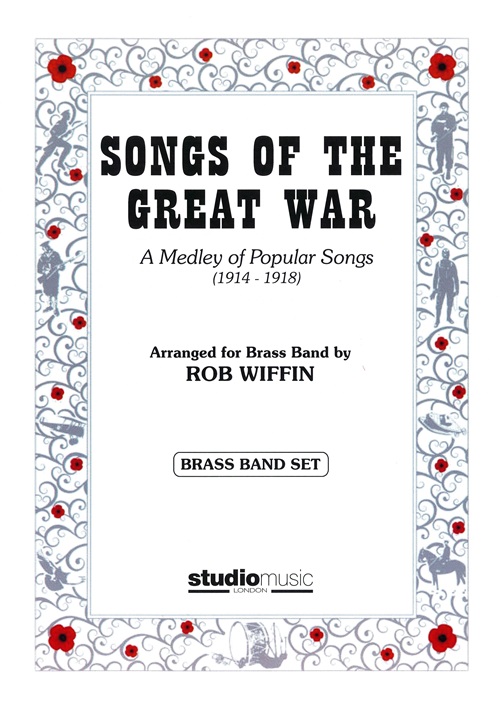 £54.95
Songs of the Great War (Brass Band - Score and Parts) - Wiffin, Rob
A Medley of Popular Songs, 1914 - 1918Music of the Great War is a five year project to use music of the period to educate and engage schools, colleges, town bands, and the wider public across the UK and the world to learn in a positive way about the events, the experience of the troops involved from all sides, and how music played its part.This year, to commemorate the centenary of the Great War a specially arranged medley Songs of the Great War has been created. The medley has been arranged for bands to rehearse and eventually perform on the 11 November 2015. It brings together some of the most popular tunes played, sung and performed by the men and women of the time - in the trenches and on the various home fronts.With the support of many countries and organisations, on the 11 November the medley will be first played in New Zealand and Australia. It will ripple east across the world being performed in countries like India and Pakistan before hitting Europe and onwards to include performances in Canada and the Caribbean. This could become one of the most played pieces of music in a 24-hour period.In Britain, there will be performances across the country, including some at key events and sites involving a wide range of military and non-military personnel.The medley includes:It's a Long Way to TipperaryYour King and Country Want YouGood Bye-eeOh! It's a Lovely WarHello! Hello! Who's Your Lady FriendTake Me Back to Dear Old BlightyMademoiselle from ArmentieresThere's a Long, Long Trail A-windingIf You Were the Only Girl in the WorldPack Up Your Troubles (In Your Old Kit Bag)Old Soldiers Never Die/Last Post
Estimated dispatch 7-14 working days
-
 £15.99
Tis the Last Rose of Summer (Flugel Horn Solo with Brass Band - Score and Parts) - Westwood, Gary
It is often thought that 'Tis the Last Rose of Summer came from the Victorian era, when Irish songs were very popular. However this was first published in 1813 and has been adapted and arranged by many composers and arrangers over the years. This arrangement, as a Flugel Horn solo, by Gary Westwood reveals the tenderness in this wistful love song. Suitable for Advanced Youth/3rd Section Bands and above. Duration: 5.00
Estimated dispatch 7-14 working days
-
 £72.99
Pagan Songs (Brass Band - Score and Parts) - Crausaz, Etienne
Written in three movements without a break, this work was inspired by melodies of a popular nature. The first movement features two opposing modal melodies: one is very bright and lively, the other dark and tuneful. Various motifs are developed to offer highly contrasting musical events. The second movement is very peaceful, with a melody resembling a lullaby. To conclude the piece, the last movement delivers a festive dance with a swing feel. Commissioned by the Swiss Music Association, this very accessible work is mostly intended for small ensembles or those with mixed instrumentation. The duration and conception of this piece makes it ideal for competitions and concerts alike.Duration: 7.00
Estimated dispatch 7-14 working days
 Listen to MP3
 View Music