
Results
-
 £60.99
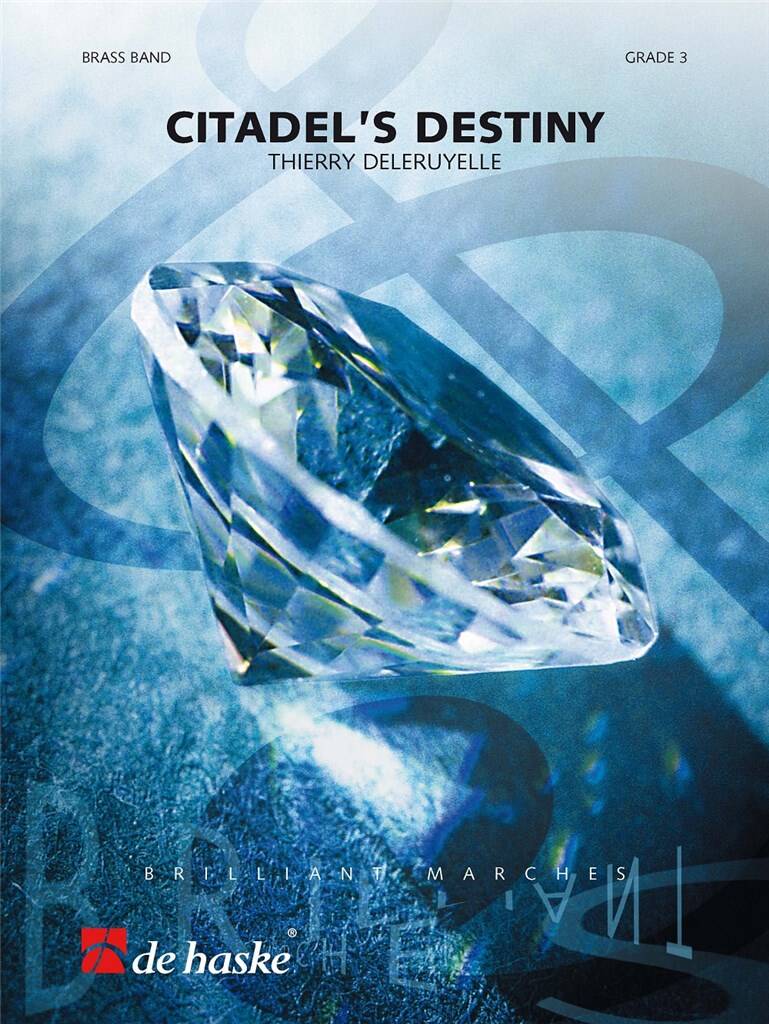
Citadel's Destiny - Thierry Deleruyelle
Citadel's Destiny is a march that can be performed either in concert or on parade. It was commissioned by the Musique de l'Infanterie de Lille. A special feature is that it adheres to the conventional codes of military marches, albeit with a modern twist. The title refers to the citadel built by Vauban in Lille, "The Queen of Citadels", with which the band shares a destiny. This march is still performed by the Infantry Band as part of their traditional concert repertoire.
Estimated dispatch 5-14 working days
-
 £104.99
Kefas - Rob Goorhuis
The composition Kefas was written for the brass band 'Apollo' from Grou (The Netherlands), by order of the Unisono Foundation, the organisation for wind music in The Netherlands.The assignment was given on account of earning the Champions Title during the Dutch Brass Band Championships in the year 2001 (4th division). The theme of the composition links the tradition of the village Grou, not to celebrate Sint Nicolaas but Sint Pieter.By this typical Dutch festivity (in December) the holy Nicolaas gives presents to the children. It is a popular custom where young and old participate. Grou is the only place where this is not done by Sint Nicolaas but by Sint Pieter.Apart from that, on the 22th of Februari, a lot of festivities that take place,resemble those of the Sinterklaas celebration. In the composition two Sint Pieter songs are processed, set through bible scenes, wherein in among others the visit of Christ to the house of Peter's Mother-in-law and the calling of Peter are depicted. The title refers to the pronouncement of Christ, where he named Peter the rock on which he shall build his church. The Hebrew word for rock is Kephas. Kefas was premiered in 2003.
Estimated dispatch 5-14 working days
-
 £76.99
Variations on Shalom Chaverim - Andreas Ludwig Schulte
Shalom Chaverim is an ancient Hebrew (farewell)song, which was originally sung at the end of a celebration or meeting. It was and is mostly sung as a round. Freely translated the words mean "Goodbye, friends, goodbye and see you again!". The varying moods at a parting have been captured very well by Andreas Schulte in his arrangement 'Variations on Shalom Chaverim'. The composer himself says about the song, 'Although the melody is in a minor key, the overall atmosphere in the song is positive. one wishes each other all the best. Saying goodbye, however, also hurts. When you slow down the pace of the melody and add 'blue notes' in the harmonies, this can be sensed immediately.'Schulte refers here to the first variation. The second variation is very intense with possibly even deeper-felt emotions. 'Variations on Shalom Chaverim' ends on a cheerful and positive note, in fast tempo, and with oriental elements in the melody: 'L'hitra'ot, Shalom' (See you again, and farewell!).
Estimated dispatch 5-14 working days
-
 £147.10
Rainforest Concerto - Saskia Apon
Rainforest Concerto has been commissioned by the Brass Band Rijnmond. This double concerto for two trombones and wind band consists of three parts with the cadenza in the slow niddle movement. Saskia Apon was inspired by the threat of the destruction of the rainforest. In the first part, Creation, we hear an accelerated reproduction of the birth of this impressive natural phenomenon. We hear the first birds, we see the growth of the mangrove trees and we witness the struggle for light and the force necessary to keep the realized equilibrium in a perpetual balance.The second part, Ode, is a tribute to the wonder and splendour of the rainforest. By means of subtle and extremely delicate sonorities we hear how nature adds an inestimable value to the rainforest. However it is also extremely fragile and this engenders a certain melancholy due to the awareness of man's impotence to respect this beautiful nature.In the last part, Contra Demolition, we hear the threatening decline, but also the revolt against this possible ruin. It is a heartfelt cry to leave nuture in peace and to work hard for the preservation of the beauty and the value of the rainforest.
Estimated dispatch 5-14 working days
-
 £105.20
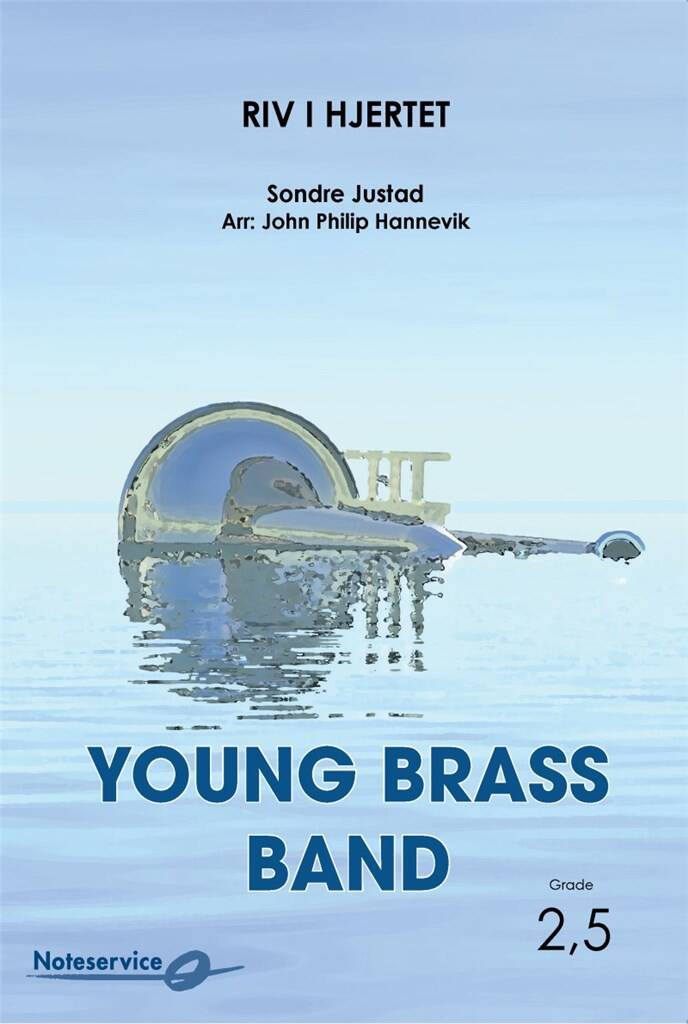
Riv i hjertet - Sondre Justad - John Philip Hannevik
The singer/ songwriter Sondre Justad was born in Lofoten in the north of Norway in 1990. His first album Riv i hjertet was released in 2015, and it became a huge success. He got very fine reviews in some of the largest norwegian newspapers, and the title-song was played frequently on the national radio-stations. The song title could loosely be translated as pulling at my heartstrings, and the song has a deep and dark meaning, with the opening lyrics sounding: If I knew - that I would be dying soon, would I be happy with the way I am living my life Please note that the repeating figures in upper cornets should never be dominant, they should only provide texture tothe accompaniment.
Estimated dispatch 5-14 working days
-
 £154.99
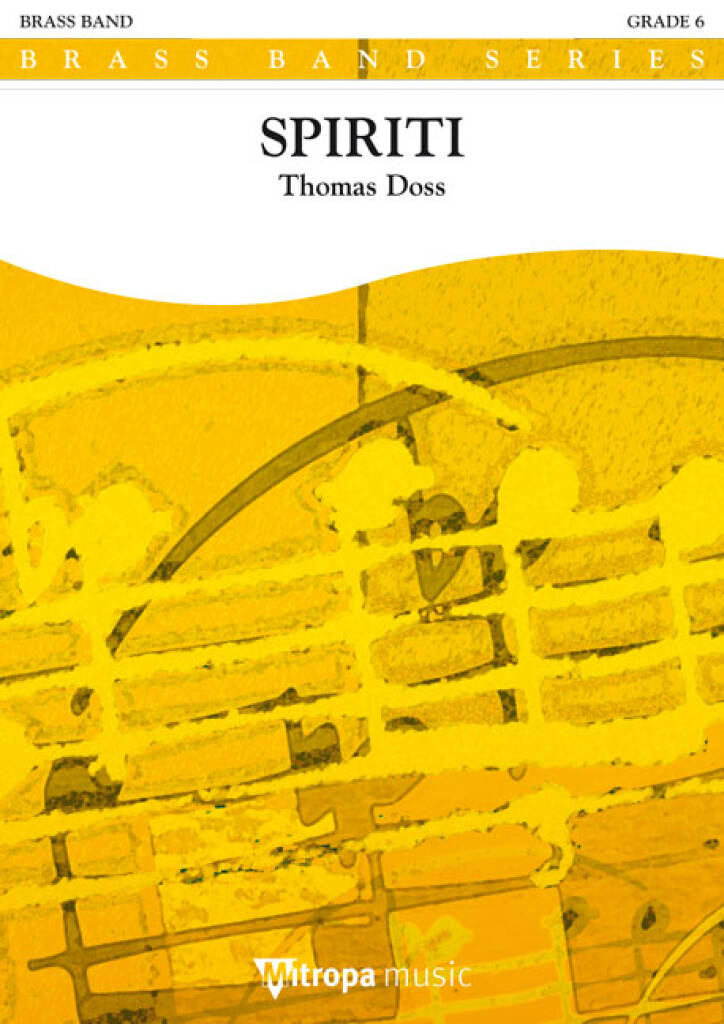
Spiriti - Thomas Doss
A Bach chorale stands at the centre of this work (Fur deinen Thron tret ich hiermit).Anton Bruckner was one of Johann Sebastian Bach's great admirers. His work is full of the spirit of that musical genius. For Thomas Doss, it was Bruckner's spirit that always seemed to be with him while working on Spiriti. Bruckner's spirit is captured in this composition by a quote from the chorale of his Fifth Symphony at the end of the piece.The introduction, written in the style of a funeral march, already displays the first fragments of the chorale. Like splinters they are strewn throughout the first Allegro, combining and recombining in turbulent, powerful tuttipassages. As the music becomes more rambunctious, the Bach-like fragments begin to swirl around each other, only to be scattered once more.The middle-section is of a more pensive nature. The Religioso character gives the audience time to reflect. The music is meditative and the quarter-note (or crotchet) elements mimic a soul that is yearning and crying out.The third part of the piece finally leads, by way of minimalist elements and the fragments mentioned earlier, to a magnificent presentation of the Bach chorale. As the church bells ring out, one can almost hear the great masters presiding at the organ.
Estimated dispatch 5-14 working days
-
 £115.60
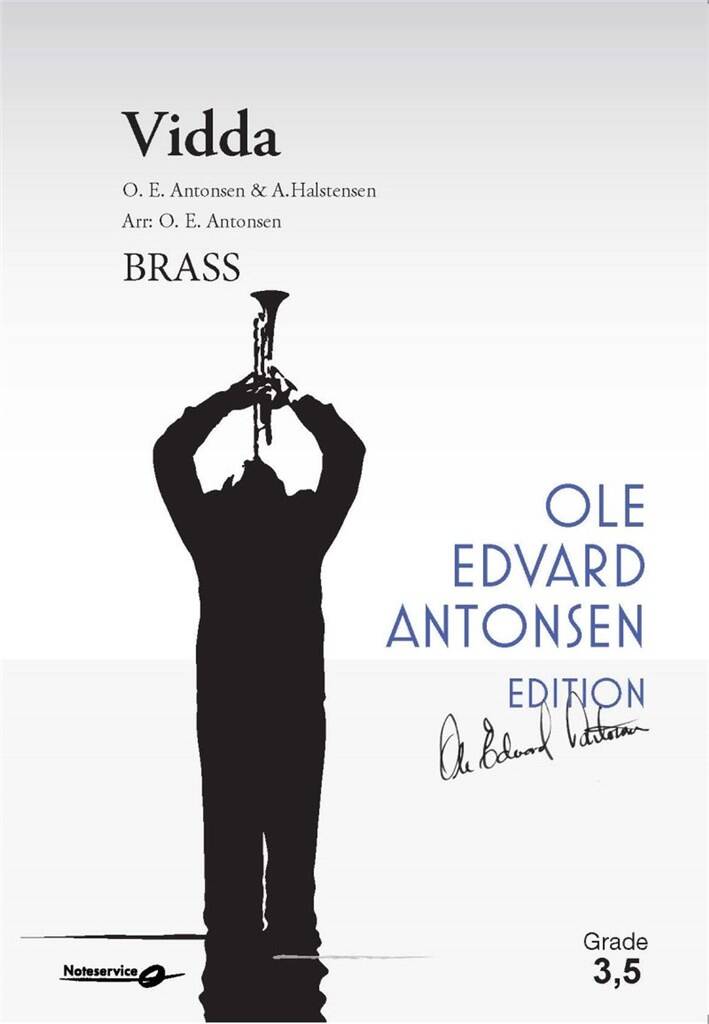
Vidda - Ole Edvard Antonsen - Ole Edvard Antonsen
I composed the song "Vidda" after I got my ultimate boy's dream fulfilled; To fly one of the Air Force's F-16 fighter jets! We flew out from Norwegian city Bodo on to the Finnmark plateau, where we flew so-called "low level" (at low altitude). It was such a great experience for me that I immediately wrote the song "Vidda" based on my experience of the trip. Here, I try to describe the meeting between the technical perfection of a machine that surpasses most of the various forces in it's escape through the magnificent scenery passing at great speed, and the pilot who is alone with both the adventure and responsibility. The drums which start the song is meant to describes theenergy in the power of the plane, while the lonely and kind of melancholy melody from the trumpet in the beginning describes the feelings of the pilot. As the song develop, we pass both the mountains and big beautiful plateaus with g-forces quivering body. Hopefully you will share some of my experiences through this song. Have a nice flight! Ole Edvard Antonsen
Estimated dispatch 5-14 working days
-
 £105.00
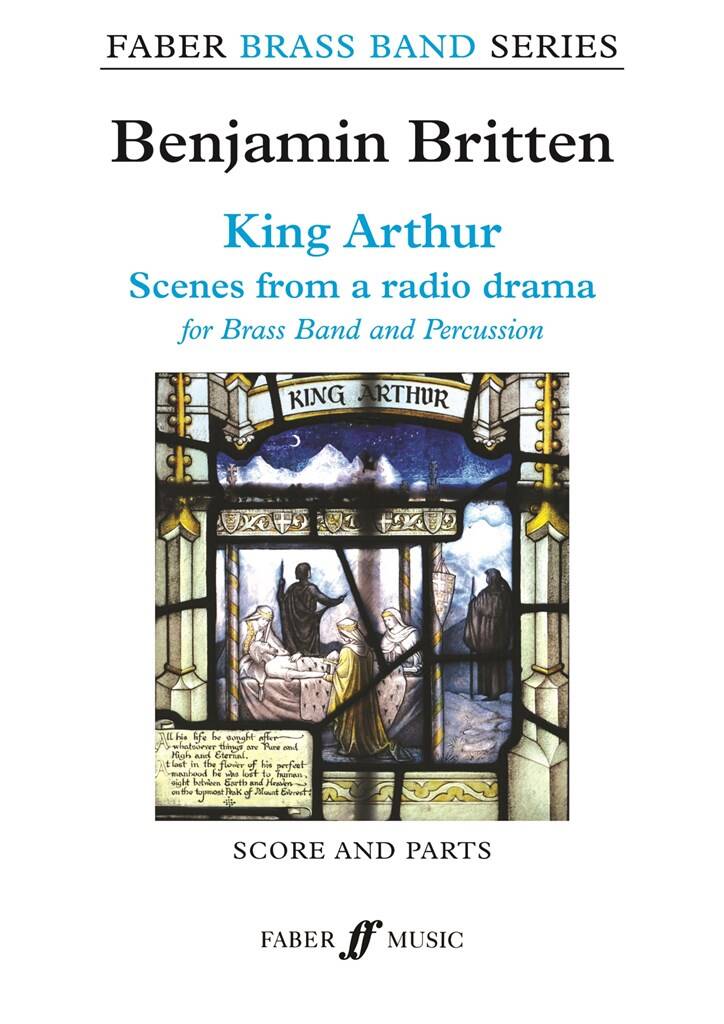
King Arthur - Benjamin Britten
King Arthur was the first of 28 scores Benjamin Britten (1913-1976) composed for radio between 1937 and 1947. It was an ambitious dramatisation of King Arthur's life and times - part pageant, part play, partcantata - written by D.G. Bridson. This colourful suite incorporates the Introduction, a dramatic Wild Dance, some of the music underscoring the scenes for Galahad and The Holy Grail, and two vividbattle scenes, ending with The Final Battle and Apotheosis. King Arthur (scenes from a radio drama) for brass band should not be confused with a much longer orchestral suite which Paul Hindmarsh devised from the same sourcein1995. King Arthur (scenes from a radio drama) will be played by the 20 First Section finalists on 16th September 2018 at this year's National Brass Band Championships of Great Britain.
Estimated dispatch 5-14 working days
-
 £91.99
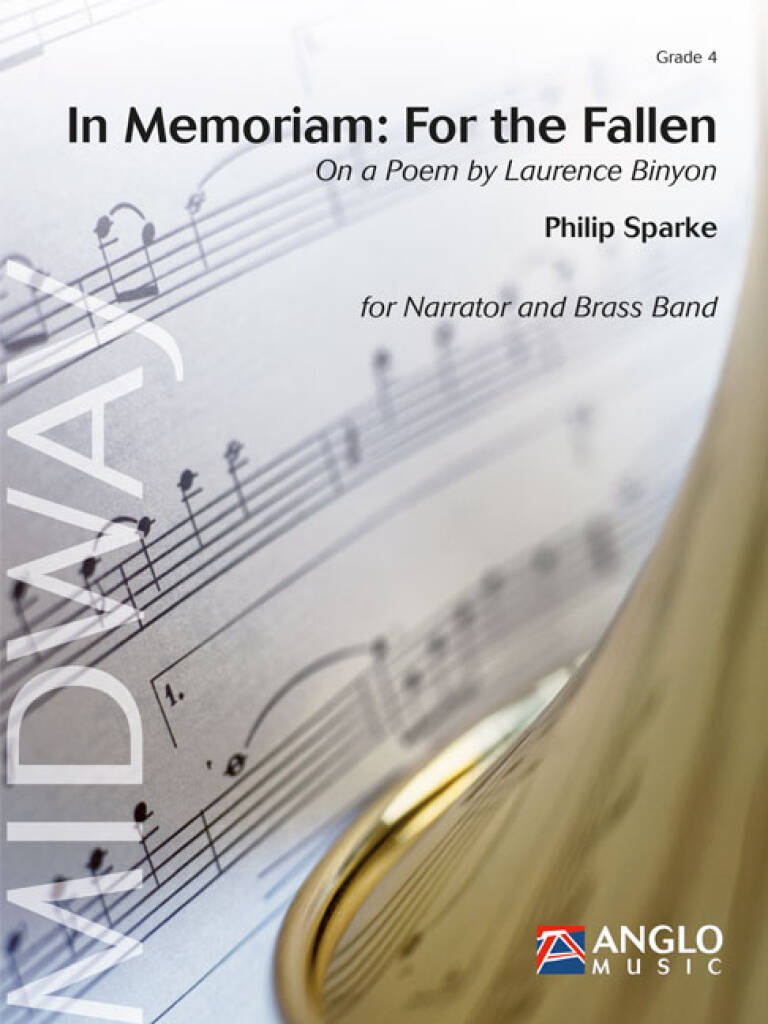
In Memoriam: For the Fallen - Philip Sparke
In Memoriam: For the Fallen was commissioned by Bolsover District Council for the Bolsover Brass Summer School 2014. It is a setting for narrator and band of Laurence Binyon's (1869-1943) poem, For the Fallen, which was first published in The Times in September 1914. The poem is known world-wide as the famous fourth stanza (They shall grow not old...) has become a regular part of Remembrance Day and ANZAC Day services. In Memoriam: For the Fallen is a musical accompaniment to the poem, shadowing the mood of each stanza.
Estimated dispatch 5-14 working days
-
£54.99
First Jazz - André Waignein
First Jazz, a fine swinging piece, was written by Roland Kernen, who is the composer and arranger of a great deal of successful concert band music. It's a cheerful piece in ABA form for four-part variable instrumentation and additional percussion. It is very suitable for beginners who want to play light music and the swing style will appeal to the musicians as well as the audience.
Estimated dispatch 5-14 working days
 View Music