
Results
-
 £56.90
Windsor Great Park - P. Yorke
The sparkling overture of this piece is no doubt 'great' and it is followed by a terrific melodic line with several beautiful romantic highlights. By means of a slowing down we get a more moderate tempo (tempo II) which enables a kind of concert march theme to develop. This is Peter York at best. Steve Sykes was most happy to recover this composition which was considered as being untraceable for many years.
Estimated dispatch 5-14 working days
-
 £49.10
Dutch Treat - Pi Scheffer - W. Bosman
Paul Yoder is one of the big names in the history of American wind band music. He was a pioneer in teaching the developing youth bands in the USA and by spreading the modern wind band music repertoire throughout Japan. He wrote over 200 works for symphonic band. 'Dutch Treat' was composed in the early seventies and immediately published in 1971 by Molenaar, a personal friend of Paul Yoder. It is an original arrangement of a traditional tune.
Estimated dispatch 5-14 working days
-
 £41.30
Dutch Treat - Paul Yoder - Wim Bouman
Paul Yoder is one of the big names in the history of American wind band music. He was a pioneer in teaching the developing youth bands in the USA and by spreading the modern wind band music repertoire throughout Japan. He wrote over 200 works for symphonic band. 'Dutch Treat' was composed in the early seventies and immediately published in 1971 by Molenaar, a personal friend of Paul Yoder. It is an original arrangement of a traditional tune.
Estimated dispatch 5-14 working days
-
 £147.10
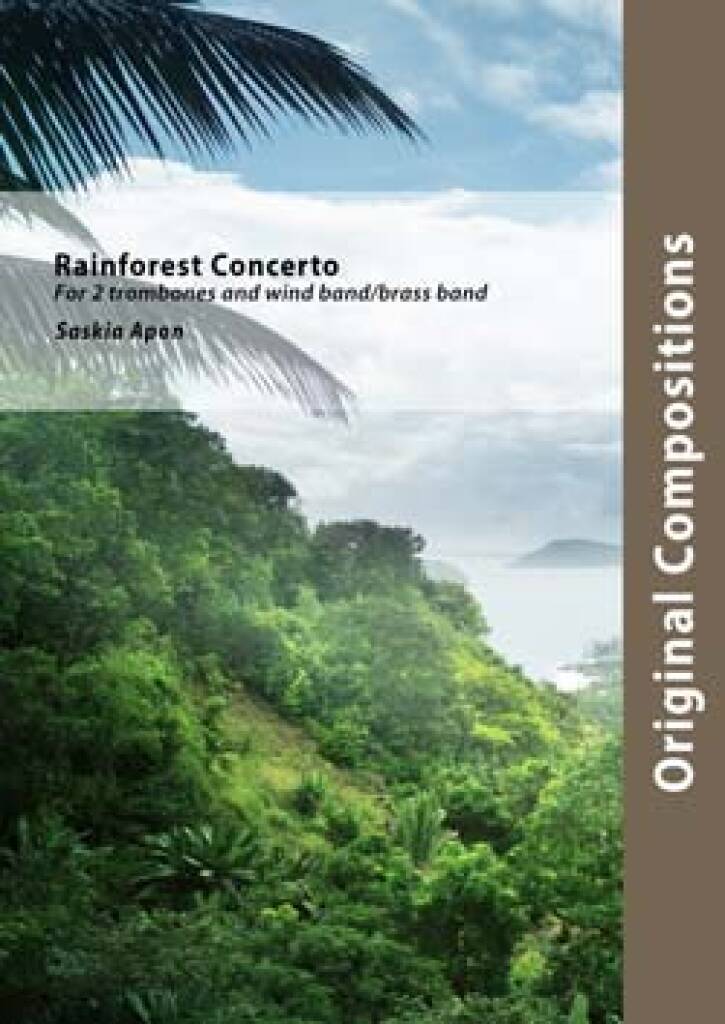
Rainforest Concerto - Saskia Apon
Rainforest Concerto has been commissioned by the Brass Band Rijnmond. This double concerto for two trombones and wind band consists of three parts with the cadenza in the slow niddle movement. Saskia Apon was inspired by the threat of the destruction of the rainforest. In the first part, Creation, we hear an accelerated reproduction of the birth of this impressive natural phenomenon. We hear the first birds, we see the growth of the mangrove trees and we witness the struggle for light and the force necessary to keep the realized equilibrium in a perpetual balance.The second part, Ode, is a tribute to the wonder and splendour of the rainforest. By means of subtle and extremely delicate sonorities we hear how nature adds an inestimable value to the rainforest. However it is also extremely fragile and this engenders a certain melancholy due to the awareness of man's impotence to respect this beautiful nature.In the last part, Contra Demolition, we hear the threatening decline, but also the revolt against this possible ruin. It is a heartfelt cry to leave nuture in peace and to work hard for the preservation of the beauty and the value of the rainforest.
Estimated dispatch 5-14 working days
-
 £86.70
Mr. Bojangles - Jerry Jeff Walker - Henk Ummels
'Mr. Bojangles' is a popular song written and initially recorded by Jerry Jeff Walker in 1968 and covered since by many other artists. The song was inspired by an encounter with a street performer in the New Orleans first precinct jail. Although this man could tap dance, the inspiration for the song was the famous stage and movie dancer Bill 'Bojangles' Robinson. Robbie Williams recorded it on it's bigband CD 'Swing When You're Winning'.
Estimated dispatch 5-14 working days
-
 £127.30
Skogtrollet - Hans Peter Nielsen - Øystein Sjøvaag Heimdal
The Wood Troll was composed in 1950 for bassoon solo with orchestra.This arrangement is written for tuba soloist (Eb or Bb) with brass band.It's a funny and challenging piece for an intermediate soloist.To the conductorPlease pay attention to the dynamics when the soloist play. To make shure that the balance between soloist and accompaniment is good, it's preferred toomit some players in the biggest sections of the band.
Estimated dispatch 5-14 working days
-
 £118.20
Marsj etter Erling Kjok - Svein H. Giske
Erling Kjok (1913-1999) was a Norwegian fiddler and a strong representative of the folk music from Nord-Gudbrandsdal.My arrangement was originally written for Concert band as a commission from The Staff Band of the Norwegian Armed Forces for the Norwegian Military Tatoo. It is partially inspired by a recording from the folk music group Kvarts.-Svein H. Giske-August 2022
Estimated dispatch 5-14 working days
-
 £105.20
Vise ved vintersolkverv - Tore Bruvoll - Haakon Esplo
The beautiful song "Song at Winter Solstice" has within short time been highly loved by listeners all around Norway. It's performed by folk-rock band "Hekla Stalstrenga" who released their first album "Hekla Stalstrenga" in 2008. This album was nominated for "Spellemansprisen" (the Norwegian equivalent to Grammy) in the folk music / traditional music category. "Song at Winter Solstice" was released as single record in 2013.
Estimated dispatch 5-14 working days
-
 £271.60
Aubade - Dawn Songs of the Fabulous Birds - Torstein Aagaard-Nilsen
Commissioned by The Norwegian Band Federation for The European Brass Band Championship 2003, in Bergen, Norway (Third edition) I remember as a kid the very early morning wake-up ceremonies caused by Seagulls having a "party" outside our home. Very few would describe it as beautiful, particularly not at 4:30 in the morning... But by listening carefully to birds I was fascinated by their diversity and musical language: they dont sing tunes or long phrases, they rather make sounds and signals, based on short motives. Aubade is based on musical pictures of the imaginary birds: the creatures with wings that exists only in myths and legends. The whole story starts with aBaritone-cadenza that evoke all the sleeping creatures. Very soon they all start to sing their songs in one way or another. The composition has a burlesque scherzo-character including slow espressive intersections. Traditional elements like melody and harmony is combined with extensive sounds and textural effects created by use of multiple muting, singing and playing at the same time. I am not too concerned about having a program for the piece. I just know that by thinking of the unheard dragon-songs, griffin-songs, the sound of the dodo, my creativity was stimultated. As a piece of music, Aubade follows its own rules based on well-known elements like melodies, arpeggio-figures, harmonies, rhythms, variations and recapitulation of ideas. - Torstein Aagaard-Nilsen
Estimated dispatch 5-14 working days
-
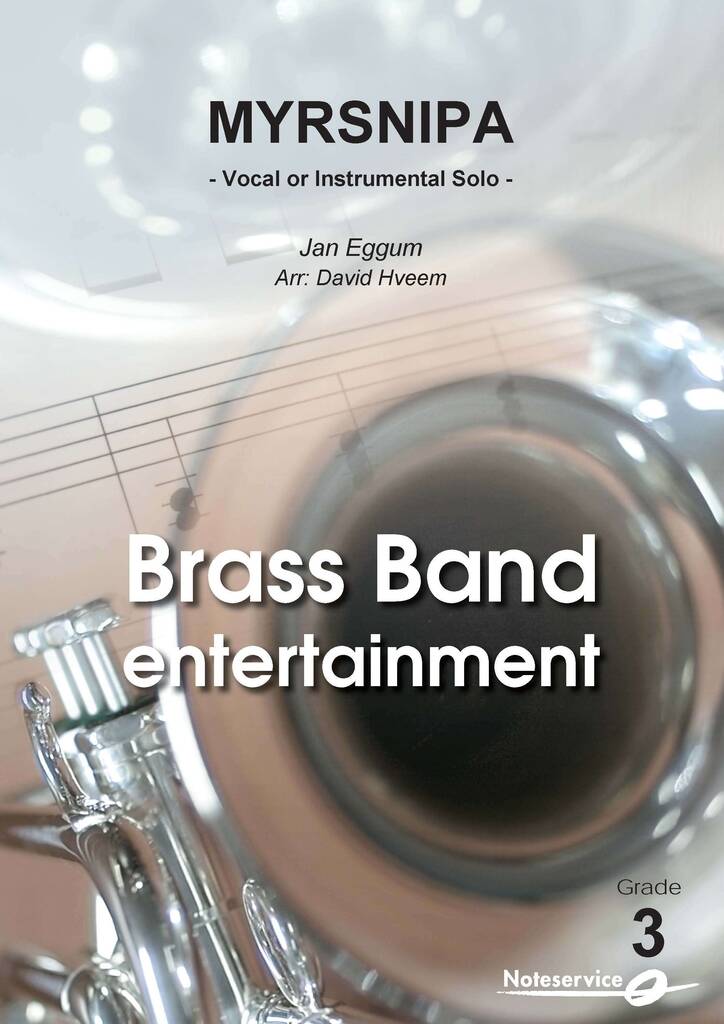 £107.80
Myrsnipa - Vocal or Instrumental Solo - Jan Eggum - David Hveem
Jan Eggum released "Myrsnipa" on the album "Hjerteknuser", which was released in 2007. The text is a variant of the folk tale with the moral "everyone likes their own children best and has for many years been one of Eggum's regular encores at concerts.The arrangement is attempted to stay true to Eggum's version and has retained its somewhat delicate character in order to support the text as much as possible. Although the arrangement is written for vocal soloist, it also works great with a solo instrument instead, and you can also choose whether you want a guitar or not, to keep it even more true to the original recording.The arrangement requires good balance and intonation, but will be a nice part of the concert repertoire the audience is guaranteed to recognize.
Estimated dispatch 5-14 working days
 View Music