
Results
-
 £68.60
Fanfare, Dance and Choral - Giovanni Giacomo Gastoldi - Henk van Belcum
Henk van Belcums used the festive and much loved song 'In Thee is Gladness', in this arrangement. Better known as 'Geest van hierboven' (Hymn 477) from the Songs for the Church (NL). A glorious fanfare opens the piece, which is then followed by a bright dance. The hymn is heard in the chorale section, in a fancy new setting, and the piece closes with a reprise of the opening fanfare.
Estimated dispatch 5-14 working days
-
 £115.60
Jubileum - Idar Torskangerpoll
This piece was written as a commission for Vassenden Youth Band in 2009.The piece consists of parts with different moods. It opens with a fanfare which process in to a faster section that has an ever changing 2 or 3- in a bar feel. TheEuphonium is featured as soloist in this section.A calmer section follows with a chamber music style. This section has a descending bassline, as a kind of passacaglia. The piece ends with the repetition of the opening fanfare and a shortcoda.
Estimated dispatch 5-14 working days
-
 £127.30
The Incredibles - Michael Giacchino - Lars Erik Gudim
Michael Giacchino (1967) has become one of the great composers scoring for Film, Television and Video Games. Music in the movies "Star Trek", "Ratatoille", "Mission Impossible III", "Sin" and "The Incredibles" has come from his hand, but even more known should be the music from the Television shows "Alias" and "Lost". In "The Incredibles", music with high energy and a lot of wind players fits well. To play this music with a wind band takes good care of this intentions. The super heroes are matched with music in all dimensions. This is well taken care of in the arrangement by Lars Erik Gudim.
Estimated dispatch 5-14 working days
-
 £127.30
Love? Magic With a Capital M - Frode Rydland
Imagine an extravagant magic show at Caesar's Palace in Las Vegas. All shows like this feature great superstars as guest artists. For instance, it can be Celine Dion and Josh Groban who enters the stage for a duet...Love... Magic with a capital M is a ballad for an imaginary magic show where the great stars are flugelhorn and trombone.A bit different stage setup, a bit of choreography, a bit of singing and a lot of sweet music!The Choir parts are intended to be sung by the band. But if your concert features a choir, you may add the choir to this performance.This music was written for Norwegian band Eikanger-Bjorsvik Musikklag for their winning program "MAGIC!", performed at the Norwegian equivalent to Brass in Concert, Siddis Brass in 2019.
Estimated dispatch 5-14 working days
-
 £102.60
Marche Militaire - Franz Schubert - Haakon Esplo
Franz Schubert wrote three "Marches Militaires", opus 51, D. 733. This publication is the first of the three (No. 1 in D major) and one of Schubert's most famous pieces. There is some uncertainty about when the march was written, but most assume in 1818.Marche Militaire has previously been instrumented and released for full orchestra and several other ensembles. Many also know it as the music for Walt Disney's cartoon "Santa's Workshop" which is broadcasted on TV every Christmas.
Estimated dispatch 5-14 working days
-
 £115.60
Joyful Life - Jerker Johansson
When Jerker Johansson in the 80's started to compose he was for a while obsessed with writing music in odd time signatures, more specifically 7/8. He was asked during the fall of 2020 by Leif Karlsson (former member of the legendary percussion ensemble Kroumata and nowadays conductor) to write something challenging for Uppsala Blasarsymfoniker and this resulted in Joyful Life. The piece is, to say the least, difficult to tap the pulse along to and is something of a baptism of fire for the musicians, regarding rhythmic precision. Joyful Life is dedicated to the always likeable Leif Karlsson (Joyful Leif!) and was premiered on the 15th November 2020 by The Swedish Air Force Band under the baton of the composer.
Estimated dispatch 5-14 working days
-
 £115.60
Nordnorsk julesalme - Trygve Hoff - John Philip Hannevik
The singer- songwriter Trygve Hoff (1938-1987) was born in the small village Rognan in the region Nordland in the north of Norway. Many of his lyrics point towards this part of the country, and he became an important figure for North-Norwegian culture.His North Norwegian Christmas Psalm has become one of the most loved and recorded newer Christmas songs in Norway. The lyrics definitely deals with about the folkish down-to-earth religion that this part of the country is known for.Offering the solo part to the tuba has it's challenges, but the instrumentation should make this a welcome and usable addition to the solo repertoire for that instrument.- John Philip Hannevik -
Estimated dispatch 5-14 working days
-
 £115.60
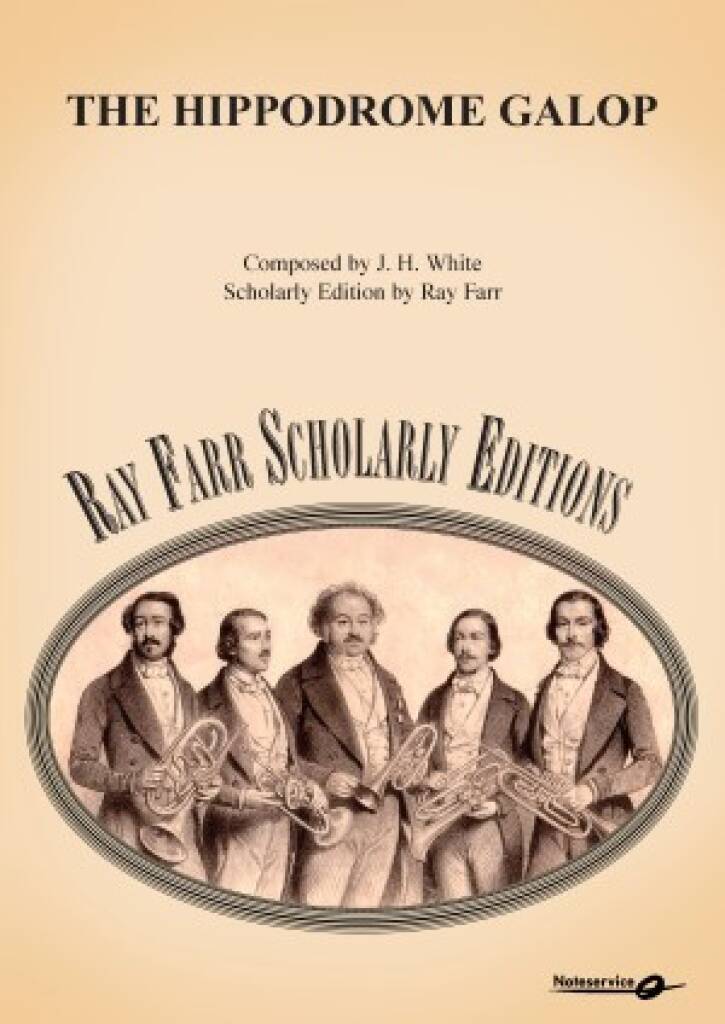
The Hippodrome Galop - J. H. White - Ray Farr
The Hippodrome Galop by H. White is No. 5 in the first of a series of works called Distin's Brass Band Scores (see advertisement below), published in 1854 by Henry Distin. These publications represent an important stage in the history of bands in Britain.The purpose of this scholarly edition is to produce a performing version, clearing ambiguities and errors, that can be enjoyed by today's performers and listeners, bearing in mind the original function and context. At the same time the edition is an analytical, musicological study of one of the rare treasures of the brass band repertory.
Estimated dispatch 5-14 working days
-
 £228.70
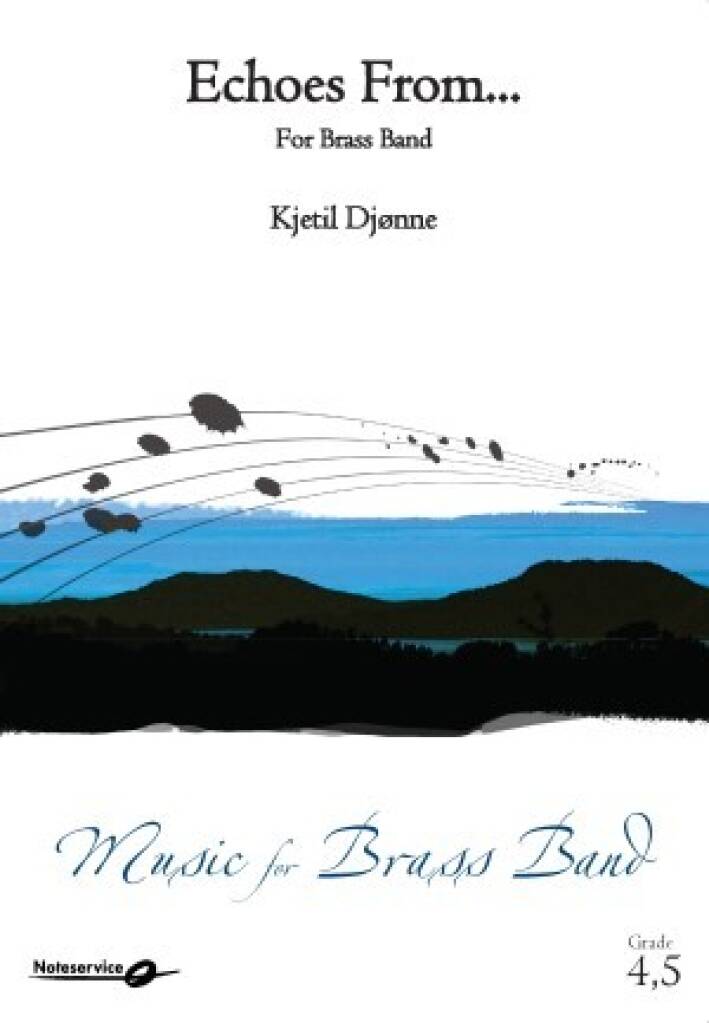
Echoes From..... - Kjetil Djønne
The essence of what a school band is, has inspired me in this composition. A hub between musicians of all ages and a place where young people can feel belonging. Several of the values in a school band have a positive impact on how musicians grow and mature. They learn about culture and discipline, as well as experiencing unity and mastery. A school band always has a goal, and achieving goals together, without reserves, is priceless. High ambitions and a common will to improve are recognizable in many school bands. In my opinion Skodvin Skulemusikk got these values: unity, affiliation, effort and ambition.The piece portrays the echo that rings in the hall before the applause after a concert. The echo in the hallways during breaks, or in the rehearsal room during rehearsal. The echo, or consequence, of all the work that is done by both musicians and parents. The echo of a unity and belonging that can last a lifetime.
Estimated dispatch 5-14 working days
-
 £54.99
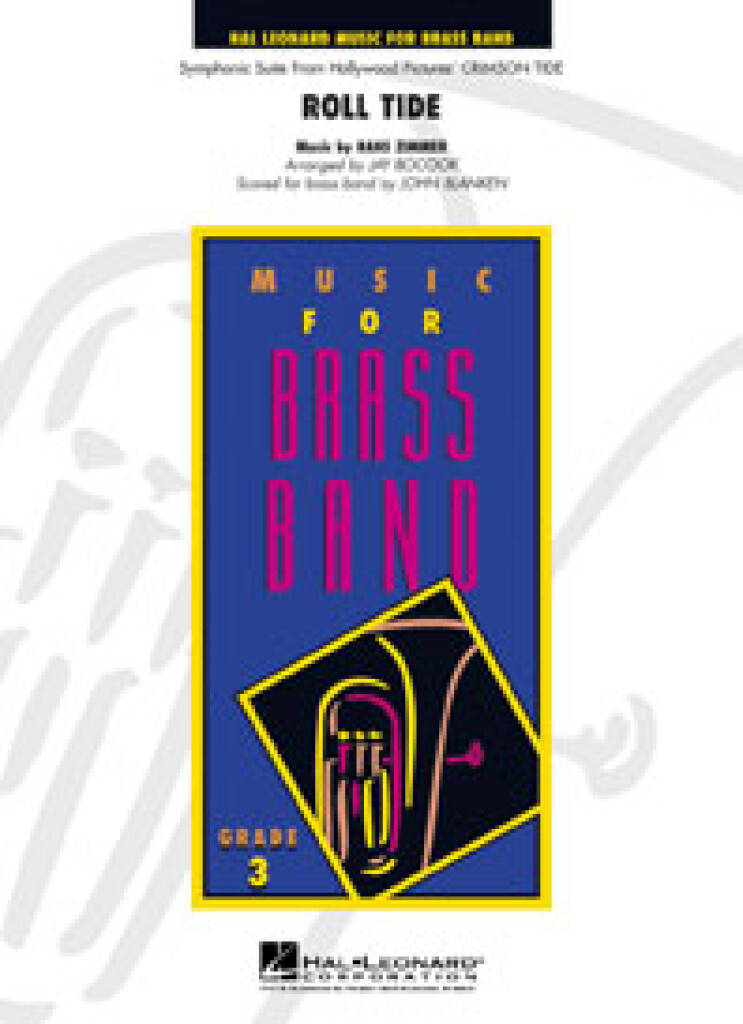
Roll Tide - Hans Zimmer - Jay Bocook
The composer Hans Zimmer, originally from Germany, is known for his dramatic and powerful film music. The compelling and energetic music of Roll Tide, with the theme of the film Crimson Tide, is representative of his compositional style. This very appealing arrangement is by Jay Bocook.
Estimated dispatch 5-14 working days
 View Music