
Results
-
 £33.62
Miserere mei, Deus (Brass Band) Gregorio Allegri arr. Espen Haukas
Miserere mei, Deus was composed by the Italian composer Gregorio Allegri (1582-1652) during the 1630s for use in the Sistine Chapel during matins, as part of the exclusive Tenebrae service on Wednesday and Friday of the Holy Week. The Miserere is written for two choirs, one of five and one of four voices, and is generally accepted to be one of the finest examples of Renaissance polyphony to survive to the present day. Tutti choirs sing a simple version of the original Miserere chant; one voice then, spatially separated, sings an ornamented "commentary" on this. The comment-part is left out in this arrangement due to its meaning with text, though monotonous in tune. The introduction is added by the arranger to set the right atmosphere before the original chant is played. The brass choirs are meant to be placed opposite each other in a church or large hall. To view a video of Norges Nasjonale Brassband performing the piece please visit www.youtube.com/watch?v=YrJU3lwYD9U PDF download includes score and parts. Sheet music available from: UK - www.brassband.co.uk USA - www.solidbrassmusic.com Difficulty Level: 4th Section + Instrumentation: Brass Choir 1: Solo Cornets (incl. Repiano) Horn in Eb Tenor Trombones in Bb Euphoniums Basses in Bb Timpani Brass Choir 2: Soprano Cornet in Eb 2nd Cornets in Bb 3rd Cornets in Bb Flugelhorn Horns in Eb Baritones Bass Trombone Basses in Eb
In Stock: Estimated dispatch 1-3 working days
-
£29.95
BEFORE THE CROSS (Cornet Solo with Brass Band Set) - Edward Gregson
Written at the request of David Daws for his solo album The Sound of David Daws, this meditation for cornet and brass band uses the composer's own song Before the cross (originally published in The Musical Salvationist, April 1965), the first lines of which are Before the cross I stand in fear and wonder, and see that all my sirs on Thee are laid. The song was written at an early stage of the composer's career, just before commencing study at The Royal Academy of Music, London. After a brief introduction the melody is heard twice, first played by the soloist, then on Euphonium and Flugel Horn with the soloist adding ornate counterpoint before taking up the melody once again, this time leading to a quiet and reflective conclusion.
Estimated dispatch 7-14 working days
-
 £37.95
Connotations (Brass Band - Score only) - Gregson, Edward
Connotations was commissioned for the 1977 National Brass Band Championship finals, held in the Royal Albert Hall, London (the winner, incidentally, of that particular competition was the famous Black Dyke Mills Band).At the age of 32 Gregson was the youngest composer to have received the honour of such a commission. It came at the end of a productive five years writing for the brass band publisher R Smith. Some of those works - The Plantagenets, Essay and Patterns for example, with their direct and tuneful style, have remained popular with brass bands the world over.For Gregson, these were the means by which he sharpened the tools of his trade, preparing the ground, as it were, for his finest work to date - Connotations. He thought of calling the piece Variations on a Fourth, but with due deference to Gilbert Vinter perhaps (Variations on a Ninth), he chose a more appropriate one. As Gregson has written, 'Connotations suggests more than one way of looking at something, an idea, and this is exactly what the piece is about'.Writing a competition piece brought its own problems. 'It has to be technically difficult and yet musically satisfying. I didn't like being kept to an eleven-minute maximum. The inclusion of short cadenzas for less usual solo instruments seems to signify a certain test-piece mentality'.Gregson solved the problems admirably by adopting a symphonic approach to variation form: Introduction - fanfares, a call to attention, in effect Variation 1; Theme - a six-note motif, given a lyrical and restrained first statement; Variation 2 - a delicate toccata; Variation 3 - typically robust in melody and rhythm; Variation 4 - lyrical solos; Variation 5 - a scherzo; Variation 6 - cadenzas; Variations 7-9 - an introduction, fugato and resounding restatement of the theme.Duration: 10.30
Estimated dispatch 7-14 working days
-
£74.95
Connotations (Brass Band - Score and Parts) - Gregson, Edward
Connotations was commissioned for the 1977 National Brass Band Championship finals, held in the Royal Albert Hall, London (the winner, incidentally, of that particular competition was the famous Black Dyke Mills Band).At the age of 32 Gregson was the youngest composer to have received the honour of such a commission. It came at the end of a productive five years writing for the brass band publisher R Smith. Some of those works - The Plantagenets, Essay and Patterns for example, with their direct and tuneful style, have remained popular with brass bands the world over.For Gregson, these were the means by which he sharpened the tools of his trade, preparing the ground, as it were, for his finest work to date - Connotations. He thought of calling the piece Variations on a Fourth, but with due deference to Gilbert Vinter perhaps (Variations on a Ninth), he chose a more appropriate one. As Gregson has written, 'Connotations suggests more than one way of looking at something, an idea, and this is exactly what the piece is about'.Writing a competition piece brought its own problems. 'It has to be technically difficult and yet musically satisfying. I didn't like being kept to an eleven-minute maximum. The inclusion of short cadenzas for less usual solo instruments seems to signify a certain test-piece mentality'.Gregson solved the problems admirably by adopting a symphonic approach to variation form: Introduction - fanfares, a call to attention, in effect Variation 1; Theme - a six-note motif, given a lyrical and restrained first statement; Variation 2 - a delicate toccata; Variation 3 - typically robust in melody and rhythm; Variation 4 - lyrical solos; Variation 5 - a scherzo; Variation 6 - cadenzas; Variations 7-9 - an introduction, fugato and resounding restatement of the theme.Duration: 10.30
Estimated dispatch 7-14 working days
-
 £76.99
Tango for Joe (Trombone Solo with Brass Band - Score and Parts) - Sparke, Philip
Tango for Joe was written for Joe Alessi, principal trombone of the New York Philharmonic. He gave the official premiere with the Brass Band of Battle Creek on 3rd December 2022 at the W K Kellogg Auditorium in Battle Creek, Michigan.Opening with an (optional) unaccompanied recitative for the soloist, Tango for Joe then develops into a slow and sensuous tango, exploring the lyrical properties of the trombone. The opening of this theme is then taken up by the full band but is soon interrupted by a highly decorated version of the melody by the soloist. A further cadenza-like passage then leads to a faster 'tango nuevo' which makes up the majority of the work.A long introduction by the band builds to the first entry of the soloist, who plays the main tango melody over a rhythmic accompaniment. This is taken up briefly by the band but the soloist enters again with his own variation on the theme. After a bridge passage featuring a brief 'question and answer' exchange between the instruments, the soloist then plays a new version of the opening slow tango theme over rhythmic interpolations. After a climax, the soloist presents a long and elaborate cadenza accompanied only by a solo cajon or drum kit. This eventually leads to a repeat of the main theme and , after a short second cadenza, the piece ends with a flourish for band and soloist.Duration: 8.45
Estimated dispatch 7-14 working days
-
 £59.95
Essay (Brass Band - Score and Parts) - Gregson, Edward
This work was specially commissioned as the test piece for a new brass band competition in 1971, held at the Royal Albert Hall, London. It is in three movements, the titles of which all have literary connotations. The first movement, Dialogue takes the form of 'conversations' between the instruments, based on the opening melody announced in unison on cornets and euphoniums. A second theme is introduced on the flugel horn and developed alongside this, creating a sonata form shell.The second movement, Soliloquy is dedicated to the memory of Gilbert Vinter - a composer who did so much in the 1960s to bring the brass band into the modern world. The movement is poignant in mood, which is depicted by a cornet solo announced after a brief introduction. The middle section builds to a powerful climax, at which point the opening theme of the first movement is heard again. Tranquillity returns however, with a solo trombone now playing the original theme with other instruments adding decorative accompanying patterns.The final movement, Epigram, creates strong rhythmic contrasts and exploits the more virtuoso character of the brass band. The middle section, with its changing time patterns and open expansive melody, suggests a 'big-country' style. A rhythmically charged coda concludes the work in exciting fashion.Duration: 12.00
Estimated dispatch 7-14 working days
-
£29.95
Essay (Brass Band - Score only) - Gregson, Edward
This work was specially commissioned as the test piece for a new brass band competition in 1971, held at the Royal Albert Hall, London. It is in three movements, the titles of which all have literary connotations. The first movement, Dialogue takes the form of 'conversations' between the instruments, based on the opening melody announced in unison on cornets and euphoniums. A second theme is introduced on the flugel horn and developed alongside this, creating a sonata form shell.The second movement, Soliloquy is dedicated to the memory of Gilbert Vinter - a composer who did so much in the 1960s to bring the brass band into the modern world. The movement is poignant in mood, which is depicted by a cornet solo announced after a brief introduction. The middle section builds to a powerful climax, at which point the opening theme of the first movement is heard again. Tranquillity returns however, with a solo trombone now playing the original theme with other instruments adding decorative accompanying patterns.The final movement, Epigram, creates strong rhythmic contrasts and exploits the more virtuoso character of the brass band. The middle section, with its changing time patterns and open expansive melody, suggests a 'big-country' style. A rhythmically charged coda concludes the work in exciting fashion.Duration: 12.00
Estimated dispatch 7-14 working days
-
 £69.99
Go for Brass! (Brass Band - Score and Parts) - De Haan, Jacob
Subtitled "A Young Person's Guide to the Brass Band", Go for Brass! is a musical introduction to the sound, instrumental groups and the individual instruments of the brass band. Your players will love this work as they stand to highlight their particular section with snippets of the sparkling up-tempo dance style theme. An extremely entertaining concert item with a little fun educational content!Duration: 05:40
Estimated dispatch 7-14 working days
-
 £54.99
Intrada & Wilhelmus (Brass Band - Score and Parts)
John Blanken wrote Intrada & Wilhelmus in 2002 for the brass band Euphonia from Wolvega, the Netherlands.The title speaks for itself. It's an introduction to the national anthem of The Netherlands; Wilhelmus. In this piece the national anthem is heared two times followed by a short postlude. 02:45
Estimated dispatch 7-14 working days
-
 £40.00
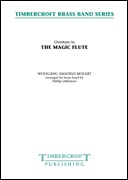
Magic Flute Overture, The (Brass Band - Score and Parts) - Mozart, Wolfgang Amadeus - Littlemore, Phillip
Mozart's The Magic Flute is a two-act opera composed in 1791, the year of his death. It was the culmination of a period of increasing involvement by Mozart with Emmanuel Schikaneder's theatrical troupe, which since 1789 had been the resident company at the Theater auf der Wieden. The Magic Flute is noted for its prominent Masonic elements; both Schikaneder and Mozart were believed to be Masons and also lodge brothers. Much of Mozart's Masonic music is written in the key of E flat. This key, with 3 flats is indicative of Masonic symbolism. There are other examples of the number three in the opera as well. The opening chords of the introduction sound three times, which also happens during the Temple scenes. Also represented in threes are the three temples of Wisdom, Reason and Nature. Tamino tries to open the three doors of the temple. There are three ladies, the attendants to the Queen of the Night, and three boys who serve as guides to Tamino and Papageno. Duration: 6:30
Estimated dispatch 7-14 working days
 View Music