
Results
-
 £33.00
In Storm and Sunshine (Brass Band - Score and Parts) - Heed, John Clifford - Houlding, Christopher
New Jersey born composer and musician John Clifford Heed, who was born during the American Civil War was as a cornet soloist and arranger in the legendary band of John Philip Sousa. J.C Heed was also known as the "March Wizard". According to local legend in his hometown, it is claimed that Heed possibly wrote "The Stars and Stripes Forever". Chris Houlding's vibrant arrangement of "In Storm and Sunshine" is written in the style of a vibrant circus march, to be performed as quick as possible! Duration: 5.00. Suitable for 2nd Section Bands and above.
Estimated dispatch 7-14 working days
-
 £69.00
In Storm And Sunshine - John Clifford Heed - Bertrand Moren
Estimated dispatch 5-14 working days
-
£77.00
In Storm and Sunshine (Bra) - John Clifford Heed - Bert Van Thienen
Estimated dispatch 7-14 working days
-
£27.00
In Storm And Sunshine - John Clifford Heed - Bertrand Moren
Estimated dispatch 7-14 working days
-
 £30.00
Amazing Grace (W. Walker arr. by Paul Pennicotte-Henrie) - Brass Band Sheet Music Full Score and Parts - LM642
COMPOSER: W. WalkerARRANGER: Paul Pennicotte-Henrie"Amazing Grace" is a Christian hymn published in 1779 by English Anglican clergyman, abolitionist, and poet John Newton. It is possibly the most sung and most recorded hymn in the world and is especially popular in the United States, where it is used for both religious and secular purposes. Newton wrote the words from personal experience; he grew up without any particular religious conviction, but his life's path was formed by a variety of twists and coincidences that were often put into motion by others' reactions to what they took as his recalcitrant insubordination. He was pressed into service with the Royal Navy, and after leaving the service, he became involved in the Atlantic slave trade.In 1748, a violent storm battered his vessel off the coast of County Donegal, Ireland, so severely that he called out to God for mercy. While this moment marked his spiritual conversion, he continued slave trading until 1754 or 1755, when he ended his seafaring altogether. Newton began studying Christian theology and later became an abolitionist.Ordained in the Church of England in 1764, Newton became the curate of Olney, Buckinghamshire, where he began to write hymns with poet William Cowper. "Amazing Grace" was written to illustrate a sermon on New Year's Day of 1773. It is unknown if there was any music accompanying the verses; it may have been chanted by the congregation. It debuted in print in 1779 in Newton's and Cowper's Olney Hymns, but settled into relative obscurity in England. In the United States, "Amazing Grace" became a popular song used by Baptist and Methodist preachers as part of their evangelizing, especially in the American South, during the Second Great Awakening of the early 19th century. It has been associated with more than 20 melodies. In 1835, American composer William Walker set it to the tune known as "New Britain" in a shape note format; this is the version most frequently sung today.
In Stock: Estimated dispatch 3-5 working days
-
 £34.95
Sprites and Flares (Brass Band - Score and Parts)
Sprites and Flares (2015), refers to the uncertain activities of sprites (upper atmospheric lightening) and solar flares (solar activity from the sun which cannot penetrate the earth's atmosphere) and uses these two ideas as a basis for the kind of musical material heard within the work - dramatic, swirling motifs, often of a virtuosic nature.The work's dramatic opening ensures the first thirty seconds are high in energy and full of impact. Following this, the music dies down and presents an ethereal atmospheric section, perhaps reflecting the calm before the storm. Before long, the music takes a turn for dramatic, fast, virtuosic playing, all reflecting the theme of the work, and indeed remains in this style through to the close, gaining momentum and becoming ever- more triumphant as the work reaches its close. A huge ending is heard, full of excitement and drama, but more importantly grandeur and rich harmonic-chords.The work was commissioned by and written for Leyland Band and its conductor, Thomas Wyss, as the finale to its 2015 Brass in Concert programme, premiered at The Sage, Gateshead, on 15th November 2015.
Estimated dispatch 7-14 working days
-
 £29.95
Summer Storm - Antonio Vivaldi - Rodney Newton
Antonio Vivaldi was born in Venice and began his adult life in the church, becoming known as the 'Red Priest', presumably due to his sandy-coloured hair. Health problems prevented him continuing actively in the priesthood and he turned his attention...
Estimated dispatch 5-7 working days
-
 £44.95
Trailblazers (Brass Band - Score and Parts) - Mackereth, Andrew
This overture draws its inspiration from the story of the first Household Troops Band. It tells the story of the 1887 band, the subsequent lull of nearly a hundred years and the re-awakening of the Troops phenomenon in 1985. It was originally written in 1995 and featured prominently by the band on its North American tour of 2002. Given the history of the Household Troops Band, it is fitting that this composition is preoccupied with marching. It begins with a marching song played by a solitary muted cornet, symbolic not only of the call to bandsmen to join the evangelical effort but also a muso-dramatic device to indicate the steady increase in members and technical ability! The music quickly develops into stirring versions of 'A robe of white' and 'Storm the forts of darkness' with two early day Salvation Army tunes crucially adding to the narrative; 'Marching on in the light of God' and 'Soldiers of our God, arise!' The second section is a reflective setting of the Herbert Booth song, 'The penitent's plea'. This song serves to represent the many people who were 'saved' during those early day campaigns. The expressive music transports the listener through a period of uncertainty and angst until finally reaching the song, 'There is a message, a simple message, and it's a message for us all'. The final section deals first with the emergence from the annals of history with the muted cornet figure again before, symbolically, the present day band bursts forth with an emphatic statement of 'Would you be free from your burden of sin? There's power in the blood'. The stirring climax represents a fitting tribute to those gallant pioneering musicians and their equally impressive and dedicated contemporaries.
Estimated dispatch 7-14 working days
-
 £29.50
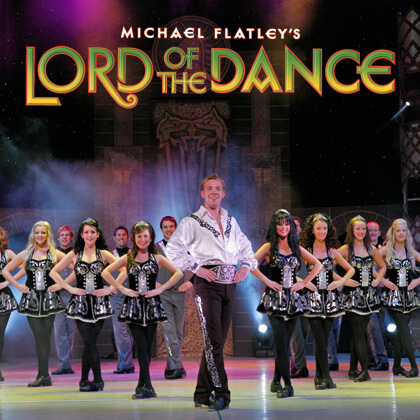
The Lord Of The Dance - Ronan Hardiman - Gavin Somerset
During an interval at the Eurovision Song Contest in 1994, Michael Flatley & the 'Riverdance' cast took the world by storm and continued to achieve worldwide success. Michael Flatley left 'Riverdance' with the dream of creating a show that was suitable for performances in arenas and not just traditional theatres - 'The Lord Of The Dance' was born. Using the traditional US shaker hymn 'The Lord of the Dance' as the shows main theme, Ronan Hardiman adapted the music to be bursting with life. This arrangement by Gavin Somerset is full of excitement and energy, arranged to ensure this effect is playable by most levels of bands. A real crowd pleaser & finale act that will have the audiences on their feet!
In Stock: Estimated dispatch 1-3 working days
-
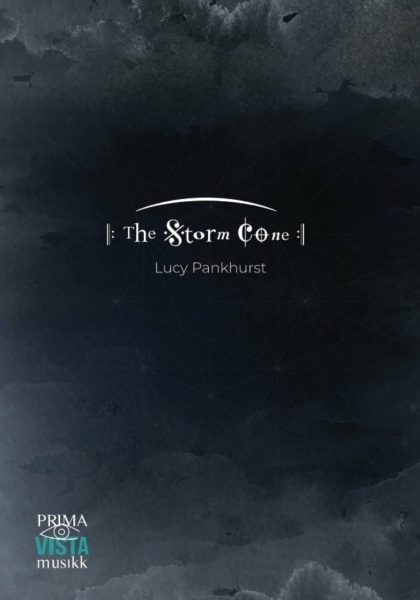 £64.95
The Storm Cone (Brass Band - Score and Parts)
The Storm Cone was commissioned from Lucy Pankhurst as a central part of an immersive artwork by Laura Daly, which considers our intrinsic relationship with the past. The project itself takes the form of a downloadable app, featuring geolocated augmented reality technology and binaural recordings. The music was performed and recorded remotely by the students, staff and friends of the University of Salford during the UK lockdowns in 2021.At its centre, is a journey through music and sound that charts the fading away of a brass band during the interwar years (1918 - 1939). Using new technologies to trace lost bandstands in their final days of mass popularity, we first encounter the band performing as a full ensemble, in 360audio. Breath-taking detail can be heard from every instrument as you move amongst the absent musicians; proximity alters the perception of sounds as Pankhurst's score builds and then returns to a single note. From the powerful, collective sound of the band, the journey then follows the departed musicians into eight spatial sound works by Daly, where their fragile solo phrases merge and mutate in new environments. History, fiction, artifice, and reality combine within this sensory encounter to confront the present with its past.This absorbing work takes its name from the title of Rudyard Kipling's 1932 poem that forewarned of WWII. It considers key aspects of the interwar period and the ensuing break-up and reshaping of communities in different parts of the country. Brass bands, with their strong industrial, religious and militaristic associations, lost many musicians to both World Wars, and the intervening years of shellshock, unemployment, economic migrancy, and industrial action. Their survival and the survival of brass music tell a story of working-class life during this epoch of deindustrialisation. Life, music and creative legacy are all being sustained by breath. As the band's sound lingers in an absent-minded hum or whistle, it becomes both an imprint and portal to these past times.The Storm Cone commemorates the legacy of creativity, music and sound, the power of community and the importance of collective memory, history and storytelling. It highlights the emotive nature of the past and how it can also help foresee possible futures. Serving as a warning shot, The Storm Cone contemplates the residual impact of the interwar period and the cyclical nature of history in terms of current events, including the economic downturn and the rise of populism, extremism, racism and antisemitism; problems seemingly exacerbated by the current pandemic. The resulting experience is an artwork that underlines human strength and fragility and is imbued with a sense of both loss and celebration.Duration: 10.00
Estimated dispatch 7-14 working days

 View Music