
Results
-
£73.00
Stealing Apples - Fats Waller - Reid Gilje
"Stealing Apples" is an old swing-tune written by Fats Waller. Performances by Benny Goodman and his big band made the song very popular.In this arrangement for brass band, the mallet percussion is very essential. Mallet Percussion presents the melody from letter A and is also featured as soli-instruments from letter L to P. These parts can alternatively be played as vibraphone solo.Please be aware of the balance at letter A. Horn and Trombones must play piano but well articulated. Letter D must sound sparkling and fresh with articulated and powerful trombones and cornets (using straight-mute).Make shue that the 8th-notes are not played too dotted two bars before letter G. Almost even 8th-notes accentuated on the start of the slur is a good tip.Watch the balance at letter H. This part have to sound homogeniously.The soloistic Soprano Cornet at letter Q must be played in the style of Benny Goodan. The accompaniment must not be too powerful from letter R to S. Best of luck with the performance!
Estimated dispatch 7-14 working days
-
£34.95
HIS EYE IS ON THE SPARROW (Tenor Horn Solo with Brass Band Set) - Leonard Ballantine
A traditional gospel spiritual originally written in 1905 by Civilla D. Martin and Charles H. Gabriel, the song is most associated with actress-singer Ethel Waters. The song has been covered extensively in gospel music, with notable versions by Shirley Caesar, Marvin Gaye, Kirk Franklin and the Family, Lauryn Hill and Tanya Blount (from Sister Act 2), Mahalia Jackson, Sister Rosetta Tharpe, Dottie West, Barbara Mandrell and Jessica Simpson.
Estimated dispatch 7-14 working days
-
 £30.00
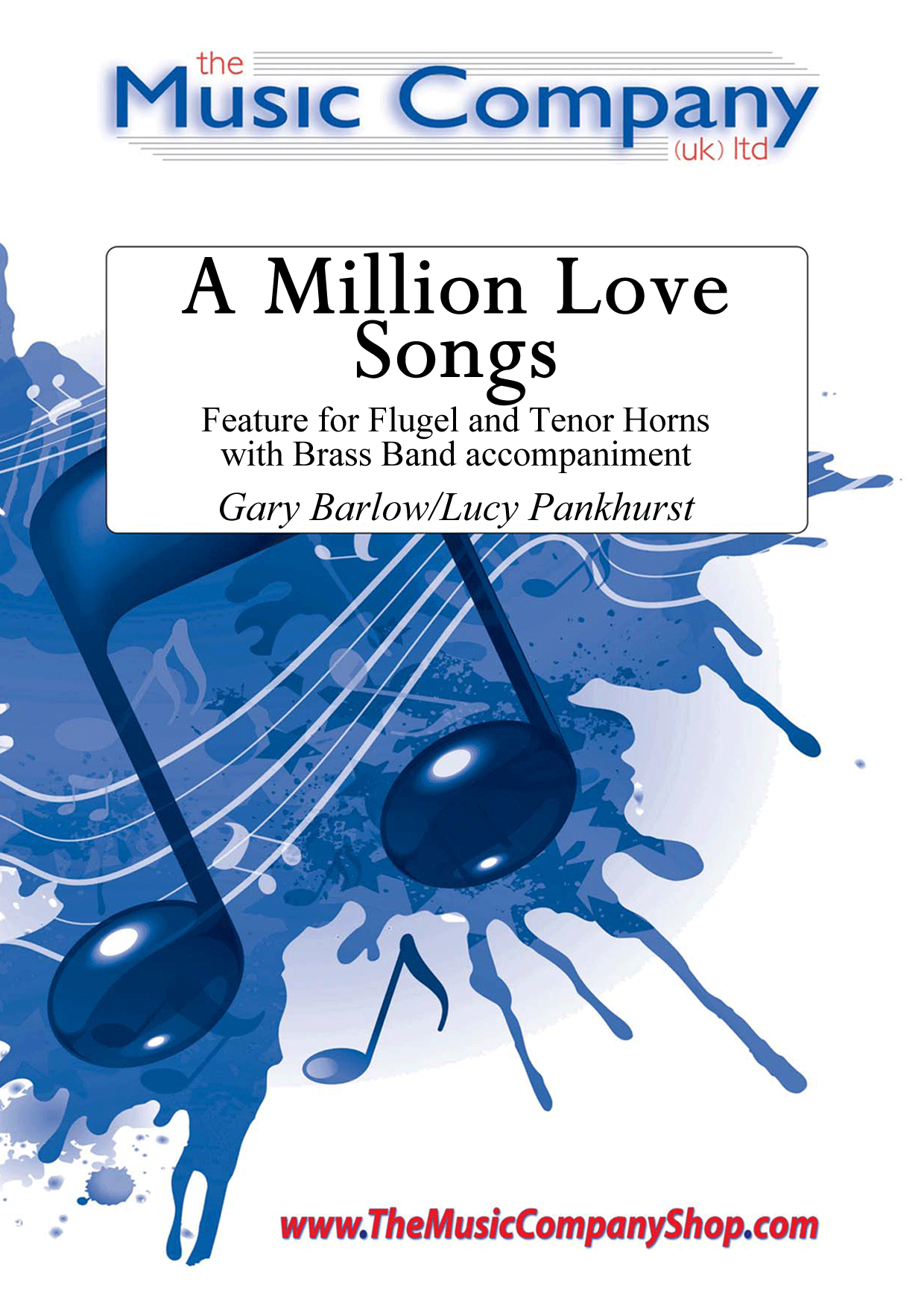
A Million Love Songs - Gary Barlow
Made famous by the boy band 'Take That', this fantastic new angle on the song from Lucy Pankhurst, creatively features the flugel and tenor horn section with full support from the accompanying band.Take That's Gary Barlow wrote 'A Million Love Songs' when he was 15. He also recorded a rough demo of the track, and was one of the songs he gave to music manager Nigel Martin-Smith on a cassette tape as part of his audition to join a boy-band.In his autobiography A Better Me, Gary revealed that Martin-Smith was so impressed by the tape, that he didn't realise it was Gary singing. As legend has it, the conversation went like this:Martin-Smith: "This tape, who has written the songs?"Barlow: "Me"Martin-Smith: "Who wrote the words, then?"Barlow: "Me. And the music and the backing track."Martin-Smith: "Wow, you'd better come back and see me tomorrow."The ballad became one of the group's most popular songs, and is often voted among the greatest love songs of all time. It peaked at No. 7 in the UK charts, and remains a firm favourite, not just for its sentiment, but for the beautiful melody Barlow created.Lucy's arrangement for brass band brings a whole new dynamic to the music and offers the flugelhorn and tenor horns a golden opportunity to shine.
In Stock: Estimated dispatch 3-5 working days
-
 £40.00
Moon Pictures - Andrew Duncan
Moon Pictures is a piece depicting mans enduring fascination with our nearest neighbour in the sky, the Moon.Following the introduction there are four continuous sections.1. Moon Dance, describes the ancient and widespread worship of the moon by many cultures.2. Tidal Flows, is about the soothing and constant heartbeat of our oceans and seas.3. Invasion of the Little Green Men, is a more light-hearted depiction of a 1950's Sci-Fi style invasion by silver suited aliens from the moon.4. 1969 A.D, describes the preparations, launch and eventual touchdown on the Moon of the historic Apollo 11 mission.Moon Pictures was written for the Todmorden Old Band in 21 with funds provided by the Millennium Commission and recorded by them on their CD 'Moon Pictures'.
In Stock: Estimated dispatch 3-5 working days
-
 £4.99
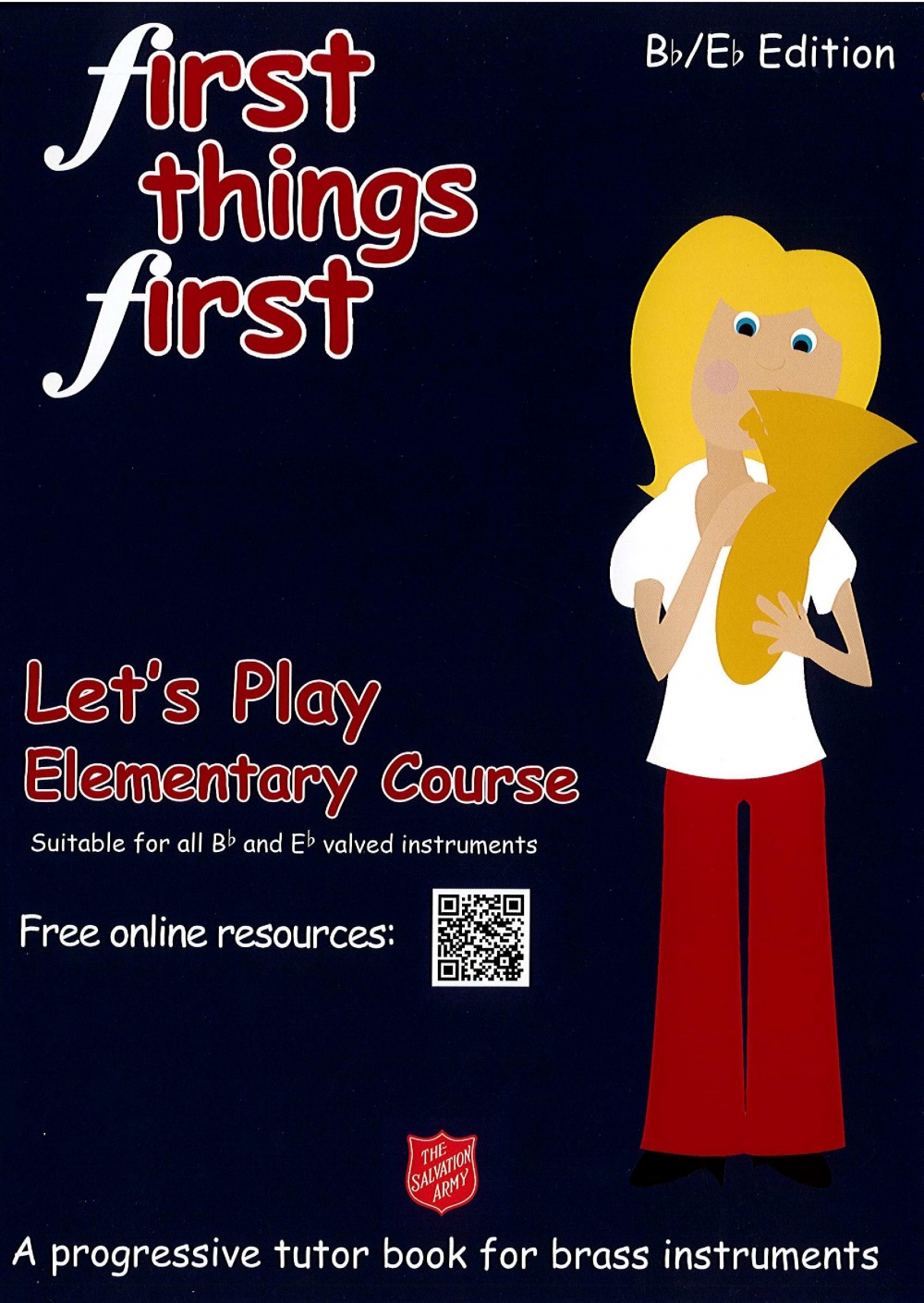
£4.99First Things First - Let's Play (Elementary Course) Bb/Eb Edition
Let's Play (Elementary Course) provides an exciting and challenging early introduction to brass playing. Intentionally, using just the first 5 noes (C-G), the course allows and encourages the important early development of a brass player's most vital commodity, the lips!Includes link to downloadable resources including backing and demonstration tracks, online course assessment sheets and personalised course certificates.In this book you willlearn how to hold the instrument and how to breath properly!learn how to buzz your lips and how to use your tongue to start notesmeet lots of well known tunes, but using just 5 notes (C, D, E, F & G)learn many of the rhythm patterns possible in 4/4 timeimprove your listening skills as you play along with the downloadable tracks.
Estimated dispatch 7-14 working days
-
 £45.00
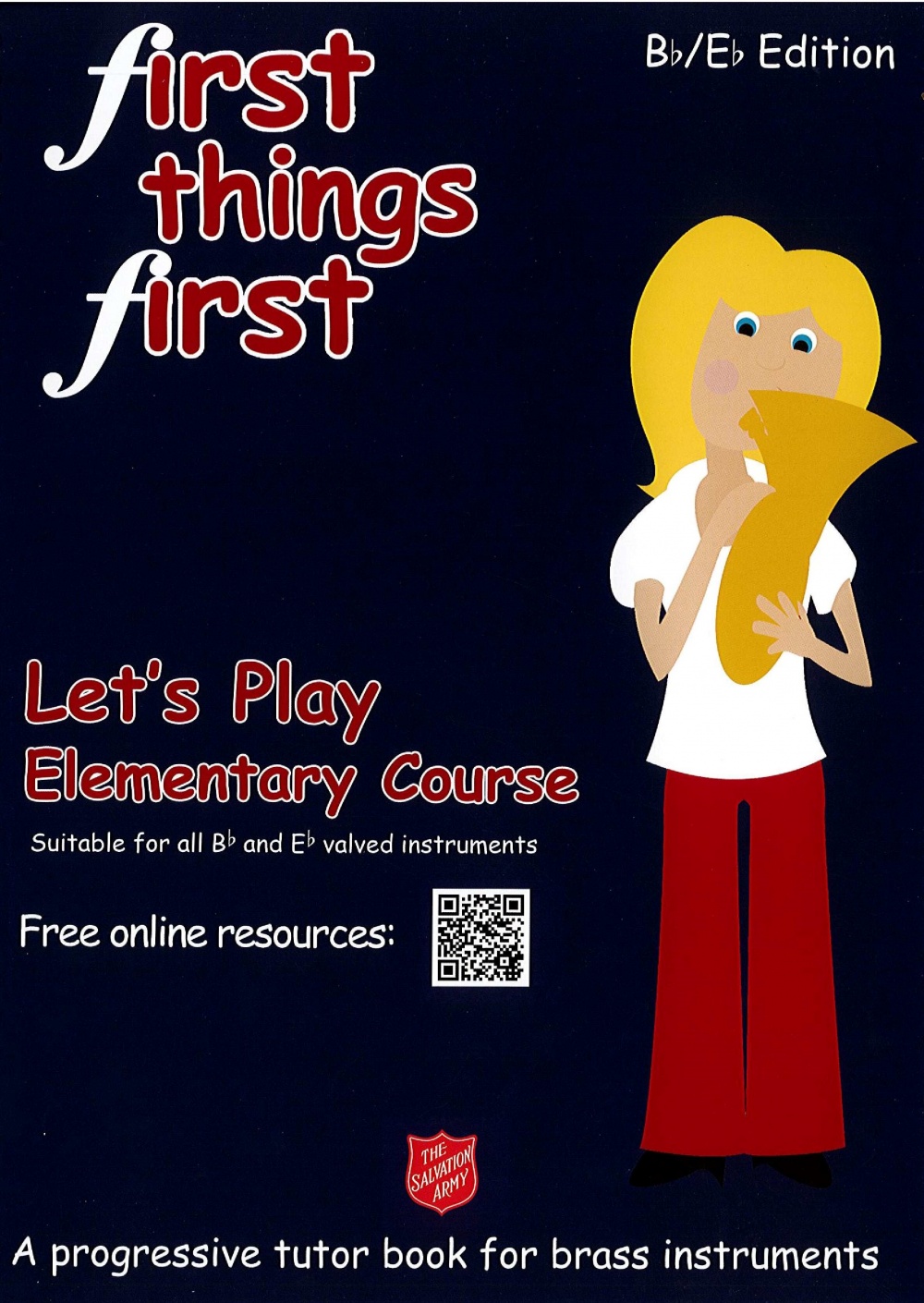
First Things First - Let's Play (Elementary Course) Bb/Eb Edition (Pack of 10)
Let's Play (Elementary Course) provides an exciting and challenging early introduction to brass playing. Intentionally, using just the first 5 noes (C-G), the course allows and encourages the important early development of a brass player's most vital commodity, the lips!Includes link to downloadable resources including backing and demonstration tracks, online course assessment sheets and personalised course certificates.In this book you willlearn how to hold the instrument and how to breath properly!learn how to buzz your lips and how to use your tongue to start notesmeet lots of well known tunes, but using just 5 notes (C, D, E, F & G)learn many of the rhythm patterns possible in 4/4 timeimprove your listening skills as you play along with the downloadable tracks.
Estimated dispatch 7-14 working days
-
 £45.00
Wellerman - Sea Shanty Medley
ABOUT THIS PIECE: We don't sell sugar, tea, or rum - nor do we condone the taking of whales in tow! We do sell some pretty exciting music though, and this latest arrangement from Adam D J Taylor is sure to be a right 'knees up' for ensemble, audience and parrots alike. Scored for brass band with optional choir, this is a fun and challenging arrangement of a few famous sea shanties with 'film music' undertones throughout. ENSEMBLE: Standard British Brass Band with optional SATB Choir* *SATB parts additional cost (minimum 4-copy order at �4.99 per copy, then �1 per copy thereafter). To order this piece with SATB parts, please contact us here. WHEN YOU BUY THIS PRODUCT, YOU GET: High-quality printed score and parts LEVEL: 2 LISTEN: Click here to hear a recording with choir (Black Dyke Mills Band & Huddersfield Choral Society) Click below to hear the piece played at the famous Changing of the Guard at Buckingham Palace: DURATION: 4-minutes 30-seconds EXAMPLE SCORE: Click here LEVEL GUIDE: Level 1- Accessible to all Level 2 - c. UK third section and higher Level 3 - c. UK second section and higher Level 4 - c. UK first section and higher Level 5 - c. UK championship section level
Estimated dispatch 5-7 working days
-
 £39.99
You Know my Name
ABOUT THIS PIECE: Bring the iconic energy of Casino Royale to your next programme with Adam D J Taylor's electrifying arrangement of "You Know My Name." Originally performed by Chris Cornell, this powerful theme blends hard rock elements with sweeping orchestration, embodying the grit and sophistication of the James Bond franchise. ENSEMBLE: Standard British Brass Band WHEN YOU BUY THIS PRODUCT, YOU GET: High-quality printed score and parts LEVEL: 2 LISTEN: DURATION: 3-minutes, 30 secondsEXAMPLE SCORE: Click here COPYRIGHT NOTICE: Due to copyright law, this item is only available in: UK AND EUROPE LEVEL GUIDE: Level 1- Accessible to all Level 2 - c. UK third section and higher Level 3 - c. UK second section and higher Level 4 - c. UK first section and higher Level 5 - c. UK championship section level
Estimated dispatch 5-7 working days
-
 £35.00
Arromanches - Albert E. Kelly/Gosling Mol
Kelly wrote this march for the 1948 Kneller Hall March Contest. With the 4/7th Dragoon Guards Kelly took part into the landing in Normandy on D Day, june the 6th 1944; actually he was injured himself at the end of july. 'ARROMANCHES' is a suiting tribute to the heroes of the Allied landings at Arromanches.
Estimated dispatch 10-14 working days
-
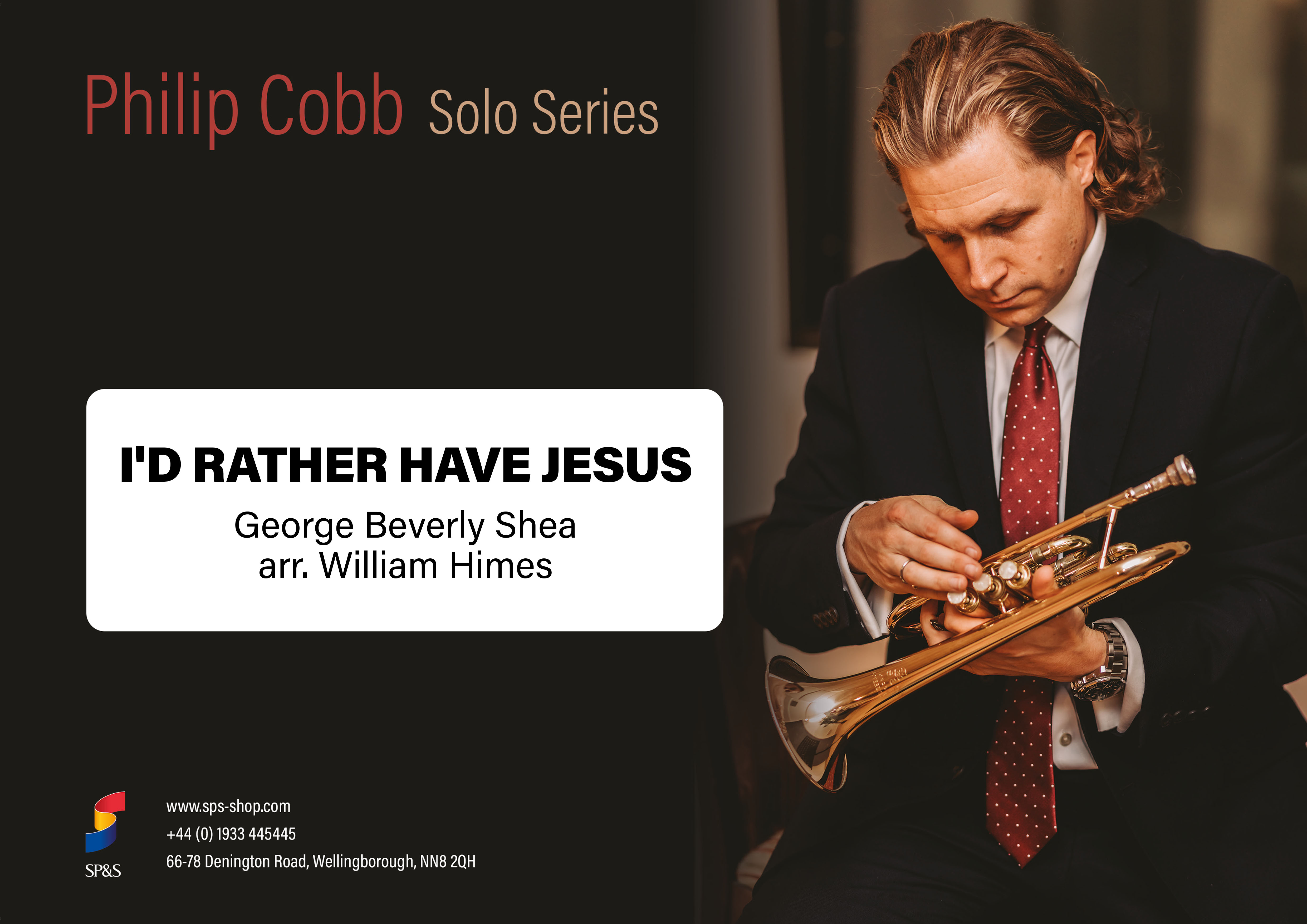 £29.95
I'd Rather Have Jesus (Cornet Solo with Brass Band - Score and Parts)
The poem, I'd rather have Jesus, was written in 1922 by Rhea Miller with the tune written by George Beverly Shea. This arrangement by William Himes was originally written for William Scarlett, trumpet player with the Chicago Symphony Orchestra and former member of the Chicago Staff Band of The Salvation Army.Duration: 3.15
Estimated dispatch 7-14 working days
 View Music