
Results
-
 £77.00
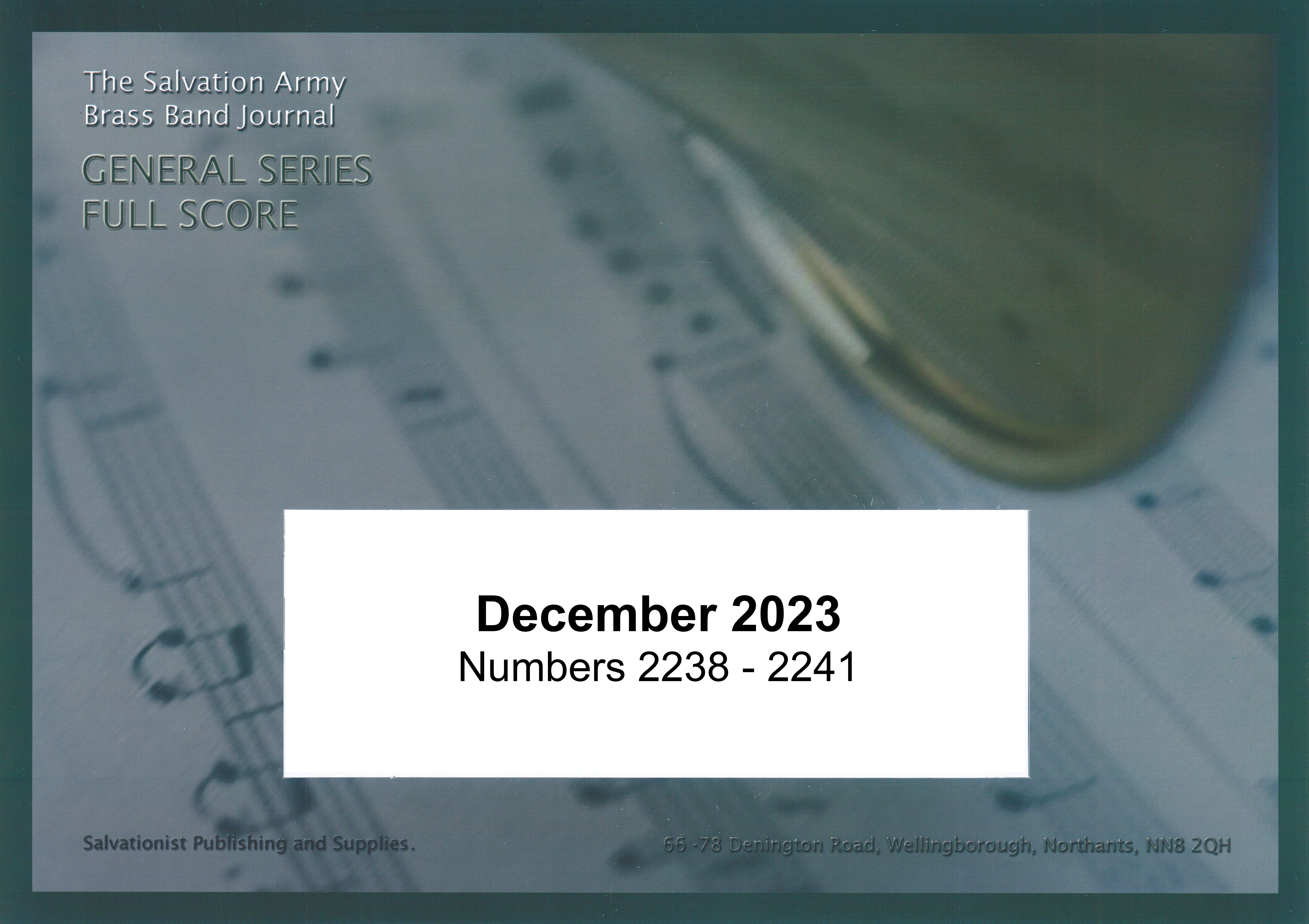
General Series Brass Band Journal, Numbers 2238 - 2241, December 2023
2238: Fanfare and allegro on the Doxology (Steve Kellner)The Doxology, set to the tune Old Hundredth (T.B. 31), is used widely around the world by Christian denominations, including Salvationists. This concert opener is based on the short but powerful hymn of praise to the Triune God.2239: To the endless day (Kenneth Downie)This is a meditation on the hymn tune Ruth (T.B. 191), written by Samuel Smith. It is a particular favourite of Don Jenkins, whose late wife was also called Ruth. This music is dedicated to Don, a distinguished trombone soloist and former Band master of Bristol Easton Corps Band.The music is always associated with the hymn by William Walsham How, whose words begin 'Summer suns are flowing over land and sea' (S.A.S.B. 59) with the title coming from the end of the final verse.2240: Euphonium Solo - He giveth more grace (Ray Steadman-Allen)This 1996 arrangement of Blacklands (T.B. 527), the composers own hymn tune written in 1963, is being published posthumously. The hymn tune sets the words 'He giveth more grace as our burdens grow greater' (S.A.S.B. 30) with an emphasis on the generosity of God.2241: The Calvary effect (Ian Clarke)Around AC 30, on a hill often refered to as Mount Calvary, an event took place that was to change the world forever. The Calvary effect is a reflection, in musical form, on that event and what it still means to people today. If features two tunes: first, in a quiet reflective mood, we hear the highly emotive Healing Stream, associated with the words 'Jesus, keep me near the cross; There is a precious fountain' (S.A.S.B. 178). This then makes way for the chorus; 'Lord, make Cavalry real to me' (S.A.S.B. 182), which is at times indistinct and almost lost in its surroundings, reflecting the sentiments of the chorus. A return to the main tune follows, this time in a positive, passionate setting. The music finishes with a triumphant 'Hallelujah!'.
Estimated dispatch 7-14 working days
-
 £59.77
Variations on 'Sine Nomine' (Brass Band) Andrew Wainwright
This magnificent work was written in 2019 for the London Central Fellowship Band and Bandmaster David Rudd. It is based on the hymn tune by Ralph Vaughan Williams, which is also known as For all the Saints. Its release in the summer of 2022 marks the 150th anniversary of Vaughan Williams' birth. The work is set in four contrasting movements, which follow an opening statement of the hymn in its full form. Variation I (Leggiero) is based on the first few notes of the chorale and is lively and sprightly in nature, with regular time changes permeating throughout. There are regular statements of the hymn, with the movement closing with a full statement of the tune in its full glory. Variation II (Andante Espressivo) derives its material from the final strain of the verse. The music is generally calm and ethereal in nature before building to an impassioned fortissimo featuring the full band, and finally dying away. Variation III (Allegro Vivace) is in compound time and, like Variation I, is based on the first few notes of the hymn. The music is joyful and playful, epitomised by syncopated rhythms, and snippets of the tune are heard throughout. Variation IV (Allegro Giocoso) is in the form of a fugue which commences with the cornets, before the theme is handed to each section of the band at various points. After several statements of the theme, the music grows into the final strain of the chorale, which is given a grandiose setting. A frenzied Presto coda leads into organ-like chords, before a series of upward major scales bring the work to its final chord. To view a video of the Canadian Staff Band performing the work please visit https://www.youtube.com/watch?v=QZ1pYH0ftv0 Sheet music available from: UK - www.brassband.co.uk USA - www.solidbrassmusic.com Difficulty Level: Second Section + Instrumentation: Soprano Cornet Eb Solo Cornet Bb 1st Cornet Bb 2nd Cornet Bb Flugel Horn Bb Solo Horn Eb 1st Horn Eb 2nd Horn Eb 1st Baritone Bb 2nd Baritone Bb 1st Trombone Bb 2nd Trombone Bb Bass Trombone Euphonium Bb Bass Eb Bass Bb Timpani Percussion 1-2
In Stock: Estimated dispatch 1-3 working days
-
 £34.99
Submerged... (Cornet Concerto No.2) - Jonathan Bates
'Submerged..' is a virtuoso concerto for Cornet composed as a response to the 'lost' Derbyshire villages of Ashopton & Derwent,. both of which were drowned in the early 1940's to make way for a new reservoir to aid the ever-increasing water demand from nearby. Sheffield and it's steel industry during World War 2. The work is through-composed but is defined by 3 clear main sections, 'The . Packhorse Bridge, Derwent', 'Ashopton Chapel' and 'Operation Chastise'. Much of the melodic and harmonic material throughout the. concerto is inspired by 3 contrasting sources; an original motif of towering block chords which opens the concerto, the famous opening. fragment of Eric Ball's 'High Peak' (1969) which was composed as a tribute to the district of Derbyshire where Ashopton & Derwent lie, . and finally Claude Debussy's haunting 'La Cath drale Engloutie' or 'The Sunken Cathedral', which was composed in 1910 around the legend of. the submerged cathedral of Ys. . I. Packhorse Bridge, Derwent (1925). One of the most striking features of the former village of Derwent was it's Packhorse Bridge, which spanned the River Derwent. adjacent to the Derwent Hall - a grand, picturesque Jacobean country house. In 1925, the renowned impressionist artist Stanley. Royle painted a striking image of the two in midwinter, with the partially frozen river sat quietly underneath the snow-topped. bridge in the foreground, while the old hall sits peacefully and dark in the background. The opening setion of this concerto paints. this picture in a quite schizophrenic manner; with frosty, shrill march-like material picturing the villagers crossing the narrow icy. bridge, combined with wild and frenzied waltz music of the grand hall and it's masquerade balls laying, for now, quietly mysterious. across the river. . II. Ashopton Chapel (1939). Ashopton was much the smaller and less-populated of the 2 'lost' villages, but still bore home to a Roman Catholic Chapel which was. the focal point of the village. The chapel - along with the rest of Ashopton - was drowned in 1943, but the final service to take place there. was held in 1939, with the final hymn being 'Day's Dying in the West'. This hymn forms a haunting coda to the 2nd section, with firstly the . piano leading the melody before an audio track containing an old recording of the hymn is accompanied by the sound of flowing water and . the rumble of storms as the village hypothetically disappears from existence with the hymn tune still echoing around the valley, before . subsiding into the growing roar of the engine of a Lancaster Bomber as it soars overhead towards Derwent to practise it's 'Dam-Buster' raid. . III. Operation Chastise (1943). The Derwent Reservoir lies adjacent to Ladybower Reservoir (of which Ashopton & Derwent were flooded to make way for) in the . Derbyshire High Peak, and during the 2nd World War was used as one of the central low-atitude practise areas of the 617 Squadron - more . commonly known affectionately as the 'Dambusters'. Before the destruction of Derwent, it's 'Packhorse Bridge' was dismantled stone by stone . and re-assembled upstream at Howden Dam to the north end of Derwent Reservoir. This is where the music begins, with a reconstruction of . the opening material before taking flight into a whirlwind tour of virtuosity from the soloist. .
In Stock: Estimated dispatch 1-3 working days
-
 £33.62
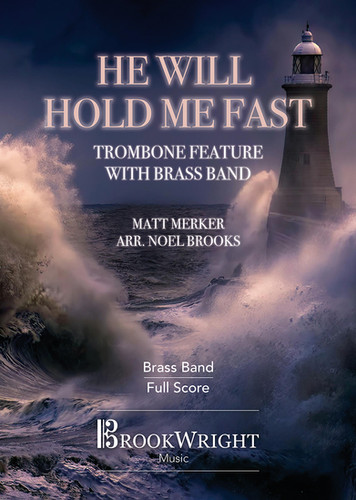
He will hold me fast (Trombone Feature with Band) Matt Merker arr. Noel Brooks
Originally conceived as a trombone duet for the graduation recital of Andy Brooks at Western University, this setting of Matt Merker's popular choral work has been adapted by Noel Brooks as a featured work for trombone trio with brass band. The arrangement follows the emotional arc of the hymn's lyrics, utilising the brass band's colours to reflect the themes of each verse. The journey begins with a sense of vulnerability; the accompaniment is kept sparse and cold to echo the text's plea regarding a failing faith. In the second verse, the music transitions into a more encouraging and uplifted atmosphere, reflecting the assurance of being "precious in His Holy sight." A shift occurs in the third verse, which takes on a darker, more reflective character to support the gravity of the lyrics. This contemplative section builds steadily toward the final chorus, where a sense of confidence returns. The work culminates in a strong musical statement of the hymn's central promise: "He will hold me fast." To view a performance of the work by the Canadian Staff Band please visit www.youtube.com/watch?v=lArvB6HP3pI Duration: Approx. 5.00 minutes Difficulty Level: 4th Section + This PDF download includes the full score and parts. Sheet music available at www.brassband.co.uk (UK) or https://satradecentral.org (USA) Instrumentation: 1st Trombone Soloist Bb 2nd Trombone Soloist Bb Bass Trombone Soloist Soprano Cornet Eb 1st Cornet Bb 2nd Cornet Bb Flugel Horn Bb 1st Horn Eb 2nd Horn Eb 1st Baritone Bb 2nd Baritone Bb Euphonium Bb Bass Eb Bass Bb Percussion Glockenspiel
In Stock: Estimated dispatch 1-3 working days
-
 £33.62
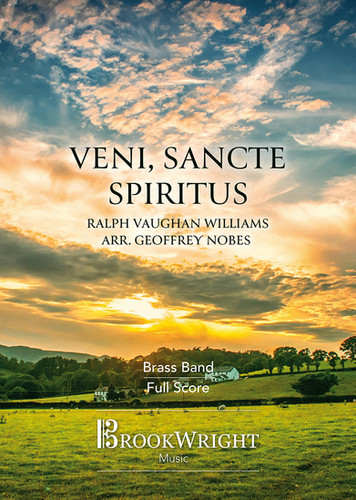
Veni, Sancte Spiritus (Brass Band) Vaughan Williams arr. Geoffrey Nobes
Originally conceived as a ceremonial work for the Band of the Royal Air Force Regiment, Veni, Sancte Spiritus was written for a Thanksgiving Service at St Clement Danes Church - the Central Church of the RAF in London. This evocative piece was inspired by the church's thousand-year-old architecture and resonant acoustic, creating a soundscape that is both reverent and atmospheric. In adapting the work for brass band, the composer introduces Vaughan Williams's hymn tune Down Ampney, seamlessly woven into the final sections of the piece. This lyrical addition enhances the spiritual tone of the music, aligning perfectly with the hymn text 'Come Down, O Love Divine', and lending the work its new title and emotional depth. Perfect for concert, ceremonial, or liturgical use, Veni, Sancte Spiritus offers a profound and reflective experience for performers and audiences alike. To view a video of the International Staff Band performing the work, please visit https://youtu.be/y5YGmKRAaic?si=7x8mBppMDEVh21Dt Duration: approx. 4.00 minutes Difficulty Level: 4th Section + PDF download includes parts and score. Sheet music available at www.brassband.co.uk (UK) or https://satradecentral.org (USA) Instrumentation: Soprano Cornet Eb Solo Cornet Bb 1st Cornet Bb 2nd Cornet Bb Flugel Horn Bb Solo Horn Eb 1st Horn Eb 2nd Horn Eb 1st Baritone Bb 2nd Baritone Bb 1st Trombone Bb 2nd Trombone Bb Bass Trombone Euphonium Bb Bass Eb Bass Bb Timpani
In Stock: Estimated dispatch 1-3 working days
-
£69.95
TRANSFORMATION (Brass Band Set) - Kenneth Downie
I believe in transformation, God can change the hearts of men, And refine the evil nature, till it glows with grace again'. So wrote John Gowans in the second verse of his great hymn, 'I believe that God the Father, can be seen in God the Son', written specifically to affirm Salvationists' beliefs. It is sung to the tune Bethany and in seeking to explore this great subject at the heart of the Christian gospel in musical terms, the composer has used this fine tune as the basis. Although it never appears in its entirety, it is seldom out of the picture and much of the work is derived from it. The other main source of material is the lovely, simple chorus, 'Some day I shall be like him, changed to heavenly beauty, when his face I see'. This chorus is especially prominent in the middle section but there are important references to it throughout. There are also brief references to Charles Wesley's hymn, 'Love Divine' and, in particular, the telling lines, 'Changed from glory into glory, till in Heaven we take our place'. The work suggests that, at times, the process of being transformed is a struggle, portrayed with many passages of fraught and demanding music. Considerable reserves of stamina and technique are required while, in contrast, the chorus, 'Some day I shall be like him' provides the warm, gentle centre of the work. The premiere of the work was given by The International Staff Band of The Salvation Army in Cadogan Hall on Friday 3rd June 2011, as part of the band's 120th anniversary celebrations.
Estimated dispatch 7-14 working days
-
 £50.00
Triumph Series Band Journal March 2015 Numbers 1259 - 1262
No. 1259 March - Divine Care (Eiliv Herikstad)The message of this march is 'God will take care of you!' The introduction reflects the beginning of the song, God will take care of you (T.B.C.S. 124), which is presented in full at sections C and D.No. 1260 (1) Cornet Solo - Become aware of him (Michael Davis)A setting for Cornet and band of Colonel Robert Redhead's song, Become aware of him, which was originally published in The Musical Salvationist.No. 1260 (2) Hymn Tune Arrangement - St Peter (David Rowsell)An arrangement of the tune, St Peter, associated with the song, In Christ there is no east or west.No. 1261 Song Arrangement - The deep love of Jesus (Andrew Blyth)The strong hymn tune of Ebenezer (T.B. 433) was composed by Welshman, Thomas John Williams (1869-1944), who served as organist and choir director at various churches in and around Llanelli. This arrangement is more relaxed in style than the original and attempts to convey the freedom of the verses mostly associated witht he tune by Samuel T. Francis (1835-1925) O deep, deep love of Jesus, vast, unmeasured, boundless, free.No. 1262 Everybody praise his holy name (Nicholas King)A bright arrangement by Nicholas King of Remco Hakkert's song, Praise his holy name.
Estimated dispatch 7-14 working days
-
 £59.77
Horizon: The Promise of the Lord (Brass Band) Andrew Wainwright
Horizon: The Promise of the Lord was written at the request of Bandmaster Stephen Cobb for The International Staff Band. It is based on the much loved hymn of the church, Cwm Rhondda (Guide me O thou great Jehovah). The work was recorded on the ISB's CD Manuscripts II (released 2023). This highly descriptive piece will be an excellent addition to concert programs, as well as being appropriate as a test piece. The inspiration for the work comes from the book of Exodus. Whilst the music is not intended to be directly programmatic, like the hymn Cwm Rhondda, the work takes the listener through the Exodus from Egypt to the promised land of Israel as a metaphor of the spiritual pilgrimage of the individual Christian through his or her earthly life. The music aims to evoke a sense of God's guidance through strife and affirm the reality that God provides for us and redeems all the wrong in the world. This God who provided for the Hebrew people wandering amidst 'barren lands' with 'bread of heaven' is still and ever will be a God of provisional grace. Through listening to the music, it is the composer's intention that we are reminded of God's promise of Deliverance as set out in Exodus 6 v7-8: 'I will take you as my own people, and I will be your God. Then you will know that I am the Lord your God, who brought you out from under the yoke of the Egyptians. And I will bring you to the land I swore with uplifted hand to give to Abraham, to Isaac and to Jacob. I will give it to you as a possession. I am the Lord.' Like the hymn, Horizon: The Promise of the Lord is intended as a prayer for guidance. The Christian is a pilgrim through 'this barren land'. The music is often chromatic and in large parts verging on atonality, as a reflection of the strife that the Israelites endured in their 40 years in the wilderness. However, it ends in climactic fashion with the Hebrew people finally reaching their destination after many years of wandering in the desert - as they approach the 'Horizon' promised by the Lord. To view a performance of the work by the National Youth Brass Band of Great Britain please visit www.youtube.com/watch?v=LjOHf7QEw1g PDF download includes score and parts. Sheet music available from: UK - www.brassband.co.uk USA - https://satradecentral.org Difficulty Level: 1st Section + Length: c11.00 minutes Instrumentation: Soprano Cornet Eb Solo Cornet Bb Repiano Cornet Bb 2nd Cornet Bb 3rd Cornet Bb Flugel Horn Bb Solo Horn Eb 1st Horn Eb 2nd Horn Eb 1st Baritone Bb 2nd Baritone Bb 1st Trombone Bb 2nd Trombone Bb Bass Trombone Euphonium Bb Bass Eb Bass Bb Percussion 1-4
In Stock: Estimated dispatch 1-3 working days
-
 £70.00
General Series Band Journal April 2016 Numbers 2154-2157
No. 2154 Cornet Solo - The victory cry! (Andrew Blyth)This solo features the popular song by Stuart Townend and Keith Getty entitled 'Power of the Cross', along with an original song by the composer, 'The Cross of hope'. It was originally written at the request of Staff Bandsman Gerry Todd and the Melbourne Staff Band.No.2155 Mission Force (Stephen Bulla)This is programmatic music, portraying the determination and forward vision of the modern church's mission. It includes two well-known hymns, 'Trentham' (T.B.159) and 'Slane' (T.B.831), using their words as metaphors that describe this quest into a spiritual future.No.2156 Prelude on 'Lavenham' (Geoffrey Nobes)An arrangement of a hymn, written by the composer with words by Reverend Nick Fawcett. The three statements of the melody correspond to three verses of the hymn and seek to reflect their meaning.No. 2157 On we march (Kevin Larsson)This piece was written for the Pasadena Tabernacle Band for their 120th anniversary. It includes a number of tunes closely connected with the Corps including 'Everything's coming up roses' from Gypsy, a song closely associated with the Rose Parade, and 'Hooray for Hollywood' as the Corps was previously called Hollywood Tabernacle. Continuing on the Rose Parade theme, 'On we march' (T.B.788) and the well-known hymn tune, 'Rachie' (T.B.190), are also featured.
Estimated dispatch 7-14 working days
-
 £55.00
Triumph Series Brass Band Journal, Numbers 1383 - 1386, March 2026
1383: Festival March - Lead On! (Andrew Wainwright)A dynamic march, commissioned by Majors Paul and Dawn McFarland during their appointment as Area Commanders of The Salvation Army's Dallas-Fort Worth Area, premiered at the 2023 Thanksgiving service at the Dallas Adult Rehabilitation Centre. Featuring the classic hymns Storm the forts of darkness (S.A.S.B. 980) and Lead on, O King eternal (S.A.S.B. 964), the piece captures the drive, hope, and mission at the heart of The Salvation Army's work in North Texas.1384: Confession (Kenneth Downie)This arrangement is based on the tune Lord of all (T.B. 440), one of the welcome additions to the 2015 Salvation Army tune book. Introduced to the arranger by Andrew Blyth, whose appreciation for the melody highlighted its gentle charm, the piece is dedicated to Andrew and the Peterborough Citadel Band, where he served as Bandmaster and continues to play.The music pairs the tune with the reflective words of We have not known thee as we ought (S.A.S.B. 630), a hymn often used in worship as a moment of confession and heart-searching before God. Its inclusion encourages both performers and listeners to approach worship with humility and sincerity.Although labelled simply as "German traditional," the tune's graceful simplicity is immediately evident. This arrangement preserves that character while introducing subtle harmonic colour and developing the tune's rising fourth motif as a unifying musical thread. The gentle nature of the melody remains central throughout, with a slightly heightened energy in the fifth phrase carefully drawn out without disrupting the overall serenity. The sharing of thematic material between Cornets and Horns calls for smooth, unobtrusive ensemble playing, allowing the tune's beauty to speak naturally.1385: God in good (Stephen Hull) This arrangement brings together two much'loved melodies: Goodness of God, a favourite from the final years of the arranger's service as Divisional Music Director in the Wisconsin/Upper Michigan Division, and the simple, enduring chorus God is so good. Heard often at summer camps, the song's message stayed with him, eventually inspiring this thoughtful musical pairing that highlights God's unwavering goodness throughout our lives.1386: A march in time (Martin Cordner)Written to celebrate the 130th anniversary of Thetford Corps (UKI Territory), this lively march pays tribute to a legacy of faithful witness, joyful service, and a community moving forward in God's light. Premiered by Cambridge Citadel Band during the anniversary weekend, the piece weaves together three cherished songs: Marching on in the light of God (S.A.S.B. 968), Jesus, precious Saviour (S.A.S.B. 501), and Light up the sunshine in your heart.
Estimated dispatch 7-14 working days
 Watch video