
Results
-
 £50.00
Dragon Dances
DescriptionDragon Dances was commissioned by Owen Farr, who is also the work's dedicatee, gave the first performance with the Cornwall Youth Band conducted by Richard Evans on 5 April 2010 and has recorded it on his solo CD "A New Dawn" accompanied by the Cory Band conducted by Philip Harper.Being a Welsh composer, writing music for a Welsh soloist, I was naturally keen to reflect this in the music, and I drew inspiration from two particularly Welsh concepts - "hiraeth" and "hwyl". "Hiraeth" is a word that has no direct translation into English, but an approximation would be 'yearning for home'. Like the other celtic nations, Wales has a widespread diaspora of people who left to seek new lives out in the empire and "hiraeth" is a way of summing up the homesickness felt by these exiles, some of whom return each year for a special ceremony at the Royal National Eisteddfod. "Hwyl" is an even more complicated word, variously meaning ecstatic joy, fervour, equable temperament and even the characteristic sing-song oration style of the great Welsh Methodist preachers.I have attempted to make the music reflect both of these, with the melancholy first part of the work inspired by the hymns and solo songs for which Wales is famous, and the second part having a much more dance-like, joyful quality.Performance Notes:2 solo cornets, 2nd and 3rd cornets require cup mutes. 2 solo cornets require harmon mutes with tubes removed (marked 'TR' in the score).1st horn and 1st baritone require straight mutes, preferably fibre. 1st trombone requires a straight mute, 2nd and bass require cup mutes.Percussion instruments required are vibraphone, glockenspiel, timpani, snare drum, suspended cymbal and tam tamWatch/Listen to the score below:
Estimated dispatch 7-14 working days
-
 £15.00
LeFay's Mirage
DescriptionThe "mirage" of the title refers to an optical effect called a fata morgana, often seen in a narrow band right above the horizon. It is an Italian term named after the Arthurian sorceress Morgan le Fay, from a belief that these mirages were fairy castles in the air or false land created by her witchcraft to lure sailors to their deaths.Fata Morgana mirages significantly distort the object or objects on which they are based, often such that the object is completely unrecognizable. A Fata Morgana may be seen on land or at sea, in polar regions, or in deserts. It may involve almost any kind of distant object, including boats, islands, and the coastline.Music often performs the same tricks - the original material is inverted, reflected and changed until it becomes something almost entirely new. This work is in two main sections, slow and fast, separated by a virtuoso cadenza with the material in the second part being a distorted reflection of that in the first. As befits a work commissioned to show off a soloist's range and ability, the work is highly challenging technically and covers the full range of the tenor horn.Where the sustain pedal is required by the music, this is indicated in the piano part; pedalling elsewhere is at the player's discretion.
Estimated dispatch 7-14 working days
-
 £30.00
Edward Gregson: Music of the Angels, for Symphonic Brass and Percussion
DescriptionProgramme NoteMusic of the Angels is a dramatic work of some 16 minute's duration, scored for a large symphonic brass ensemble, including seven trumpets, and percussion. The percussion section deploys 'dark' instruments such as three tam-tams, a bass drum and two sets of timpani.The title of the work is based on a quotation from the Book of Revelations:And I saw the seven angels which stood before God; and to them were given seven trumpetsThus, the idea behind the work is a dramatic one and the composer has emphasised this by the partial spatial arrangement of the ensemble, with six solo trumpets standing centre stage, but behind the main ensemble, and the seventh trumpet off-stage throughout.The work opens with a four-note motif, dominant throughout the work, announced initially by four off-stage horns and answered by fanfare figures on four solo trumpets. Then in turn each of the first four solo trumpets announce their own cadenzas before joining together, independently playing their own music. This reaches an intense climax before subsiding into slow music which might be described as a Kyrie eleison - a lament for humanity - a cantilena for flugel horn and euphonium, accompanied by trombones. The drama soon returns with the entry of trumpets 5 and 6, playing music that is fast, more urgent and foreboding, and describing in musical terms the horsemen of the Apocalypse.At the climax of this section trumpet 7 enters dramatically, representing the words of the seventh angel ... and time shall be no more. The opening four-note motif is here transformed into a cadenza of epic proportions, to the partial accompaniment of three tam-tams (representing the Holy Trinity). The ensuing scherzo, scored for the ensemble, is fast and furious, but despite the somewhat desolate mood of this music (briefly interrupted by the re-appearance of trumpet 7), it slowly moves towards a more optimistic conclusion, transforming the 'lament for humanity' music into an affirmative and triumphant climax.This work has been commercially recorded on a critically acclaimed CD from London Brass on the Chandos label, available HERE.For more information on Edward Gregson's music please visit the composer's website: www.edwardgregson.com
Estimated dispatch 7-14 working days
-
£73.00
Stealing Apples - Fats Waller - Reid Gilje
"Stealing Apples" is an old swing-tune written by Fats Waller. Performances by Benny Goodman and his big band made the song very popular.In this arrangement for brass band, the mallet percussion is very essential. Mallet Percussion presents the melody from letter A and is also featured as soli-instruments from letter L to P. These parts can alternatively be played as vibraphone solo.Please be aware of the balance at letter A. Horn and Trombones must play piano but well articulated. Letter D must sound sparkling and fresh with articulated and powerful trombones and cornets (using straight-mute).Make shue that the 8th-notes are not played too dotted two bars before letter G. Almost even 8th-notes accentuated on the start of the slur is a good tip.Watch the balance at letter H. This part have to sound homogeniously.The soloistic Soprano Cornet at letter Q must be played in the style of Benny Goodan. The accompaniment must not be too powerful from letter R to S. Best of luck with the performance!
Estimated dispatch 7-14 working days
-
£67.00
Bla vals - Idar Torskangerpoll
A piece that explore the "blue" notes in music, and where we have the constant change of 3 or 2 in a bar. Solo in horn or altosax.Make sure that the bass line and percussion is steady and firm throughout the piece.
Estimated dispatch 7-14 working days
-
 £59.95
Heroes of Erin - Richard Rock
A suite of Irish music commissioned by Prof. David King for the University of Salford Brass Band. The suite is in 4 movements 'Mo Ghile Mear' - full band with small flugel feature, 'Bohemian' - Horn Solo, 'Lucht Siuil' - Cornet Solo and 'Molly's Wake' - Band feature
Titles No Longer Available
-
 £39.95
Summer's Eve - Paul Lovatt-Cooper
'On a Summer's Eve' was commissioned to mark the 21st Birthday of the Tenor Horn Soloist Emma Conway
Estimated dispatch 10-14 days
-
£34.95
Upon Green Vales - Paul Lovatt-Cooper
Commissioned for Black Dykes Solo Horn Siobhan Bates
Estimated dispatch 10-14 days
-
 £24.95
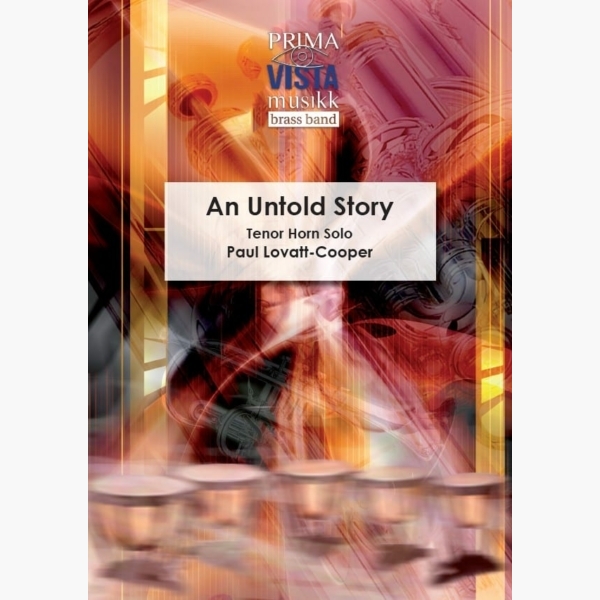
An Untold Story - Paul Lovatt-Cooper
This delightful piece is sure to be a welcome addition to the tenor horn repertoire. Although not technically challenging, the piece requires a great deal of lyricism from the soloist and a lightness of touch from the band accompaniment. This...
Estimated dispatch 5-7 working days
-
 £29.95
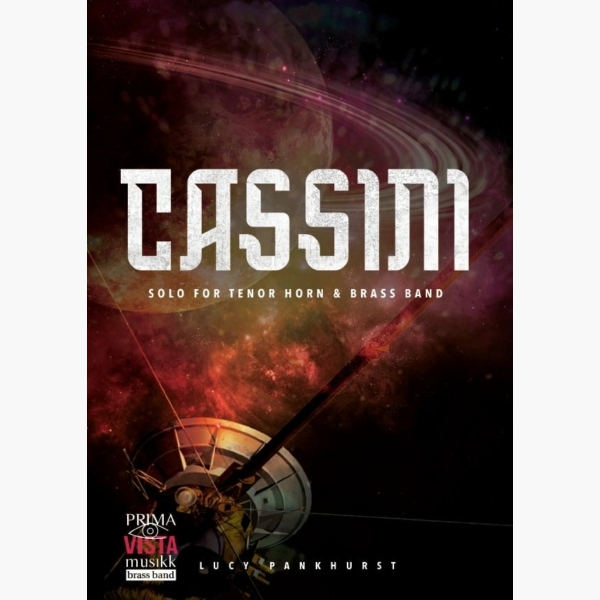
Cassini - Lucy Pankhurst
Cassini was commissioned in 2017 by the University of Salford for Tenor Horn soloist Helen Varley and the University of Salford Brass Band. The commission was requested just before the final part of the Cassini space probe's mission which took...
Estimated dispatch 5-7 working days
 View Music