
Results
-
 £116.40
Decennium - Eric Swiggers
'Decennium' was composed in 2003 as a commission by the municipality of Berheze for its tenth anniversary. The composition describes the history of this town in the Province of Brabant, consisting of 6 different villages: Heesch, Heeswijk, Dinther, Nistelrode, Loosbroek and Vorstenbosch. The composition starts with a slow introduction, Adagio Misterioso, suggesting the atmosphere in long-ago days when the area consisted mainly of swamps, meres and low woods. (The word 'Bern' is a synonym of 'Born' meaning source or water, whereas 'Hese' is derived from 'Haisjo' meaning brushwood ). Above the dark sounds we hear far away trumpet signals announcing the Middle Ages. After a piercing crescendo, we hear the full sound of festive trumpets. A medieval dance, as was to be heard in the Heeswijk castle, follows. This dance gets a more and more stirring character and finally turns into a merry popular dance ending with a burst of laughter reproduced by descending scales with the muted trombones and trumpets. A slow transition with a quotation from a Gregorian plainsong (Domine Deus) and church bell ringing, referring to the Abbey of Berne, brings us to a romantic Larghetto. This part describes the quiet rural life in a beautiful natural surrounding. The last dying note contrasts with the threatening ostinato, referring to the rise of the industrialization, which provoked quite some resistance with the local people. Once more we hear the 'Domine Deus' but much more powerful this time. When the resistance calms down, the work concludes with an Alla Marcia. The first notes of the main theme could be heard all through the composition and now we hear the complete main theme again. The new town is born. A festive conclusion refers both to the tenth anniversary and the optimism and confidence as to the future.
Estimated dispatch 5-14 working days
-
 £76.99
Oregon - Jacob de Haan
This fantasy tells the story of Oregon, one of Americas north-western states. Traveling by train on the Northern Pacific Railroad, the listener is taken through the fascinating Oregon landscape. Indians, cowboys, golddiggers and hooded wagons will file past on this adventurous journey. The piece has some similarities with a soundtrack of a movie. Various melodies, which could be the main themes of a movie, pass the review.The piece begins in a slow movement, introducing the first theme in minor. Then we hear in the following fast movement the trombones imitate the train, whistling the steam-flute. We hear the characteristic minor theme again, but now in differentvariants(also in major). The rythmic structure of 'western' stile and rock succeed each other. This is leading to the slow movement, where the signals of horns and trumpets introduce a wonderful vocal melody. After this characteristic melody, the fast movement appears shortly again, the trombones whistling the steam-flute again (now in major). We hear also some musical elements, that plays a part in the following Presto. Barchanges, jazzy chords, interesting rhytmic patterns (with bongo) and an original theme are the characteristics of this Presto. After this, the horns announce the last section of the piece. Interesting is the fact that we hear in this Allegro section a variant of the vocal melody in the slow movement. Also the Presto theme returns shortly, followed by the Allargando, which is a grand characteristic end of a soundtrack. The movie of our travelling fantasy has come to an end.
Estimated dispatch 5-14 working days
-
 £183.20
Folklore - Kjetil Djønne
"Folklore" is a work for brass band and percussion loosely based on the story of the Norwegian woman accused of witchcraft, Anne Pedersdotter. She was sentenced to be burned at the stake in Bergen in the spring of 1590 and has since been frequently highlighted as Norway's most famous and talked-about witch.The work begins with the movement "Lyderhorn," depicting the mountain outside Bergen where witches gathered to plan magical actions against the city. Here, we hear the quietness of nature and the wind blowing through the trees before a new theme appears, which will come to life in the next movement. In the distance, the witches have started their ceremony.In the next movement, "Walpurgis Night," the witches perform their rituals to afflict the city with fire, disease, and natural disasters. The ceremony becomes more and more chaotic, violent, and compelling until the darkness of the night envelops us, concluding the section.The third movement describes the women's inner struggle against the harassment they faced when the people of Bergen suspected them of being witches. Rumors often turned into formal accusations from the legal system, and many were sentenced to death after undergoing trial. "From life to death through the fire."The fourth and final movement, "The Pyre," depicts the actual death sentence. You can hear the pyre being ignited and the flames growing and intensifying. It all culminates in a chorale as a memorial to the lives that were taken.
Estimated dispatch 5-14 working days
-
£76.99
Durkle Bandrydge Suite - Bruce Fraser
Durkle Bandrydge is the name of the composers imaginary world, but it could very well be anyones invisible dream world with a different name. In this very versatile suite by Bruce Fraser, 8 characters are featured, each with its ownpeculiarities, making Durkle Bandrydge such a colourful place. Do these characters differ that much from us? That is for you to find out! In the last part, all characters come together in a special way.Durkle Bandrydge exists at the end ofyour street. It is invisible to humans, but Durkle Bandrygators can watch us with great interest. The music will introduce you to some of the characters who live in this unusual place. The parts: Somnanbulyss, who is a giant trollguarding the entrance to Durkle Bandryde. At least, he is supposed to, but he tends to sleep most of the time. His music is therefore very slow moving and sleepy. Long Gwysteen is a tall, mysterious, and somehow sophisticated character,who walls around with a shell on his back. His music glides along rather gracefully. Squelfitch is a rather unpleasant and smelly character who lives in a bog, which is why his music sounds rather slimy and a bit like trying to walkthrough quicksand. Perfydlia is a meddling old woman, who gossips about everybody and squeals with sudden delight at the small exciting bits of tittletattle about others in the village. In the music you can hear her sudden little squealsof delight. Maryann Lovely is a beautiful young lady, graceful, gorgeous, absolutely devine, and her music is obviously just the same. Thistledoo Nicely is a lively character who spends and spends and spends with her credit card,buying the latest fashion and never worries about having to pay the bills. Her music reflects her excitement when shopping and het 'happy go lucky' approach to life. Marsyn Edginton is the Lord of the manor, the richest man in town, the'big cheese', the man with all the power and, of course, the biggest house. He is very grand and his music like he could be a king. Jimmy McScotsmyn is a red haired scotsman wearing tartan cap. He misses his home country terribly and eatslots of shortbread, oatcakes, scotch eggs, porridge and drinks an enormous amount of Scotch Wisky, which helps him to have fond memories of the kind of music he would like to dance to when he was a younger man. His favourite dance is a Jig andthis is the music he remembers. Grand March of the Durkle Bandrydgators. We hope that you have enjoyed meeting these characters from Drukle Bandrydge and would invite you to listen to all the villagers now march along in a grand parade -it is a pity that you can not see them, what is a wonderful sight. If you listen carefully, you will hear the melodies which belong to the characters as they march past. Oh what a grand spectacle!
Estimated dispatch 5-14 working days
-
 £58.70
Into the Unknown - From Frozen II - Kristen Anderson-Lopez - Haakon Esplo
Composers Kristen Anderson-Lopez and Robert Lopez have once again written music for Disneys sequel film Frozen II after great success in 2013 with Frozen.Many will probably remember Let it Go which became a big hit from this movie.The new movie continue to follow the main character Elsa, who sings her amazing musical number "Into the Unknown" in Frozen II. The song describes Elsa's inner conflict of choice to leave Arendelle or trace the source of a mysterious voice she continues to hear.The song is originally sung by Idina Menzel and the Norwegian artist Aurora and has elements and motifs inspired by Scandinavian herding calls. As always, the music is both magnificent and captivating and will surely be a hit for many years to come.
Estimated dispatch 5-14 working days
-
 £174.10
Three Gentle Giants - Svein H. Giske
Three Gentle Giantswas commissioned by Grenland International Brass Festival as a test piece for the 2nd division in 2008.Three Gentle Giants. The three giants each have their own monologue which leads into a conversation. They gather recognition and respect from each others views as the dialogue evolves. Eventually they find a more nutual and singular expression to their conversation.The giants are old with a long life behind them. This can be heard through a slow, melancholic waltz. A waltz is dance commonly linked to festiveoccasions, such as weddings, but for the giants it holds much more significance. It gives room to think about people they have met, placesthey have been, and all that life has given them.Quietly it ends, more or less like it began. We hear echoes of the past, before it all fades out.The giants wander off into a new beginning.Svein H. Giske- January 2023 -In Memoriam Thorvald, Finn and Thor Louis
Estimated dispatch 5-14 working days
-
 £104.99
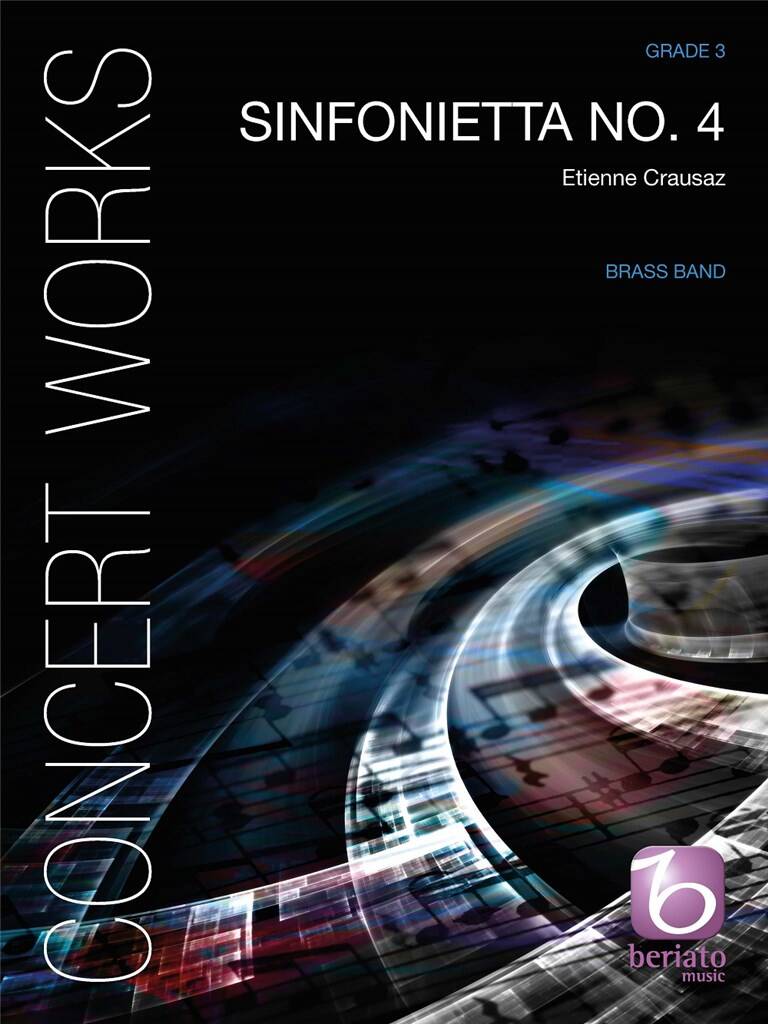
Sinfonietta No. 4 - Etienne Crausaz
This work was composed for the occasion of the 28. Fete Cantonale des Musiques Vaudoises (28th Music Festival of the Canton Vaud), taking place in the Valley of Joux in June 2018. The music begins with a very simple fanfare consisting of five ascending legato notes which constitute the fundamental framework of the piece. This contrasts with the more cantabile sounding theme we hear after. The following Allegro section uses the sequence in a contrapuntal style reminding us of the Renaissance period, but with more modern day harmonies. Two solo cadenzas played by cornet and euphonium initiate the middle section, in which a theme also based on the sequence builds uptowards the climax of the piece. The sequence in the last section is played in time but gives the feeling of a "one to the bar" beat. Shortly before the festive finale, the music heard in the middle part resumes.
Estimated dispatch 5-14 working days
-
 £228.70
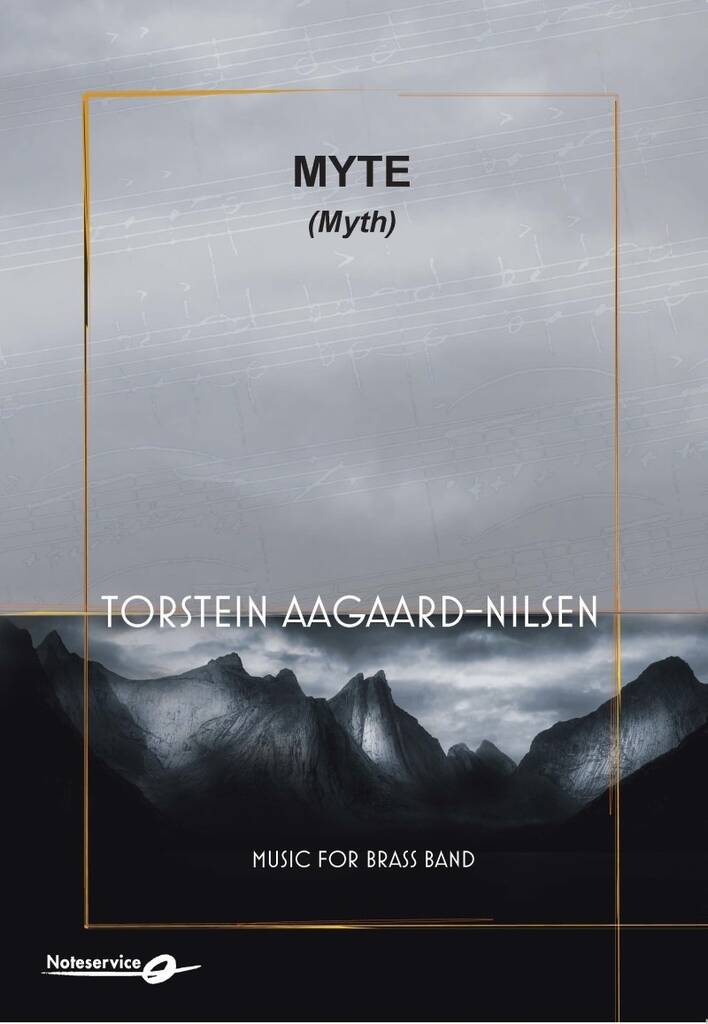
Myte - Myth - Torstein Aagaard-Nilsen
Commissioned by Radoy Brass for their 20 years anniversary.This version was first performed by Manger Skulemusikklag in 2005.The Work is devided into Five Scenes:1. Sverdet (The Sword) 3:452. Advarsel - fra en vis mann (Warning - from a Wise Man) 2:303. Dragen (The Dragon) 3:004. Advarsel II - fra syngende fugler (Warning II - from singing birds) 1:355. Gull - forbannelsen (Gold - The Curse) 2:50Total durata 13:30This work is based on five scenes from the tale about "Sigurd Favnesbane" (Sigurd the dragonslayer). Moods and atmospheres in the piece represent my way of retelling the old myth.1. The SwordThe dwarf blacksmith Regin is hammering and sharpening the edges of the magical sword Gram. After three attempts the sword is finally sharp enough to kill a dragon. 2. Warning - from a Wise manRichard Wagners opera Sigfried is based on the same story. In the opera the hero get warned by a wise man. He tells the secret of how to survive an attack of the dragon by hiding in a hole in the pathway and then kill the dragon with the sword as thedragon passes on its way to the river to drink water.3. DragonThe Dragon (Favne) guards a fantastic treasure, but he is also the brother of the blacksmith Regin. Favne get killed and his blood flows slowly while he laments (trombone/bass trombone).4. Warning II - from singing birdsWhile frying the heart, Sigurd burns his thumb and put it into his mouth to cool it down. Then he swallow a drop of fresh magic dragon blood which transfers the ability to understand the birdlanguage. The birds sing warnings to Sigurd telling himthat Regin will betray him and later kill him. Sigurd then kills Regin instead.5. Gold - the CurseSigurd takes the gold treasure and escapes on the horseback of Grane. But his robbery of the gold lead him into trouble: The gold is banned and a curse will hit everyone whotakes it...Myth is a programmatic work where the story is quite clearly illustrated throughout the piece:In the first movement you can hear the blacksmith working with hammer on ambolt while the heat is intense from the glows. The dwarf has got his own theme i lower brass (bar 4-5). The hero Sigurd has his own identifying chord (2 bars before F). Thechord is also a symbol of the sword.In the second movement the warning from the wise man is expressed in the lyric bass line.The airblow in instruments illustrate the dragon Favne on his way out of his cave, and later the blood flows slowly. The dragon takes his last deep breath after a painful duet in trombones. The birds sing their motifs (lightly, but not cheerfulthough), until Sigurd cuts the head off Regin and it hits the ground.The last movement describes the atmosphere andstate of mind as the curse infects the obsessed thief.
Estimated dispatch 5-14 working days
-
 £115.60
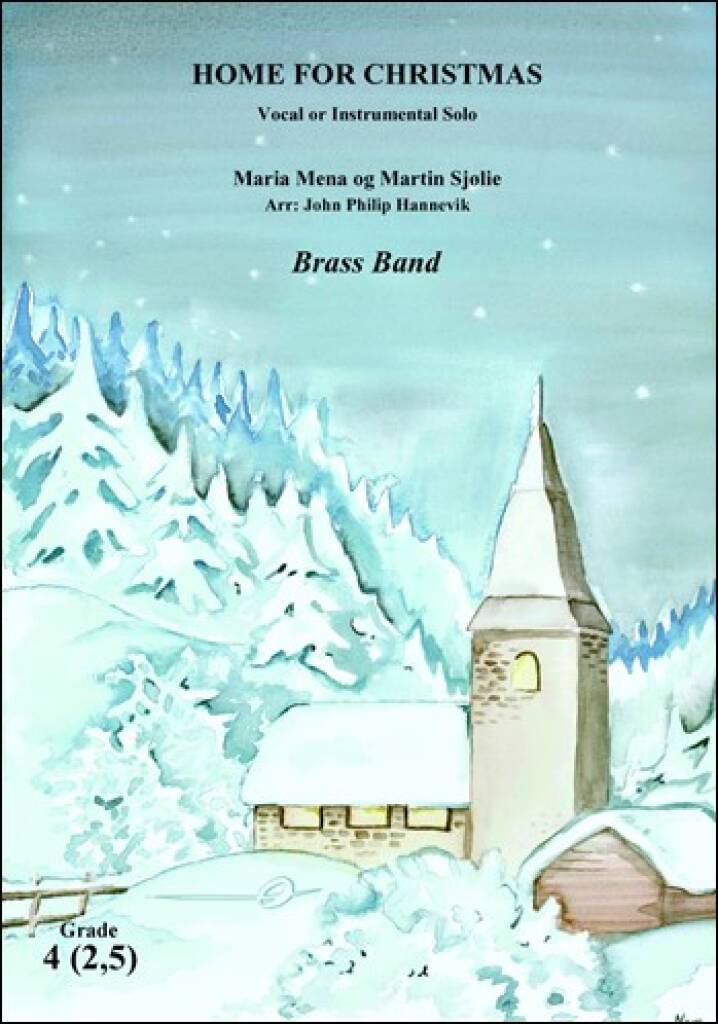
Home for Christmas - Maria Mena - John Philip Hannevik
The song "Home for Christmas" is written and performed by the popular norwegian singer / songwriter Maria Mena. The song featured as the soundtrack for director Bent Hamers movie "Hjem til jul" from 2010. This arrangement is written for aninstrumental soloist, but if one prefers a vocal soloist, one will also find a solo part with lyrics included in the full set.It will be helpful to hear the recorded version of this song performed by Maria Mena. This will help adapting to thefree timing required to make the performance interesting and musical.
Estimated dispatch 5-14 working days
-
 £127.30
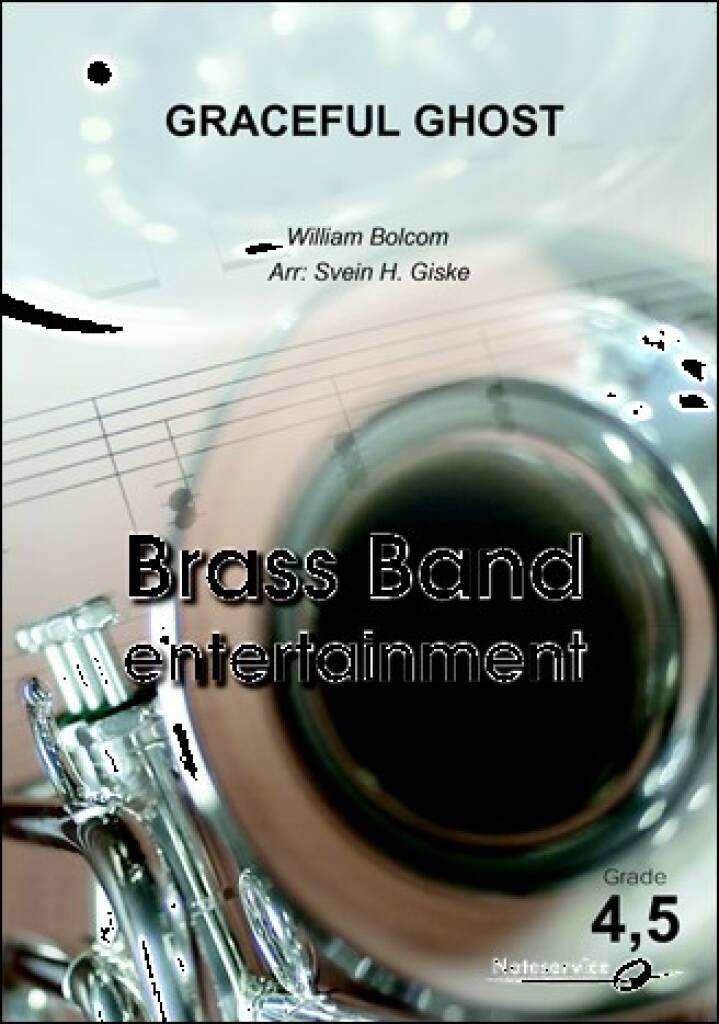
Graceful Ghost - William Bolcom
I came to know of this piece when hearing famous Norwegian ragtime pianist Morten Gunnar Larsen playing it at a concert with the Norwegian Navy Band Bergen. I was struck by its melancholic beauty and wanted to arrange it for band.Ragtimes are rarely in a minor key (which this one is) and when you first hear it, you might think it was written around the time when Scott Joplin was the main ragtime composer. But, if you listen more carefully, you notice that some of theharmonies are more advanced than one might expect in traditional ragtime, giving the piece a slightly more contemporary feel. The composer William Bolcom wrote Graceful Ghost in 1970 to honour the memory of his father and it is one of hismost popular pieces.
Estimated dispatch 5-14 working days
 View Music