
Results
-
 £29.95
Scherzo No. 1 - Jonathan Bates
DURATION: 2'30". DIFFICULTY: 1st+. 'Scherzo No.1 (Sanguine)' was composed for the Reg Vardy Band's 2019 Brass in Concert Championships programme, which revolved around the 4 temperaments of Human Nature - a theory by the Greek philsopher Galen from 450 BC. Sanguine individuals are defined as being optimistic or positive, especially in an apparently bad or difficult situation. An extrovert, and someone that looks for the good in situations. They bring energy into a room and brighten people's life with their humour and cheerful nature. It is upon this definition which Scherzo No.1 is composed, with an optimistic and cheery feel to the music, with small interjections of anger and sadness soon giving way to the more upbeat music surrounding it. .
In Stock: Estimated dispatch 1-3 working days
-
 £29.95
Temperamental - Jonathan Bates
DURATION: 3'30". DIFFICULTY: Difficult. 'Temperamental' was composed as the opening item to the Reg Vardy Band's 2019 Brass in Concert Championships programme, which revolved around the 4 temperaments of Human Nature - a theory by the Greek philsopher Galen from 450 BC. This funk-inspired short concert work is deliberately very schizophrenic in nature, encompassing all 4 moods and feelings into the music and featuring a number of soloists from within the band, notably the Flugel Horn, Solo Trombone and Percussion section. .
In Stock: Estimated dispatch 1-3 working days
-
 £10.00
Kopanitsa
DescriptionKopanitsa was commissioned by Gavin Pritchard, who is also the work's dedicatee and gave the first performance with the Tongwynlais Temperance Band conducted by Gareth Pritchard at the Butlins Mineworkers Championship on 20 January 2008, winning the prize for best soloist as a result. He has recorded it on the CD "Enter the Galaxies" accompanied by the Cory Band conducted by Robert Childs.Gavin had requested a virtuoso showpiece featuring as many instruments as possible. The solo part is therefore written for vibraphone (bowed and struck), 10 x tuned tom toms, 5 x suspended cymbals plus hi-hat and a xylophone. The soloist's 'choreography' therefore forms an integral part of the performance. This can be seen to great effect in Gavin's performance of the work at the 2013 Brass in Concert Championship with Tredegar Band, available on the DVD of the event from World of Brass. A 'kopanitsa' is a Bulgarian folk dance that traditionally features two slow beats and two quick beats, reflected in the central 10/8 section. The music is deliberately Balkan in character, using the characteristic modes of Greek and Bulgarian folk music, and accelerates regularly to finish at breakneck speed. The tom-tom section marked 'ad lib.' after [D] can be improvised if the soloist wishes.You can follow the score in the preview video below!
Estimated dispatch 7-14 working days
-
 £28.50
Kronos - Richard Rock
This piece portrays the character of Kronos. Kronos is a character taken from Greek Mythology, a Titan God, who killed his own father, Uranus, in his lust for power and who also tried to kill his own offspring upon learning from an oracle that one of his children would overthrow him....
Titles No Longer Available
-
 £94.95
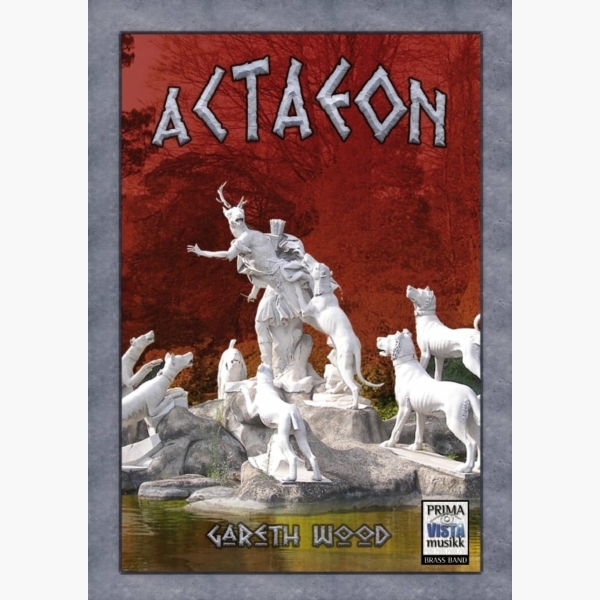
Actaeon - Gareth Wood
This major work for brass band is based on the story of the Greek mythological character, Actaeon. Artemis was bathing in the woods when the hunter Actaeon stumbled across her, thus seeing her naked. He stopped and stared, amazed at...
Estimated dispatch 5-7 working days
-
 £39.95
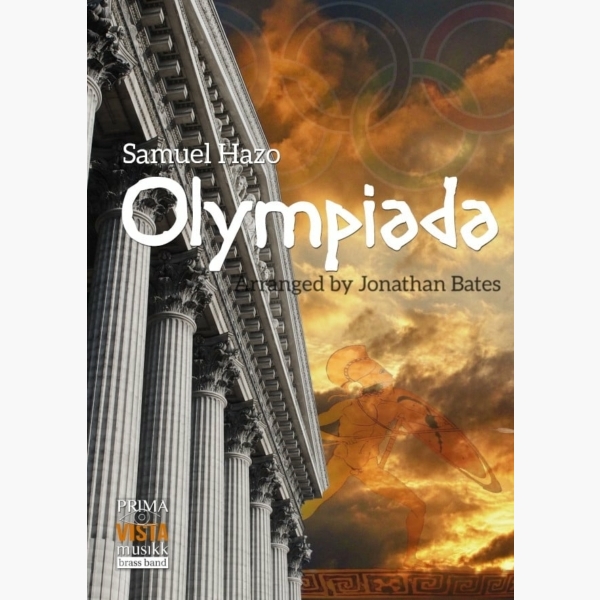
Olympiada - Samuel Hazo - Jonathan Bates
Olympiada was written to capture the human conditions of intense glory and pain that only the Olympic Games can inspire, while musically tying themes with a historic Greek feel to modern chord changes and melodies. It opens with an Olympic-style...
Estimated dispatch 5-7 working days
-
£44.95
KERYGMA (Brass Band Set) - Steven Ponsford
The Greek word 'kerygma' was adopted by the early Christian church as a way of expressing 'the word of God proclaimed'. The composer has taken this concept and used three contemporary worship songs, 'He is Lord', 'Jesus Christ' and 'He has risen', along with fragments of the more traditional 'Easter Hymn', to proclaim in music the Lordship of the risen Christ.
Estimated dispatch 7-14 working days
-
 £40.00
Alchemists' Fire - Lucy Pankhurst
An original composition from Lucy Pankhurst and Winner of the 2011 John Golland Award, receiving its premiere at the RNCM Festival of Brass that same year.It is a complex, energetic and invigorating major work for brass band, and one which rightly demands attention through its intricate scoring, impact-making effects and bubbling brilliance!Comments from the composer on the work's title and its multi-purpose influence and inspiration upon her composition:"The phrase "Alchemists' Fire" has several possible connotations:Firstly, Alchemists' Fire is a magical weapon featured in the Dungeons & Dragon role playing game. It is a potion, so can be used to splash, throw or pour onto a target, dealing fire damage if it hits successfully.The second possible meaning comes from an historical source, where it was also known as Greek Fire, from which the D&D element takes its influence. This was an incendiary weapon used by the Byzantine Empire, typically used in naval battles to great effect, as it could continue to burn on water. It provided a technological advantage and was responsible for many key Byzantine victories. The manufacture of this 'fire' was kept a deadly secret; so much so that the formula was eventually lost and contemporary scientists and historians can only speculate at what the chemical make-up might have been.The final implication is a much more visual and sensory concept; that of the fire actually used by the Alchemist in his work - raging, dangerous and white-hot. Some sections of the work reflect the idea of 'magic' and ongoing experiments, some successful, some failing dangerously, in a cacophony of pops, fizzes and explosions amidst furious heat and brief moments of calm as the fire slowly cools, sizzling with residual components and elemental energy."
In Stock: Estimated dispatch 3-5 working days
-
 £25.00
Zephyrus - Andrew Duncan
The Big Blow', was a formal record attempt to create the largest brass band in the world. It took place at Butlin's Resort, Skegness on 20 January 27 and in addition to the fun generated by the event itself, it's main goal was to raise money in support of the work of Brass Band Aid, and specifically to provide long-term sponsorship for two children in the village of Adet, Ethiopia.The Music Company (UK) Ltd were one of the Official Partners of The Big Blow, providing the performance piece for the record attempt. As Editorial Director of the company, Andrew Duncan wrote 'Zephyrus' to mark the occasion.Originally presented at the event as 'March - The Big Blow', the published re-titling of 'Zephyrus' provides a more subtle alternative, taking its name from the Greek God of the West Winds.'Zephyrus' is a traditional British brass band march with an interesting African-feel lilt to the trio. This is enhanced by optional percussion instruments including djembi and bongos, which can also be covered by standard drum kit. A positive, upbeat concert march to reflect the sentiment behind 'The Big Blow' record attempt.There were 443 participants in total, including:Soprano Cornets x 12Cornets x 152Flugels x 19Tenor Horns x 68Baritones x 32Euphoniums x 32Trombones x 55Eb Basses x 35Bb Basses x 17Percussionists x 21The Music Company are pleased to continue their support of Brass Band Aid by offering a donation to this worthy charity for every set of this music sold.
In Stock: Estimated dispatch 3-5 working days
-
 £51.95
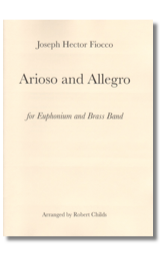
Arioso and Allegro - Joseph Hector Fiocco arr. Philip Wilby and Robert Childs
Joseph Hector Fiocco (1703-41) was the most famous member of a family of Belgian musicians. As well as being a church musician, Joseph was a violin maker, professor of Latin and Greek, and a distinguished harpsichord player. His famous allegro, originally written for harpsichord, lies well for the euphonium. It requires a steady tempo throughout its compass and dynamic range, and is ideal for improving technique and stamina. The lyrical arioso demands well-shaped phrases and ne breath control.
Estimated dispatch 7-9 working days