
Results
-
 £104.99
FANFARE OF BELLS, A (Brass Band) - Pallhuber, Hermann
Commissioned by the German 3BA Concert Brass and premiered at the 2012 Flemish Open Brass Band Championships. Duration: 7:50. Recorded on De Haske Brass CD DHR03-060-3 Ready Steady Brass!.
Estimated dispatch 7-14 working days
-
 £34.95
HIGHLAND CATHEDRAL (Brass Band - arr. Kerwin) - Kerwin, Simon
This lovely melody was composed by two German musicians who tried to emulate the popularity of the famous Scottish tune Amazing Grace. The piece was an instant success and achieved a substantial degree of popularity after it was featured in the film, Four Weddings and a Funeral. It is usually performed with just pipes and drums, however this arrangement succeeds in joining this traditional classical melody with a steady drum beat, flowing contrapuntal descants and harmonies to create an epic opus. The arrangement is functional with or without Bagpipes.
Estimated dispatch 7-14 working days
-
 £42.95
In Memoriam R.K (Brass Band Set - Score and Parts) - Howarth, Elgar
All England National Brass Band Championship 2007. Recored on Polyphonic QPRL226D Master Brass Volume 18, QPRL056D National Brass Band Championship 1992 played by Black Dyke.Composer's NoteRudolph Kempe, the German conductor, was much admired for this interpretations of late romantic music, particularly Mahler and Strauss. No such music exists in the brass band repertoire and this piece, deliberately written in pastiche style, serves both to fill the gap and as my own small tribute to one of the greatest musicians I have known.
Estimated dispatch 7-14 working days
-
 £44.95
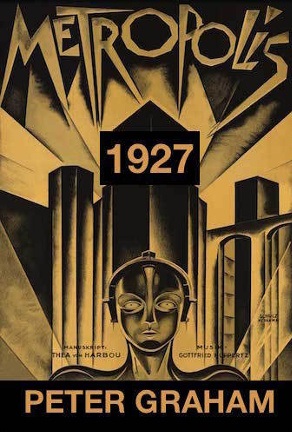
Metropolis 1927 (Brass Band - Score only) - Graham, Peter
Fritz Lang's 1927 science fiction epic Metropolis is considered to be a masterpiece of cinematic vision and a high point of German Expressionist filmmaking. Set in a future dystopian world the film introduces the viewer to two contrasting communities living in the vast city of Metropolis. Those above ground live a life of privilege and pleasure serviced by the underground-dwelling drone workers whose role is to maintain and operate the banks of machines which provide the city's power.Lang's film, which can be considered a type of 20th century morality play, draws upon a range of themes and influences from Marxist ideals and social satire to overt religious symbolism.The music does not attempt to precis the plot, such as it is, but simply reflects my musical responses to Lang's noirish visual style and set designs - the brooding machine rooms, the decadent nightclubs, the gothic cathedral and so on - paradoxically a world of terrifying beauty.Metropolis 1927 was commissioned by Bramwell Tovey and The National Youth Brass Band of Great Britain with funds provided by The Arts Council of England. The first performances took place in the Winter Gardens, Weston-super-Mare on Saturday 19th April and in the Cheltenham Town Hall on Sunday 20th April 2014.This revised version was premiered by The Black Dyke Band, conductor Nicholas Childs, at the 38th European Brass Band Championships in the Konzerthaus Freiburg, Germany, on Saturday 2 May 2015.- Peter GrahamDuration: 15.00
Estimated dispatch 7-14 working days
-
£124.95
Metropolis 1927 (Brass Band Set - Score and Parts) - Graham, Peter
Fritz Lang's 1927 science fiction epic Metropolis is considered to be a masterpiece of cinematic vision and a high point of German Expressionist filmmaking. Set in a future dystopian world the film introduces the viewer to two contrasting communities living in the vast city of Metropolis. Those above ground live a life of privilege and pleasure serviced by the underground-dwelling drone workers whose role is to maintain and operate the banks of machines which provide the city's power.Lang's film, which can be considered a type of 20th century morality play, draws upon a range of themes and influences from Marxist ideals and social satire to overt religious symbolism.The music does not attempt to precis the plot, such as it is, but simply reflects my musical responses to Lang's noirish visual style and set designs - the brooding machine rooms, the decadent nightclubs, the gothic cathedral and so on - paradoxically a world of terrifying beauty.Metropolis 1927 was commissioned by Bramwell Tovey and The National Youth Brass Band of Great Britain with funds provided by The Arts Council of England. The first performances took place in the Winter Gardens, Weston-super-Mare on Saturday 19th April and in the Cheltenham Town Hall on Sunday 20th April 2014.This revised version was premiered by The Black Dyke Band, conductor Nicholas Childs, at the 38th European Brass Band Championships in the Konzerthaus Freiburg, Germany, on Saturday 2 May 2015.- Peter GrahamDuration: 15.00
Estimated dispatch 7-14 working days
-
 £35.00
Nimrod (from Enigma Variations) (Brass Band - Score and Parts) - Elgar, Edward - Littlemore, Phillip
Elgar wrote his Enigma Variations between 1898 and 1899. It is without a doubt Elgar's best-known large scale composition, and is dedicated to 'my friends within', as each variation is an affectionate portrayal of one of his circle of close acquaintances. The ninth variation, Nimrod, is dedicated to Augustus J. Jaeger, Elgar's publisher at Novello & Co. and also his editor and close friend. The name of the variation refers to 'the mighty hunter before the Lord' and can be found in the Book of Genesis. The name J?ger is German for hunter. Often used for solemn occasions, it is the most poignant and beautiful pieces of British music. Duration: 4:00
Estimated dispatch 7-14 working days
-
£1.95
SCHNEEWALZER (The Snow-Waltz) (SATB) - Richards, Goff
SATB & Piano. Compatible with Brass Band edition. Also available TTBB with Piano) Words in German and English
Estimated dispatch 7-14 working days
-
£1.95
SCHNEEWALZER (The Snow-Waltz) (TTBB) - Richards, Goff
TTBB & Piano. Compatible with Brass Band edition. Also available SATB with Piano) Words in German and English
Estimated dispatch 7-14 working days
-
£37.95
Serenade (Eine Kleine Nachtmusik) (Brass Band - Score only) - Mozart, Wolfgang Amadeus - Ball, Eric
The German title, Eine Kleine Nackmusik, means a little serenade, though it is often rendered more literally as a little night music. In this arrangement some of the traditional repeats have been omitted.Duration: 15.00
Estimated dispatch 7-14 working days
-
£82.95
Serenade (Eine Kleine Nachtmusik) (Brass Band - Score and Parts) - Mozart, Wolfgang Amadeus - Ball, Eric
The German title, Eine Kleine Nackmusik, means a little serenade, though it is often rendered more literally as a little night music. In this arrangement some of the traditional repeats have been omitted.Duration: 15.00
Estimated dispatch 7-14 working days
 View Music