
Results
-
 £23.95
The Red Kite (Euphonium Solo with Brass Band - Score and Parts) - Wiffin, Rob
At one time the Red Kite was close to national extinction in the UK but now it is possible to admire this distinctive bird of prey with its red colouring and forked tail. I love watching it soaring so gracefully through the sky. I attempted to catch that feeling in this solo composed for Martin Smith. In writing it I had in mind making the euphonium glide solitary and effortlessly, occasionally swooping down then reclaiming its high altitude.To create the desired atmosphere, I avoided too many root position chords and enhanced the feeling of floating by adding notes to a lot of the harmony, giving it subtle colour. The harmonic rhythm is slow but the movement switches in the way that the Red Kite can make slight changes of direction by minor adjustments of its tail. On top of this accompaniment the soloist is left to sing with a sense of grace and freedom.- Rob WiffinDuration: 3.45
Estimated dispatch 7-14 working days
-
 £99.95
Carols for Band (Brass Band Set) - Sparke, Philip
Designed to be playable by any combination from quartet to full brass band, wind band or orchestra, the arrangements in this book with provide a practical solution to all your carolling needs. Parts are divided into Soprano, Alto, Tenor and Bass so that any suitable instrumentation will sound well, providing an equal balance of players per voice is maintained. The carols are printed in alphabetical order so they are easy to find, and comprehensively indexed under both first line and name of tune.Score, Timpani and Percussion parts are available separately.Instrumentation is as follows: Brass BandWind BandStringsSopranoEb Soprano CornetSolo Bb CornetBb Repiano & Flugel1st Flute & Piccolo2nd FluteOboe1st Bb Clarinet1st Bb Trumpet/Cornet1st ViolinAlto2nd & 3rd Bb CornetSolo Eb Horn1st Bb Trombone2nd & 3rd Bb ClarinetsEb Alto Saxophone2nd Bb Trumpet/Cornet1st F Horn2nd ViolinTenor1st & 2nd Eb Horns1st & 2nd Bb Baritones2nd Bb Trombone1st Bb EuphoniumEb Alto ClarinetBb Tenor Saxophone2nd F Horn1st & 2nd TrombonesViolaBassBass Trombone2nd Bb EuphoniumEb BassBb BassBassoonBb Bass ClarinetEb Baritone SaxophoneBass TromboneEuphoniumTubaCello/BassTitles included:Angels from the Realms of GloryAs with Gladness Men of OldAway in a MangerBrightest and BestChristians AwakeCoventry CarolDeck the HallsDing Dong, Merrily on HighFirst NowellGod Rest ye Merry, GentlemenGood King WenceslasHark the Glad SoundHark, the Herald Angels SingHolly and the IvyI Saw Three ShipsIn Dulci JubiloIn the Bleak Mid-WinterInfant HolyInfant KingIt Came Upon a Midnight ClearJingle BellsLo, He Comes with Clouds DescendingLove Came Down at ChristmasO Come, All ye FaithfulO Come, O Come, EmmanuelO Little Town of BethlehemOf the Father's Love BegottenOnce in Royal David's CitySans Day CarolSee Amid the Winter's SnowSilent NightSussex CarolThou Didst Leave Thy ThroneUnto Us is Born a SonWe Wish You a Merry ChristmasWhile Shepherds WatchedThe Brass Band Set consists of 25 Parts:1 x Eb Soprano Cornet4 x Solo Bb Cornet2 x Bb Repiano & Flugel4 x 2nd & 3rd Bb Cornet1 x Solo Eb Horn2 x 1st & 2nd Eb Horn2 x 1st & 2nd Bb Baritone1 x 1st Bb Trombone1 x 2nd Bb Trombone1 x Bass Trombone1 x 1st Bb Euphonium1 x 2nd Bb Euphonium2 x Eb Bass2 x Bb Bass
Estimated dispatch 7-14 working days
-
 £20.00
LEGEND OF KING ARTHUR, The (Brass Band Extra Score) - Meechan, Peter
Extra score. 2014 National Championships Finals- Championship Section. King Arthur is the subject of many tales, stories, myths and legends - from his ascension to the throne by pulling the sword from the stone, his courageous battles with his fellow Knights of the Round Table, to his ultimately tragic love for Guinevere. The Legend of King Arthur is a musical portrayal of some of the most important moments in the legend. It is dedicated to Michael Bach and Brass Band B?rgermusik Luzern, who commissioned the work. Duration: 16:00
Estimated dispatch 7-14 working days
-
£75.00
LEGEND OF KING ARTHUR, The (Brass Band Set) - Meechan, Peter
Score and Parts. 2014 National Championships Finals - Championship Section. King Arthur is the subject of many tales, stories, myths and legends - from his ascension to the throne by pulling the sword from the stone, his courageous battles with his fellow Knights of the Round Table, to his ultimately tragic love for Guinevere. The Legend of King Arthur is a musical portrayal of some of the most important moments in the legend. It is dedicated to Michael Bach and Brass Band B?rgermusik Luzern, who commissioned the work. Duration: 16:00
Estimated dispatch 7-14 working days
-
 £42.00
Love Came Down at Christmas (Brass Band - Score and Parts) - Rutter, John - Stowell, David
Referred to by the BBC as "the most celebrated and successful composer of carols alive today," John Rutter's melodic and appealing music has always been synonymous with the warmest of Christmas glows. Suitable for 4th Section bands and above
Estimated dispatch 7-14 working days
-
 £45.00
The Grand Union Waltz (Brass Band - Score and Parts) - Lane, Liz
The Grand Union Waltz was written as a wedding present and represents a shared love of narrow-boating, the Grand Union Canal being the longest canal in Great Britain. Suitable for 2nd Section bands and above
Estimated dispatch 7-14 working days
-
 £24.50
Tournament Gallop - L.M.Gottschalk - Adam Rutter
All performers love a showpiece, and if there isn't one available, they write their own. American born Louis Moreau Gottschalk was a child prodigy and became famous for writing and performing his own piano compositions. Now it's the turn of your band to show off to the crowds with a performance of the 'Tournament Gallop'. Arranged by Adam Rutter, the piece is largely marked 'Presto', though in reality, the idea was that Gottschalk would perform the work as fast as humanly possible! An entertainment special and one audiences will love.
In Stock: Estimated dispatch 1-3 working days
-
 £29.50
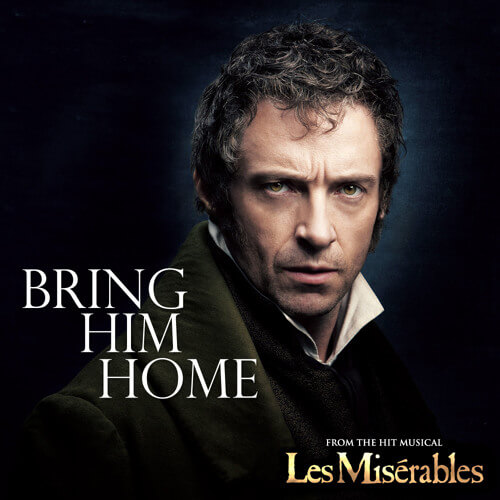
Bring Him Home - Claude-Michel Schonberg - Andi Cook
This publication needs very little introduction as it has, for over thirty years, been a firm favourite across the globe as one of the stand out numbers from the musical, 'Les Miserables'. This brand new arrangement has been done for the Grimethorpe Colliery Band and their Soprano Cornet player, Kevin Crockford, who has recorded the work for the band's new upcoming CD to be released later this year. Andi Cook has given us a faithful recreation of the original that both soloists and audiences will love. A must for all Soprano Players.
In Stock: Estimated dispatch 1-3 working days
-
 £29.50
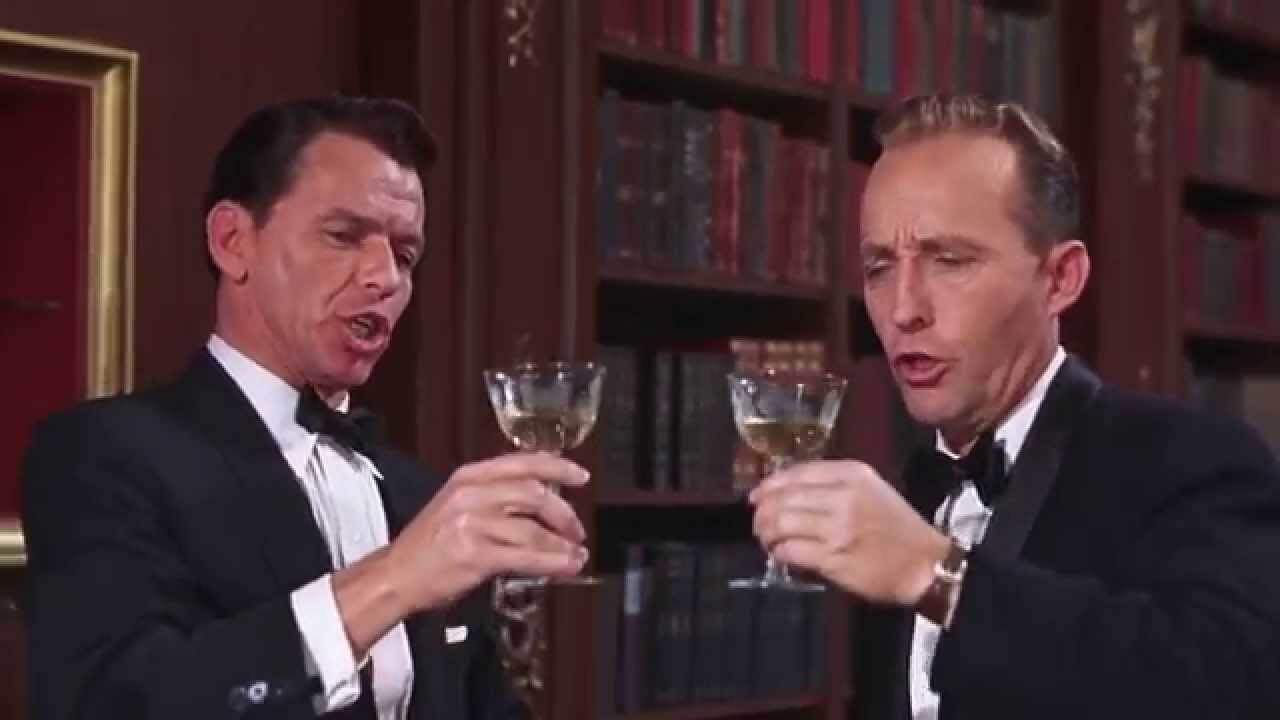
Well Did You Evah! - Cole Porter - Gavin Somerset
This fantastic, high-energy, showcase of a piece was originally composed by Cole Porter for the musical 'Du Barry Was A Lady'. However, it was not until it was performed by Bing Crosby & Frank Sinatra in the film 'High Society' that the piece shot to fame in 1956 and then again in 2001 when Robbie Williams performed the duet with Jon Lovitz on his album 'Swing When Your Winning'. Your band can now faithfully recreate Crosby & Sinatra's clever, comic on screen interaction in this arrangement by Gavin Somerset that is scored as a duet for any two Bb instruments to take the spotlight, or an Eb & Bb instrument. An entertaining piece for the entire band and one your audiences will love! To download the playback audio to play along to, please RIGHT CLICK HERE & Save As .
In Stock: Estimated dispatch 1-3 working days
-
£29.50
New Horizons - Max Stannard
This composition was originally written for the Horwich RMI Band to commemorate the life of Matthew Densfield, who has a drummer in his school brass band before his passing at an early age. This is a lively and energetic concert opener which encapsulates Matthew's love of live and rhythm as a drummer. This would be an excellent opener for your next concert and suitable for most bands from 4th to championship section to play. Duration: 3 minutes.
In Stock: Estimated dispatch 1-3 working days
 View Music
 Listen to MP3