
Results
-
 £96.99
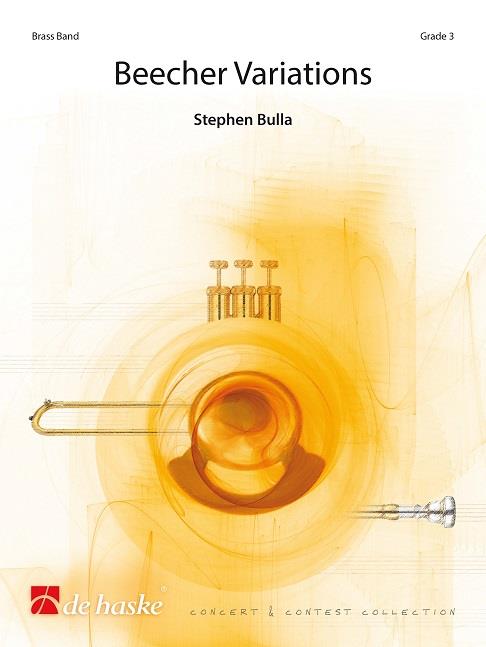
Beecher Variations (Brass Band - Score and Parts)
In this beautiful composition, melodic fragments of the hymn tune Beecher are morphed into a series of variations, showing the melody in various moods from expressive, then quiet and soft, to bright and triumphant in the end. Written as a test piece in the 4th division for the Dutch Brass Band Championships in 2015, the music features challenging solo parts for cornet, soprano cornet, flugelhorn and euphonium. A great work for the concert or contest stage!Duration: 12.00
Estimated dispatch 7-14 working days
-
 £41.09
Emerald Isle Fantasy (Tenor Horn Solo with Brass Band) Brian Bowen
This gorgeous solo for tenor horn and brass band features a number of much-loved Irish melodies. The solo was one of several works Brian Bowen left with BrookWright Music prior to his death in September 2022. To view a video of Art Henry performing the solo with the New York Staff Band please visit www.youtube.com/watch?v=5pgFrDwhJe8 PDF download includes score and parts. Sheet music available from: UK - www.brassband.co.uk USA - https://satradecentral.org Difficulty Level: 3rd Section + Duration: approx. 7.00 minutes Instrumentation: Tenor Horn Soloist Eb Soprano Cornet Eb 1st Cornet Bb 2nd Cornet Bb Flugel Horn Bb 1st Horn Eb 2nd Horn Eb 1st Baritone Bb 2nd Baritone Bb 1st Trombone Bb 2nd Trombone Bb Bass Trombone Euphonium Bb Bass Eb Bass Bb Percussion 1-2
In Stock: Estimated dispatch 1-3 working days
-
£40.00
Miniature - Matthew Hall
Miniature is a ballad for band with highlights for Euphonium, Cornet & Soprano Cornet
Estimated dispatch 5-7 working days
-
 £42.00
Hymn at Sunrise (Score only) - Ray Steadman-Allen
The idea for this work was prompted by a poem - Hymn Before Sunrise - which describes the majesty of a mountain in darkness, the sounds of a nearby waterfall and so on. Nothing came of the exposure to these pictures except for general thoughts about the dawn of day and a series of movements expressing a personal response to the wonder of creation in an imaginary moment in time. The movement titles, which were added later, are intended to underline a prevailing sense of worship, wonder and exaltation. The music is pure, not pictoral, though listeners may conjure their own images. An actual hymn - Tallis' Cannon - is incorporated. There are five movements: 1. Thanksgiving: A short prelude in two parts. First a brief passage of 'dawn music' before things become more vigorous: fanfare-like music ushers in the trombone section's presentation of the Tallis tune. A broad band version concludes the movement. 2. De Profundis: A slow movement shot through with anxious questionings featuring flugel and trombone. The mood lightens a little in the centre where the soprano cornet is featured and the movement ends serenely. 3. Celebration is characterised by rhythmic drive, this is buoyant with plenty of incident pointed up by the percussion. 4. Invocation: Melodic in nature and sober in mood, the first section is a series of short solos mingled with chorale-like statements. Central to the movement is a chorale-prelude style presentation of the Tallis tune. The third section reintroduces the earlier solo music by the full ensemble. Dissolving, the music enters the last movement without a break. 5. Paean: Marked allegro con spirito there is, quite rightly, a fair amount of fun in the rejoicing. Snatches of Tallis are heard, then comes a gentle passage with a cornet solo leading to fanfare music and recapitulation. Two recitatives are succeeded by a coda which brings the work to a sonorous and exultant conclusion.
Estimated dispatch 7-9 working days
-
 £52.00
Hymn at Sunrise (Parts only) - Ray Steadman-Allen
The idea for this work was prompted by a poem - Hymn Before Sunrise - which describes the majesty of a mountain in darkness, the sounds of a nearby waterfall and so on. Nothing came of the exposure to these pictures except for general thoughts about the dawn of day and a series of movements expressing a personal response to the wonder of creation in an imaginary moment in time. The movement titles, which were added later, are intended to underline a prevailing sense of worship, wonder and exaltation. The music is pure, not pictoral, though listeners may conjure their own images. An actual hymn - Tallis' Cannon - is incorporated. There are five movements: 1. Thanksgiving: A short prelude in two parts. First a brief passage of 'dawn music' before things become more vigorous: fanfare-like music ushers in the trombone section's presentation of the Tallis tune. A broad band version concludes the movement. 2. De Profundis: A slow movement shot through with anxious questionings featuring flugel and trombone. The mood lightens a little in the centre where the soprano cornet is featured and the movement ends serenely. 3. Celebration is characterised by rhythmic drive, this is buoyant with plenty of incident pointed up by the percussion. 4. Invocation: Melodic in nature and sober in mood, the first section is a series of short solos mingled with chorale-like statements. Central to the movement is a chorale-prelude style presentation of the Tallis tune. The third section reintroduces the earlier solo music by the full ensemble. Dissolving, the music enters the last movement without a break. 5. Paean: Marked allegro con spirito there is, quite rightly, a fair amount of fun in the rejoicing. Snatches of Tallis are heard, then comes a gentle passage with a cornet solo leading to fanfare music and recapitulation. Two recitatives are succeeded by a coda which brings the work to a sonorous and exultant conclusion.
Estimated dispatch 7-9 working days
-
 £33.62
Fanfare Prelude on 'Richmond' (Brass Band) Charles Wesley arr. Andrew Wainwright
Fanfare Prelude on 'Richmond' was written for the inaugural Texas Brass Fest, held at Round Top Festival Institute on 27 May 2023, for the four premier brass bands in Texas - Austin, Dallas, Houston and San Antonio Brass Bands. It is based on the much loved hymn of the church by Charles Wesley, which is also known as 'O For a Thousand Tongues to Sing', the first verse of which reads: O for a thousand tongues to sing my great Redeemer's praise, the glories of my God and King, the triumphs of his grace! For maximum effect it is suggested that cornets and trombones are staged stood around the band, although if this is not possible then traditional band formation will be acceptable. To view a video of the premiere performance featuring the massed bands of Austin, Dallas, Houston and San Antionio at Texas Brass Fest 2023, please visit www.youtube.com/watch?v=22GJM4A6mbM or the Chicago Staff Band at www.youtube.com/watch?v=Gjp8N_U9U2c PDF download includes score and full set of parts. Sheet music available from: UK - www.brassband.co.uk USA - www.solidbrassmusic.com Difficulty Level: 2nd Section + Instrumentation: Soprano Cornet Eb Cornets 1-5 Bb Flugel Horn Bb Solo Horn Eb 1st Horn Eb 2nd Horn Eb 1st Baritone Bb 2nd Baritone Bb 1st Trombone Bb 2nd Trombone Bb Bass Trombone Euphonium Bb Bass Eb Bass Bb Timpani Percussion 1-3
In Stock: Estimated dispatch 1-3 working days
-
 £59.77
We Seven (Brass Band) Derek Jenkins
We Seven, the title of this work, comes from a book by the same name written by the United States's first astronauts. The composer writes: 'In 1959, the United States entered the space race by starting a programme whose main aims included sending a solo astronaut into space and recovering him safely. Project Mercury, as this programme was so called, recruited the first seven American astronauts and successfully sent six of them into space. These men were Scott Carpenter, Gordon Cooper, John Glenn, Gus Grissom, Wally Schirra, Alan Shepard, and Deke Slayton, and collectively they became known as the 'Mercury Seven.' Through their efforts and those of countless others, the United States Space Program accomplished much with these six flights, including successfully sending an astronaut into space, putting a man in orbit, and keeping him up there for more than 24 hours. In 1962, shortly after Glenn and Carpenter's orbital flights, the 'Mercury Seven' co-wrote the book We Seven and throughout it, the astronauts discuss the events leading from their selection into the programme up through Carpenter's flight in May of 1962. The primary material for the work comes from two sources: the use of musical cryptograms to encode the astronauts names and initials into pitches and the aria 'Un bel di vedremo' from Giacomo Puccini's opera, Madame Butterfly. The inclusion of the latter comes directly from one of Glenn's chapters in the book. Together with a couple of the other astronauts, he would often listen to the opera to unwind from a long day of training. I would like to think that as he was orbiting the Earth that this opera, particularly this aria, would be running through his mind.' This work commemorates the Project Mercury on the 50th anniversary of its conclusion and was written for Joseph Parisi and the University of Missouri-Kansas City Wind Ensemble. This version for brass band has been prepared by the composer for the Fountain City Brass Band. To view a video of Fountain City Brass Band performing the work please visit: www.youtube.com/watch?v=yD3sBWhGkOo Sheet music available from: UK - www.brassband.co.uk USA - www.solidbrassmusic.com Difficulty Level: 1st Section + Instrumentation: 1 Soprano Cornet (Eb) 9 Cornets (Bb) [Both 3rd Cornets double Crystal Glasses] 1 Flugelhorn 3 Tenor Horns (Eb) [2nd Horn doubles Crystal Glasses] 2 Baritones (Bb) 2 Trombones (Bb) 1 Bass Trombone 2 Euphoniums (Bb) 2 Basses (Eb) 2 Basses (Bb) 4 Percussion
In Stock: Estimated dispatch 1-3 working days
-
 £44.83
Boreas: The North Wind (Brass Band) Derek Jenkins
Boreas was an ancient Greek deity personifying the north wind. He was a winged god of ruthless disposition, which was rivaled only by the harsh wintry winds at his command. Boreas fell in love with Orithyia, the King's daughter. Contrary to his genuine nature, he attempted to woo her with sweet words of devotion. His efforts were in vain, and Orithyia failed to yield to his advances. With this rejection, Boreas's temper flared and he, once again, was overcome by his icy and merciless nature. Like Boreas, this work begins with slow, lyrical lines that quickly fade into an unrelenting fury of anger. Moments reminiscent of Boreas's words of affection appear, but they are quickly washed away as the piece escalates. This arrangement was written for Joseph Parisi and the Fountain City Brass Band as a small token of thanks. The original version for wind ensemble was commissioned by and written for Timothy Shade and the Bethel College Wind Ensemble. To view a video of Diamond Brass Band performing the work please visit: www.youtube.com/watch?v=Co4oreV7Hm4 Sheet music available from: UK - www.brassband.co.uk USA - www.solidbrassmusic.com Difficulty Level: 2nd Section + Instrumentation: 1 Soprano Cornet (Eb) 9 Cornets (Bb) 1 Flugelhorn 3 Tenor Horns (Eb) 2 Baritones (Bb) 2 Trombones (Bb) 1 Bass Trombone 2 Euphoniums (Bb) 2 Basses (Eb) 2 Basses (Bb) 4 Percussion
In Stock: Estimated dispatch 1-3 working days
-
 £67.24
Dreams of America (Brass Band) Derek Jenkins
Dreams of America was commissioned by the National Youth Brass Band of America. The concept of the 'American Dream' is an indelible part of the American psyche. Over time, notions of success, fame, and fortune have become synonymous with this idea. Some have achieved their personal 'American Dreams', and yet for others they often remain only a dream. Dreams of America takes a look at certain, generalised aspects of the 'American Dream' and pits them against the harsh realities faced by many, both in the past and present. To heighten these dichotomies, each movement is accompanied by a slideshow of historic and modern images related to the issues at hand. Movement 1: Yearning to Breathe Free explores the anger, fear, and subjugation that seems rampant in recent years, but has been present throughout the country's founding. Movement 2: Take my Stand looks at the role that change, protest, and equality has had and continues to have in our society. Movement 3: It Beckons and Beckons examines the beauty of nature and our role in preserving and protecting this country's natural wonders while illustrating the ease of which our environment can be ruined and destroyed. Movement 4: Sweet Land of Liberty reflects onthe composer's interpretation at what truly makes the United States of America a great country - the people who call this place home. The patriotic tune America the Beautiful has been woven throughout, in part for its poetic depiction of the American landscape and its call for "brotherhood from sea to shining sea!" Sheet music available from: UK - www.brassband.co.uk USA - www.solidbrassmusic.com Difficulty Level: 1st Section + Instrumentation: 1 Soprano Cornet (Eb) 9 Cornets (Bb) 1 Flugelhorn 3 Tenor Horns (Eb) 2 Baritones (Bb) 2 Trombones (Bb) 1 Bass Trombone 2 Euphoniums (Bb) 2 Basses (Eb) 2 Basses (Bb) 4 Percussion
In Stock: Estimated dispatch 1-3 working days
-
£40.00
Elegy
A piece for brass band featuring the soprano cornet. Slow and solemn, yet dignified and graceful, this allows the soloist to shine in front of the whole brass band. The band stays in the background for just about the whole piece, coming slightly to the fore in the more turbulent middle section. Lasting 4'30" a nice change of pace for a concert.