Results
-
 £33.62
Viva la Banda! (Brass Band) Dave Collins
Viva la Banda is fun, high energy and has some wonderfully catchy melodies for all members of the band to enjoy. In places it is harmonically surprising, taking us through the twists and turns of a Latin adventure. Imagine the sights and sounds of a hot plaza, and transport your audiences across the sea from your local bandstand! To view a rolling score video of the work please visit www.youtube.com/watch?v=uawvYv2-INU Duration: Approx. 4.15 minutes Difficulty Level: 3rd Section + PDF download includes parts and score. Sheet music available from www.brassband.co.uk (UK) or https://satradecentral.org (USA) Instrumentation: Soprano Cornet Eb Solo Cornet Bb Repiano Cornet Bb 2nd Cornet Bb 3rd Cornet Bb Flugel Horn Bb Solo Horn Eb 1st Horn Eb 2nd Horn Eb 1st Baritone Bb 2nd Baritone Bb 1st Trombone Bb 2nd Trombone Bb Bass Trombone Euphonium Bb Bass Eb Bass Bb Drum Set Congas Agogo
In Stock: Estimated dispatch 1-3 working days
-
 £33.62
Vivace from Piano Sonata No.2 (Brass Band) Prokofiev arr. Yasuaki Fukuhara
Bristling with energy and vitality, this is a terrific arrangement of the fourth and final movement from Piano Sonata No. 2, which is Sergei Prokofiev's celebrated piano solo piece composed in 1912. The arranger writes: 'Whilst I have endeavoured to maintain the characteristics and flavours of the original piece, I altered and added dynamics and musical notations in a few cases where they seemed to fit the medium of the brass band and to reflect a general performance manner of this piece on a piano. I also added percussion parts which provide additional colour. After careful consideration, I decided to keep to the original key in order to maintain the brightness and clarity of the original work.' PDF download includes score and full set of parts. To view a rolling score video please visit www.youtube.com/watch?v=X3GUHQI3u7E Sheet music available from: UK - www.brassband.co.uk USA - www.solidbrassmusic.com Difficulty Level: 1st Section + Instrumentation: Soprano Cornet Eb Solo Cornet Bb Repiano Cornet Bb 2nd Cornet Bb 3rd Cornet Bb Flugel Horn Bb Solo Horn Eb 1st Horn Eb 2nd Horn Eb 1st Baritone Bb 2nd Baritone Bb 1st Trombone Bb 2nd Trombone Bb Bass Trombone Euphonium Bb Bass Eb Bass Bb Timpani Percussion 1-2
In Stock: Estimated dispatch 1-3 working days
-
 £33.62
Waltz of the Flowers from The Nutcracker Suite - Brass Band (arr. Wilkinson)
VIEW SCORE PDF Step into the enchanting world of Tchaikovsky's beloved The Nutcracker with this delightful arrangement of Waltz of the Flowers from The Nutcracker Suite. Expertly adapted for brass band by Keith M. Wilkinson, this suite captures the festive spirit and magical charm of the original score, while showcasing the full power and brilliance of brass and percussion. The third of three movements, The Nutcracker Suite includes March, Trepak and Waltz of the Flowers. To purchase the full suite, please visit www.brookwrightmusic.com/product-page/the-nutcracker-suite-brass-band-tchaikovsky-arr-keith-wilkinson PDF download includes score and full set of parts. Sheet music available from: UK - www.brassband.co.uk USA - www.solidbrassmusic.com Difficulty Level: 2nd Section + Instrumentation: Soprano Cornet Eb Solo Cornet Bb Repiano Cornet Bb 2nd Cornet Bb 3rd Cornet Bb Flugel Horn Bb Solo Horn Eb 1st Horn Eb 2nd Horn Eb 1st Baritone Bb 2nd Baritone Bb 1st Trombone Bb 2nd Trombone Bb Bass Trombone Euphonium 1-2 Bb Bass Eb Bass Bb Timpani Percussion 1-2
In Stock: Estimated dispatch 1-3 working days
-
 £33.62
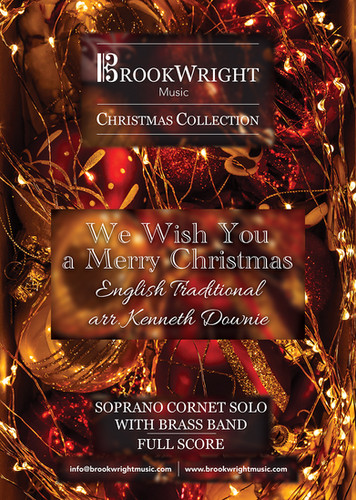
We Wish You a Merry Christmas (Soprano Cornet Solo with Band) arr.Kenneth Downie
This light-hearted soprano cornet feature offers a fresh and entertaining take on the well-known Christmas carol We Wish You a Merry Christmas. Thought to date back to 16th-century England, the carol reflects a tradition of festive singing outside the homes of the well-to-do - often accompanied by requests for treats such as figgy pudding, a forerunner of today's Christmas pudding. Kenneth Downie's arrangement embraces the jovial spirit of the original, pairing nimble soprano cornet writing with bright, colourful scoring for brass band. The famous refrain, 'And we won't go until we've got some', sets the tone: cheerful, a touch cheeky, and full of seasonal good humour. To view a rolling score video of the work featuring Gary Fountain, please visit www.youtube.com/watch?v=3WCW9oBw-mY A version of this solo is available as part of the Sounds of the Season series, with both piano accompaniment and MP3 orchestral backing track, available here. Difficulty Level: 3rd Section + PDF download includes parts and score. Sheet music available at www.brassband.co.uk (UK) or https://satradecentral.org (USA) Instrumentation: Soprano Cornet Soloist Eb Solo Cornet Bb Repiano Cornet Bb 2nd Cornet Bb 3rd Cornet Bb Flugel Horn Bb Solo Horn Eb 1st Horn Eb 2nd Horn Eb 1st Baritone Bb 2nd Baritone Bb 1st Trombone Bb 2nd Trombone Bb Bass Trombone Euphonium Bb Bass Eb Bass Bb Percussion 1-4
In Stock: Estimated dispatch 1-3 working days
-
 £37.35
Whodunnit? Murder Mystery for Brass & Percussion (Brass Band) Karl Whelan
The composer writes: 'One of my all time favourite films is Clue (1985) based on the board game of the same name (Cluedo, if you're from the UK). Clue follows the night of six guests who are invited to a mansion for dinner. The host, Mr. Boddy is murdered, and the guests must work together to find the killer before any more lives are lost. I implore you to give it a watch if you haven't already, even if it's just for Tim Curry's magical performance as The Butler. Running at 82 minutes, the film is over before you know it. I wanted to create a similar story here with Whodunnit?, which like it's inspiration, Clue, moves at an incredible pace as it follows a dinner party, to which our guests have been invited. This work is rather dark throughout and full of intentional cliches, for which, I make no apology!' To view a rolling score video please visit www.youtube.com/watch?v=hdviJUrCvOE Sheet music available from: UK - www.brassband.co.uk USA - https://satradecentral.org Difficulty Level: 2nd Section + Length: 6.00 minutes Instrumentation: Soprano Cornet Eb Solo Cornet Bb Repiano Cornet Bb 2nd Cornet Bb 3rd Cornet Bb Flugel Horn Bb Solo Horn Eb 1st Horn Eb 2nd Horn Eb 1st Baritone Bb 2nd Baritone Bb 1st Trombone Bb 2nd Trombone Bb Bass Trombone Euphonium Bb Bass Eb Bass Bb Timpani Percussion 1 (Suspended Cymbal**, Shaker, Drum Kit, Vibraslap) Percussion 2 (Bass Drum, Suspended Cymbal**, Wood Blocks, Tam-tam) Percussion 3 (Glockenspiel, Xylophone, Tubular Bells, Vibraphone) * Doubling on Trumpet (if possible) ** Shared
In Stock: Estimated dispatch 1-3 working days
-
 £33.62
With the heart (Brass Band) Andrew Batterham
With the heart is a fanfare full of energy and celebration. The title references a quote from the book The Little Prince by Antoine de Saint-Exupery: "it is only with the heart that one can see rightly, what is essential is invisible to the eye". This aesthetic links the passion of music to the giving ethos of the Rotary organisation, whose District 9800 commissioned the work for their 2024 District Conference. With the Heart was premiered by the Victorian Youth State Brass Band directed by Phillipa Edwards in Bendigo in April 2024. To listen to a performance by Victorian State Youth Brass Band please click here. Duration: Approx. 3.15 minutes Difficulty Level: 4th Section + PDF download includes parts and score. Sheet music available from www.brassband.co.uk Instrumentation: Soprano Cornet Eb Solo Cornet Bb Repiano Cornet Bb 2nd Cornet Bb 3rd Cornet Bb Flugel Horn Bb Solo Horn Eb 1st Horn Eb 2nd Horn Eb 1st Baritone Bb 2nd Baritone Bb 1st Trombone Bb 2nd Trombone Bb Bass Trombone Euphonium Bb Bass Eb Bass Bb Percussion 1-3
In Stock: Estimated dispatch 1-3 working days
-
 £33.62
You're Always There (Brass Band) Lee Fisher arr. Andrew Wainwright
One of BrookWright's most popular titles, this piece is based on an original song by Lee Fisher which was written for Britain's Got Talent star Charlie Green. Originally arranged as a tenor horn solo with brass band, it is now available here as a standalone work for band. To view a follow-the-score video please visit www.youtube.com/watch?v=suzzgdxU_xU PDF download includes score and parts. Sheet music available from: UK - www.brassband.co.uk USA - https://satradecentral.org Difficulty Level: 4th Section + Length: 3.45 minutes Instrumentation: Soprano Cornet Eb Solo Cornet Bb Repiano Cornet Bb 2nd Cornet Bb 3rd Cornet Bb Flugel Horn Bb Solo Horn Eb 1st Horn Eb 2nd Horn Eb 1st Baritone Bb 2nd Baritone Bb 1st Trombone Bb 2nd Trombone Bb Bass Trombone Euphonium Bb Bass Eb Bass Bb Timpani Percussion 1-2
In Stock: Estimated dispatch 1-3 working days
-
 £33.62
You're Always There - Tenor Horn Solo with Band (Lee Fisher arr. Wainwright)
VIEW SCORE PDF Commissioned by tenor horn virtuoso Sheona White, this solo was recorded by Virtuosi GUS Band's principal horn, Nathan Waterman on the CD 'Christmas Fantasia'. To view a 'follow-the-score' video of Nathan Waterman performing the solo with Virtuosi GUS Band, please visit: https://www.youtube.com/watch?v=-R5nAoeCgPg Includes score and full set of parts. Sheet music available from: UK - www.brassband.co.uk USA - www.solidbrassmusic.com Instrumentation: Soprano Cornet Eb Solo Cornet Bb Repiano Cornet Bb 2nd Cornet Bb 3rd Cornet Bb Flugel Horn Bb Solo Horn Eb 1st Horn Eb 2nd Horn Eb 1st Baritone Bb 2nd Baritone Bb 1st Trombone Bb 2nd Trombone Bb Bass Trombone Euphonium Bb Bass Eb Bass Bb Timpani Percussion 1-2 A version with piano accompaniment is available from www.brookwrightmusic.com/product-page/you-re-always-there-tenor-horn-solo-with-piano-lee-fisher-arr-wainwright
In Stock: Estimated dispatch 1-3 working days
-
£55.00
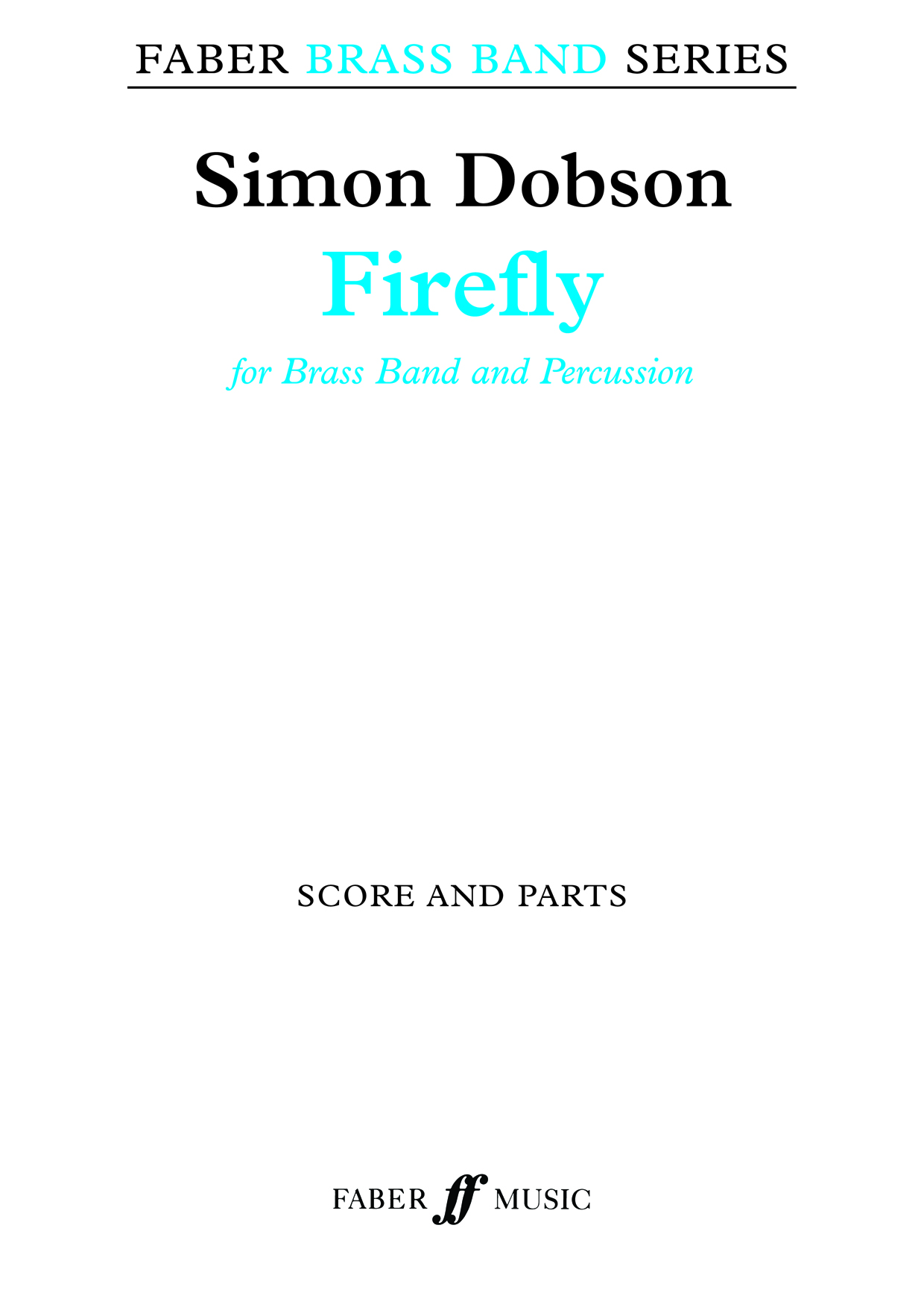
Firefly (brass band score & parts) - Simon Dobson
Firefly was composed by award-winning composer Simon Dobson (b.1981) to provide an entertaining up-tempo concert work for community and youth bands. Composed in funk-rock style, and is based on the groove beat with which it opens. Dobson says, "Firefly was written as a break from my more serious music and as a 'hat tip' to the various types of beat orientated music I listen to." It was first performed by Oslofjord Brass in Norway and in its wind version by Harmonie Shostakovich, Switzerland. Duration: 5-6 minutes. INSTRUMENTATION: 1 Eflat Sop. Cornet, Solo Cornets (4), Bflat Rep. Cornet (1), 2nd Bflat, Cornets (2), 3rd Bflat Cornets (2); Flugel horn, Solo Eflat Horn, 1st Eflat Horn, 2nd Eflat Horn; 1st Bflat Bar., 1 2nd Bflat Bar., 1st Trombone, 2nd Trombone, Bass Trombone; Bflat Euphoniums (2); Eflat Tubas (2); Bflat Tubas (2); 2 percussion
In Stock: Estimated dispatch 1-3 working days
-
 £20.00
atrium phase
Descriptionatrium phase was inspired by listening to works performed at the 2013 Huddersfield Contemporary Music Festival in the atrium of the Huddersfield University Creative Arts Building. The atrium, despite being a functional area incorporating meeting areas and a cafe, has almost coincidentally evolved into a fantastic (if somewhat resonant) performance space. Performers can be positioned on three different sides and three different levels, making the atrium ideally suited to spatially separated performances of a variety of music from Gabrieli to Christian Wolff.In atrium phase the band is separated into four groups - ideally these should be positioned around the audience as follows: group A to the left of the audience, group B in front of the audience, group C to the right of the audience and group D (the four basses) behind the audience. The music "phases" between the groups in the manner of contemporary electroacoustic music, with the bass group acting as a kind of "subwoofer". Starting very slowly, the music accelerates using metrical modulations to finish at considerable speed.The music is intended to be performed without a conductor wherever possible - the three percussionists should set and control the tempo, and there are clear points of overlap for percussionists to allow synchronisation between groups.atrium phase won the inaugural Foden's Band Composition Competition in 2014 and the first performance was given on 24 January 2015 at the RNCM Festival of Brass by Foden's Band.Performance Notes:The band is separated into four groups - ideally these should be positioned around the audience as follows: group A to the left of the audience, group B in front of the audience, group C to the right of the audience and group D (the four basses) behind the audience. The music "phases" between the groups in the manner of contemporary electroacoustic music, with the bass group acting as a kind of "subwoofer". Starting very slowly, the music accelerates using metrical modulations to finish at considerable speed.Instruments in group A require cup mutes (soprano, 2 x cornets, horn, baritone, trombone, euph), group B harmon mutes (4 x cornets, baritone and trombone - the baritone should use a trombone mute) and group C require fibre straight mutes (3 x cornets, flugel, 2 x horns, euph., bass trom - NOT metal mutes if possible).Percussion instruments required are claves, wood block and 2 x temple blocks. The music is intended to be performed without a conductor wherever possible - the three percussionists should set and control the tempo, and there are clear points of overlap for percussionists to allow synchronisation between groups.Approximate duration 6'17"
Estimated dispatch 7-14 working days
 Watch video