
Results
-
 £183.99
Perihelion: Closer to the Sun - Philip Sparke
Perihelion was commissioned by the Cory Band as their own-choice piece for the 2013 European Brass Band Championships, held in Oslo, Norway. Winning the set piece section of the contest and coming second to Eikanger-Bjorsvik Musikklag with their own choice selection, Cory went on to become European Champions for the fifth time.Cory MD Philip Harper had asked for a 'Concerto for Band' to fully exploit his outstanding band of virtuosi, and composer Philip Sparke created a one-movement work with contiguous sections, first featuring horns and flugel, then trombones followed by cornets and a slower central section for percussion and baritones, euphonium andbasses.The piece is abstract in nature, without a specific programme, and the title merely reflects the fact that the piece was begun on January 2nd 2013, the day of Earth's perihelion - the point in its orbit when it is closest to the sun. It could also be argued that the piece weaves between moments of brilliant optimism and dark shadow, both of which can be the result of bright sunshine.
Estimated dispatch 5-14 working days
-
 £59.99
Jeanie with the light brown hair - Stephen Foster - Philip Sparke
One of the most beautiful songs ever written. Philip Sparke's sumptuous arrangement of this Stephen Foster classic will make a perfect item to bring a few minutes of peace and calm tranquillity to any concert. The lush harmonies, so characteristic of Philip Sparke's arranging, are augmented with exquisite solo figures for cornet and flugel horn. Once you have played this you will want it on every concert programme.
Estimated dispatch 5-14 working days
-
 £152.99
Suite From Hymn of the Highlands - Philip Sparke
Complete score and full set of parts for Philip Sparke's Suite From Hymn To The Highlands for Brass Band. This work draws three expressive musical pictures of the Scottish highlands. The first movement, Ardross Castle, contains solo passages for horn and baritone and features a fascinating bagpipe melody. The second movement, Alladale, is a trio for tenor horn, flugel horn and baritone with an accompaniment featuring the percussion section. The final movement, Dundonnell,features two highly contrasting melodies, a wild presto and the bagpipe melody first heard in the first movement.
Estimated dispatch 5-14 working days
-
 £59.99
Lairg Muir - Philip Sparke
The River Alladale provides the inspiration for this lyrical piece which has a lilting melody with an unmistakeable Scottish feel. The trio of Flugel Horn, Tenor Horn and Baritone provide a wonderful sense of flowing with the river which, as the piece progresses, broadens and grows stronger as it nears the outlet to the sea by the Summer Isles. Bring a touch of Scots magic to your concert with this delightful piece.
Estimated dispatch 5-14 working days
-
£59.99
Laura - David Raskin - Mark Freeh
David Raksin was active in the music business for so many decades that he was thought by many to be the Grandfather of film music. Raksin created notable scores for films such as Forever Amber and The Bad and the Beautiful, though he is best known for the soundtrack to Laura, where the lead character is always represented by the same theme, an "idee fixe". This haunting melody gets under your skin and stays there. It is totally suited to the plot where the investigating detective is haunted by the subject of his investigations. Here is a chance to feature your flugel soloist in this jazz ballad which has been given the 'Freeh treatment'.
Estimated dispatch 5-14 working days
-
 £60.99
Adagio - Tomaso Albinoni - Jacob de Haan
If you need a beautiful slow interlude for any concert then this is the piece for you. This short work by Italian composer Thomaso Albinoni has a luscious melody that will bring tears to any eyes. For hundreds of years the manuscript of this work had been lost and was only discovered in 1945. Despite this it has become Albinoni's best known work and has topped the classical charts on many occasions. Wonderful figures for the flugel and soprano cornet bring out extra emotion in this arrangement by Jacob de Haan.
Estimated dispatch 5-14 working days
-
 £74.99
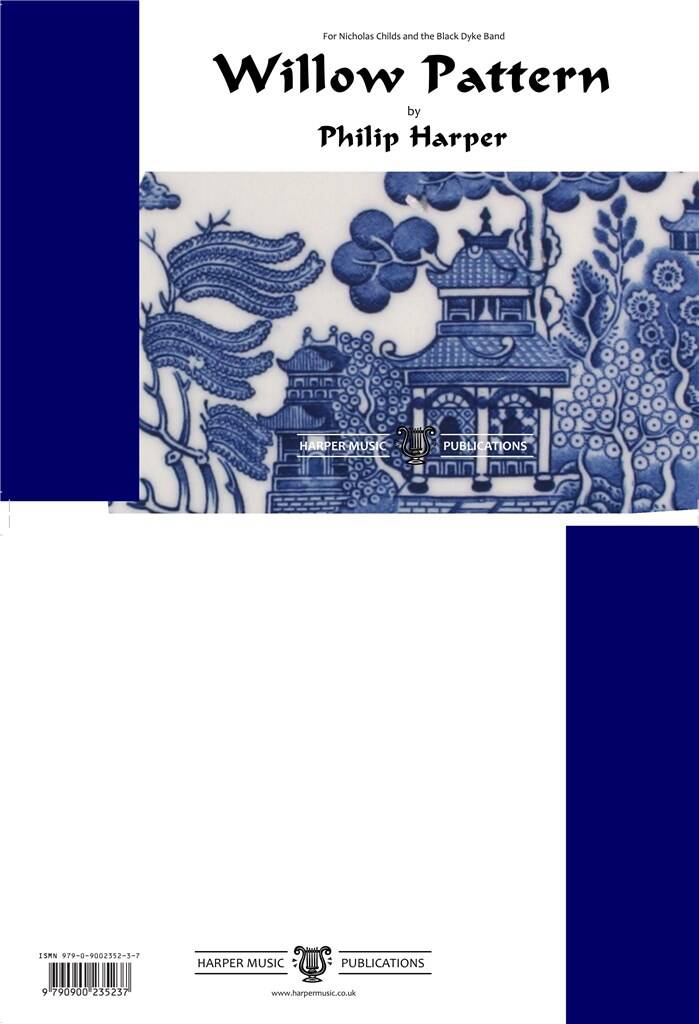
Willow Pattern - Philip Harper
Composed in 2009 for Nicholas Childs and the Black Dyke BandThis piece tells the Willow Pattern legend through music. Several leitmotifs are used both for the different characters and also for some of the important emotions in the tale. Additionally, Knoon-se's part is mainly played by the flugel horn, Changby the euphonium, the Mandarin by the Eb Bass and the Duke Ta-jin by the trombone. The Willow Pattern LegendOnce, in ancient China, there lived a wealthy and powerful Mandarin who had a beautiful daughter, Knoon-se. She had fallen in love with Chang, a humble accountant, which angered her father who imprisoned her in the Pavilion by the river with only theexotic birds for company. She learnt that the Mandarin planned to marry her to the pompous Duke Ta-jin and that the wedding would take place on the day the blossom fell from the willow tree, so she sent Chang a message: "Gather thy blossom, ere it bestolen". The Duke arrived by sea amid great fanfare when the tree was heavy with bud, and nights of magnificent banquets followed. After one such occasion when the Mandarin slept, Chang crept over the crooked fence and tiptoed into the Pavilion to rescueKnoon-se, but as they escaped the alarm was raised. They fled over the bridge with the Mandarin close on their heels brandishing his whip.They managed to escape by boat to a secluded island where they lived happily for a time. Meanwhile, the Mandarin learned of their refuge and, intent on revenge, he ordered his soldiers to kill them. As Knoon-se and Chang slept at night, the men setfire to the pagoda in which they lived and the lovers perished in the flames. However, the Gods, moved by the lovers' plight, transformed their souls into two turtle-doves which rose from the charred remains, soaring above the Earth, symbolising eternal happiness. Willow Pattern is dedicated to the memory of Jean Harper who passed away as I was completing the piece and who was a great collector of porcelain and china-ware. NOTES ON PERFORMANCEMute Requirements:Metal mutes soprano cornet, repiano cornet, 2nd cornets, 3rd cornets (6 in total) Cup mutes all cornets and trombones (10 + 3) Harmon mutes soprano cornet, solo cornets, repiano cornet (6) Percussion Requirements:There are two parts for percussion on the score. The minimum requirements are as follows: 2 players - Timpani, 2 Large tom toms, 2 Wood Blocks, Triangle, Sleigh Bells, Whip, Clash Cymbals, Suspended Cymbal, Hi-hat, Glockenspiel, Xylophone, Tam tam (or susp. cym.) For performances with extra resources, and to achieve closer authenticity, the full requirements are as follows: 3 players - Timpani, 3 Taiko Drums played with thick wooden sticks (or Large tom toms), 2 Wood Blocks, Triangle, Chinese Bells (or Sleigh Bells), Whip, Clash Cymbals, Chinese Cymbals (small clash cymbals approx 12"), Suspended Cymbal, Glockenspiel,Xylophone, Tam tam
Estimated dispatch 5-14 working days
-
 £24.95
Nobody Knows the Trouble I've Seen - Alwyn Green
This well known Spiritual has been arranged by Bass Trombonist, Alwyn Green, as a flugel horn feature. It can be performed by any Bb band instrument.
Estimated dispatch 5-14 working days
-
 £15.99
'tis The Last Rose Brass Band - Traditional
It is often thought that this melody came from the Victorian era, when Irish songs were very popular, however this Air was first published in 1813 and has been adapted and arranged by many composers and arrangers over theyears. This arrangement, as a Flugel Horn solo, by Gary Westwood is a new treatment and shows off this tender and wistful love song.
Estimated dispatch 5-14 working days
-
 £65.00
Four Sketches - Simon Dobson
Simon Dobson wrote his 'Four Sketches' at the request of Peter Bossano, Head of Brass at the Royal College of Music, in recognition of the 25th anniversary of Benjamin Britten's death. The first movement, 'Fanfare',quotes directly from the opening violin melody from Britten's song cycle Les Illuminations. This melodic line is superimposed upon sonorous Lydian mode chords to project a majestic sound. The second movement, 'Prayer', is adefinite contrast, being and much more reflective and pensive in it's mood, and featuring a dream like euphonium cadenza. The third movement, 'Funeral March', builds from a soft chordal opening to a chaotic andconfusedfortississimo climax with flourishes in the cornets and pounding tri-tones across the basses, before plunging into silence for a flugel cadenza to finish. The final Finale movement is much more positive from the off, withits jaunty melodies over a Brittenesque ostinato. The block chordal passages offer a crashing climax, making for an exciting conclusion to an excellent new work for the medium. Simon Dobson's 'Four Sketches' was the winningentry in the European Brass Band Composer Competition held in Brussels in March 2002.
Estimated dispatch 5-14 working days
 View Music