
Results
-
 £154.60
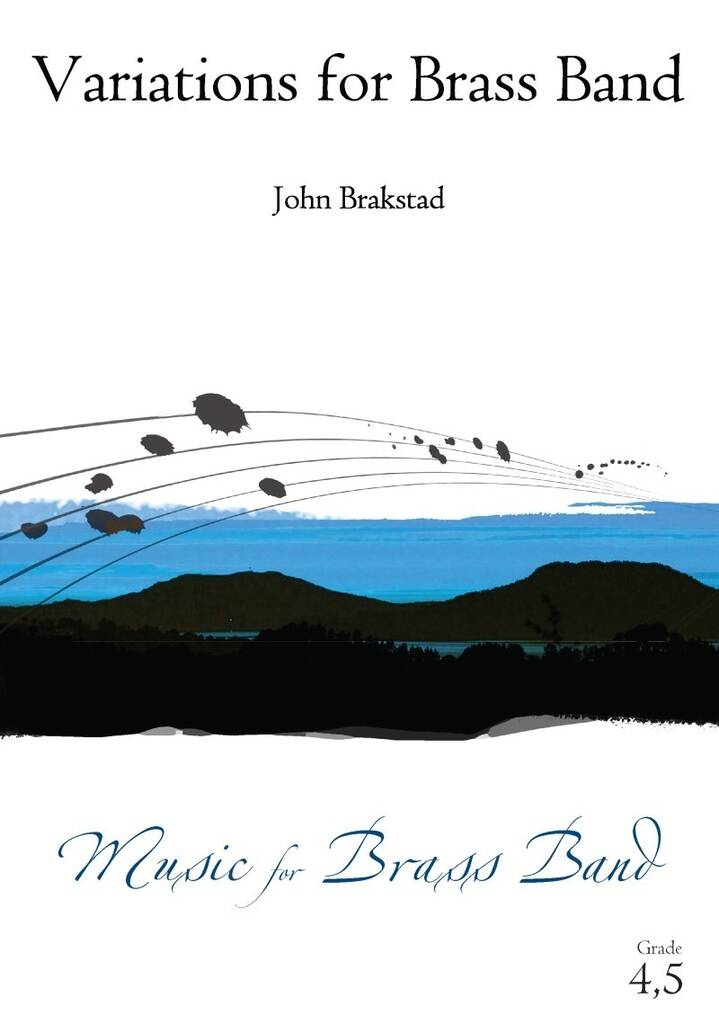
Variations for Brass Band - John Brakstad
"Variations for Brass Band" consists of a chorale and 5 variations of brilliant, lyric and humorous character. The piece also contains several soloparts and elements of ensemble.Each variation has its own title, but the piece should be played in its entirity.The chorale is based on a minor pentachord, and each variation begins with these five notes, with different rhythmical treatment.There is also a little secondary "theme", consisting of five notes which are heard throughout the work (eg. as sixteens/semiquavers in cornets in bar 1).When the beams sweep across the Earth, they can be heard as regular pulses. We call them pulsars.In this piece there are three percussion parts. In addition there is an "optional part" to replace the marimba and vibraphone written in the three original percussion parts if desired. This fourth part is shown in the full score.
Estimated dispatch 5-14 working days
-
 £144.99
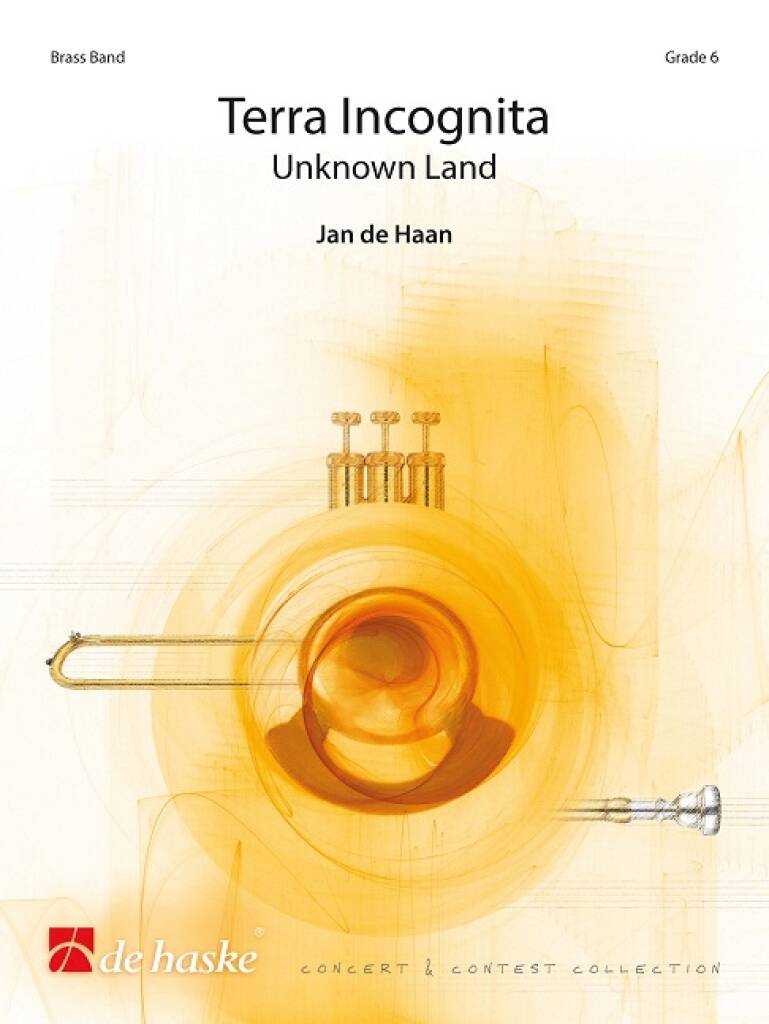
Terra Incognita - Jan de Haan
Download the Digeridoo sound file here.In five musically and thematically continuous parts, this composition transports us to foreign, fascinating places - stepping into the shoes of the explorers who set off to discover unknown lands centuries ago. The test piece for the Dutch Brass BandChampionships 2015 (Challenge Section) holds interesting solo parts for flugelhorn and trombone. An exciting musical journey!
Estimated dispatch 5-14 working days
-
 £115.60
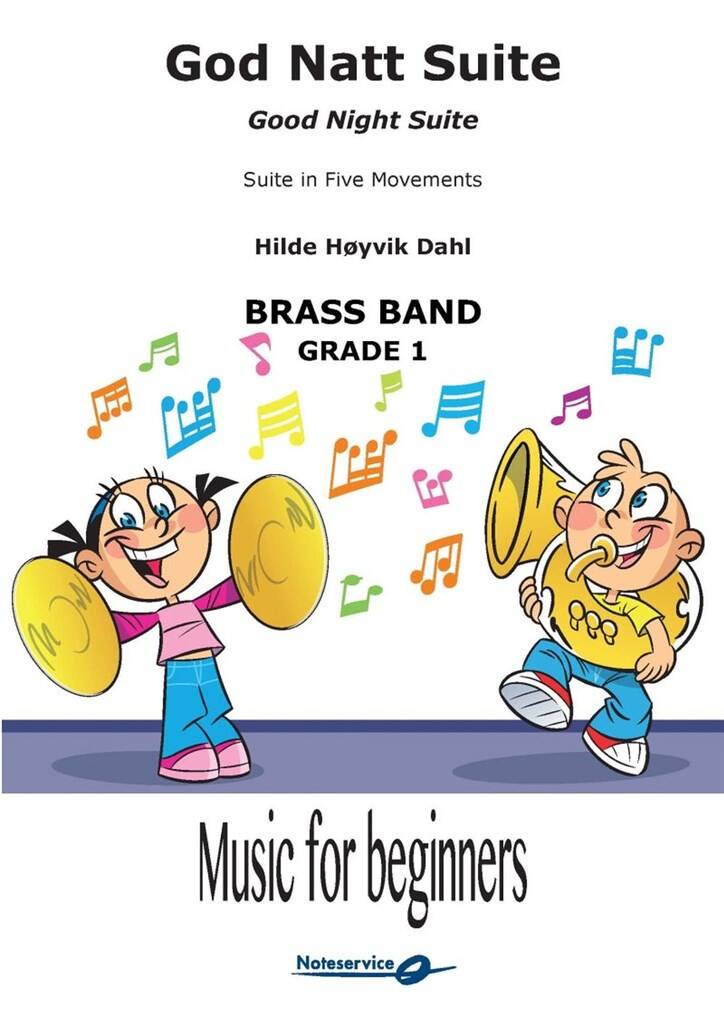
God Natt Suite - Hilde Høyvik Dahl
Good Night Suite is written for beginning band and suitable for the youngest musicians. The level of difficulty is at lowest grade and the rhythms are equal in all wind parts. The register on each instrument is also customized to each part. Some easy solos appears in some sections and in Mvt. 4 there are different rhythm in the melody and bass parts. The level of difficulty is the same for all five movements. The movements may of course be played as single pieces. When all movements are mastered it's possible to play the suite as a kind of fairytale with simple dramaturgy or choreography. Maybe the whole band can be dressed in their pajamas?
Estimated dispatch 5-14 working days
-
 £102.99
Sinfonietta No. 1 - Marc Jeanbourquin
Sinfonietta No.1 won first prize in the 2023 Composition Competition organized by the Swiss Brass Band Association. Various melodic themes and rhythmic motifs develop throughout the work. They combine with the numerous dynamic effects to bring a certain unity, from the beginning to the end of this competition piece. The technical and melodic difficulties allow the different soloists to show their virtuosity and musical prowess over five uninterrupted parts. After a first slow and misterioso part, there is a contrast with the following energico sequence based on an ostinato, creatings both a progression and a tension, to drive everything towards the third part mesto (sad), then lento, where some cadenzas and numerous dissonnances can be heard. The energico transition announces the fifth part, a ternary and fast con fuoco. This last part will lead the audience to a final apotheosis.
Estimated dispatch 5-14 working days
-
£54.99
Pleasure for Band - Kees Schoonenbeek
As the title suggests Pleasure for Band is a pleasant composition it is based in five equal parts. The first movement makes use of A-B-A form, with the A theme having a bright joyous character and the B theme having a contrasting more lyrical feel. This work will make an idea encore for any concert.
Estimated dispatch 5-14 working days
-
 £50.00
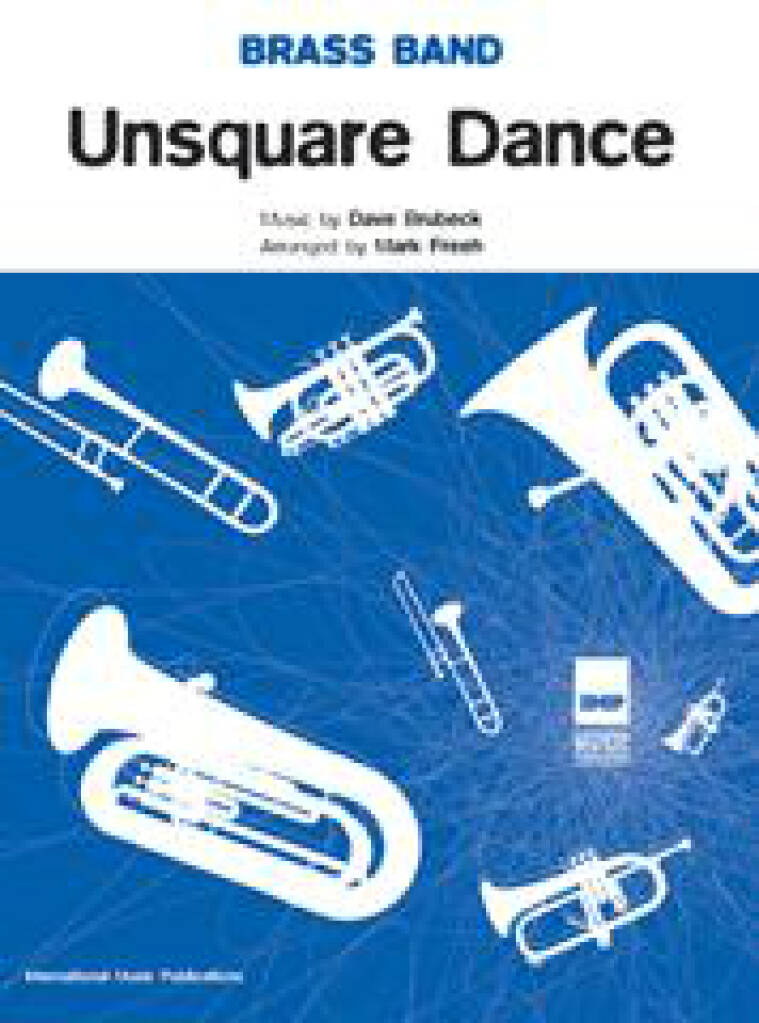
Unsquare Dance - Dave Brubeck
As in the famous 'Take Five' Brubeck enjoyed playing with time signatures that most people would find unfamiliar. The reason for the title of this piece is obvious when one notices that it is in 7/4 time! This arrangement forBrass Band is by Mark Freeh and includes the Score and all parts. It would be suitable for a good secondary school band.
Estimated dispatch 5-14 working days
-
 £37.35
Enduring Faith (Brass Band) Andrew Wainwright
Enduring Faith was commissioned by Christopher Ward and the Five Lakes Silver Band and is a lyrical work for brass band that explores the intersection of hope, resilience, and conviction. Designed with a focus on melodic clarity and expressive phrasing, the composition moves through a series of nuanced emotional shifts - ranging from quiet, reflective passages to moments of expansive lyricism and affirmation. The harmonic structure travels through several keys, serving as a musical metaphor for the changing seasons of life. Throughout the piece, the texture is enriched by featured soloists from across the ensemble, including flugel horn, cornet, euphonium, baritone, and trombone. This work is dedicated to Doug and Stephanie Bayne, long-standing members of the Five Lakes Silver Band, in recognition of their commitment to their community and their steadfast support of the ensemble. It was recorded by the Five Lakes Silver Band on their 2025 album, Legacy. To view a video of the Five Lakes Silver Band performing the work please visit https://youtu.be/84NU_OXMs3Y Duration: Approx. 5.30 minutes Difficulty Level: 3rd Section + This PDF download includes the full score and parts. Sheet music available at www.brassband.co.uk (UK) or https://satradecentral.org (USA) Instrumentation: Soprano Cornet Eb Solo Cornet Bb Repiano Cornet Bb 2nd Cornet Bb 3rd Cornet Bb Flugel Horn Bb Solo Horn Eb 1st Horn Eb 2nd Horn Eb 1st Baritone Bb 2nd Baritone Bb 1st Trombone Bb 2nd Trombone Bb Bass Trombone Euphonium Bb Bass Eb Bass Bb Timpani Percussion 1-2
In Stock: Estimated dispatch 1-3 working days
-
 £33.62
Metamorphosis on 'Finlandia' (Brass Band - Full Score Print) Andrew Wainwright
This major work was commissioned by Five Lakes Silver Band and its Musical Director Christopher Ward in February 2024, and is featured on the band's CD Resurget Cineribus. The music is based on the hymn tune by Katharina von Schlegel, Be Still, My Soul, found in Sibelius' famous tone poem Finlandia (Op. 26). While the only source material used in Metamorphosis on 'Finlandia' is the hymn itself as opposed to any of the developmental music found in the tone poem, it does also seek to depict the strife of the Finnish people against the censorship of the Russian Empire. It is therefore both rousing and turbulent at various times. Metamorphosis on 'Finlandia' commences with a quartet playing a full statement of the hymn in its simplest form, featuring a solo flugel. This leads into a sprightly 6/8 section where a fanfare-like figure proclaims the theme. The music in this section is at times unstable and off-kilter as references to the hymn come and go, often in a very chromatic or dissonant form - a reflection of the struggles that the Finnish people went through. Despite this, there is still a sense of optimism. A somewhat reflective slower section follows, featuring another full rendition of the hymn, with a number of solo voices taking up the tune. This is followed by several cadenzas - for cornet, trombone, Eb bass, and Bb bass, which represent different voices speaking out against the oppression of the Finnish people. This leads into an energetic final movement before a resounding proclamation of the hymn in its full glory. A return to the fanfare heard earlier in the work brings the piece to a glorious conclusion. To listen to a recording of Five Lakes Silver Band performing the work please visit www.youtube.com/watch?v=GeJJF6asD2k Duration: Approx. 13.15 minutes Difficulty Level: 1st Section + This product includes a print copy of the full score. PDF parts and score available here. Sheet music available here (UK) or https://satradecentral.org (USA) Instrumentation: Soprano Cornet Eb Solo Cornet Bb Repiano Cornet Bb 2nd Cornet Bb 3rd Cornet Bb Flugel Horn Bb Solo Horn Eb 1st Horn Eb 2nd Horn Eb 1st Baritone Bb 2nd Baritone Bb 1st Trombone Bb 2nd Trombone Bb Bass Trombone Euphonium Bb Bass Eb Bass Bb Timpani Percussion 1-3
In Stock: Estimated dispatch 1-3 working days
-
£67.24
Metamorphosis on 'Finlandia' (Brass Band) Andrew Wainwright
This major work was commissioned by Five Lakes Silver Band and its Musical Director Christopher Ward in February 2024, and is featured on the band's CD Resurget Cineribus. The music is based on the hymn tune by Katharina von Schlegel, Be Still, My Soul, found in Sibelius' famous tone poem Finlandia (Op. 26). While the only source material used in Metamorphosis on 'Finlandia' is the hymn itself as opposed to any of the developmental music found in the tone poem, it does also seek to depict the strife of the Finnish people against the censorship of the Russian Empire. It is therefore both rousing and turbulent at various times. Metamorphosis on 'Finlandia' commences with a quartet playing a full statement of the hymn in its simplest form, featuring a solo flugel. This leads into a sprightly 6/8 section where a fanfare-like figure proclaims the theme. The music in this section is at times unstable and off-kilter as references to the hymn come and go, often in a very chromatic or dissonant form - a reflection of the struggles that the Finnish people went through. Despite this, there is still a sense of optimism. A somewhat reflective slower section follows, featuring another full rendition of the hymn, with a number of solo voices taking up the tune. This is followed by several cadenzas - for cornet, trombone, Eb bass, and Bb bass, which represent different voices speaking out against the oppression of the Finnish people. This leads into an energetic final movement before a resounding proclamation of the hymn in its full glory. A return to the fanfare heard earlier in the work brings the piece to a glorious conclusion. To listen to a recording of Five Lakes Silver Band performing the work please visit www.youtube.com/watch?v=GeJJF6asD2k Duration: Approx. 13.15 minutes Difficulty Level: 1st Section + PDF download includes parts and score. Sheet music available here (UK) or https://satradecentral.org (USA) Instrumentation: Soprano Cornet Eb Solo Cornet Bb Repiano Cornet Bb 2nd Cornet Bb 3rd Cornet Bb Flugel Horn Bb Solo Horn Eb 1st Horn Eb 2nd Horn Eb 1st Baritone Bb 2nd Baritone Bb 1st Trombone Bb 2nd Trombone Bb Bass Trombone Euphonium Bb Bass Eb Bass Bb Timpani Percussion 1-3
In Stock: Estimated dispatch 1-3 working days
-
£33.62
Metamorphosis on 'Finlandia' (Brass Band - Full Score PDF) Andrew Wainwright
This major work was commissioned by Five Lakes Silver Band and its Musical Director Christopher Ward in February 2024, and is featured on the band's CD Resurget Cineribus. The music is based on the hymn tune by Katharina von Schlegel, Be Still, My Soul, found in Sibelius' famous tone poem Finlandia (Op. 26). While the only source material used in Metamorphosis on 'Finlandia' is the hymn itself as opposed to any of the developmental music found in the tone poem, it does also seek to depict the strife of the Finnish people against the censorship of the Russian Empire. It is therefore both rousing and turbulent at various times. Metamorphosis on 'Finlandia' commences with a quartet playing a full statement of the hymn in its simplest form, featuring a solo flugel. This leads into a sprightly 6/8 section where a fanfare-like figure proclaims the theme. The music in this section is at times unstable and off-kilter as references to the hymn come and go, often in a very chromatic or dissonant form - a reflection of the struggles that the Finnish people went through. Despite this, there is still a sense of optimism. A somewhat reflective slower section follows, featuring another full rendition of the hymn, with a number of solo voices taking up the tune. This is followed by several cadenzas - for cornet, trombone, Eb bass, and Bb bass, which represent different voices speaking out against the oppression of the Finnish people. This leads into an energetic final movement before a resounding proclamation of the hymn in its full glory. A return to the fanfare heard earlier in the work brings the piece to a glorious conclusion. To listen to a recording of Five Lakes Silver Band performing the work please visit www.youtube.com/watch?v=GeJJF6asD2k Duration: Approx. 13.15 minutes Difficulty Level: 1st Section + This PDF download includes the full score. Parts and score available here. Sheet music available here (UK) or https://satradecentral.org (USA) Instrumentation: Soprano Cornet Eb Solo Cornet Bb Repiano Cornet Bb 2nd Cornet Bb 3rd Cornet Bb Flugel Horn Bb Solo Horn Eb 1st Horn Eb 2nd Horn Eb 1st Baritone Bb 2nd Baritone Bb 1st Trombone Bb 2nd Trombone Bb Bass Trombone Euphonium Bb Bass Eb Bass Bb Timpani Percussion 1-3
In Stock: Estimated dispatch 1-3 working days
 View Music