
Results
-
 £89.95
Revelation (Score and Parts)
Symphony for Double Brass on a theme of Purcell 1995 marked the tercentenary of Purcell's death, and my new score Revelation has been written as a tribute to his music and the ornate and confident spirit of his age. There are five major sections: 1 Prologue 2 Variations on a ground bass I 3 Fugue 4 Variations on a ground bass II 5 Epilogue and Resurrection The score uses many features of the Baroque Concerto Grosso, and arranges players in two equal groups from which soloists emerge to play in a variety ofvirtuoso ensembles. It quotes freely from Purcell's own piece Three Parts on a Ground in which he has composed a brilliant sequence of variations over a repeating six-note bass figure. This original motif can be heard most clearly beneath the duet for Cornet 5 and Soprano at the beginning of the 2nd section. There is, of course, a religious dimension to Revelation as the title suggests, and the score is prefaced by lines by the 17th century poet John Donne. His Holy Sonnet paraphrases the Book of Revelation in which the dead are raised at the sounds of the last trumpet. Donne's trumpets are themselves placed stereophonically ". . . At the round Earth's imagined corners" and it is this feature that today's players represent as they move around the performing area. Their final apocalyptic fanfares can be heard at the close of the score, as Purcell's music re-enters in a lasting tribute to England's first composer of genius. Philip Wilby September 1995 At the round Earth imagined corners, blow your trumpets, angels, and arise, arise from death, you numberless infinities Of souls, and to your scattered bodies go. All whom the flood did, and fire shall o 'erthrow All whom war, dearth, age, agues, tyrannies, Despair, law, chance hath slain, and you whose eyes Shall Behold God, and never taste death woe. John Donne after Revelation Ch. 11 v.15
Estimated dispatch 7-14 working days
-
 £44.95
Revelation (Score Only)
Symphony for Double Brass on a theme of Purcell 1995 marked the tercentenary of Purcell's death, and my new score Revelation has been written as a tribute to his music and the ornate and confident spirit of his age. There are five major sections: 1 Prologue 2 Variations on a ground bass I 3 Fugue 4 Variations on a ground bass II 5 Epilogue and Resurrection The score uses many features of the Baroque Concerto Grosso, and arranges players in two equal groups from which soloists emerge to play in a variety ofvirtuoso ensembles. It quotes freely from Purcell's own piece Three Parts on a Ground in which he has composed a brilliant sequence of variations over a repeating six-note bass figure. This original motif can be heard most clearly beneath the duet for Cornet 5 and Soprano at the beginning of the 2nd section. There is, of course, a religious dimension to Revelation as the title suggests, and the score is prefaced by lines by the 17th century poet John Donne. His Holy Sonnet paraphrases the Book of Revelation in which the dead are raised at the sounds of the last trumpet. Donne's trumpets are themselves placed stereophonically ". . . At the round Earth's imagined corners" and it is this feature that today's players represent as they move around the performing area. Their final apocalyptic fanfares can be heard at the close of the score, as Purcell's music re-enters in a lasting tribute to England's first composer of genius. Philip Wilby September 1995 At the round Earth imagined corners, blow your trumpets, angels, and arise, arise from death, you numberless infinities Of souls, and to your scattered bodies go. All whom the flood did, and fire shall o 'erthrow All whom war, dearth, age, agues, tyrannies, Despair, law, chance hath slain, and you whose eyes Shall Behold God, and never taste death woe. John Donne after Revelation Ch. 11 v.15
Estimated dispatch 7-14 working days
-
 £79.95
The Lost Village of Imber (Brass Band - Score and Parts) - Bond, Christopher
The Lost Village of Imber was commissioned by Bratton Silver Band in 2019 in celebration of 160 years of the band; 1859-2019. Structured in three movements, the complete work was premiered by Cory Band at Wiltshire Music Centre in February 2020.The village of Imber on Salisbury Plain had been inhabited for over one thousand years when it was evacuated in 1943 to make way for military training in the Second World War. At the time, with preparations for the Allied invasion of Europe underway, most villagers put up no resistance, despite being upset, with the belief that they'd return once the war had concluded. To this day, Imber and its surrounding land remain a military training ground. The villagers never returned, and just the shell of what was once a community remains.Structured in three movements, it is on this very real story that the work is based, setting out the series of events of 1943 in chronological order.The first movement, On Imber Downe, portrays a sense of jollity and cohesiveness, a community of individuals living and working together before news of the evacuation had broken. Sounds of the village are heard throughout, not least in a series of percussive effects, the anvil of the blacksmith; the cowbell of the cattle and the bells of the church.The second movement, The Church of St. Giles, begins mysteriously and this sonorous, atmospheric opening depicts Imber in its desolate state and the apprehension of residents as they learn they have to leave their homes. Amidst this is the Church, a symbol of hope for villagers who one day wish to return, portrayed with a sweeping melodic passage before the music returns to the apprehension of villagers facing eviction around their sadness at losing their rural way of life.In complete contrast, the third movement, Imemerie Aeternum, portrays the arrival of the military, complete with the sounds of the ammunition, firing and tanks, sounds which were all too familiar to those living in the surround areas. To close, the Church of St. Giles theme returns in a triumphant style, representing the idea that the church has always been, even to this day, a beacon of hope for the villagers and local community, both the centrepiece and pinnacle of a very real story.Duration: 13.30
Estimated dispatch 7-14 working days
-
£34.95
The Southern Cross (Brass Band - Score and Parts) - Bowen, Brian
The Southern Cross is one of several excellent marches by Brian Bowen in which he carried on the more sophisticated pattern of British marches by Wilfred Heaton, Leslie Condon and Ray Steadman-Allen. It was written for the Box Hill (Australia) Corps jubilee celebrations in 1970 and formed part of the band's repertoire when it toured Great Britain in the same year. The first half of the march features part of the song, 'March on!' by Klaus Ostby, an early pioneer of Salvation Army music in Scandinavia. The contrapuntal layering of melodies in the trio, especially in the finale where 'March on!' sounds one more triumphant time, is notable, as is the shift to a slower, more stately tempo. The harmonic and rhythmic style also represents the more modern sounds of Salvation Army brass band music in the late 1960s and early 1970s. Right from the opening gestures, listeners at early performances knew that a page had turned in the evolution of the Salvation Army march.
Estimated dispatch 7-14 working days
-
£17.50
The Southern Cross (Brass Band - Score only) - Bowen, Brian
The Southern Cross is one of several excellent marches by Brian Bowen in which he carried on the more sophisticated pattern of British marches by Wilfred Heaton, Leslie Condon and Ray Steadman-Allen. It was written for the Box Hill (Australia) Corps jubilee celebrations in 1970 and formed part of the band's repertoire when it toured Great Britain in the same year. The first half of the march features part of the song, 'March on!' by Klaus Ostby, an early pioneer of Salvation Army music in Scandinavia. The contrapuntal layering of melodies in the trio, especially in the finale where 'March on!' sounds one more triumphant time, is notable, as is the shift to a slower, more stately tempo. The harmonic and rhythmic style also represents the more modern sounds of Salvation Army brass band music in the late 1960s and early 1970s. Right from the opening gestures, listeners at early performances knew that a page had turned in the evolution of the Salvation Army march.
Estimated dispatch 7-14 working days
-
 £120.00
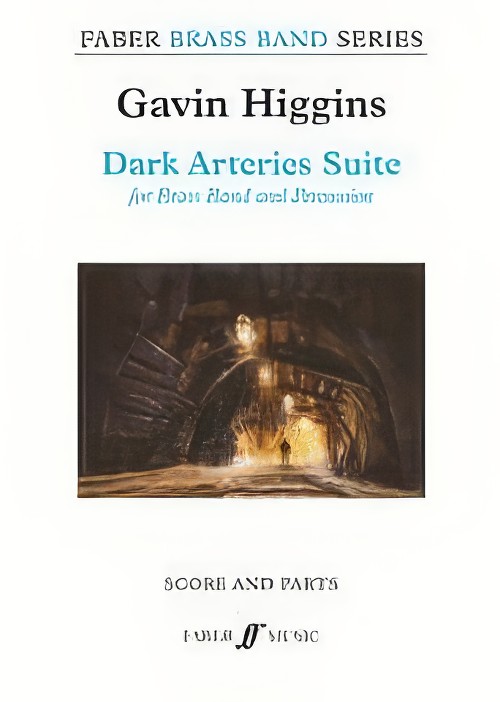
Dark Arteries Suite (Brass Band - Score and Parts) - Higgins, Gavin
Dark Arteries was commissioned by Rambert Dance Company and first performed in May 2015 with the Tredegar Town Band sharing the stage with Rambert dancers. Dark Arteries is a personal and at times highly wrought response to the Miners Strike and its aftermath. It is in three movements, the first and last are expansive, with widely contrasting sound worlds, from dark, brooding melodies and the haunting sounds of solo flugel horn to wild syncopations on cornets, suggestive of an imposing, but often bleak mining landscape. Suitable for 1st Section Bands and above. Duration: 16.00
Estimated dispatch 7-14 working days
-
 £44.95
Princethorpe Variations (Brass Band - Score and Parts) - Downie, Kenneth
Colourful harmony, rhythmic flair and melodic invention are the hallmarks of this excellent set of variations by Kenneth Downie, based on the well known church tune, Princethorpe.This major work demonstrates the well-known characteristics of the composer: colourful harmony, rhythmic flair and melodic invention, all encapsulated in scoring which is engulfing both to players and listeners alike. Following a presentation of the theme there are five variations culminating in what can be described as either a finale or coda.Theme. The composer shows his originality in the harmonic sense of this introduction. Perhaps it could be suggested that over-indulgence of rubato may be a temptation to be avoided.Sections A to F. Relentless rhythmic drive is of paramount importance in this first variation. Conscientious observance of dynamics is of course an essential requirement in conveying the exciting quality of the music; there are moments of sudden contrast of which all will need to be aware. Moving between the time-signatures of 5/4 and 6/4 these sections are built from strong easily-identifiable fragments of the theme. These is a significant increase in temp at letter F which will further the exciting impact of the music.Sections G & H. In a pastorale style this short, gentle variation affords a contrast in style between the previous and succeeding ones. The gentle undulating character of the melodic lines is governed by the Allegretto grazioso directive.Sections I to M. Commencing two bars before letter I the music is now exuberant and the tempo and style is that of a march in compound time. In this exhilarating movement there are moments of contrast and indeed of delicacy which are a foil to the more energetic moments. Rhythmic control will be essential to maintain a consistent tempo. As elsewhere in the work, the percussion section will contribute much to the success of the performance there are bars where this section alone is heard and there are important entries for glockenspiel.Sections N & O. With emotional content this Adagio variation has the first two notes of the melody as its melodic impetus. Apart from just over two bars at O (where there is an interpolatory phrase from Cornets and Trombones), the melodic line is entrusted to the plaintive sounds of the horn section. Cornets and Trombones provide a change of tone colour at the beginning of section O. Under a poco rall, this very expressive variation is concluded; there is an important link supplied by Eb Bass.Sections P & Q. A lively march-tempo is launched immediately and these sections are in the nature of an introduction to the final variations. There is a quickening of pace at Q which assists the generation of excitement which should be an essential part of the performance. Solo Cornets introduce a melodic line at Q which anticipates the compound time of the following section.Sections R & S. The Solo Cornet theme of the previous section is now a contrapuntal line accompanying the theme tune. With an elongation of the notes in the melody, the conductor will need to call on the sustaining powers of the band and at no time should the interesting accompanying lines be allowed to detract from the sonorous presentation of the basic theme.Sections T, U & V. Following a poco rit, the finale begins at letter T with the directive, molto vivace. There is much detail to be rehearsed, not least being the dynamic contrasts which are encountered. As throughout the work, the listener should have no difficulty in identifying the thematic sources of the composer's music.
Estimated dispatch 7-14 working days
-
£22.50
Princethorpe Variations (Brass Band - Score only) - Downie, Kenneth
Colourful harmony, rhythmic flair and melodic invention are the hallmarks of this excellent set of variations by Kenneth Downie, based on the well known church tune, Princethorpe.This major work demonstrates the well-known characteristics of the composer: colourful harmony, rhythmic flair and melodic invention, all encapsulated in scoring which is engulfing both to players and listeners alike. Following a presentation of the theme there are five variations culminating in what can be described as either a finale or coda.Theme. The composer shows his originality in the harmonic sense of this introduction. Perhaps it could be suggested that over-indulgence of rubato may be a temptation to be avoided.Sections A to F. Relentless rhythmic drive is of paramount importance in this first variation. Conscientious observance of dynamics is of course an essential requirement in conveying the exciting quality of the music; there are moments of sudden contrast of which all will need to be aware. Moving between the time-signatures of 5/4 and 6/4 these sections are built from strong easily-identifiable fragments of the theme. These is a significant increase in temp at letter F which will further the exciting impact of the music.Sections G & H. In a pastorale style this short, gentle variation affords a contrast in style between the previous and succeeding ones. The gentle undulating character of the melodic lines is governed by the Allegretto grazioso directive.Sections I to M. Commencing two bars before letter I the music is now exuberant and the tempo and style is that of a march in compound time. In this exhilarating movement there are moments of contrast and indeed of delicacy which are a foil to the more energetic moments. Rhythmic control will be essential to maintain a consistent tempo. As elsewhere in the work, the percussion section will contribute much to the success of the performance there are bars where this section alone is heard and there are important entries for glockenspiel.Sections N & O. With emotional content this Adagio variation has the first two notes of the melody as its melodic impetus. Apart from just over two bars at O (where there is an interpolatory phrase from Cornets and Trombones), the melodic line is entrusted to the plaintive sounds of the horn section. Cornets and Trombones provide a change of tone colour at the beginning of section O. Under a poco rall, this very expressive variation is concluded; there is an important link supplied by Eb Bass.Sections P & Q. A lively march-tempo is launched immediately and these sections are in the nature of an introduction to the final variations. There is a quickening of pace at Q which assists the generation of excitement which should be an essential part of the performance. Solo Cornets introduce a melodic line at Q which anticipates the compound time of the following section.Sections R & S. The Solo Cornet theme of the previous section is now a contrapuntal line accompanying the theme tune. With an elongation of the notes in the melody, the conductor will need to call on the sustaining powers of the band and at no time should the interesting accompanying lines be allowed to detract from the sonorous presentation of the basic theme.Sections T, U & V. Following a poco rit, the finale begins at letter T with the directive, molto vivace. There is much detail to be rehearsed, not least being the dynamic contrasts which are encountered. As throughout the work, the listener should have no difficulty in identifying the thematic sources of the composer's music.
Estimated dispatch 7-14 working days
-
 £74.95
Radio City (Trombone Solo with Brass Band - Score and Parts) - Graham, Peter
As youngsters growing up on the west coast of Scotland, my brother and I fell heir to an old valved radiogram which provided us with our first experiences of radio broadcasts. On the short wave signal, and through the static, we could pick up a whole range of programmes from across the Atlantic. I particularly recall the baseball games, the American accents of the announcers providing a window to a evocative world far removed from our small Ayrshire town. These memories form the basis of Radio City.The work is set in three movements, each introduced by a pastiche radio announcer narrative written by Philip Coutts. The first, City Noir, is a nod towards Raymond Chandler's eponymous private eye Philip Marlow and the dark cityscape of 1940s California.Movement two, Cafe Rouge, takes its title from the main restaurant in New York's famous Hotel Pennsylvania. Two of the most famous band leaders of the 1940s, trombonists Glenn Miller and Tommy Dorsey, broadcast live from the cafe on numerous occasions and the movement echoes with a collage of imagined sounds from the period.The finale, Two-Minute Mile, derives from an event dubbed in the USA as "the most exciting two minutes in sport", namely the Kentucky Derby. The virtuoso soloist figurations have their roots in Kentucky bluegrass fiddle music, with the galloping bluegrass clog-dancing rhythms providing the backdrop.- Peter Graham, Cheshire, January 2013
Estimated dispatch 7-14 working days
-
 £154.99
Contrasts (Trombone Solo with Brass Band - Score and Parts) - Van der Roost, Jan
Contrasts was written for, and dedicated to, trombone soloist Dr. Brett Baker. As the titles indicates, contrasting elements characterize this challenging piece. The slow movement Sounds has a somewhat dark and sombre atmosphere, with complex harmonies and special sound effects. However, the second movement, Caprice, is energetic, entertaining, virtuosic and somewhat whimsical - quite a contrast indeed with the first! Duration: 16.30
Estimated dispatch 7-14 working days
 View Music