
Results
-
 £74.95
Radio City (Trombone Solo with Brass Band)
As youngsters growing up on the west coast of Scotland, my brother and I fell heir to an old valved radiogram which provided us with our first experiences of radio broadcasts. On the short wave signal, and through the static, we could pick up a whole range of programmes from across the Atlantic. I particularly recall the baseball games, the American accents of the announcers providing a window to a evocative world far removed from our small Ayrshire town. These memories form the basis of Radio City.The work is set in three movements, each introduced by a pastiche radio announcer narrative written by Philip Coutts. The first, City Noir, is a nod towards Raymond Chandler's eponymous private eye Philip Marlow and the dark cityscape of 1940s California.Movement two, Cafe Rouge, takes its title from the main restaurant in New York's famous Hotel Pennsylvania. Two of the most famous band leaders of the 1940s, trombonists Glenn Miller and Tommy Dorsey, broadcast live from the cafe on numerous occasions and the movement echoes with a collage of imagined sounds from the period.The finale, Two-Minute Mile, derives from an event dubbed in the USA as "the most exciting two minutes in sport", namely the Kentucky Derby. The virtuoso soloist figurations have their roots in Kentucky bluegrass fiddle music, with the galloping bluegrass clog-dancing rhythms providing the backdrop.- Peter Graham, Cheshire, January 2013
Estimated dispatch 7-14 working days
-
 £119.00
Decennium - Eric Swiggers
'Decennium' was composed in 2003 as a commission by the municipality of Berheze for its tenth anniversary. The composition describes the history of this town in the Province of Brabant, consisting of 6 different villages: Heesch, Heeswijk, Dinther, Nistelrode, Loosbroek and Vorstenbosch. The composition starts with a slow introduction, Adagio Misterioso, suggesting the atmosphere in long-ago days when the area consisted mainly of swamps, meres and low woods. (The word 'Bern' is a synonym of 'Born' meaning source or water, whereas 'Hese' is derived from 'Haisjo' meaning brushwood ). Above the dark sounds we hear far away trumpet signals announcing the Middle Ages. After a piercing crescendo, we hear the full sound of festive trumpets. A medieval dance, as was to be heard in the Heeswijk castle, follows. This dance gets a more and more stirring character and finally turns into a merry popular dance ending with a burst of laughter reproduced by descending scales with the muted trombones and trumpets. A slow transition with a quotation from a Gregorian plainsong (Domine Deus) and church bell ringing, referring to the Abbey of Berne, brings us to a romantic Larghetto. This part describes the quiet rural life in a beautiful natural surrounding. The last dying note contrasts with the threatening ostinato, referring to the rise of the industrialization, which provoked quite some resistance with the local people. Once more we hear the 'Domine Deus' but much more powerful this time. When the resistance calms down, the work concludes with an Alla Marcia. The first notes of the main theme could be heard all through the composition and now we hear the complete main theme again. The new town is born. A festive conclusion refers both to the tenth anniversary and the optimism and confidence as to the future.
Estimated dispatch 10-14 working days
-
 £25.00
...and the winter moon rises
Description...and the winter moon riseswas inspired by a winter's evening car journey across the Pennines from Manchester to Huddersfield, through the brass band heartland of Saddleworth. There was recent snow on the ground, and the sun had just set. A bright clear moon was rising into a sky coloured with orange from the setting sun, and the moonlight made all the snow and ice sparkle.The work is the fourth movement of a larger 5 movement suite entitled "North!", but can be (and has been) performed in isolation. This work was a finalist in the 2012 Ohio Brass Arts Festival composition competition.Performance NotesThe percussion parts should be playable by three players; the "arco" parts of the vibraphone parts should be played by drawing a cello or double bass bow up the side of the bar. Motors should be left off throughout.Three of the brass players are asked to double on triangles for the first part of the piece; ideally these should be of different sizes giving clearly different sounds. The easiest solution is to tie a triangle to the music stand, rather than try to hold it and then swap instruments later in the piece.Click below to watch a playback preview of the score!
Estimated dispatch 7-14 working days
-
 £29.88
March - His Royal Banner (Brass Band) Jonathan Mead
This upbeat, foot-tapping march by Welsh composer Jonathan Mead features the two well known Welsh tunes of Aberystwyth and God Bless The Prince of Wales. Aberystwyth is set as a big bold bass solo and careful attention will need to be paid to make sure that it sounds clean and together. God Bless The Prince of Wales first appears as a traditional hymn tune, before returning in a more vibrant, lively style, with florid scalic passages for the solo cornets and euphoniums. The march was written with St David's Day in mind, although will be an appropriate addition to concert programme throughout the year as either an opener or finisher. Difficulty Level: 3rd Section + Sheet music available from: UK - www.brassband.co.uk USA - www.solidbrassmusic.com Instrumentation: Soprano Cornet Eb Solo Cornet Bb Repiano Cornet Bb 2nd Cornet Bb 3rd Cornet Bb Flugel Horn Bb Solo Horn Eb 1st Horn Eb 2nd Horn Eb 1st Baritone Bb 2nd Baritone Bb 1st Trombone Bb 2nd Trombone Bb Bass Trombone Euphonium Bb Bass Eb Bass Bb Percussion Clash Cymbals Glockenspiel
In Stock: Estimated dispatch 1-3 working days
-
 £55.00
Triumph Series Brass Band Journal, Numbers 1355 - 1358, November 2023
1355: March Medley - Pardoned Forever (Keith Manners)This collection of Easter-themed melodies should be played with enthusiasm and vigour. Featuring the songs He lives (S.A.S.B. 229), Chris is alive! Let Christians sing (S.A.S.B. 217) and No more! No more! He remembers sins no more (S.A.S.B. 460), the positive message of Easter Sunday is reflected in this bright march style.1356: Selection - I love the sweetest name (Noel Jones)This devotional selection includes three songs that feature the name of Jesus and derives its title from the following lines of those songs; 'How sweet the name of Jesus sounds' (S.A.S.B. 78), 'O, how I love the Saviour's name! The sweetest name on earth' (S.A.S.B. 94) and 'Sweetest name on mortal tongue' (S.A.S.B. 93).1357: Renewal (Harold Burgmayer)Will J. Brand penned the song Renewal (S.A.S.B. 634), with music by Bramwell Coles, for 'Day of Renewal' meetings conducted by General Albert Orsborn in October 1949. It was published in that form in The Musical Salvationist in 1951. Over time these meaningful words of consecration became wedded to an alternative tune, a lovely melody by Oscar Ahnfelt known as Trust in God (T.B. 903). This setting for band is based on a male-voice arrangement, conceived for a time of renewed consecration, sung by massed bands at the Canadian Staff Band's 50th Anniversary Festival in 2019.1358: Groove Hosanna! (Munashe Chikwezvero)This is a funk setting of three well-known melodies associated with Jesus' triumphal entry into Jerusalem. Today, such celebratory processions, and indeed most large gatherings, usually feature rich forms of music-making. Music provides atmosphere and generates excitement, and it is hoped that a funk inspired arrangement of these songs will inspire listeners to 'move to the groove'. The first two songs, Children of Jerusalem (S.A.S.B. 356) and Give me joy in my heart, keep me praising (S.A.S.B. 362) encourage us to sing 'Loud hosannas to our King!'. The words of the third song, When his salvation bringing, remind us that he "smiled to hear their song".
Estimated dispatch 7-14 working days
-
 £64.95
The Storm Cone (Brass Band - Score and Parts)
The Storm Cone was commissioned from Lucy Pankhurst as a central part of an immersive artwork by Laura Daly, which considers our intrinsic relationship with the past. The project itself takes the form of a downloadable app, featuring geolocated augmented reality technology and binaural recordings. The music was performed and recorded remotely by the students, staff and friends of the University of Salford during the UK lockdowns in 2021.At its centre, is a journey through music and sound that charts the fading away of a brass band during the interwar years (1918 - 1939). Using new technologies to trace lost bandstands in their final days of mass popularity, we first encounter the band performing as a full ensemble, in 360audio. Breath-taking detail can be heard from every instrument as you move amongst the absent musicians; proximity alters the perception of sounds as Pankhurst's score builds and then returns to a single note. From the powerful, collective sound of the band, the journey then follows the departed musicians into eight spatial sound works by Daly, where their fragile solo phrases merge and mutate in new environments. History, fiction, artifice, and reality combine within this sensory encounter to confront the present with its past.This absorbing work takes its name from the title of Rudyard Kipling's 1932 poem that forewarned of WWII. It considers key aspects of the interwar period and the ensuing break-up and reshaping of communities in different parts of the country. Brass bands, with their strong industrial, religious and militaristic associations, lost many musicians to both World Wars, and the intervening years of shellshock, unemployment, economic migrancy, and industrial action. Their survival and the survival of brass music tell a story of working-class life during this epoch of deindustrialisation. Life, music and creative legacy are all being sustained by breath. As the band's sound lingers in an absent-minded hum or whistle, it becomes both an imprint and portal to these past times.The Storm Cone commemorates the legacy of creativity, music and sound, the power of community and the importance of collective memory, history and storytelling. It highlights the emotive nature of the past and how it can also help foresee possible futures. Serving as a warning shot, The Storm Cone contemplates the residual impact of the interwar period and the cyclical nature of history in terms of current events, including the economic downturn and the rise of populism, extremism, racism and antisemitism; problems seemingly exacerbated by the current pandemic. The resulting experience is an artwork that underlines human strength and fragility and is imbued with a sense of both loss and celebration.Duration: 10.00
Estimated dispatch 7-14 working days
-
 £0.99
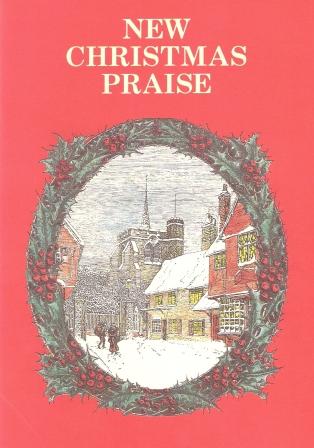
£0.99New Christmas Praise Song Book 1 - 95
These books are now an archive publication and, although are still available, have been superseded by Christmas Collection (available in marchcard size: https://www.sps-shop.com/cc-marchcard or A4 size https://www.sps-shop.com/cc-largeprint). Christmas Collection includes 46 new carols and songs as well as 10 extended carols (originally seen in the Sounds of Christmas books).Ideal for congregational singing.CONTENTS 1. A child this day is born 2. A Christmas Lullaby 3. A great and mighty wonder 4. A starry night 5. A virgin most pure 6. All my heart this night rejoices 7. Angels from the realms of Glory (Come and worship) 8. Angels from the realms of Glory (Iris) 9. Angels, sing again? 10.Angels we have heard on high 11.As with gladness men of old 12. Away in a manger 13. Away in a manger (The manger scene) 14. Bethlehem 15. Brightest and best 16. Brightest and best (Spean) 17. Child of Mary 18.. Calypso Carol 19. Carol for the Nativity 20. Carol of the bells 21.Carol of the drum 22. Christ was born on Christmas Day 23. Christians Awake 24. Come, children, come quickly 25. Coventry carol 26. Do you hear what I hear 27. Ding dong! merrily on high 28. Gabriels message 29. Glory in the highest 30. Go, tell it on the mountain 31. God of God, the uncreated 32. God rest you merry, gentlemen 33. Good Christian men, rejoice 34. Good King Wenceslas 35. Hark the glad sound! 36. Hark! the herald angels sing 37. How far is it to Bethlehem 38. I saw three ships come sailing in 39. I wonder as I wander 40. Il est n 41. Immanuel Appears 42. In the bleak mid-winter 43. Infant Holy 44. It came upon the midnight clear (Traditional) 45. It came upon the midnight clear (Willis) 46. Jesus, good above all other 47. Joy to the world 48. Little baby Jesus 49. Little Jesus, sweetly sleep. 50. Little donkey 51. Long, long ago 52. Marys boy child 53. Masters in this hall 54. Noel 55. o come, all ye faithful 56. o come, Immanuel 57. O come with me to Bethlehem 58. O little town of Bethlehem (Christmas Carol) 59. O little town of Bethlehem (Forest Green) 60. O little town of Bethlehem (St Louis) 61. O Heaven-sent King 62. O holy night 63. Once, in royal Davids city 64. Past three oclock 65. Personent hodie 66. Praise ye the Lord 67. Rise up, shepherd! 68. Sans day carol 69. See, amid the winters snow 70. Silent night! 71. Sleep, holy Babe 72. Softly the night is sleeping 74. Stars are shining 73. Sussex carol 76. Sweet chiming bells 75. Sweet chiming Christmas bells 77. The angels sang the story 78. The first Nowell 79. The holy Boy 80. The holly and the ivy 81. The infant King 82. The shepherds farewell 83. The virgin Mary had a baby boy 84. The stable door 85. They all were looking for a king 86. Three kings march 87. Unto us a boy is born 88. Wayfaring 89. We gather round the manger-bed 90. We three kings of Orient are 91. What child is this 92. When wise men came seeking 93. While shepherds watched 94. Who is he 95. Zither carol
Estimated dispatch 7-14 working days
-
 £34.95
Judd: My Hope - Roger Trigg
'My Hope' was written for, and premiered by Enfield Citadel Band (Bandmaster Jonathan Corry) on 11th October, 2013. The work formed part of the band's annual pre-contest festival on the eve of the National Brass Band Championships which are held in the august surroundings of the Royal Albert Hall, London each year. The words 'my hope' appear in both hymns that are referenced in the music. The notes 'E', 'C', 'B' also feature throughout the work as homage to Enfield Citadel Band. The verse of 'My hope is built on nothing less' (S.A.S.B. 662), to the tune 'Solid Rock' (T.B. 446), is then introduced and forms the basis of the end of the first section - set in the minor, unlike the usual setting of the melody. The more sedate middle section that follows features an original theme, again using the notes 'E', 'C', 'B' as a melodic stimulus.The tune 'Michael' (Herbert Howells), to which the text 'All my hope on God is founded' (S.A.S.B. 530) is sung, provided the original impetus for this work. The song features as a new addition to The Salvation Army's 2015 iteration of its song book. It is a noble tune and there are big majestic, organ-like sounds utilised in its final treatment which brings the work to a climactic end.
Estimated dispatch 7-14 working days
-
 £87.95
Masquerade (Score and Parts)
The first performance took place on the 4th. September 1993 at the Free Trade Hall in Manchester during the British Open Brass Band Championships.Note by Philip Wilby:Masquerade is a centenary tribute to Verdi's last opera Falstaff and takes its final scene as the basis for my own piece. Thus I have used some of Verdi's music, and some of Shalespeare's plot, and woven them into a fabric with highly demanding music of my own to produce a work in the great tradition of operatically-based brass band pieces. Such scores date from the very beginnings of band repertory and are often not direct arrangements in the established sense but new compositions produced in homage to a past master. They may still offer performers and audience alike something familiar interwoven with something new. My own piece reuses some elements from the original story: . .Falstaff has been caught in a web of his own lies by the ladies of the town, who propose to teach him a lesson. The story opens at night in Windsor Great Park. The plotters, variously disguised in Hallowe'en fashion (as fairies,elves hobgoblins etc!) assemble in the park to await Falstaff's arrival (musicologists will, perhaps, note a rare use of 'large bottle in F' being used during this scene of suppressed alcoholic revelry!). Falstaff's companions, Bardolph,Piston and Robin, enter (represented here by the three trombones!), and are variously abused by the masqueraders. At the height of the Tout an alarm sounds and Falstaff (euphonium cadenza) enters as Midnight strikes. From a safe hiding place he watches as the disguised Nanetta (principal comet) sings a serene solo as the moon appcars above the trees. With sudden force the others seize him and drag him from his hiding place. As in the traditional game 'Blind Man's Buff', he is roughly turned seven times (a sequence of solo accelerandi) until, at last, he recognizes his assailants as his sometime friends. Far from complaining, Verdi's character concludes the opera with a good-humoured fugue on the words.... 'All the World's a Joke... Every mortal laughs at the others, But he laughs best who has the final laugh. Philip Wilby.
Estimated dispatch 7-14 working days
-
 £44.95
Masquerade (Score Only)
The first performance took place on the 4th. September 1993 at the Free Trade Hall in Manchester during the British Open Brass Band Championships.Note by Philip Wilby:Masquerade is a centenary tribute to Verdi's last opera Falstaff and takes its final scene as the basis for my own piece. Thus I have used some of Verdi's music, and some of Shalespeare's plot, and woven them into a fabric with highly demanding music of my own to produce a work in the great tradition of operatically-based brass band pieces. Such scores date from the very beginnings of band repertory and are often not direct arrangements in the established sense but new compositions produced in homage to a past master. They may still offer performers and audience alike something familiar interwoven with something new. My own piece reuses some elements from the original story: . .Falstaff has been caught in a web of his own lies by the ladies of the town, who propose to teach him a lesson. The story opens at night in Windsor Great Park. The plotters, variously disguised in Hallowe'en fashion (as fairies,elves hobgoblins etc!) assemble in the park to await Falstaff's arrival (musicologists will, perhaps, note a rare use of 'large bottle in F' being used during this scene of suppressed alcoholic revelry!). Falstaff's companions, Bardolph,Piston and Robin, enter (represented here by the three trombones!), and are variously abused by the masqueraders. At the height of the Tout an alarm sounds and Falstaff (euphonium cadenza) enters as Midnight strikes. From a safe hiding place he watches as the disguised Nanetta (principal comet) sings a serene solo as the moon appcars above the trees. With sudden force the others seize him and drag him from his hiding place. As in the traditional game 'Blind Man's Buff', he is roughly turned seven times (a sequence of solo accelerandi) until, at last, he recognizes his assailants as his sometime friends. Far from complaining, Verdi's character concludes the opera with a good-humoured fugue on the words.... 'All the World's a Joke... Every mortal laughs at the others, But he laughs best who has the final laugh. Philip Wilby.
Estimated dispatch 7-14 working days
 View Music
 Watch video