
Results
-
£29.50
Show Me The Way To Go Home - Hal Swain and Irvin King - Adrian Horn
This band feature begins as only a drinking song could do, with a trombone trio taking the lead! The song was composed by the English song writing team, James Campbell and Reginald Connelly under their pseudonyms, Hal Swain and Irvin King during a train journey, prior to which, they had enjoyed a few drinks! Arranged by Adrian Horn originally for the Poynton Band, this is a great showcase arrangement of a modern classic featuring all sections of the band and giving the soloists a chance to shine. Great entertainment value.
In Stock: Estimated dispatch 1-3 working days
-
 £39.95
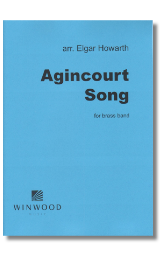
Agincourt Song (Score and Parts) - Elgar Howarth trans. Ray Farr
This famous 15th-century song commemorating the English victory at the battle of Agincourt in 1415 has been adapted and arranged by many composers over the years, notably William Walton in his music for the film Henry V and by Ralph Vaughan Williams in his overture for brass band Henry the Fifth. Elgar Howarth originally made this stirring arrangement for 10-piece orchestral brass, and Ray Farr's transcription for British-style brass band employs antiphonal groups to magnificent effect.
Estimated dispatch 7-9 working days
-
 £37.35
Drink to me only (Flugel Solo with Brass Band) Trad. English Melody arr. Bowen
Enhance your solo repertoire with this evocative and timeless setting for flugel horn. Originally arranged for the New York Staff Band in 1991, this piece offers a lyrical and deeply expressive showcase for the soloist. This arrangement draws from a rich heritage, blending secular and sacred traditions. The melody, famously attributed to Colonel R. Mellish (1777-1817), is inspired by the classic 17th-century poem by Ben Johnson. Within The Salvation Army tradition, this beloved tune is paired with the sacred lyrics of William Drake Pennick, "There is a holy hill of God, its heights by faith I see" (The Salvation Army Song Book, No. 627), making it a versatile choice for both concert and worship settings. This setting is celebrated for its warm, melodic lines, perfectly suited to the mellow tonal qualities of the flugel horn. For those interested in studying the interpretation of this work, the New York Staff Band featured this arrangement on their 1992 recording, Under Three Flags (Triumphonic TRCD 1050). To view a rolling score video featuring Donald Spencer (Flugel Horn Soloist) with the New York Staff Band please visit: www.youtube.com/watch?v=ZRocgjTrli4 Sheet music available from: UK - www.brassband.co.uk USA - www.solidbrassmusic.com Difficulty Level: 4th Section + Instrumentation: Flugel Horn Soloist Bb Soprano Cornet Eb Solo Cornet Bb Repiano Cornet Bb 2nd Cornet Bb 3rd Cornet Bb Solo Horn Eb 1st Horn Eb 2nd Horn Eb 1st Baritone Bb 2nd Baritone Bb 1st Trombone Bb 2nd Trombone Bb Bass Trombone Euphonium Bb Bass Eb Bass Bb Timpani Glockenspiel
In Stock: Estimated dispatch 1-3 working days
-
 £74.99
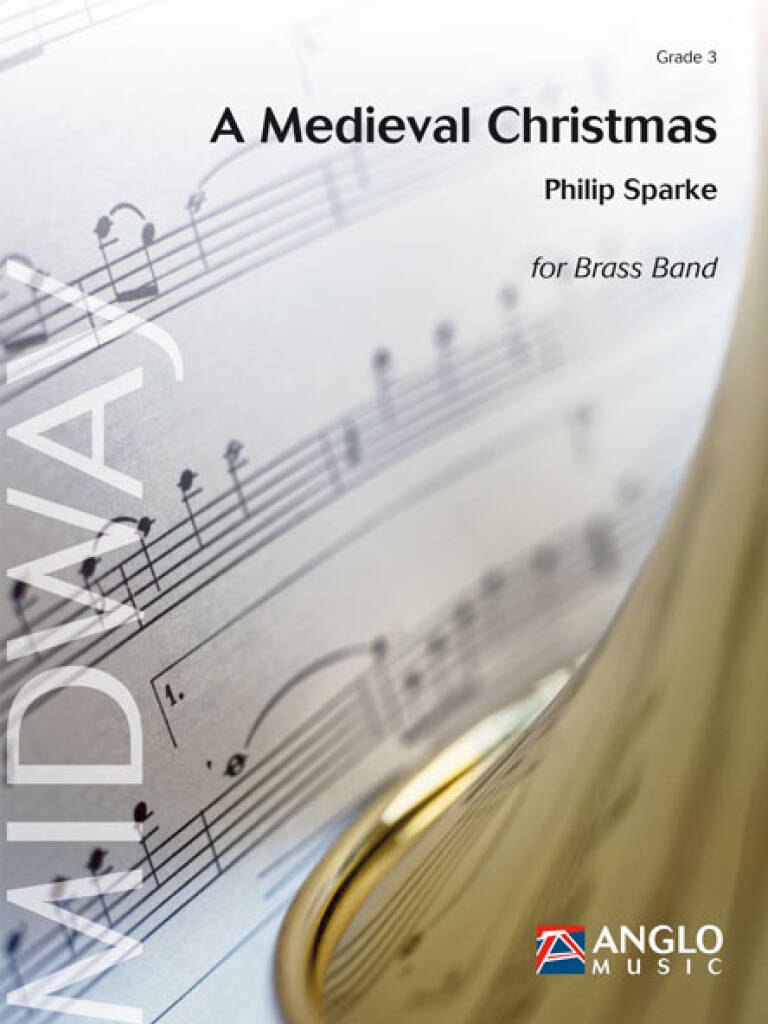
A Medieval Christmas - Philip Sparke
Christmas is full of customs and traditions, both old and new. This is especially evident in Christmas songs, some of which have been part of Christian worship for centuries. A Medieval Christmas combines three ancient melodies that are still popular around the world today. Philip Sparke chose Gaudete, a song of praise from the middle ages, Coventry Carol, an English song from the 14th century, and In dulci jubilo, which can also be traced back to the 14th century, to form this joyous suite.
Estimated dispatch 5-14 working days
-
 £8.50
£8.50ENGLISH FOLK SONG (score) - Frederick, Mike
The score shows brass band scoring & percussion.
In Stock: Estimated dispatch 1-3 working days
-
 £27.50
ENGLISH FOLK SONG (score & parts) - Frederick, Mike
The score shows brass band scoring & percussion.
In Stock: Estimated dispatch 1-3 working days
-
£24.50
Auld Lang Syne - Traditional - Max Stannard
The ionic words of Robert Burns were set to the tune of a traditional folk song and ever since, its popularity in English speaking countries has grown continuously. Traditionally sung to welcome in the New Year, this arrangement by Max Stannard suits all festive occasions and can be used as a moving encore to your Christmas concert programme this year.
In Stock: Estimated dispatch 1-3 working days
-
 £74.99
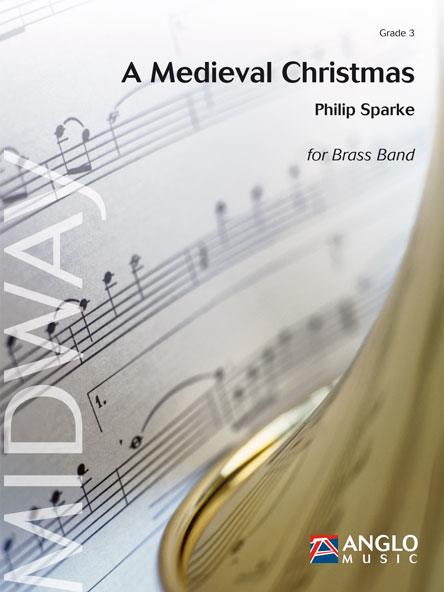
A Medieval Christmas (Brass Band - Score and Parts) - Sparke, Philip
Christmas is full of customs and traditions, both old and new. This is especially evident in Christmas songs, some of which have been part of Christian worship for centuries. A Medieval Christmas combines three ancient melodies that are still popular around the world today. Philip Sparke chose Gaudete, a song of praise from the middle ages, Coventry Carol, an English song from the 14th century, and In dulci jubilo, which can also be traced back to the 14th century, to form this joyous suite.Duration: 6:45
Estimated dispatch 7-14 working days
-
 £54.99
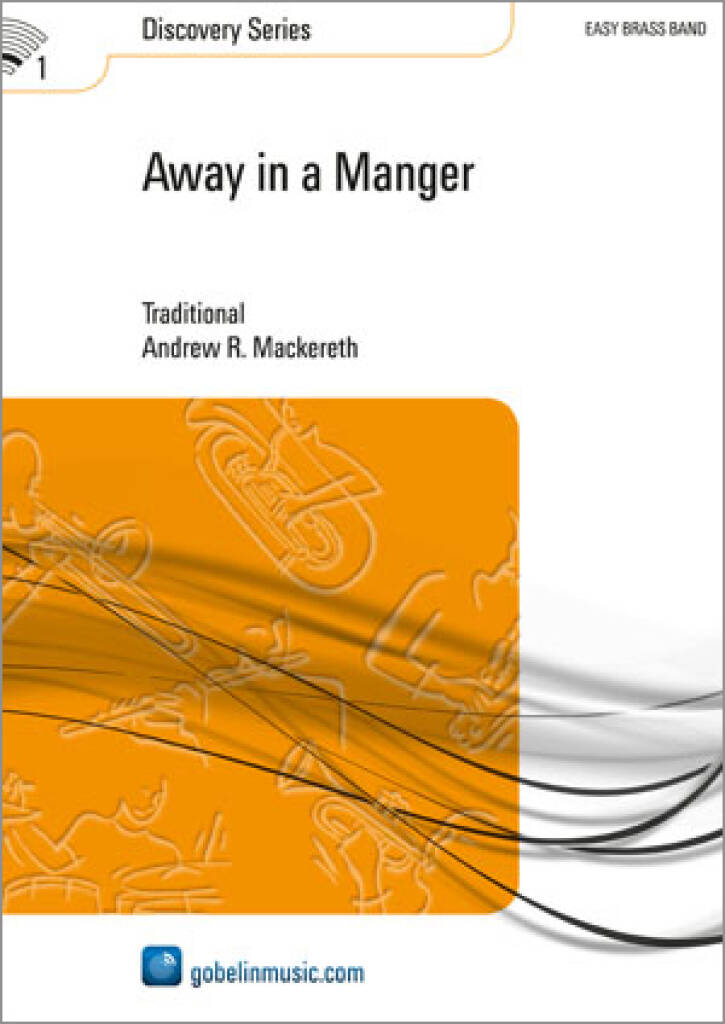
Away in a Manger - Andrew R. Mackereth
In English-speaking countries 'Away in a Manger' is one of the first Christmas songs to be taught to little children. It is a moving song with simple words, which makes it easy to understand. The song is also known as 'Luther's Cradle Hymn'. This suggests that Martin Luther was the author of the lyrics. According to researchers, however, this is a misconception the author is unknown. In England 'Away in a Manger' is sung to a different melody than in the USA, for example. The 'English' melody was composed by W.J. Kirkpatrick. Andrew Mackereth made a touching arrangement of the 'English' melody, which suits the tender lyrics perfectly.
Estimated dispatch 5-14 working days
-
£54.99
God rest ye merry Gentlemen - Andrew R. Mackereth
'God rest ye merry, Gentlemen' is an ancient English carol. It was first published in 1833, but it can be traced as far back as the 15th century, which makes it one of the oldest carols known. 'God rest ye merry' is a Middle English salutation. In this manner, people wished one another greatness and might. In modern English, the first line of this carol would read 'May God keep you mighty, gentlemen'. Andrew R. Mackereth has not kept to the original words in his up-tempo arrangement of the carol. It is still clearly recognizable, but the arranger has taken a good many liberties. Sometimes a particular note is held longer, at times motifs follow oneanother in various parts. If you listen carefully, you may even be able to detect a motif from another well-known song.
Estimated dispatch 5-14 working days
 Listen to MP3
 View Music