
Results
-
 £119.00
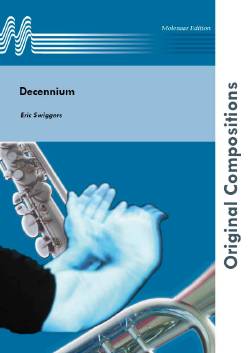
Decennium - Eric Swiggers
'Decennium' was composed in 2003 as a commission by the municipality of Berheze for its tenth anniversary. The composition describes the history of this town in the Province of Brabant, consisting of 6 different villages: Heesch, Heeswijk, Dinther, Nistelrode, Loosbroek and Vorstenbosch. The composition starts with a slow introduction, Adagio Misterioso, suggesting the atmosphere in long-ago days when the area consisted mainly of swamps, meres and low woods. (The word 'Bern' is a synonym of 'Born' meaning source or water, whereas 'Hese' is derived from 'Haisjo' meaning brushwood ). Above the dark sounds we hear far away trumpet signals announcing the Middle Ages. After a piercing crescendo, we hear the full sound of festive trumpets. A medieval dance, as was to be heard in the Heeswijk castle, follows. This dance gets a more and more stirring character and finally turns into a merry popular dance ending with a burst of laughter reproduced by descending scales with the muted trombones and trumpets. A slow transition with a quotation from a Gregorian plainsong (Domine Deus) and church bell ringing, referring to the Abbey of Berne, brings us to a romantic Larghetto. This part describes the quiet rural life in a beautiful natural surrounding. The last dying note contrasts with the threatening ostinato, referring to the rise of the industrialization, which provoked quite some resistance with the local people. Once more we hear the 'Domine Deus' but much more powerful this time. When the resistance calms down, the work concludes with an Alla Marcia. The first notes of the main theme could be heard all through the composition and now we hear the complete main theme again. The new town is born. A festive conclusion refers both to the tenth anniversary and the optimism and confidence as to the future.
Estimated dispatch 10-14 working days
-
 £32.00
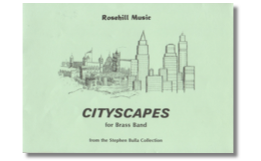
Cityscapes (Score only) - Stephen Bulla
The music of Cityscapes intends to parallel the impressions, sights, and sounds of a modern city to what a painter might convey with a landscape portrait. 'Morning Scene - Awakening': the quiet solitude of a sunrise, birdsong, and empty streets can betray the crowded jungle of city life. These are the last moments of sleep before the alarm goes off and the coffee goes on. 'Faces in Motion': The pavements come alive, streets fill with cars, office buildings open, the rush hour is on - and everyone is late! 'Museum Visit': To step into a museum is to visit another world. Looking at what we've been and where we've been, there's always a sense of awe at how much has gone before; and the realisation of how much there is yet to come... 'Nightlife': After hours is not the time to slow down, for the city never really sleeps. Nightclubs open, and the jazz circuit is alive with swinging sounds. This is the soul of the city. Duration: 12:00
Estimated dispatch 7-9 working days
-
 £42.00
Cityscapes (Parts only) - Stephen Bulla
The music of Cityscapes intends to parallel the impressions, sights, and sounds of a modern city to what a painter might convey with a landscape portrait. 'Morning Scene - Awakening': the quiet solitude of a sunrise, birdsong, and empty streets can betray the crowded jungle of city life. These are the last moments of sleep before the alarm goes off and the coffee goes on. 'Faces in Motion': The pavements come alive, streets fill with cars, office buildings open, the rush hour is on - and everyone is late! 'Museum Visit': To step into a museum is to visit another world. Looking at what we've been and where we've been, there's always a sense of awe at how much has gone before; and the realisation of how much there is yet to come... 'Nightlife': After hours is not the time to slow down, for the city never really sleeps. Nightclubs open, and the jazz circuit is alive with swinging sounds. This is the soul of the city. Duration: 12:00
Estimated dispatch 7-9 working days
-
 £90.00
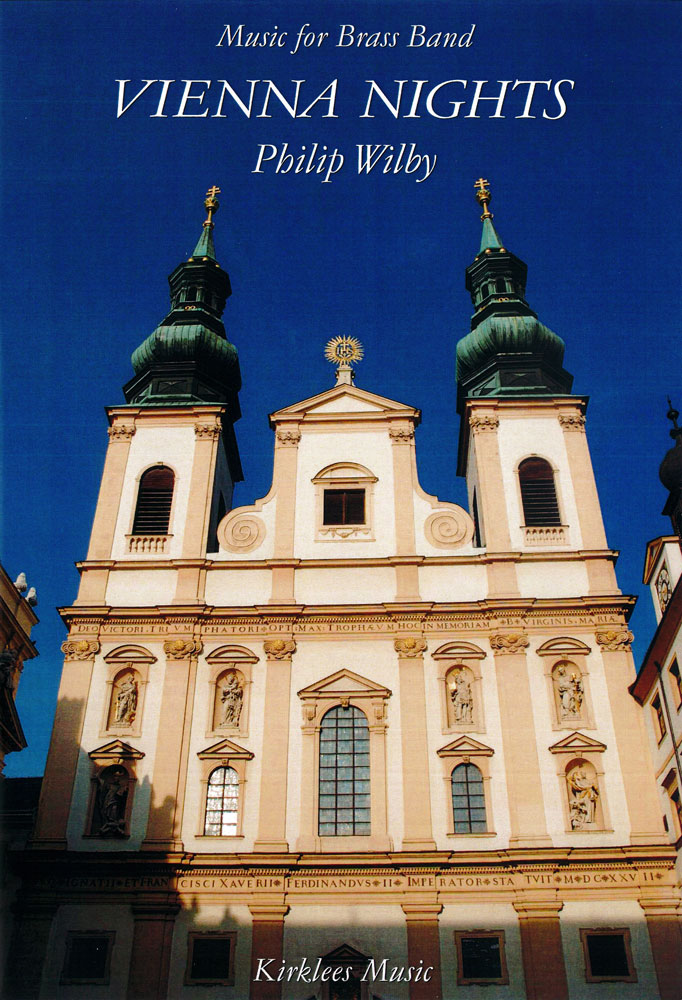
Vienna Nights (Brass Band - Score and Parts)
The City of Vienna stands at one of the historic crossroads of the world, linking east and west and embracing artistic influences from all sides. In the 250th anniversary year of Mozart's birth, this fantasy on Mozart's celebrated Piano Sonata in A (K331), has been composed true to the form and content of the original, but also to the underlying substance of the conception.One of Mozart's distinguishing features, and one that links him to later music by Beethoven, Schubert, Mahler and Schoenberg, is the breadth of his musical vision. His music links intellectual rigour with ecstatic utterance and darker preoccupations. It is, perhaps, this shadow-laden side of his musical nature which gives his work a profundity often absent in the work of his contemporaries. Admirers of his Requiem Mass or the Statue music in Don Giovanni will recognise that it is this extra sense of reality which makes Mozart so relevant to the modern age, and where he may link hands with the other great Viennese thinkers such as Berg, Webern and Adorno.The composer follows the three movement plan of the Sonata closely. The original begins with a Theme and Variations which is freely quoted. His Minuet is mirrored in the Recitative and Notturno, where each section of the band lays down a metaphoric rose to his memory. Famously, the sonata ends in populistic style with a Turkish Rondo. Ever since the Hapsburg-Ottoman Wars, which came to an end in the seventeenth century, Viennese composers have included Turkish elements in their music, not least in the use of certain percussion instruments. Vienna Nights is thusly a homage.It celebrates the world's greatest composer, but also the city which fostered his work. Here, in your imagination, you might easily conjure up a caf table near the Opera House, where Mozart, Mahler and Sigmund Freud, observed by us all from a discreet distance, may meet as old friends.
Estimated dispatch 7-14 working days
-
£12.00
Vienna Nights (Brass Band - Study Score)
The City of Vienna stands at one of the historic crossroads of the world, linking east and west and embracing artistic influences from all sides. In the 250th anniversary year of Mozart's birth, this fantasy on Mozart's celebrated Piano Sonata in A (K331), has been composed true to the form and content of the original, but also to the underlying substance of the conception.One of Mozart's distinguishing features, and one that links him to later music by Beethoven, Schubert, Mahler and Schoenberg, is the breadth of his musical vision. His music links intellectual rigour with ecstatic utterance and darker preoccupations. It is, perhaps, this shadow-laden side of his musical nature which gives his work a profundity often absent in the work of his contemporaries. Admirers of his Requiem Mass or the Statue music in Don Giovanni will recognise that it is this extra sense of reality which makes Mozart so relevant to the modern age, and where he may link hands with the other great Viennese thinkers such as Berg, Webern and Adorno.The composer follows the three movement plan of the Sonata closely. The original begins with a Theme and Variations which is freely quoted. His Minuet is mirrored in the Recitative and Notturno, where each section of the band lays down a metaphoric rose to his memory. Famously, the sonata ends in populistic style with a Turkish Rondo. Ever since the Hapsburg-Ottoman Wars, which came to an end in the seventeenth century, Viennese composers have included Turkish elements in their music, not least in the use of certain percussion instruments. Vienna Nights is thusly a homage.It celebrates the world's greatest composer, but also the city which fostered his work. Here, in your imagination, you might easily conjure up a caf table near the Opera House, where Mozart, Mahler and Sigmund Freud, observed by us all from a discreet distance, may meet as old friends.
Estimated dispatch 7-14 working days
-
 £32.50
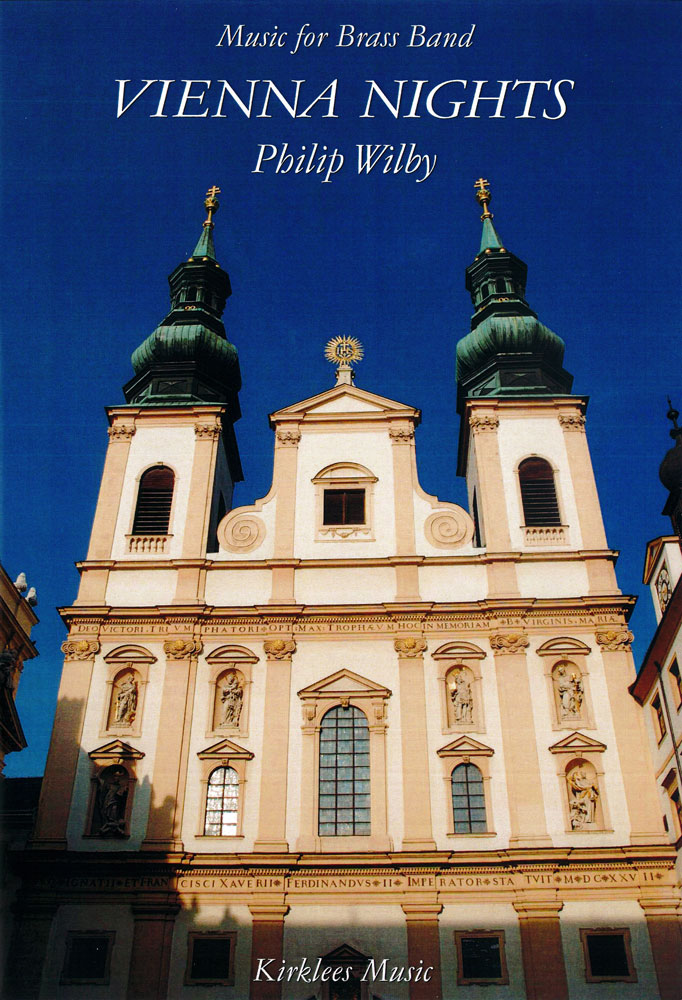
Vienna Nights (Score Only)
The City of Vienna stands at one of the historic crossroads of the world, linking east and west and embracing artistic influences from all sides. In the 250th anniversary year of Mozart's birth, this fantasy on Mozart's celebrated Piano Sonata in A (K331), has been composed true to the form and content of the original, but also to the underlying substance of the conception.One of Mozart's distinguishing features, and one that links him to later music by Beethoven, Schubert, Mahler and Schoenberg, is the breadth of his musical vision. His music links intellectual rigour with ecstatic utterance and darker preoccupations. It is, perhaps, this shadow-laden side of his musical nature which gives his work a profundity often absent in the work of his contemporaries. Admirers of his Requiem Mass or the Statue music in Don Giovanni will recognise that it is this extra sense of reality which makes Mozart so relevant to the modern age, and where he may link hands with the other great Viennese thinkers such as Berg, Webern and Adorno.The composer follows the three movement plan of the Sonata closely. The original begins with a Theme and Variations which is freely quoted. His Minuet is mirrored in the Recitative and Notturno, where each section of the band lays down a metaphoric rose to his memory. Famously, the sonata ends in populistic style with a Turkish Rondo. Ever since the Hapsburg-Ottoman Wars, which came to an end in the seventeenth century, Viennese composers have included Turkish elements in their music, not least in the use of certain percussion instruments. Vienna Nights is thusly a homage.It celebrates the world's greatest composer, but also the city which fostered his work. Here, in your imagination, you might easily conjure up a caf table near the Opera House, where Mozart, Mahler and Sigmund Freud, observed by us all from a discreet distance, may meet as old friends.
Estimated dispatch 7-14 working days
-
 £33.20
The Red Kite (Euphonium Solo with Brass Band) Rob Wiffin
At one time the Red Kite was close to national extinction in the UK, but now it is possible to admire this distinctive bird of prey with its red colouring and forked tail, gracefully soaring through the sky. This solo, composed for Martin Smith, captures that feeling, with the euphonium gliding solitary and effortlessly, occasionally swooping down before reclaiming its high altitude. To create the desired atmosphere, root position chords are kept to a minimum, with added notes enhancing the feeling of floating and giving the harmony subtle colour. The harmonic rhythm is slow, but the movement shifts in the way the Red Kite makes slight changes of direction with minor adjustments of its tail, leaving the soloist free to sing with a sense of grace and freedom above the accompaniment. Audio demo: https://soundcloud.com/user-565396545/the-red-kite-euphonium-solo Duration: Approx. 3.45 minutes Difficulty Level (Band): Easy Soloist: Medium This PDF download includes the full score and parts. Sheet music available at www.brassband.co.uk (UK) or https://satradecentral.org (USA)
In Stock: Estimated dispatch 1-3 working days
-
 £51.00
A Christmas Trifle by Andrew Duncan
A Christmas Trifle is a fantasy for brass band based on the famous English Carol, God Rest Ye Merry Gentlemen. The piece begins very lively before changing to a more jazzy style with a walking bass. This is followed by a jazz-waltz in 5/4 with solos for flugal, euphonium and soprano cornet which leads into a slow chorale section, gradually building from p to fff . This is followed by the final section which begins with a simple sleigh bell pulse over which the Tchaikovsky Christmas favourite, Trepak from the Nutcracker Suite is merged with the God Rest Ye Merry Gentlemen theme bringing A Christmas Trifle to a rousing close. To listen to a sound file of A Christmas Trifle scroll down on this page.
-
 £42.00
The Golden Carol. Arranged for brass band by Lynda Nicholson
Arranged for brass band by by Lynda Nicholson The Golden Carol is a traditional Old English Christmas Carol. The words tell of the Three Kings following the Star to Bethlehem to see Jesus on Christmas morning. The tune is anonymous, but has a medieval feel, similar to other carols, such as I Saw three Ships. The Golden Carol begins in a 5/4 jazz waltz rhythm with a solo Eb Bass being joined a few bars later by by a solo trombone then a solo horn, before more instruments (including percussion) are added and the tune plays out in the cornets and soprano cornet. The second section goes into 4/4 with a strong Rock/Big Band feel driven along rhythmically by the kit drummer. This section then leads to a rousing close for the full band. The Golden Carol is part of the Lynda Nicolson Collection . To hear a sound recording of The Golden Carol scroll down.
-
 £30.00
Flanfayre - Stephen Deazley
I was asked by Music for Youth to write a flexibly scored fanfare for the school proms at the Royal Albert Hall and at their National Festival in Birmingham in 2013. At its first performance at the National Festival, over 200 young brass players performed Flanfayre in Birmingham Town Hall, directed by Roger Argente, members of Superbrass and myself. The score is a progressive romp through some increasingly dance-like grooves, borrowing some of its swing from South America, from marches and big band, moving from a really quite straight opening to a "let-go" moment at the end. It is more like a flan full of different flavours, than a fanfare, hence the title. I set myself a challenge to write 100 bars but ended up with 102, which, after the introduction, can be broken down into 10 easily discernible sections each with their own mini-musical narrative. If you have time feel free to teach the audience the clapping groove. I also modelled the slow moving melody of the final section on the following words; "nothing beats a nice big cheesy, nothing beats a nice big cheesy, nothing beats a nice big cheesy, nothing beats a cheesy flan". Feel free to incorporate these too, and perform only under the strict instruction that you have fun ! - Programme Note copyright of Stephen Deazley
 View Music