
Results
-
 £49.95
Gypsy Dance (Brass Band - Score and Parts) - Wiffin, Rob
Gypsy Dance was composed while the composer was living in Spain. He had been working with some gypsy musicians and was intrigued by the instinct and passion that they brought to their playing. The composer also had the opportunity to watch some modern flamenco dancing and wanted to capture some of the spirited essence of this art form. In writing the piece he used two main melodic ideas and rather than develop them, they are presented in different guises as the dance moves through various episodes and builds towards a fiery climax.
Estimated dispatch 7-14 working days
-
 £69.95
Dance Music (Brass Band - Score and Parts) - Downie, Kenneth
This music takes the form of a suite in four movements. The ever-changing spirit of the dance is reflected in the contrasting styles of each movement, ranging from the gentle lullaby to more boisterous and lively moods. Careful listeners will identify references to dance-associated tunes in each movement, concluding with the Christmas carol, 'Tomorrow shall be my dancing day'. The music is planned to be versatile and any one movement could be performed as a stand-alone item if required.
Estimated dispatch 7-14 working days
-
£34.95
Dance Music (Brass Band - Score only) - Downie, Kenneth
This music takes the form of a suite in four movements. The ever-changing spirit of the dance is reflected in the contrasting styles of each movement, ranging from the gentle lullaby to more boisterous and lively moods. Careful listeners will identify references to dance-associated tunes in each movement, concluding with the Christmas carol, 'Tomorrow shall be my dancing day'. The music is planned to be versatile and any one movement could be performed as a stand-alone item if required.
Estimated dispatch 7-14 working days
-
 £40.00
Symphonic Dance No.3 (Brass Band - Score and Parts) - Rachmaninoff, Sergei - Littlemore, Phillip
Completed in 1940, the set of?Symphonic Dances?was Sergei Rachmaninov's last composition. The work is fully representative of the composer's late style with its curious, shifting harmonies, the almost Prokofiev-like grotesquerie of the outer movements and the focus on individual instrumental tone colours throughout.?Rachmaninov composed the Symphonic Dances four years after his Third Symphony, mostly at the Honeyman Estate, 'Orchard Point', in Centerport, New York, overlooking Long Island Sound. The three-movement work's original name was Fantastic Dances, with movement titles of 'Noon', 'Twilight' and 'Midnight'. When the composer wrote to the conductor Eugene Ormandy in late August, he said that the piece was finished and needed only to be orchestrated, but the manuscript for the full score actually bears completion dates of September and October 1940. It was premiered by Ormandy and the Philadelphia Orchestra, to whom it is dedicated, on 3rd January, 1941. This arrangement is of the last dance and is a kind of struggle between the?Dies Iraetheme, representing Death, and a quotation from Rachmaninov's own?Vespers?(also known as the All-night Vigil, 1915), representing Resurrection. The Resurrection theme proves victorious in the end as the composer actually wrote the word 'Hallelujah' at the relevant place the score (one bar after Fig. 16 in this arrangement).?Duration: 3:45
Estimated dispatch 7-14 working days
-
 £69.99
Tribute to Whitney Houston (Brass Band - Score and Parts) - Bond & Brown
It has been too many years since the American pop singer Whitney Houston passed away, but the world has not forgotten her beautiful voice. Her timeless hits, from ballads to wonderful dance tracks, are still heard on the radio. This attractive medley includes some of her greatest successes:How Will I KnowSaving All My Love for YouI Wanna Dance with SomebodyI Will Always Love YouDuration: 5.45
Estimated dispatch 7-14 working days
-
 £34.95
Fox's Air And Dance (Brass Band - Score and Parts) - Downie, Kenneth
This is a one-movement composition, albeit in two sections, that is accessible to bands of most abilities and to all audiences. The Air is in a good-natured, easy-going style while the Dance section is a bit of a romp loosely based on the traditional tune 'In and out the dusty bluebells'.
Estimated dispatch 7-14 working days
-
£17.50
Fox's Air And Dance (Brass Band - Score Only) - Downie, Kenneth
This is a one-movement composition, albeit in two sections, that is accessible to bands of most abilities and to all audiences. The Air is in a good-natured, easy-going style while the Dance section is a bit of a romp loosely based on the traditional tune 'In and out the dusty bluebells'.
Estimated dispatch 7-14 working days
-
£40.00
UNSQUARE DANCE (Brass Band - Score and Parts) - Brubeck, Dave - Freeh, Mark
Dave Brubeck, the American jazz pianist, has contributed a huge amount of material to the genre, responsible for many titles now so often referred to as 'jazz standards'. Brubeck has experimented with irregular time signatures throughout his musical career including 'Pick Up Sticks' (which is in 6/4 time), Blue Rondo a la Turk (in 9/8 but over four beats as 2.2.2.3) and of course his most famous work, 'Take Five' (in 5/4!). His 'Unsquare Dance' (in 7/4 time) has been expertly arranged for brass band by Mark Freeh.Duration: 4.00
Estimated dispatch 7-14 working days
-
 £40.00
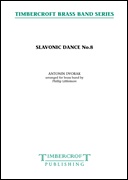
Slavonic Dance No.8 (Brass Band - Score and Parts) - Dvorak, Antonin - Littlemore, Phillip
Antonin Dvorak composed his first set of eight Slavonic Dances in 1878. The music is lively and overtly nationalistic, although the tunes themselves are all original and are not taken from any Slavic folk dances. Slavonic Dance No.8 is high-spirited and in the style of a furiant, the boldest of Czech folk dances. Although written in a 3/4 metre throughout, Dvorak creates cross-rhythms that shift this metre in to 2/4, which is an important characteristic of the furiant. Duration: 4.10
Estimated dispatch 7-14 working days
-
 £60.99
Brazilian Bay Dance (Brass Band - Score and Parts) - Evers, Harm
This piece, by the Dutch composer Harm Evers, takes you and your musicians to the hot atmosphere of a Brazilian beach party. Everyone celebrates until late at night and dances to the cheerful sounds of Latin American music.Duration: 4:00
Estimated dispatch 7-14 working days
 View Music