
Results
-
£40.00
Well, Did you Evah! - Porter, C - Somerset, G
Released in 1956, the Hollywood musical High Society was a musical remake of The Philadelphia Story. It had a star studded cast, including Frank Sinatra, Bing Crosby, Grace Kelly and Louis Armstrong (who played himself). Gavin Somerset's arrangement of Well, Did you Evah! faithfully reproduces the famous Crosby/Sinatra duet for two euphoniums. Entertainment at its best!!4th section +
In Stock: Estimated dispatch 1-3 working days
-
 £38.95
Unity Series Band Journal - Numbers 558 - 561, October 2026
558: Jesus is the winner! (Samuel Ekong)Jesus is the Winner is the publishing debut of Samuel Ekong, Band Secretary at Abuja Central Corps in the Nigeria Territory. Based on a popular song associated with renowned worship leader Ron Kenoly, this arrangement centres on the infectious chorus, "Jesus is the winner man". While the original song was performed in a reggae style, Ekong has reimagined it with a lively swing feel, creating a joyful and accessible work for brass band. Full of rhythmic energy and uplifting spirit, the arrangement encourages a light, buoyant approach throughout and offers an engaging concert item that is sure to be enjoyed by performers and audiences alike.559: Festival Arrangement - Hearts Ablaze (Marcus Venables)Written at the request of Jonathan Evans for Sale Salvation Army Band, Hearts Ablaze is based on the popular contemporary worship song Build Your Kingdom Here that has become especially significant within the corps. The music captures the passion, prayer and enthusiasm of its message, combining bold opening statements with lyrical moments and energetic rhythmic drive. After introducing the familiar melody, the work develops into a vibrant celebration built around the song's call: "Set your Church on fire... Build your kingdom here, we pray." Uplifting and engaging throughout, the piece offers both performers and audiences a joyful and inspiring musical experience.560: Cornet Solo - Soul Saver (Ian Robinson)Based on the well-known chorus Thank You, Lord, for Saving My Soul by Seth and Bessie Sykes, this solo is a heartfelt expression of gratitude for God's gift of salvation. The familiar melody is presented in an expressive setting that allows the soloist to communicate the simple yet powerful message of the song. Contrasting lyrical passages, rich harmonic colours and moments of gentle brilliance combine to create an engaging musical journey. Throughout, the focus remains on the chorus's timeless theme of thanksgiving, making this a moving and devotional addition to the brass band solo repertoire.561: Chorus Selection - God's Presence (Howard Davies)God's Presence by Major Howard Davies combines three well-known songs that explore the believer's walk with God. The selection includes Philip P. Bliss's Let the lower lights be burning, Charles H. Fillmore's O I love him, and the familiar Salvation Army chorus God is with us all the time (S.A.S.B. 1028). Each melody expresses a different aspect of Christian faith, from witness and devotion to the assurance of God's presence. Suitable as both a concert item and a congregational feature, this accessible arrangement offers warmth, variety and a clear spiritual message for performers and audiences alike.
Estimated dispatch 7-14 working days
-
 £77.00
General Series Brass Band Journal, Numbers 2265 - 2268, April 2026
2265: Holy God, we praise your name (Micael Dikantsa)This bolero introduces composer Micael Dikantsa of the Amriswil Corps, Switzerland, and is based on the hymn Holy God, We Praise Your Name (Grosser Gott, wir loben dich). Set in the traditional slow, dramatic bolero style, the work builds steadily from a distinctive percussion figure as the melody passes through different instrumental groups. With its growing intensity and rich scoring, this piece offers an engaging and atmospheric addition to concert programmes.2266: Tell the story (Barrie Gott)This work continues the Swing series that began nearly 40 years ago with Light'Walk. After a bold introduction, the melody unfolds through unison and close'harmony writing, leading to a Flugel Horn solo with scope for improvisation. The well'known hymn I Love to Tell the Story is heard in a New Orleans style before a modulation launches an energetic shout chorus and lively coda. Smooth, relaxed swing style is key throughout.2267: The old rugged cross (Erik Leidzn)This arrangement by Erik Leidzn is an early and lesser'known setting of a well'loved hymn, rediscovered during research into his work. Edited from a rare score found in the USA East Music Department archives, it demonstrates Leidzn's economical and effective style, creating a practical and expressive arrangement at a time when concise, serviceable hymn settings were greatly needed.2268: Heaven came down! (Michael Cooper)Inspired by William Booth's famous challenge to use contemporary styles for sacred purpose, this piece blends high'energy jazz'fusion big'band writing with a joyful gospel hymn. Driven by rhythm, syncopation and precision, the music proclaims its message of transformation and spiritual joy with vitality, clarity and infectious swing.
Estimated dispatch 7-14 working days
-
 £29.95
Soliloquy II (Euphonium Solo with Brass Band - Score and Parts)
A few years ago, I wrote a Soliloquy based on a Salvation Army song by George Marshall called Soliloquy (In the Stillness), since published in the General Series. This solo follows up the form of that previous work, though it is quite different in emotional content, and was a commission during Covid lockdown from Euphonium player Micah Dominic Parsons.The main inspiration is the tune Cross of Jesus by John Stainer as well as a motif from some older Euphonium Studies from the Royal Military School of Music, Kneller Hall, that Micah had discovered. The tune is used in a chorale form and, after an introduction, the very first section is a reversal of the chorale that appears in the second half of the work. The Euphonium exclamations are all derived from the main tune and the study motif. The work begins in quite a dark reflective manner, representing those aspects of the song, without being too specific. The second half reflects the more positive characteristics and finds a triumphal nature in its conclusion. The soloist lines throughout have a very declamatory style and can have a freedom in performance.There is one new element in the coda, where the triplet motif (bars 87-89) is a direct quotation from Romans 8 - A brass celebration by Ray Steadman-Allen. RSA was a good friend, mentor and encourager to me. The glorious climax of Romans 8 is his presentation of the same tune (Cross of Jesus) used in this work. And so the piece ends with a final and personal reference to RSA!- Howard Evans
Estimated dispatch 7-14 working days
-
 £15.00
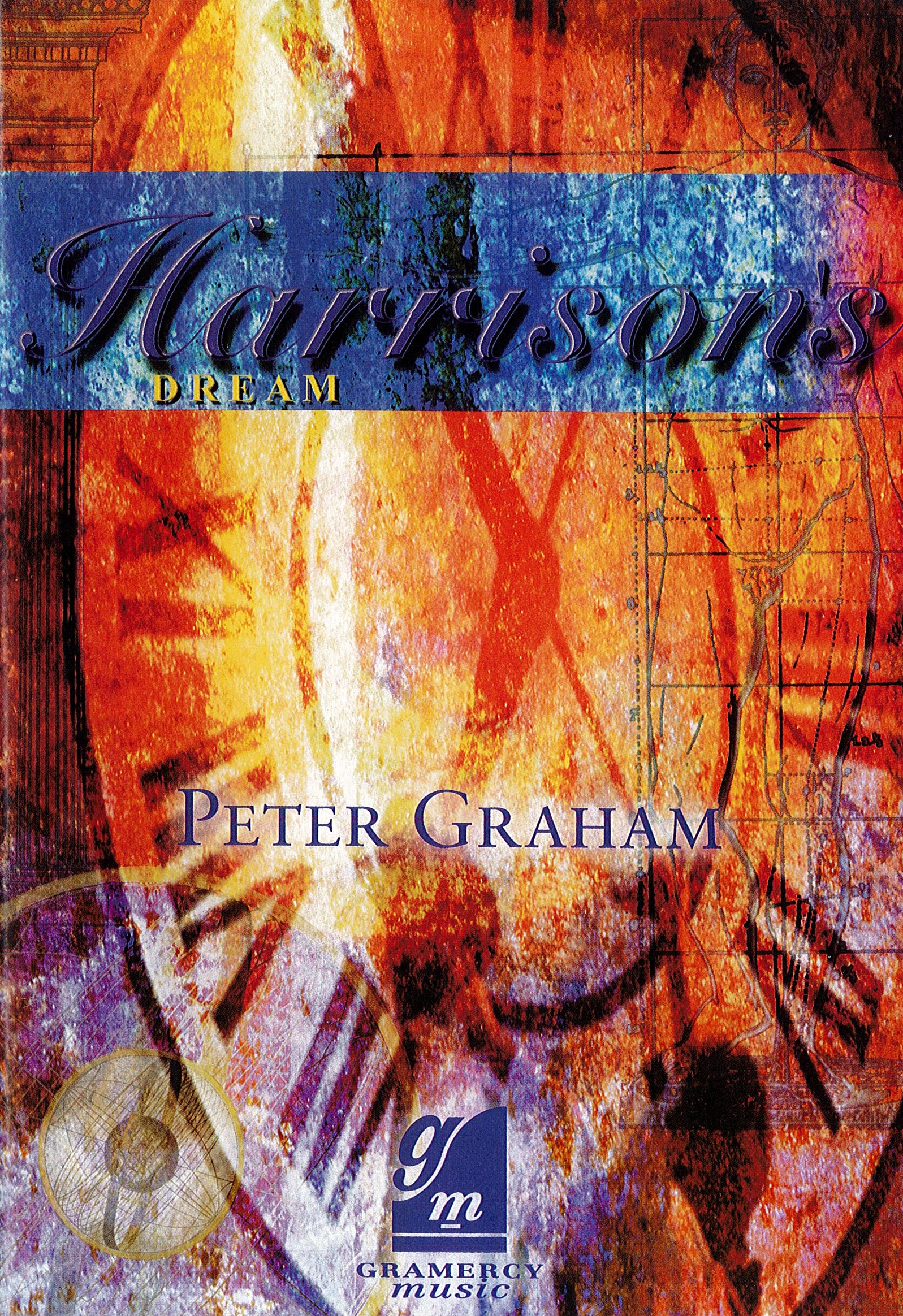
Harrison's Dream (Brass Band - Study Score)
At 8.00pm on the 22nd of October 1707, the Association, flagship of the Royal Navy, struck rocks off the Scilly Isles with the loss of the entire crew. Throughout the rest of the evening the remaining three ships in the fleet suffered the same fate. Only 26 of the original 1,647 crew members survived. This disaster was a direct result of an inability to calculate longitude, the most pressing scientific problem of the time. It pushed the longitude question to the forefront of the national consciousness and precipitated the Longitude Act. Parliament funded a prize of �20,000 to anyone whose method or device would solve the dilemma. For carpenter and self-taught clockmaker John Harrison, this was the beginning of a 40 year obsession. To calculate longitude it is necessary to know the time aboard ship and at the home port or place of known longitude, at precisely the same moment. Harrison's dream was to build a clock so accurate that this calculation could be made, an audacious feat of engineering. This work reflects on aspects of this epic tale, brilliantly brought to life in Dava Sobel's book Longitude. Much of the music is mechanistic in tone and is constructed along precise mathematical and metrical lines. The heart of the work however is human - the attraction of the �20,000 prize is often cited as Harrison's motivation. However, the realisation that countless lives depended on a solution was one which haunted Harrison. The emotional core of the music reflects on this, and in particular the evening of 22ndOctober 1707. Peter GrahamCheshireJuly 2000
Estimated dispatch 7-14 working days
-
 £38.95
Unity Series Band Journal - Numbers 526 - 529, February 2024
526: March - Summit Cross (Beat Hari)This exciting and energetic work introduces a new contributor to our journals. Beat Hari helps lead the band at Frutigen Corps, Switzerland. This march was composed with the intention of featuring it in an open-air concert beside the ski slopes. Members of the corps regularly join the band, instigating conversations with skiing guests by distributing bible verses and sweets. The composer has named this march because of the many Swiss mountains that have crosses on their summit as symbols of God's protection over the population living in the valleys below. The march follows a traditional format with a solid rhythmic construction built from the bass line.527: Christ is all (Olaf Ritman)The Salvation Army song, Christ is all (S.A.S.B. 588) is one that is cherished by the composer. The verses by Herbert Booth are both powerful and vulnerable and the melody by William A. Williams really touches the soul.528: My all to follow (David Edmonds)This piece pays tribute to all who have accepted the call to become Salvation Army officers and envoys. Such a calling involves significant change and can be difficult when leaving their comfort zone or moving away from family.529: We shall win (Alan Williams)William Hodgson's song We're a band that shall conquer the foe (S.A.S.B. 990) is one of confidence and encouragement in our daily fight against evil, sin and injustice, both in the world and in our lives. As such, this music should be full of that same confidence.
Estimated dispatch 7-14 working days
-
 £34.95
Three Carols (Brass Band - Score and Parts)
Three Carols was commissioned by the New York Philharmonic as part of their Holiday Brass series and was premiered at Avery Fisher Hall by the New York Philharmonic Principal Brass and Canadian Brass. Originally for 10 players, soon after the premiere I decided to score the piece for brass band. The brass band version was first performed by the New York Staff Band.Through the years I have been intrigued by carious carols from different countries and the challenge of creating musical treatments that sound fresh and original. When commissioned to write these brass arrangements, I wanted to create contrasting movements that could be performed either as a set or individually and thought that three carols from different countries would allow the opportunity for that contrast. The featured carols are the traditional Polish carol Infant Holy (C.C. 41), What child is this? (C.C. 100) with lyrics by William Dix and set to the English folk song Greensleeves and the lesser-known Catalonian carol Cold December flies away.- Joseph Turrin
Estimated dispatch 7-14 working days
-
 £55.00
Triumph Series Brass Band Journal, Numbers 1347 - 1350, March 2023
1347: Intrada on 'St Magnus' (Ruben Schmidt)This is an energetic intrada based on the tune St. Magnus with the composer keeping the words The head that once was crowned with thorns (S.A.S.B. 22) in mind.1348: March - In every corner sing (Alan Williams)This is a bright march requiring plenty of vigour and imagination. Featuring and taking its title from Let all the world in every corner sing: My God and King! (S.A.S.B. 41), this bright melody is contrasted with the tune Lydia associating the words There is a name I love to hear, I love to sing its worth (S.A.S.B. 94).1349: I need thee (Craig Woodland)An expressive arrangement of the traditional hymn I need thee every hour (S.A.S.B. 707)1350: March - The great commission (Paul Sharman)This march was written for the Norwegian Christian brass band, Egersund Missionary Band, and is derived from the tune Onward, Christian soldiers (T.B. 188) as well as a brief fragment of the Norwegian National Anthem and the melody Die Sach is dein (The work is thine).
Estimated dispatch 7-14 working days
-
 £55.00
Triumph Series Brass Band Journal, Numbers 1343 - 1346, November 2022
1343: March - Spreading the Word (Ian Clarke)This lively march features the songs Look, ye saints! the sight is glorious (S.A.S.B. 227), When we walk with the Lord (S.A.S.B. 690), I want to tell what God has done (S.A.S.B. 852), and makes reference to the old chorus When I remember that he died for me I'll never go back any more.1344: Prelude on 'Anstasis' (Sam Creamer)The Greek word anstasis translates to resurrection and particularly refers to the resurrection of Jesus Christ. The popular worship song O praise the name (Anstasis) forms the basis of this prelude. While the theme of this work is most applicable for Easter use, it could well find its place in programme and worship repertoire all year round.1345: Flugel Solo - The old rugged cross (Eiliv Herikstad)This Flugel Horn Solo (also playable by Cornet) includes chords on the soloist part so that the soloist can have improvisational freedom, or can play the written out solo.1346: March - Showers of blessing (Zachary Docter)This energetic march uses Gary Rose's melody Showers of blessing (STTL Vol.24, Pt.1).
Estimated dispatch 7-14 working days
-
 £38.95
Unity Series Band Journal - Numbers 506 - 509, June 2022
506: Lord of all hopefulness (Gary Rose)The hymn Lord of all hopefulness, Lord of all Joy (S.A.S.B. 772) and its associate tune, Slane, creates a reflective work beautifully penned by Gary Rose507: Carol Arrangement - Glory in the highest (Sam Creamer)This Christmas favourite is given the classic Count Basie big band swing style - a perfect addition to your December concerts.508: Meditation - In Holiness (Dean Jones)Written for Merthyr Tydfil Corps band, this expressive work pieces together the tunes Hereford (T.B. 16) and Beethoven (T.B. 5).509: March - Ellan Vannie (Paul Sharman)The opening statement of this march reference the tune Ellan Vannin (T.B. 366) which gives rise to the title. 'Ellan Vannin' is Manx Gaelic for 'Isle of Man' and this music was written for a musician's weekend at Douglas Corps
Estimated dispatch 7-14 working days
 View Music