
Results
-
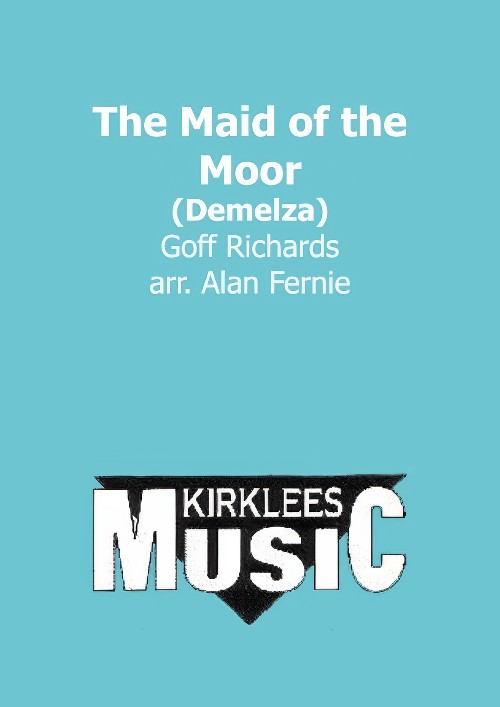 £25.00
Maid of the Moor (Cornet Solo with Brass Band - Score and Parts) - Richards, Goff - Fernie, Alan
Also known as Demelza
Estimated dispatch 7-14 working days
-
 £30.00
O Mio Babbino Caro (from Gianni Schicchi) (Cornet Solo with Brass Band - Score and Parts) - Puccini, Giacomo - Littlemore, Phillip
O Mio Babbino Caro (Oh My Dear Papa) is taken from the opera Gianni Schicchi by Giacomo Puccini. It is sung by Lauretta after tensions between Schicchi and his prospective in-laws have reached a breaking point that threatens to separate her from Rinuccio, the boy she loves. It provides a contrasting interlude expressing lyrical simplicity and single-hearted love in the atmosphere of hypocrisy, jealousy, double-dealing and feuding in medieval Florence. The story of Gianni Schicchi concerns a rich old man who dies leaving all his possessions to the local monastery. His outraged relatives persuade Gianni Schicchi to impersonate the dead man and to dictate a new will. It is the second opera of Puccini's operatic triptych, which also includes?Il Tabarro?and?Suor Angelica. Duration: 2:00
Estimated dispatch 7-14 working days
-
 £59.99
Once Upon a Time in the West (Soprano Cornet Solo with Brass Band - Score and Parts) - Morricone, Ennio - Duncan, Andrew
Duration: 3.00
Estimated dispatch 7-14 working days
-
 £30.00
One Fine Day (from Madam Butterfly) (Cornet Solo with Brass Band - Score and Parts) - Puccini, Giacomo - Littlemore, Phillip
One Fine Day?is the opera's most famous aria. It comes at the beginning of Act II, which is set three years after the action of Act I. Pinkerton, Butterfly's husband, is a US Naval Officer and he had to return to the sea shortly after their wedding. In the aria, she sings about the day he will return, seeing the ship appear on the horizon, then seeing it enter the harbour. When he arrives, they will be runited for ever. Duration: 3:00
Estimated dispatch 7-14 working days
-
 £56.00
Only Love (Cornet Solo with Brass Band - Score and Parts) - Cosma, Vladimir - Fernie, Alan
Duration: 3:30
Estimated dispatch 7-14 working days
-
 £30.00
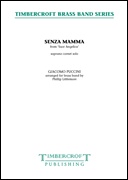
Senza Mamma (from Suor Angelica) (Soprano Cornet Solo with Brass Band - Score and Parts) - Puccini, Giacomo - Littlemore, Phillip
The aria Senza Mamma (Without your Mother), sung in the opera by Sister Angelica, is one of the most poignant moments in any of Puccini's works, and has remained a repertoire favourite. Suor Angelica?is the second instalment in Puccini's triptych of one-act operas commonly known as Il trittico. The opera chronicles the fall, redemption, and final transfiguration of its central character, Sister Angelica, who has taken the veil in repentance for bearing a child out of wedlock. The libretto, by Giovacchino Forzano, was immediately appealing to the composer, whose sister Igenia was Mother Superior of the convent at Vicepelago. Though it contains some of Puccini's most adventurous writing (the musical language at times even flirts with polytonality) the work has not enjoyed popularity comparable to that of its companions,?Il Tabarro?and?Gianni Schicchi, each of which has enjoyed an independent life in the repertory. Duration: 3:40
Estimated dispatch 7-14 working days
-
 £35.00
The Green Hornet (Cornet Solo with Brass Band - Score and Parts) - May, Billy - Morrison, Alan
-
Estimated dispatch 7-14 working days
-
 £36.76
El Camino A Belen - Trumpet Solo with Brass Band (Nick Simmons-Smith)
VIEW SCORE PDF This trumpet solo was written by Nick Simmons-Smith at the request of Dallas Brass Band for a Christmas concert featuring Elmer Churampi, international trumpet soloist. The solo features three Christmas songs: i. Mi Burrito Sabanero voy camino de Belen (With my donkey of the Savannah, I'm going to Bethlehem) ii. Noche de paz (Silent night) iii. Campana Sobre Campana (Bell above bells, O bells of Bethlehem) These songs are all very popular in Central and South America - including Peru, where Elmer Churampi is originally from. Each tune has been given a different Latin treatment producing a fast-slow-fast festive concert solo. The solo is not long, but each movement could be played individually. To view a video of Elmer Churampi performing the solo with Dallas Brass Band, please visit: www.youtube.com/watch?v=cpQCFXReEJg PDF download includes score and full set of parts. Sheet music available from: UK - www.brassband.co.uk USA - www.solidbrassmusic.com Instrumentation: Trumpet Soloist Bb Soprano Cornet Eb Solo Cornet Bb Repiano Cornet Bb 2nd Cornet Bb 3rd Cornet Bb Flugel Horn Bb Solo Horn Eb 1st Horn Eb 2nd Horn Eb 1st Baritone Bb 2nd Baritone Bb 1st Trombone Bb 2nd Trombone Bb Bass Trombone Euphonium Bb Bass Eb Bass Bb Percussion 1-3
In Stock: Estimated dispatch 1-3 working days
-
 £33.08
Metamorphosis on 'Finlandia' (Brass Band - Full Score Print) Andrew Wainwright
This major work was commissioned by Five Lakes Silver Band and its Musical Director Christopher Ward in February 2024, and is featured on the band's CD Resurget Cineribus. The music is based on the hymn tune by Katharina von Schlegel, Be Still, My Soul, found in Sibelius' famous tone poem Finlandia (Op. 26). While the only source material used in Metamorphosis on 'Finlandia' is the hymn itself as opposed to any of the developmental music found in the tone poem, it does also seek to depict the strife of the Finnish people against the censorship of the Russian Empire. It is therefore both rousing and turbulent at various times. Metamorphosis on 'Finlandia' commences with a quartet playing a full statement of the hymn in its simplest form, featuring a solo flugel. This leads into a sprightly 6/8 section where a fanfare-like figure proclaims the theme. The music in this section is at times unstable and off-kilter as references to the hymn come and go, often in a very chromatic or dissonant form - a reflection of the struggles that the Finnish people went through. Despite this, there is still a sense of optimism. A somewhat reflective slower section follows, featuring another full rendition of the hymn, with a number of solo voices taking up the tune. This is followed by several cadenzas - for cornet, trombone, Eb bass, and Bb bass, which represent different voices speaking out against the oppression of the Finnish people. This leads into an energetic final movement before a resounding proclamation of the hymn in its full glory. A return to the fanfare heard earlier in the work brings the piece to a glorious conclusion. To listen to a recording of Five Lakes Silver Band performing the work please visit www.youtube.com/watch?v=GeJJF6asD2k Duration: Approx. 13.15 minutes Difficulty Level: 1st Section + This product includes a print copy of the full score. PDF parts and score available here. Sheet music available here (UK) or https://satradecentral.org (USA) Instrumentation: Soprano Cornet Eb Solo Cornet Bb Repiano Cornet Bb 2nd Cornet Bb 3rd Cornet Bb Flugel Horn Bb Solo Horn Eb 1st Horn Eb 2nd Horn Eb 1st Baritone Bb 2nd Baritone Bb 1st Trombone Bb 2nd Trombone Bb Bass Trombone Euphonium Bb Bass Eb Bass Bb Timpani Percussion 1-3
In Stock: Estimated dispatch 1-3 working days
-
£33.08
Metamorphosis on 'Finlandia' (Brass Band - Full Score PDF) Andrew Wainwright
This major work was commissioned by Five Lakes Silver Band and its Musical Director Christopher Ward in February 2024, and is featured on the band's CD Resurget Cineribus. The music is based on the hymn tune by Katharina von Schlegel, Be Still, My Soul, found in Sibelius' famous tone poem Finlandia (Op. 26). While the only source material used in Metamorphosis on 'Finlandia' is the hymn itself as opposed to any of the developmental music found in the tone poem, it does also seek to depict the strife of the Finnish people against the censorship of the Russian Empire. It is therefore both rousing and turbulent at various times. Metamorphosis on 'Finlandia' commences with a quartet playing a full statement of the hymn in its simplest form, featuring a solo flugel. This leads into a sprightly 6/8 section where a fanfare-like figure proclaims the theme. The music in this section is at times unstable and off-kilter as references to the hymn come and go, often in a very chromatic or dissonant form - a reflection of the struggles that the Finnish people went through. Despite this, there is still a sense of optimism. A somewhat reflective slower section follows, featuring another full rendition of the hymn, with a number of solo voices taking up the tune. This is followed by several cadenzas - for cornet, trombone, Eb bass, and Bb bass, which represent different voices speaking out against the oppression of the Finnish people. This leads into an energetic final movement before a resounding proclamation of the hymn in its full glory. A return to the fanfare heard earlier in the work brings the piece to a glorious conclusion. To listen to a recording of Five Lakes Silver Band performing the work please visit www.youtube.com/watch?v=GeJJF6asD2k Duration: Approx. 13.15 minutes Difficulty Level: 1st Section + This PDF download includes the full score. Parts and score available here. Sheet music available here (UK) or https://satradecentral.org (USA) Instrumentation: Soprano Cornet Eb Solo Cornet Bb Repiano Cornet Bb 2nd Cornet Bb 3rd Cornet Bb Flugel Horn Bb Solo Horn Eb 1st Horn Eb 2nd Horn Eb 1st Baritone Bb 2nd Baritone Bb 1st Trombone Bb 2nd Trombone Bb Bass Trombone Euphonium Bb Bass Eb Bass Bb Timpani Percussion 1-3
In Stock: Estimated dispatch 1-3 working days
 View Music