
Results
-
 £29.95
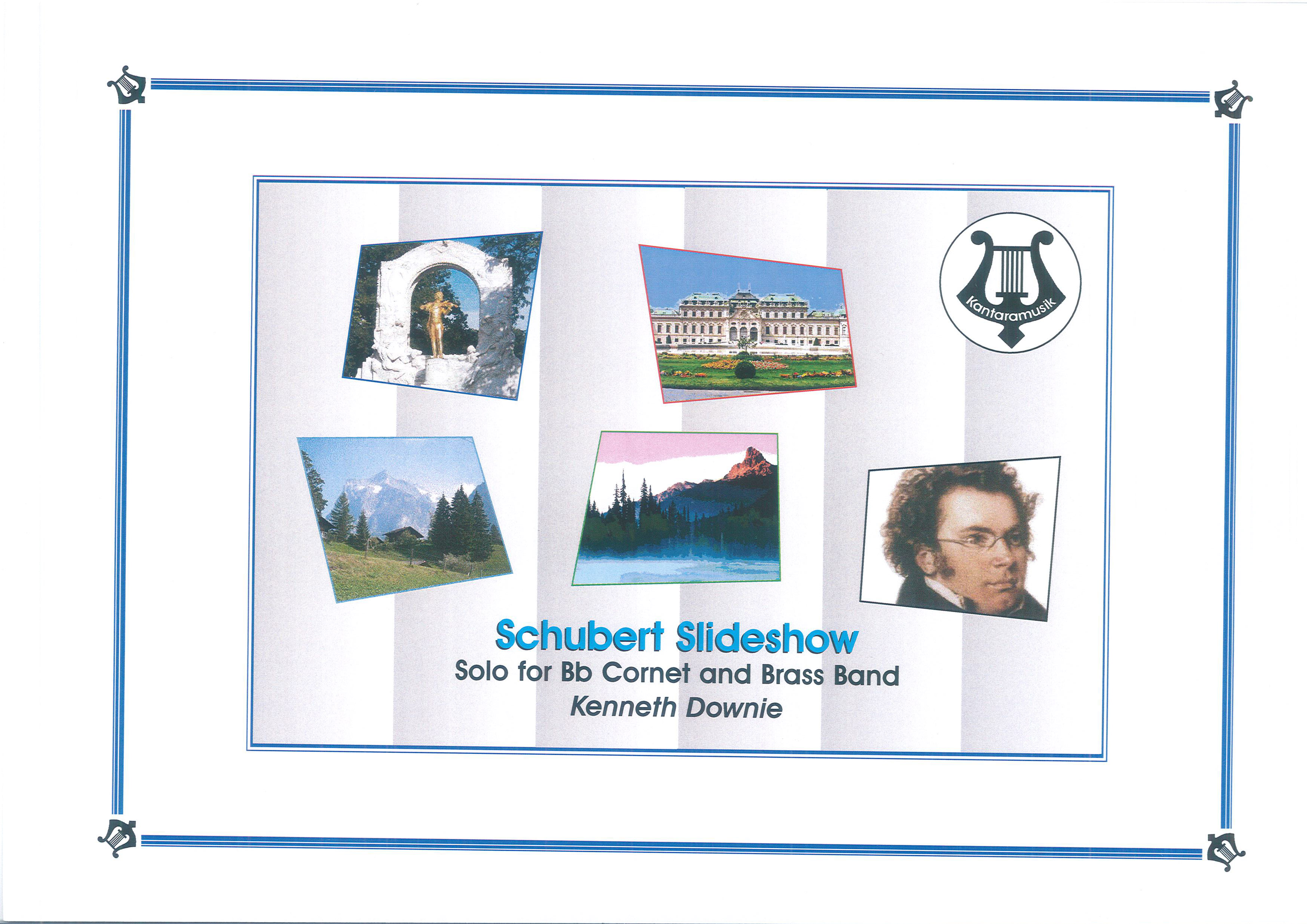
Schubert Slideshow - Cornet Solo (Brass Band - Score and Parts)
Heidenroslein' is a poem by Goethe, published in 1799, which was notably set to music by Schubert in 1815. It is this music which inspired this variation solo. It is called 'Slideshow' as each variation might be considered as a different view or aspect of the theme. Cornet players have the opportunity to demonstrate both the lyrical and the more bravura qualities of their playing.
Estimated dispatch 7-14 working days
-
 £24.95
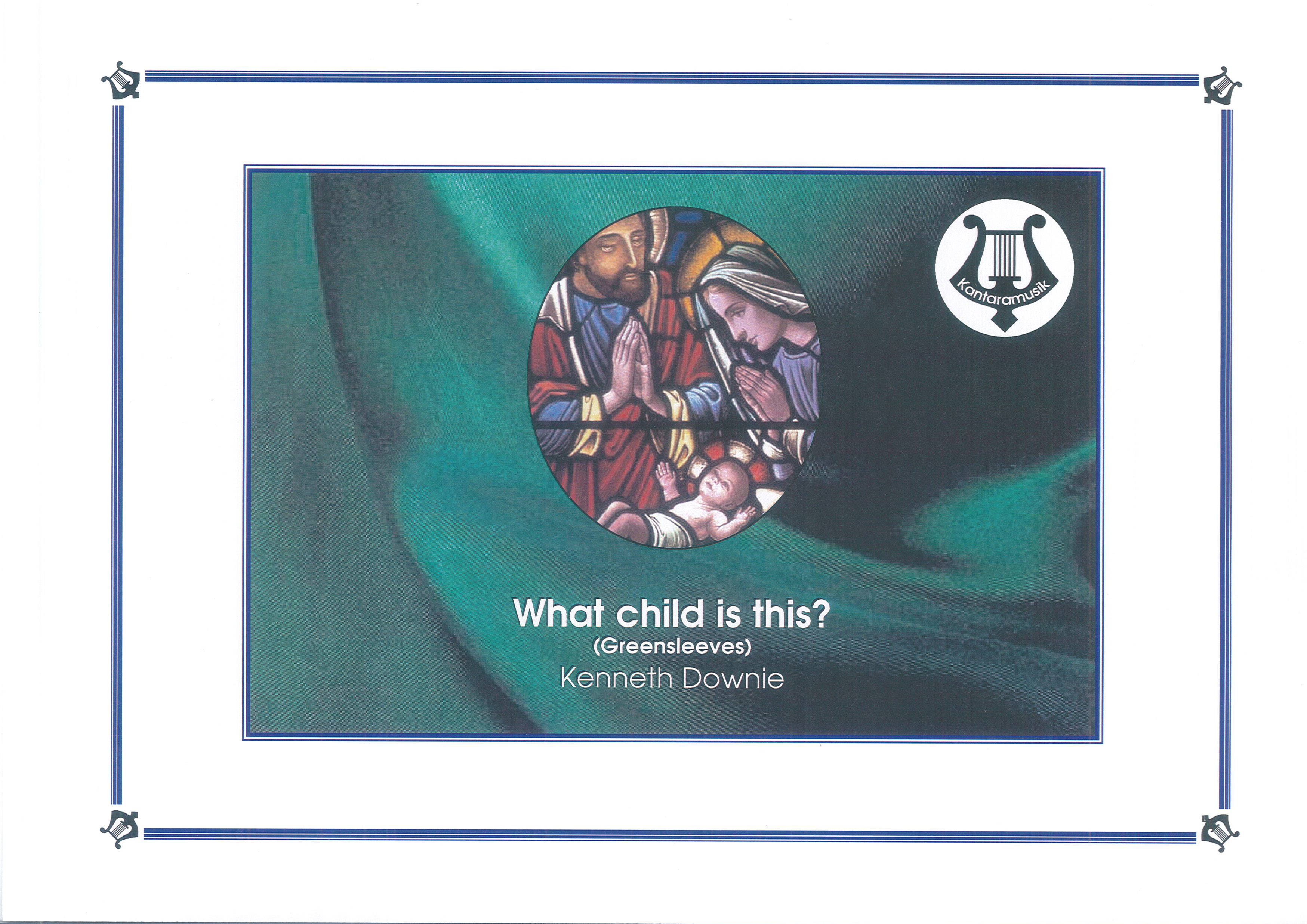
What Child is This? (Greensleeves) (Cornet Solo with Brass Band - Score and Parts)
Another Christmas arrangement of the traditional English tune 'Greensleeves'. It takes the form of a solo for Bb cornet, intentionally written to be well within the ability range of most players, yet providing plenty of scope for musical lyricism.
Estimated dispatch 7-14 working days
-
 £32.00
Blaenwern (Brass Band - Score and Parts)
This arrangement is dedicated to the memory of a much-loved friend and wonderful cornet player, Stephen Howard. Stephen played with the Clacton-on-Sea Band, conducted by his father Robert, and was a frequent guest with the G.U.S. Band directed by Dr. Keith M Wilkinson. Indeed, only a few weeks before his untimely death in 1984, Stephen had played principal cornet with the G.U.S. Band on a tour of Switzerland, performing outstandingly at each concert.The arrangement was first performed at Stephen's Memorial Service in October, 1984."Changed from glory into glory,Till in Heaven we take our place,Till we cast our crowns before Thee,Lost in wonder, love and praise." Charles Wesley
Estimated dispatch 7-14 working days
-
 £16.99
The Bells of Peover (Cornet Solo with Brass Band - Score and Parts)
The Bells of Peover is a beautiful and lyrical cornet solo, conjuring up a pastoral scene with the distant ringing of church bells. The piece is named after a pub in the Cheshire village of Lower Peover, near Knutsford. Suitable for Youth/4th Section Bands and above. Duration: 4.00
Estimated dispatch 7-14 working days
-
 £28.95
Trumpet Spectacular (Cornet Sextet with Brass Band - Score and Parts)
A cornet section feature for Brass Band
Estimated dispatch 7-14 working days
-
 £29.95
First Light (Cornet Solo with Brass Band - Score and Parts)
First Light was written for Kirsty Abbotts and Carlton Main Frickley Colliery Band. A slow lilting melody is presented in the cornet solo and passed between the band and the soloist to create images of the tranquil night before the piece reaches a climactic moment which is meant to represent the beams of light emerging as the sun rises. The theme is then presented in a tutti forte section before arriving at a tranquil finish. First Light is featured on the Kirsty Abbotts and Carlton Main Frickley Colliery Bands CD, A Search for Peace.
Estimated dispatch 7-14 working days
-
£44.95
Harmony Music (Score Only)
Harmony Music was written for the Championship Section Finals of the National Brass Band Championships of Great Britain held at the Royal Albert Hall, London, in October 1987.It opens quietly with a long unison crescendo, interrupted by the basses, which in turn introduces a cornet fanfare, leading to a chorale-like episode, building from the lower half of the band to a huge tutti. There is a brief hint of faster music to come which fails to dispel a high, haunting euphonium solo before the main molto vivace arrives. This is a fast and furious gallop with a certain French flavour. This reaches a climax and subsides gradually into the slower central section (a homage to Maurice Ravel) which incorporates accompanied cadenzas for cornet and horn. The opening of the piece returns and leads back to an abbreviated recapitulation of the vivace. When it appears to be hurtling to a close, the trombones and sopranos introduce a brief moment of chaos before a presto coda asserts itself.
Estimated dispatch 7-14 working days
-
£36.00
Enchantment in Paris (Score) - Offenbach, J - Harper, P
To commemorate the 200th Anniversary of the famous cornetist Jean-Baptiste Arban's birth in 2025, Philip Harper arranged this pastiche cornet solo in the style of great air-varies of the 19th century.Using a lilting melody from Offenbach's La Vie Parisienne, there are four variations of increasing complexity.A great challenge for your principal cornet, and an absolute knock-out in your concerts.2nd section + (accompaniment) Championship (soloist)Duration 5 minutes
In Stock: Estimated dispatch 1-3 working days
-
 £89.95
Revelation (Score and Parts)
Symphony for Double Brass on a theme of Purcell 1995 marked the tercentenary of Purcell's death, and my new score Revelation has been written as a tribute to his music and the ornate and confident spirit of his age. There are five major sections: 1 Prologue 2 Variations on a ground bass I 3 Fugue 4 Variations on a ground bass II 5 Epilogue and Resurrection The score uses many features of the Baroque Concerto Grosso, and arranges players in two equal groups from which soloists emerge to play in a variety ofvirtuoso ensembles. It quotes freely from Purcell's own piece Three Parts on a Ground in which he has composed a brilliant sequence of variations over a repeating six-note bass figure. This original motif can be heard most clearly beneath the duet for Cornet 5 and Soprano at the beginning of the 2nd section. There is, of course, a religious dimension to Revelation as the title suggests, and the score is prefaced by lines by the 17th century poet John Donne. His Holy Sonnet paraphrases the Book of Revelation in which the dead are raised at the sounds of the last trumpet. Donne's trumpets are themselves placed stereophonically ". . . At the round Earth's imagined corners" and it is this feature that today's players represent as they move around the performing area. Their final apocalyptic fanfares can be heard at the close of the score, as Purcell's music re-enters in a lasting tribute to England's first composer of genius. Philip Wilby September 1995 At the round Earth imagined corners, blow your trumpets, angels, and arise, arise from death, you numberless infinities Of souls, and to your scattered bodies go. All whom the flood did, and fire shall o 'erthrow All whom war, dearth, age, agues, tyrannies, Despair, law, chance hath slain, and you whose eyes Shall Behold God, and never taste death woe. John Donne after Revelation Ch. 11 v.15
Estimated dispatch 7-14 working days
-
 £44.95
Revelation (Score Only)
Symphony for Double Brass on a theme of Purcell 1995 marked the tercentenary of Purcell's death, and my new score Revelation has been written as a tribute to his music and the ornate and confident spirit of his age. There are five major sections: 1 Prologue 2 Variations on a ground bass I 3 Fugue 4 Variations on a ground bass II 5 Epilogue and Resurrection The score uses many features of the Baroque Concerto Grosso, and arranges players in two equal groups from which soloists emerge to play in a variety ofvirtuoso ensembles. It quotes freely from Purcell's own piece Three Parts on a Ground in which he has composed a brilliant sequence of variations over a repeating six-note bass figure. This original motif can be heard most clearly beneath the duet for Cornet 5 and Soprano at the beginning of the 2nd section. There is, of course, a religious dimension to Revelation as the title suggests, and the score is prefaced by lines by the 17th century poet John Donne. His Holy Sonnet paraphrases the Book of Revelation in which the dead are raised at the sounds of the last trumpet. Donne's trumpets are themselves placed stereophonically ". . . At the round Earth's imagined corners" and it is this feature that today's players represent as they move around the performing area. Their final apocalyptic fanfares can be heard at the close of the score, as Purcell's music re-enters in a lasting tribute to England's first composer of genius. Philip Wilby September 1995 At the round Earth imagined corners, blow your trumpets, angels, and arise, arise from death, you numberless infinities Of souls, and to your scattered bodies go. All whom the flood did, and fire shall o 'erthrow All whom war, dearth, age, agues, tyrannies, Despair, law, chance hath slain, and you whose eyes Shall Behold God, and never taste death woe. John Donne after Revelation Ch. 11 v.15
Estimated dispatch 7-14 working days
 View Music