
Results
-
 £29.88
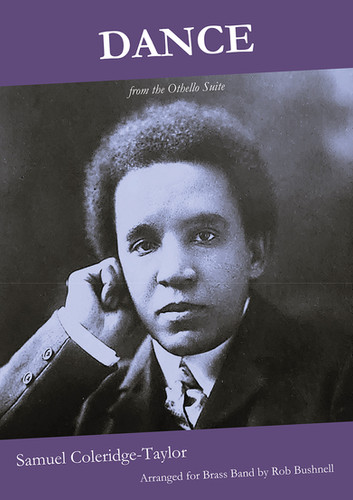
Dance from the Othello Suite (Brass Band) Coleridge-Taylor arr. Bushnell
Samuel Coleridge-Taylor is a British composer, who, from a young age, showed talent on the violin and entered the Royal College of Music, studying with Charles Villers Standford. His music become so popular that his Hiawatha trilogy was the second most performed choral piece (joint with Mendelssohn's Elijah, and only beaten by Handel's Messiah) with choral societies up and down the British Isles. In fact, Hiawatha was arranged by Charles Godfrey as a test-piece for the 1902 National Brass Band Championship of Great Britain, held at Crystal Palace.Commissioned by the theatre impresario Herbert Beerbohm, Coleridge-Taylor composed incidental music for His Majesty's Theatre London production of the Shakespeare play, Othello, in the West End, in 1909. In 1912, the play opened to the public, with a suite of five movements put together soon afterwards. The Dance, arranged here by Rob Bushnell, makes a great concert opener.This arrangement is for the British-style brass band, with alternative parts for horns in F and bass-clef lower brass. A recording of the original composition can be found at www.youtube.com/watch?v=OQeO_Ij9CV8 Duration: approx. 2.30 minutes Difficulty Level: 3rd Section + PDF download includes parts and score. Sheet music available at www.brassband.co.uk (UK) or https://satradecentral.org (USA) Instrumentation: Soprano Cornet Eb Solo Cornet Bb Repiano Cornet Bb 2nd Cornet Bb 3rd Cornet Bb Flugel Horn Bb Solo Horn Eb 1st Horn Eb 2nd Horn Eb 1st Baritone Bb 2nd Baritone Bb 1st Trombone Bb 2nd Trombone Bb Bass Trombone Euphonium Bb Bass Eb Bass Bb Timpani Percussion - Triangle, Cymbal & Bass Drum
In Stock: Estimated dispatch 1-3 working days
-
 £33.62
Hope (Brass Band) Nathanael Watchorn
Hope is a deeply reflective and uplifting work for brass band, shaped by themes of serenity, renewal, and spiritual hope. Composer Nathanael Watchorn revisits a melody and harmonic framework originally conceived for an unrealised project - material that, even at its inception, carried the gentle strength and stillness of a benedictory chorus. Sensing its innate sense of calm and assurance, Watchorn sought to give the music new life through words that would illuminate its emotional core. Those words came from his father, Major Julian Watchorn, whose poetic text - titled Benediction: The Hope of Christ - speaks of grace, love, joy, and the sustaining power found in Christ. The verses provide a clear spiritual lens through which conductors, performers, and listeners alike can experience the music. Whether heard as a musical benediction or a stand-alone concert work, Hope provides a meaningful and deeply moving moment of stillness amid the noise of modern life. To view a video of Regent Hall Band performing the work please visit www.youtube.com/watch?v=489X1cwPYi0&list=RD489X1cwPYi0&start_radio=1 Duration: approx. 3.00 minutes Difficulty Level: 3rd Section + This PDF download includes parts and score. Sheet music available at www.brassband.co.uk (UK) or https://satradecentral.org (USA) Instrumentation: Soprano Cornet Eb Solo Cornet Bb 1st Cornet Bb 2nd Cornet Bb Flugel Horn Bb Solo Horn Eb 1st Horn Eb 2nd Horn Eb 1st Baritone Bb 2nd Baritone Bb 1st Trombone Bb 2nd Trombone Bb Bass Trombone Euphonium Bb Bass Eb Bass Bb Timpani Percussion 1-2
In Stock: Estimated dispatch 1-3 working days
-
 £33.62
Margaret - Brass Band (Timothy Matthews arr.Kenneth Downie)
VIEW SCORE PDF The arranger, Kenneth Downie writes: 'This music was commissioned by Mike Griffiths, Music Director of Riviera Concert Brass, based in Torquay in Devon, England. It is developed around the hymn tune Margaret, and written in memory of the lady of that name who was a renowned supporter of, and generous donor to the band. The graceful melody was written by Timothy Matthews (1826-1910), and it is usually associated with the words of the hymn, the first verse of which says: Thou didst leave thy throne and thy kingly crown When thou camest to earth for me; But in Bethlehem's home was there found no room For thy holy nativity, O come to my heart, Lord Jesus; There is room in my heart for thee. I feel that there is a strong emotional core to this lovely tune and any performance should seek to bring out this quality, in a musical manner.' PDF download includes score and full set of parts. Sheet music available from: UK - www.brassband.co.uk USA - www.solidbrassmusic.com Difficulty Level: 4th Section + Instrumentation: Soprano Cornet Eb Solo Cornet Bb 1st Cornet Bb 2nd Cornet Bb Flugel Horn Bb Solo Horn Eb 1st Horn Eb 2nd Horn Eb 1st Baritone Bb 2nd Baritone Bb 1st Trombone Bb 2nd Trombone Bb Bass Trombone Euphonium Bb Bass Eb Bass Bb Timpani Glockenspiel Percussion
In Stock: Estimated dispatch 1-3 working days
-
 £33.62
Men of Harlech (Brass Band) Welsh Traditional arr. Alex McGee
This contemporary take by Alex McGee on the Welsh folk song Men of Harlech will be an entertaining addition to concert programmes. The arranger writes: 'Men of Harlech is perhaps one of the most well known of all traditional Welsh folk songs, but not like this. This setting was inspired by a composer who I first encountered as a 14-year-old playing in his first regional brass band, Gareth Wood. Upon learning of the death of Gareth I felt compelled to honour his memory and his music in composition. I struck upon the idea to do what he had done to the tune Sosban Fach to Men of Harlech, to take the tune as the raw material and try to craft it into something new yet recognisable, modern yet accessible. The work attempts to highlight what for me are the underlying characteristics of we Welsh; prone to melancholy but quick to find joy, contradictory, inviting, welcoming and warm but capable of housing a fierce streak of nationalistic pride. I dedicate this work to Gareth Wood and thank him for his music.' To view a rolling score video of the work please visit: https://www.youtube.com/watch?v=YSoZnpnhEjQ Duration: 3.30 minutes Difficulty Level: 3rd Section + PDF download includes parts and score. Sheet music available from www.brassband.co.uk Instrumentation: Soprano Cornet Eb Solo Cornet Bb Repiano Cornet Bb 2nd Cornet Bb 3rd Cornet Bb Flugel Horn Bb Solo Horn Eb 1st Horn Eb 2nd Horn Eb 1st Baritone Bb 2nd Baritone Bb 1st Trombone Bb 2nd Trombone Bb Bass Trombone Euphonium Bb Bass Eb Bass BbTimpani Percussion 1-2
In Stock: Estimated dispatch 1-3 working days
-
 £37.35
Nocturne for Brass Band & Percussion: The Lady with the Lamp - Andy Wareham
VIEW SCORE PDF Nocturne for Brass Band & Percussion: The Lady with the Lamp was composed for the BrookWright International Brass Band Composer Competition 2020, the work later going on to be a finalist in the competition. The music celebrates the life and achievements of Florence Nightingale on the 200th anniversary of her birth. The work is structured in ternary form and is designed to be an engaging concert piece, accessible to both lower and upper section bands. Minimal percussion has been used and ossia passages have been added to accommodate all levels. The music imagines Miss Nightingale walking the wards at night with the contrasting sections representing her devotion to the care of others, the struggles and sacrifice of her service, and the lasting effect of her renowned achievements that are still felt to this day. Sheet music available from: UK - www.brassband.co.uk USA - www.solidbrassmusic.com Difficulty Level: 2nd Section + Instrumentation: Soprano Cornet Eb Solo Cornet 1&2 Bb Solo Cornet 3&4 Bb Repiano Cornet Bb 2nd Cornet Bb 3rd Cornet Bb Flugel Horn Bb Solo Horn Eb 1st Horn Eb 2nd Horn Eb 1st Baritone Bb 2nd Baritone Bb 1st Trombone Bb 2nd Trombone Bb Bass Trombone Euphonium 1&2 Bb Bass Eb Bass Bb Timpani Percussion 1-2
In Stock: Estimated dispatch 1-3 working days
-
 £37.35
Polonaise from 'Scenes de Ballet' (Brass Band) Glazunov arr. Rob Bushnell
Alexander Glazunov was a Russian composer who was a gifted musician from childhood. He was seen as the natural heir to the nationalist revolution that had started with the Mighty Handful. Despite quickly turning from this to absolute forms of music, taking a keen interest in ballet music, his compositions still alludes to Russian folk tunes. He wrote four dance compositions, of which Scenes de Ballet was the first in 1894. The suite Scenes de Ballet, opus 52 has eight movements and was dedicated to the orchestra of the Russian Opera, St Petersburg. First performed in 1895 at a concert of the Imperial Music Society with Glazunov conducting. This arrangement of the final movement is for the British-style brass band, with alternative parts for horns in F and bass-clef lower brass. A recording of the original composition can be found here: https://www.youtube.com/watch?v=BS-Yx-bmxPg Duration: approx. 5.20 minutes Difficulty Level: 2nd Section + PDF download includes parts and score. Sheet music available at www.brassband.co.uk (UK) or https://satradecentral.org (USA) Instrumentation: Soprano Cornet Eb Solo Cornet Bb Repiano Cornet Bb 2nd Cornet Bb 3rd Cornet Bb Flugel Horn Bb Solo Horn Eb 1st Horn Eb 2nd Horn Eb 1st Baritone Bb 2nd Baritone Bb 1st Trombone Bb 2nd Trombone Bb Bass Trombone Euphonium Bb Bass Eb Bass Bb Timpani Percussion 1 - Snare Percussion 2 - Triangle, Cymbal & Bass Drum
In Stock: Estimated dispatch 1-3 working days
-
 £67.24
Pyrenean Carol Suite (Brass Band) David Taylor
This attractive suite for brass band by David Taylor features five traditional carols from the Pyrenees region of Spain, as follows: i. Nadal Tindaire (Jingling Christmas) - Occitan traditional This Occitan Christmas song tells of musical instruments used to celebrate the Nativity - 'fifes and trumpets, timpani and pipes, or you, clear little bells, along with the angels' choir.' ii. Gabriel's Message (Birjina Gaztetto Bat Zegoen) - Basque traditional The most widely-known of the chosen carols, honouring Jesus's mother Mary, this is often sung in its English version, but the melody came from the Basque country. The Basque words were adapted from the Mediaeval song Angelus ad Virginem. Here, we feature the flugel horn. This movement was originally written on its own, with organ accompaniment, for the composer's wife, Diane Scott. iii. El Noi de la Mare (The Child of the Mother) - Catalan traditional A beautiful Catalan carol celebrating the birth of Jesus, telling of the tasty gifts that the singer would bring - 'Raisins and figs and nuts and olives; Raisins and figs and honey and mato [a Catalan dessert cheese traditionally served with honey.]' Here we feature the euphonium. The tune was made famous by guitarist Andres Segovia, who used it as a favourite encore, and by John Rutter, who made a widely-used setting for choir. iv. Paure Satan (Poor Satan) - Occitan traditional This rather unusual carol tells of the pain that Satan is put to by the arrival of the infant Jesus. Its mocking and sarcastic tone is reflected here, where the tuba soloist (as Satan) is given musical trouble throughout by the other parts. At first they conflict with the soloist, then the soloist makes overtures of friendship, which are treated with suspicion followed by contempt. The soloist finally gives in to their accompaniment (or do they?). There are plenty of opportunities for little theatrical touches here, if the tuba player is so inclined! The tuba part in this movement is notably more difficult than the rest of the music, and a number of optional changes have been marked to make the part easier to play, if so desired. The player is also welcome to add suitable extra embellishments to taste if they wish, within the character of the music. v. Fum, Fum, Fum! - Catalan traditional A favourite Catalan Christmas song for centuries, this rousing melody provides a fitting way to round off the suite, with its repeated rhythmic refrain of the nonsense title phrase. It tells of the Nativity, and then it tells of the celebratory feasting and good times that the singers look forward to to honour it. Although the suite is intended to be performed whole, it is also intended for usage with a selection of movements on occasions where a shorter piece is wanted. Suggested formats include a single movement alone (2, 3, and 5 are likely most appropriate), a pair of movements (any of the first four, plus 5), and a suite of three or four movements (1 and 5, plus one or two of 2, 3, or 4 in the middle). It is suggested that a good way to design a 'pick-your-own-suite' from the movements is to think of the earlier movements as introductory to the final movement. To view a rolling score video featuring Kidlington Concert Brass please visit www.youtube.com/watch?v=QIGdul-yxxg PDF download includes score and parts. Sheet music available from: UK - www.brassband.co.uk USA - https://satradecentral.org Difficulty Level: 3rd Section + Length: 9.45 minutes Instrumentation: Soprano Cornet Eb Solo Cornet Bb Repiano Cornet Bb 2nd Cornet Bb 3rd Cornet Bb Flugel Horn Bb Solo Horn Eb 1st Horn Eb 2nd Horn Eb 1st Baritone Bb 2nd Baritone Bb 1st Trombone Bb 2nd Trombone Bb Bass Trombone Euphonium Bb Bass Eb Bass Bb Timpani Percussion 1-2
In Stock: Estimated dispatch 1-3 working days
-
 £59.77
The Glory of Colour (Brass Band) Ivan G. Andrews
This work by Ivan Andrews was inspired by the large Baptistry window of the new Coventry Cathedral and will be suitable both as a contest or concert work. The window was conceIved and designed by Basil Spence and was intended to be a worldwide experience. When installed it was claimed to be "the single largest window in stained glass that hitherto had ever been contemplated and brought into existance." The stained glass design was done by artist John Piper and when completed was described by Bishop Bardsley as a "triumphant expression of faith, a faith encapsulated in the 'glory of colour'".* Hence the title for the piece. The composer writes: 'When thinking of this music the traditional tune now often called Monks Gate kept coming to me. The words often sung to this tune were penned by John Bunyan and each stansa ends with the words "To be a pilgrim". The Cathedral in Coventry, although a Christian Church, is designed to bring all faiths together in Unity - there is a "Unity Chapel" opposite the Baptistry window so the concept of pilgrimage seemed perfectly apt to me. The music is therefore designed to reflect many colours as there are many expressions of faith. Single fragments of the Monks Gate tune are used as a basis for what might be deemed 'variations'. The tune is heard in full towards the end of the piece and then the music rises to a climax of bright brilliant white light. The colours of the window are darker on the outer edges but they all circulate towards the brilliant white at the centre - representing the source of all faith.' To view a rolling score video of the work please visit https://www.youtube.com/watch?v=zPN_EhhMDAE Duration: Approx. 11.30 minutes Difficulty Level: 2nd Section + PDF download includes parts and score. Sheet music available from www.brassband.co.uk Instrumentation: Soprano Cornet Eb Solo Cornet Bb Repiano Cornet Bb 2nd Cornet Bb 3rd Cornet Bb Flugel Horn Bb Solo Horn Eb 1st Horn Eb 2nd Horn Eb 1st Baritone Bb 2nd Baritone Bb 1st Trombone Bb 2nd Trombone Bb Bass Trombone Euphonium Bb Bass Eb Bass BbTimpani Percussion 1-2
In Stock: Estimated dispatch 1-3 working days
-
 £57.00
Conspirators Overture
Composer: Andrew Duncan Conspirators Overture was written for Katrina Marzella-Wheeler and the Cooperation Band for their winning programme played at the 2025 Brass in Concert competition at the Glass House in Gateshead England. The piece describes a meeting in a cafe in Paris in 1912 between three very influential Russians. The composer Igor Stravinsky, the dancer Vaslav Nijinsky and the impresario Sergei Diaghilev. Together they conspired about how Stravinsky's new Ballet, Le Sacre du Printemps (The rite of Spring) was going to disrupt what was then a very conservative, classical music scene in Paris. Stravinsky's music would forever change the way harmonies and rhythms are used in classical and jazz music. Starvinsky's full name is Igor Fyodorovich Stravinsky. The piece uses the morse code rhythm for IFS, which is Stravinsky's initials as a pulsating 11/8 rhythm which is the foundation of the overture. The opening notes from the Rite of Spring, played by a solo bassoon, are also quoted in the piece in a jazz waltz setting and in a short fugue towards the end of the piece. Suitable for Championship or First Section Bands.
-
 £89.95
Songs of Ascent - Jonathan Bates
DURATION: 14 minutes. DIFFICULTY: Championship. 'Songs of Ascent' was composed for the Royal Northern College of Music Brass Band, as part of their programme for the 2019 RNCM Festival of Brass. In my view, the festival itself is the leading showcase for original contemporary music for the medium (in a concert setting) in the world and therefore an ideal place to explore new ideas and sounds, which was a notion fundamental to the construction of this work. The piece is subtitled 'Out of the Depths, I cry to you, O Lord'; the opening line of Psalm 130 (which forms part of a set of 15 psalsm, 120-134 known as the Songs of Ascent") which forms the main inspiration for much of the musical material. Following an extended opening for four individual tuba lines, there are a number of solos for members of the band off stage, with bleak and deep accompaniment lines, reflecting the words of Psalm 130. Amongst these 'songs of ascents', the most common and strong themes are repentance and redemption; with the central core of this work emerging 'from the depths' to reveal one of very few calming and reflective passages of the work utilising the tune of 'Guide Me O Thy Great Redeemer' in a new setting, featuring the Solo Horn and Bass Trombone, before returning to the ethereal and dark timbres that form much of the music up to this point. In terms of compositional technique, this work is solely based on a set of 4 9-note scales in their various unique transpositions (below). Each of these scales provide a set of 2 whole tone scales, 6 minor triads, 6 major triads and is built on 9 augmented triads. Whilst most of the music in this work is based melodically on the set of notes (heard right at the outset in the motif in the tuba line), the central section delves into the harmonic capabilities of these 'modes', using a number of the 7 'keys' which can be derived from the minor & major chords derived in each scale. All 4 scales are used independantly to each other, with whole sections of the work focussing on each mode. 'Songs of Ascent' was selected as the set work for the Championship Section at the Butlin's Mineworker's Championships in 2020.
In Stock: Estimated dispatch 1-3 working days
 Watch video