
Results
-
 £35.00
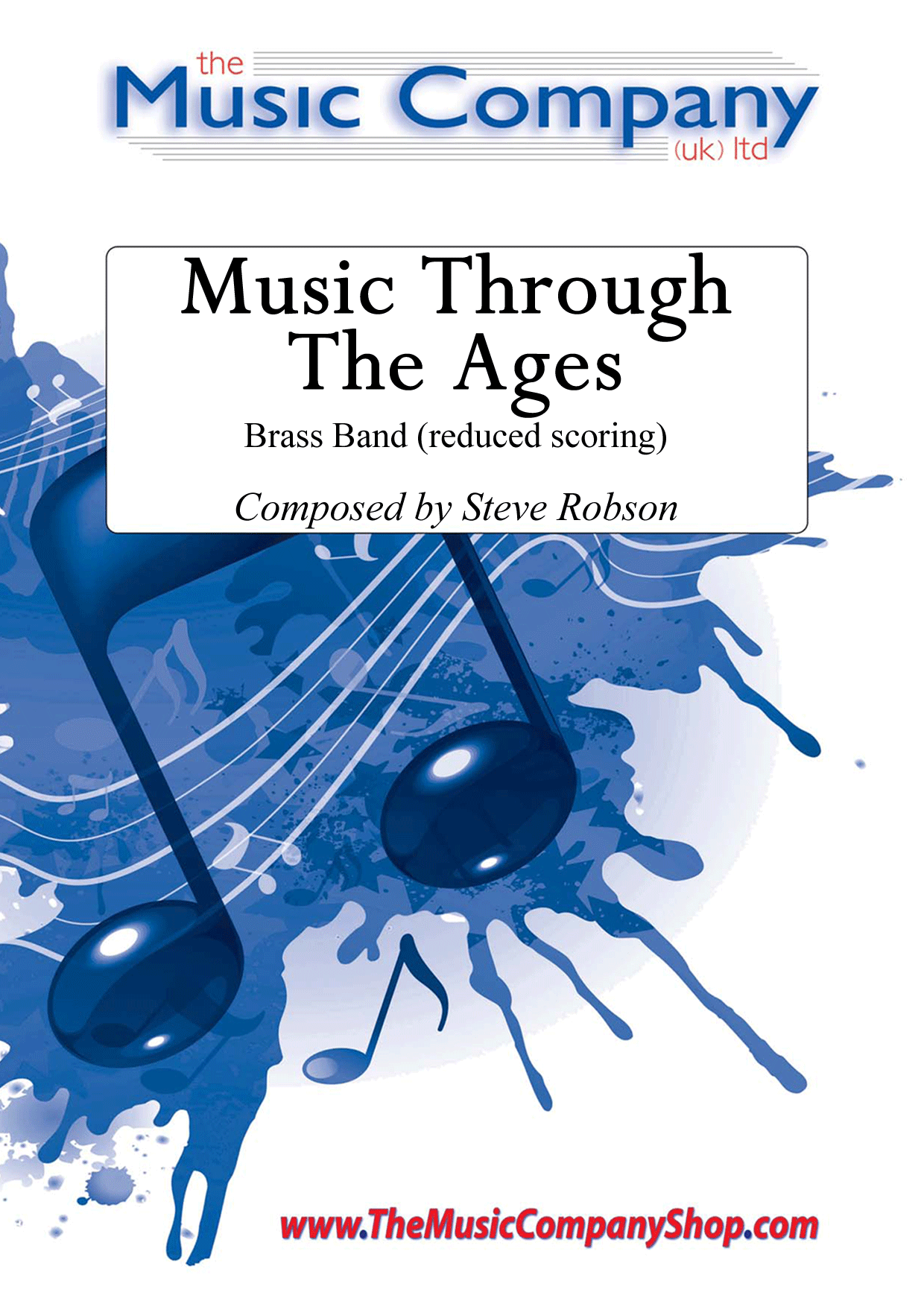
Music Through The Ages - Steve Robson
A fun and educational collection of 7 pieces created by Steve Robson, with optional narration, providing a time-travelling journey through the history of 2000 years of music to the present time.Originally written for Stanhope Youth Band, the piece has now been well received by other youth bands far and wide. The complete work offers great flexibility too, as te movements can be used as stand-alone items or as a full concert performance, offering players and audiences an insight to the evolving styles of Music Through The Ages.Movements include:FanfareThe Passing of the VIth Legion A Patrol - Imagining the sound of the Roman Legion at Vindolanda (AD84)The Journey of St Cuthbert - A Plainchant (995)The Honorable Robert Shafto MP - Late Baroque Style (1749)The Very Capable Mr Mozart Classical Style - Rondo (1786)Sans Pareil March - Tribute to Timothy Hackworth and George Allan (1913)The Angel of the North - Contemporary composition (Present day)Watch a full performance below of the pieces, including narration. This was a collaborative performance project, presented by members of different youth bands from across the North East on Saturday 13 November 2018 in the Theatre at Ushaw College, Durham.(NB: The piece Galliard, performed at 12mins 22secs into the video, was specially written for the concert and is not included in this collection.)Look and Listen (with thanks to all participating youth bands and supporting players):Set includes score (with narration), separately bound narration (enable a choice of either compere/conductor presentation) and parts including:Cornet 1Cornet 2Corent 3FlugelhornEb Tenor Horn 1Eb Tenor Horn 2Baritone 1Baritone 2Trombone 1Trombone 2Bass TromboneEuphoniumEb BassBb BassTimpaniPercussionAdditional world parts also provided include F Horn 1, F Horn 2, Trombone 1 in Bass Clef, Trombone 2 in Bass Clef.
In Stock: Estimated dispatch 3-5 working days
-
 £51.95
Prelude and Fugue: The Spitfire (Score and Parts) - William Walton arr. Elgar Howarth
Originally part of the score Walton wrote for the film The First of the Few, this fabulous music found greater fame in the concert version he made in 1942. Now, at last, here is an authorised version for brass band by an acknowledged master of the art, in a beautiful new presentation from Winwood Music. The Prelude - essentially a march in his best Crown Imperial style leads to a dazzling Fugue which incorporates a quiet interlude before the dramatic finale. Whether used as a concert opener or roof-raising finale it is sure to delight audiences and players alike. Duration: 7:00
Estimated dispatch 7-9 working days
-
 £35.00
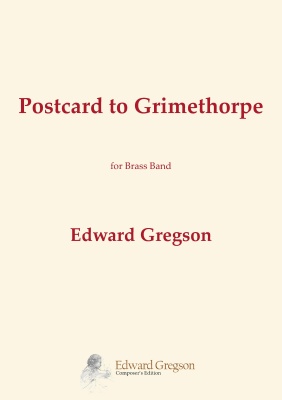
Postcard to Grimethorpe (Brass Band - Score and Parts)
I composed the original version of Postcard to Grimethorpe in 1993 at the request of Elgar Howarth, for a concert at the Queen Elizabeth Hall, London, given by the Grimethorpe Colliery Band. This was at a time when after the Grimethorpe Colliery pit closed the future of the band was in severe jeopardy. The concert was given in aid of the band, both through publicity and funding.Then in late 2022 Jack Stamp, the American composer, conductor and educator, and at that time international composer-in-association with Grimethorpe, contacted me to say that he had discovered my short piece in the band library, and asked if I might extend it for a recording he was sponsoring for the band - the repertoire to consist entirely of music specially composed for Grimethorpe.I agreed and decided to extend the piece by using the miner's hymn Gresford, as a symbolic gesture of protest at the many thousands of miners in the UK who were made redundant from their jobs. After an angular (quasi-atonal) first section, the hymn enters, softly at first, but with each phrase it becomes more powerful and insistent, ending with the final phrase triumphantly accompanied by melodic percussion (replacing the drums and cymbals of the earlier phrases, as if the band were then on the march). However, this short work ends softly and gently, as if anger has been replaced by quiet resolution and determination, looking to the future with confidence.- Edward GregsonDuration: 3.00
Estimated dispatch 7-14 working days
-
 £29.95
Judd: War Cry
'War Cry' was written at the request of Bandmaster Ronald Waiksnoris for the New York Staff Band's 125th Anniversary concert in Carnegie Hall, New York, in March 2012. He wanted a piece to open the concert with and so 'War Cry' was born. It is based on the song, 'Ever is the War Cry'. You will find the piece is quite militant in nature, which is a direct reflection of the text of the song.
Estimated dispatch 7-14 working days
-
 £37.95
The Year of the Dragon (Score Only)
The highlight of Cory's centenary celebrations throughout 1984 was a concert held in St. David's Hall, Cardiff, in March. The band, with the aid of funds provided by the Welsh Arts Council, commissioned Philip Sparke to write a work for first performance at this concert. The result was "The Year of the Dragon" of which the composer writes:"At the time I wrote The Year of the Dragon, Cory had won two successive National Finals and I set out to write a virtuoso piece to display the talents of this remarkable band to the full."The work is in three movements:TOCCATA opens with an arresting side drum figure and snatches of themes from various sections of the band, which try to develop until a broad and powerful theme from the middle of the band asserts itself. A central dance-like section soon gives way to the return of this theme, which subsides until faint echoes of the opening material fade to a close.INTERLUDE takes the form of a sad and languid solo for trombone. A chorale for the whole band introduces a brief spell of optimism but the trombone solo returns to close the movement quietly.FINALE is a real tour-de-force for the band with a stream of rapid semi-quavers running throughout the movement. The main theme is heroic and march-like but this is interspersed with lighter, more playful episodes. A distant fanfare to the sound of bells is introduced and this eventually returns to bring the work to a stirring close.
Estimated dispatch 7-14 working days
-
 £33.91
Carnsmerry - Kevin Ackford
Score & Parts Carnsmerry was written as the set march in the year 2000 for the 1st section at the West of England Bandsmen's Festival contest held in the village of Bugle in Cornwall. Snippets of both the Floral Dance as well as the May Dance can be heard in this vibrant march, finishing with an obbligato for both the Soprano Cornet and Solo Horn this is a must for your concert programme.
Estimated dispatch 5-7 working days
-
 £29.95
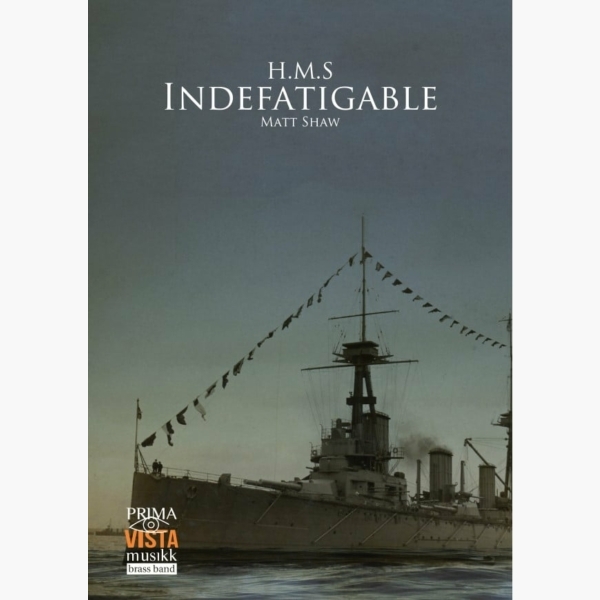
HMS Indefatigable - Matt Shaw
HMS Indefatigable is a contest march, composed for the Virtuosi GUS Band, under the direction of Adam Cooke, and used as part of their programme for Brass in Concert in November 2016. The march is named after the battlecruiser HMS...
Estimated dispatch 5-7 working days
-
 £77.00
General Series Brass Band Journal, Numbers 2250 - 2253, December 2024
2250: Prelude on 'Rhosymedre' (Ralph Vaughan Williams trs. Douglas Engle)The English composer Ralph Vaughan Williams' work Three Preludes (founded on Welsh Hymn Tunes) was published for the organ in 1920. This is a transcription of the second movement of that work. The words associated with the hymn tune are by Samuel Crossman, My song is love unknown (S.A.S.B. 149), and vividly depict the events of Holy Week. The music is gentle and solemn and would be appropriate for a Good Friday service or as a moment of repose in a concert. 2251: Hosanna Shuffle (Sam Creamer)The half-time shuffle groove is a popular feel developed by alternative rock/pop bands of the 1980s. It marries elements of rock and swing styles together to form a new and infectious feel - Hosannah Shuffle being written as a tribute to this fusion of musical styles. Contrary to a swing style, shuffle brings the pulse back onto the beat while maintaining the swung quaver rhythms to create a rock-type rhythmic drive. 2252: Everlasting Love (Keith Manners)This piece was written for the London North East Music School in 2004. The theme of the week was 'Making a stand for Christ', reminding the school that it only takes one person to make such a stand before others follow. The music starts with a lone Solo Cornet playing the melody of Graham Kendrick's song Such Love (S.A.S.B. 199). One by one, other parts join in with the theme.2253: Festival March (Michael Cooper)This piece represents the first published brass composition of Bandmaster Michael Cooper, who is the Bandmaster at Brisbane City Temple Corps. This imposing festival march features the tunes I want to be a soldier (T.B. 683), Lift up the banner (T.B. 90) and My Jesus, I love thee (T.B. 506). These tunes depict the idea that spiritual warfare is an essential component of one's faith, success of which is articulated in the final verse of My Jesus, I love thee (S.A.S.B. 878).
Estimated dispatch 7-14 working days
-
 £29.95
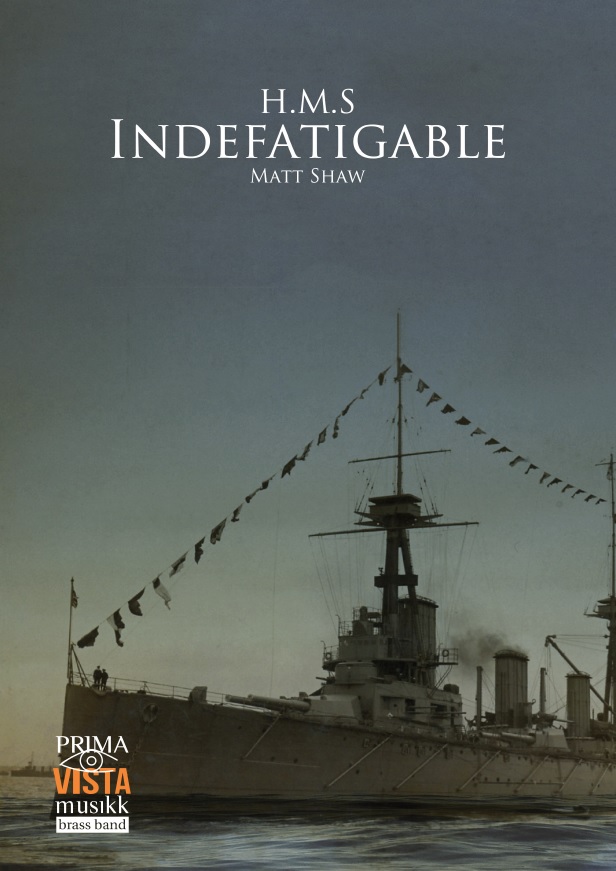
HMS Indefatigable (Brass Band - Score and Parts)
HMS Indefatigable is a contest march, composed for the Virtuosi GUS Band, under the direction of Adam Cooke, and used as part of their programme for Brass in Concert in November 2016.The march is named after the battlecruiser HMS Indefatigable; an ill-fated ship of the British fleet that fell victim to German Bombardment in the Battle of Jutland, in 1916. During the initial 30 minutes of the battle, the Indefatigable sustained heavy fire from the German battleship SMS Von der Tann, which struck Indefatigable's armoury and caused the ship to suffer a catastrophic explosion, resulting in the ship sinking, with all but two lives lost. 1,017 souls perished.This piece aims to capture the might and power of the great ship at sea, incorporating a touch of menace, hinting at the unfortunate end awaiting the HMS Indefatigable, whilst serving as a fitting tribute to the ship and her crew.
Estimated dispatch 7-14 working days
-
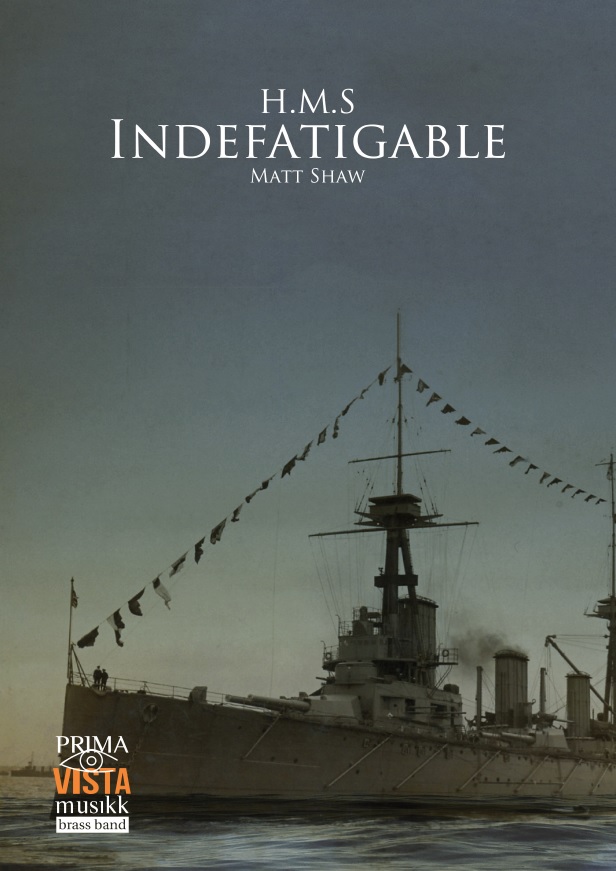 £14.95
HMS Indefatigable (Score Only)
HMS Indefatigable is a contest march, composed for the Virtuosi GUS Band, under the direction of Adam Cooke, and used as part of their programme for Brass in Concert in November 2016.The march is named after the battlecruiser HMS Indefatigable; an ill-fated ship of the British fleet that fell victim to German Bombardment in the Battle of Jutland, in 1916. During the initial 30 minutes of the battle, the Indefatigable sustained heavy fire from the German battleship SMS Von der Tann, which struck Indefatigable's armoury and caused the ship to suffer a catastrophic explosion, resulting in the ship sinking, with all but two lives lost. 1,017 souls perished.This piece aims to capture the might and power of the great ship at sea, incorporating a touch of menace, hinting at the unfortunate end awaiting the HMS Indefatigable, whilst serving as a fitting tribute to the ship and her crew.
Estimated dispatch 7-14 working days