
Results
-
 £127.30
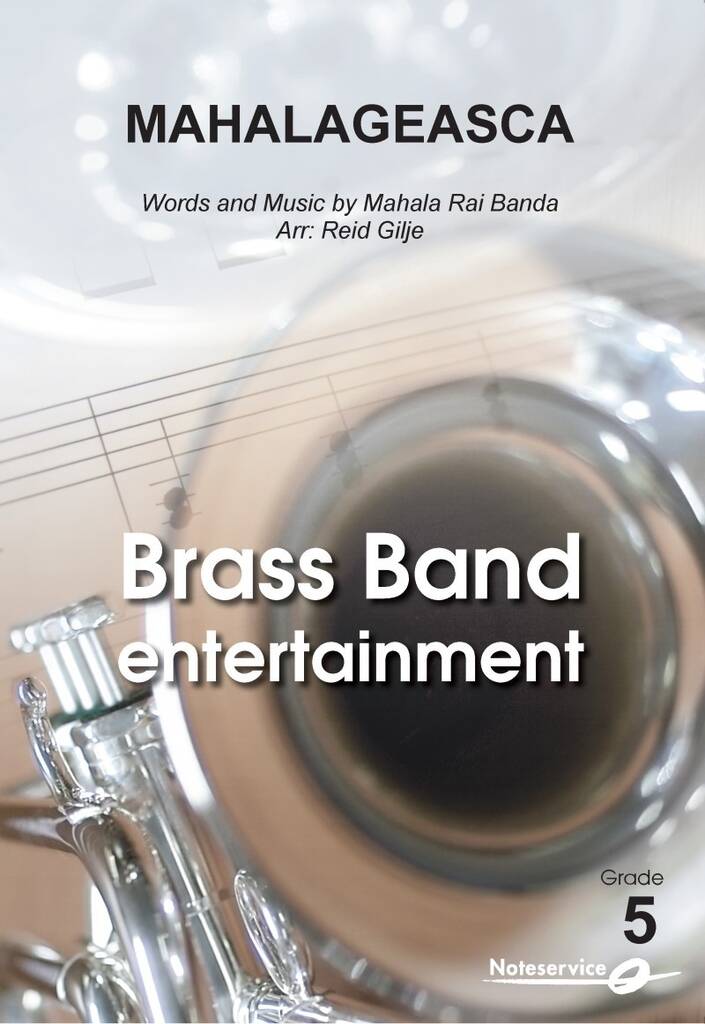
Mahalageasca - Mahala Rai Banda - Reid Gilje
Mahalageasca is a piece that make you happy both to listen and perform.It's possible to play the piece as a stage entrance piece. Repeat bars 1 to 8 several times. You might let the Drum set and some Percussion start alone. After basses have played their first eight bars, move on to bar nine.It is also possible to perform is as an ancore where you might change positions for the brass players but use the same pattern with Percussion as above.Here's a suggestion for set-up:Backrow sits in front of the conductor (on horn chairs)Soprano and Solo Cornets standing behind them.Trombones sits at the conductors right (on Euphonium/Baritone-chairs)Basses sitting behind the TrombonesFlugelhorn and horns on the left (sitting on the solo cornet chairs)Euphoniums and Baritones behind the horns.Please do not play too loud on mf. A bit press on the start of the slurs often better the emphasis (some marcatos written as well)Bars 96 to 136 is challenging for mallet percussion. They can be played as solo, or two players might share it in a convenient way.
Estimated dispatch 5-14 working days
-
 £60.99
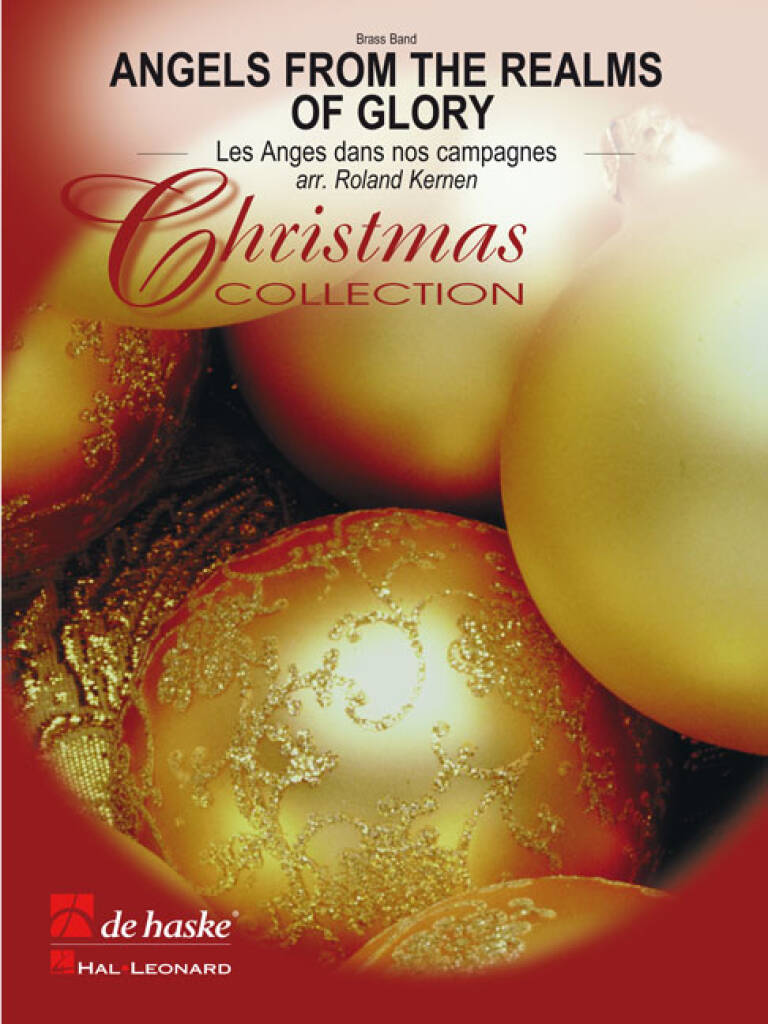
Angels from the Realms of Glory - Roland Kernen
The title of this clever arrangement reveals the Christmas song it is based on. The melody can be traced back to a French folksong from the 18th century which is now known around the world. In France it is called Les anges dans nos campagnes, in Germany it is most widely known as Engel auf den Feldern singen and in England it was originally called Angels From the Realms of Glory but it often known as Angels We Have Heard on High. Everyone will rejoice upon hearing the 'Gloria in excelsis Deo' refrain!
Estimated dispatch 5-14 working days
-
 £124.95
The Triumph of Time - Peter Graham
Like The Essence of Time, The Triumph of Time is a set of variations for band which follow roughly the same moods and characteristics of its older relative. Many years ago as I took up a university post and embarked on postgraduate compositionalstudy, my friend and colleague Ron Holz offered me some sage advice; to explore and assimilate unfamiliar compositional concepts and to develop and strengthen my technique, but never to stop writing tunes! This piece is dedicated to Dr Ronald W. Holzin gratitude.Peter Graham, June 2015
Estimated dispatch 5-14 working days
-
 £33.62
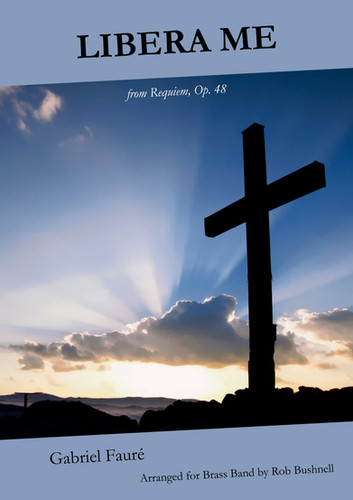
Libera Me from 'Requiem' (Brass Band) Faure arr. Rob Bushnell
Composed between 1887 and 1890, Gabriel Faure's Requiem is not only one of his best-known works but one of the most popular piece of choral music in the Classical repertoire, coming 23rd in the Classic FM's Hall of Fame 2024. Believed to be a tribute to his father (who died in 1885), Faure himself said "My Requiem wasn't written for anything - for pleasure, if I may call it that!" It started life as a five-movement work but was later expanded to be the final seven-movement work we know today. The first version (which Faure called "un petit Requiem") was first performed on 16 January 1888, with Faure conducting, a second version premiered on 21 January 1893 before the final version (reworked for full orchestra) was played on 12 July 1900; the Requiem was performed at the composer's own funeral in 1924.The Libera Me, or Deliver Me, was actually written in 1877 and is the sixth part of the Requiem.Faure once said of the work, "Everything I managed to entertain by way of religious illusion I put into my Requiem, which moreover is dominated from beginning to end by a very human feeling of faith in eternal rest." Upon interview, he also said, "It has been said that my Requiem does not express the fear of death and someone has called it a lullaby of death. But it is thus that I see death: as a happy deliverance, an aspiration towards happiness above, rather than as a painful experience. The music of Gounod has been criticised for its inclination towards human tenderness. But his nature predisposed him to feel this way: religious emotion took this form inside him. Is it not necessary to accept the artist's nature? As to my Requiem, perhaps I have also instinctively sought to escape from what is thought right and proper, after all the years of accompanying burial services on the organ! I know it all by heart. I wanted to write something different."This arrangement is for the British-style brass band, with alternative parts for horns in F and bass-clef lower brass. The tenor solo is featured on the euphonium. A recording of the original composition can be found here: www.youtube.com/watch?v=fXwFNoBHCf0 Duration: 4.20 minutes approx. Difficulty Level: 4th Section + PDF download includes parts and score. Sheet music available from www.brassband.co.uk Instrumentation: Soprano Cornet Eb Solo Cornet Bb Repiano Cornet Bb 2nd Cornet Bb 3rd Cornet Bb Flugel Horn Bb Solo Horn Eb 1st Horn Eb 2nd Horn Eb 1st Baritone Bb 2nd Baritone Bb 1st Trombone Bb 2nd Trombone Bb Bass Trombone Euphonium Bb Bass Eb Bass BbTimpani
In Stock: Estimated dispatch 1-3 working days
-
£89.95
INFINITY (Brass Band Set) - Robert Redhead
In the post-modern age in which we live, 'absolutes' are difficult for many to comprehend. Yet infinity, which means absolute, total, all-embracing, having no limits or boundaries in time, space, extent, or magnitude, has always been central to the Christian's concept of God.Through the ages, as human understanding has grown, particularly at a remarkable rate from the latter part of the twentienth century, Christianity has been continually challenged to interpret traditional beliefs in the light of new discoveries, but always within the reality of the infinite Being. In addition, scripture tells us that 'humanity was made in God's image'. Humankind is part of God's creation and as such, responsible for its upkeep. Such a commission has never been more relevant than in this present age. Psalm 8 creates a great picture of the majesty, eternal, infinte quality of God and yet reveals the desire of God to share in spirit with humankind. It recognises humankind as being, not a tool of the infinite, but as a creative contributing part of the ongoing movement and activity of the infinite. The music is deliberately melodic in context, creating a sense of unity with the infinite, in tandem with the varying expressions of individuality. It is not based on the Psalm but reflects some of the sentiments lying therein. The 'hymn-like' theme expresses the nature of the Divine using the Old Testament image of the infinite God coming to finite humankind, not in the 'wind', the 'earthquake', the 'fire', but in the 'still small voice' of quietness (1 Kings 19: 11-13). The ensuing musical development, in different styles and patterns, expresses this continual link between infinite and finite. Thus the conclusion, rather than being a symbol of might, power and magnificence, reflects the same sentiment as the opening.
Estimated dispatch 7-14 working days
-
£10.00
INFINITY (Brass Band Study Score) - Robert Redhead
In the post-modern age in which we live, 'absolutes' are difficult for many to comprehend. Yet infinity, which means absolute, total, all-embracing, having no limits or boundaries in time, space, extent, or magnitude, has always been central to the Christian's concept of God.Through the ages, as human understanding has grown, particularly at a remarkable rate from the latter part of the twentienth century, Christianity has been continually challenged to interpret traditional beliefs in the light of new discoveries, but always within the reality of the infinite Being. In addition, scripture tells us that 'humanity was made in God's image'. Humankind is part of God's creation and as such, responsible for its upkeep. Such a commission has never been more relevant than in this present age. Psalm 8 creates a great picture of the majesty, eternal, infinte quality of God and yet reveals the desire of God to share in spirit with humankind. It recognises humankind as being, not a tool of the infinite, but as a creative contributing part of the ongoing movement and activity of the infinite. The music is deliberately melodic in context, creating a sense of unity with the infinite, in tandem with the varying expressions of individuality. It is not based on the Psalm but reflects some of the sentiments lying therein. The 'hymn-like' theme expresses the nature of the Divine using the Old Testament image of the infinite God coming to finite humankind, not in the 'wind', the 'earthquake', the 'fire', but in the 'still small voice' of quietness (1 Kings 19: 11-13). The ensuing musical development, in different styles and patterns, expresses this continual link between infinite and finite. Thus the conclusion, rather than being a symbol of might, power and magnificence, reflects the same sentiment as the opening.
Estimated dispatch 7-14 working days
-
 £20.00
Infinity (Brass Band - Study Score)
In the post-modern age in which we live, 'absolutes' are difficult for many to comprehend. Yet infinity, which means absolute, total, all-embracing, having no limits or boundaries in time, space, extent, or magnitude, has always been central to the Christian's concept of God.Through the ages, as human understanding has grown, particularly at a remarkable rate from the latter part of the twentienth century, Christianity has been continually challenged to interpret traditional beliefs in the light of new discoveries, but always within the reality of the infinite Being. In addition, scripture tells us that 'humanity was made in God's image'. Humankind is part of God's creation and as such, responsible for its upkeep. Such a commission has never been more relevant than in this present age. Psalm 8 creates a great picture of the majesty, eternal, infinte quality of God and yet reveals the desire of God to share in spirit with humankind. It recognises humankind as being, not a tool of the infinite, but as a creative contributing part of the ongoing movement and activity of the infinite. The music is deliberately melodic in context, creating a sense of unity with the infinite, in tandem with the varying expressions of individuality. It is not based on the Psalm but reflects some of the sentiments lying therein. The 'hymn-like' theme expresses the nature of the Divine using the Old Testament image of the infinite God coming to finite humankind, not in the 'wind', the 'earthquake', the 'fire', but in the 'still small voice' of quietness (1 Kings 19: 11-13). The ensuing musical development, in different styles and patterns, expresses this continual link between infinite and finite. Thus the conclusion, rather than being a symbol of might, power and magnificence, reflects the same sentiment as the opening.
Estimated dispatch 7-14 working days
-
 £59.77
Avifauna (Brass Band) Joshua Tyler Jameson
This highly descriptive work was commissioned by the National Youth Brass Band of America and will be a terrific concert or entertainment contest item. The music paints the picture of the lives of a variety of different birds. The composer writes: 'When I began thinking about this project I was sitting in my office in the early morning, the sun having just risen. There was a gentle breeze and the only thing that I could hear (aside from my hungry whining cats) was the gentle song of the birds outside my open window. As much of my work is programmatic, almost like symphonic poems, this immediately gave me the image of a majestic sunrise with all types of birds fluttering about, almost as if out of an episode of Planet Earth. When I was commissioned by the National Youth Brass Band of America, I knew the project had to be something the ensemble could grab onto. Something they could see. Something they could relate to. There being so many types of birds in North America, I selected a handful to help tell my story... The scene where I came up with this idea seemed to be the perfect starting point. Sunrise, tiny chirps of Morning Birds floating around the twilight of dawn, swiftly moving towards the majesty of the sun cresting the horizon. A new day, the beginning of a story. As the sun rises higher in the sky, animal activity stirs, becoming lively and wild. The flowers have opened up to drink in the sun's rays, leaving them open to nectar-seeking Hummingbirds. Whizzing by at lightning speed, the hummingbirds journey from flower to flower, drinking their fill until the sun begins to set back over the horizon. When daylight fades, the enigmatic Owl floats silently through the sky. The wonder of these creatures comes not just from their beauty, but also from their mystery and their ferocity. We see images in pop culture of majestic white owls and marvel in their beauty... but to a mouse roaming the forest floor in the dark of the night, the terror of suddenly being dropped upon by a silent predator is anything but peaceful. In the dead of night, soft rolling clouds thicken as a storm begins to brew. With the ensuing rain also emerges the grotesque scavenging Vulture; marching along from carcass to carcass, tearing into the rotting leftovers of another predator's kill, gorging themselves until over-full. However, from this nightmare fuel of a bird, a new day awaits... As the dawn of another day approaches, you begin to hear the same morning birds you heard the previous day. When the light finally breaks the horizon, the soaring majesty of the Eagle drives us to the end of our story; an exciting journey told through the eyes of the winged creatures that paint the skies of North America. This is Avifauna.' To view a follow-the-score video please visit: www.youtube.com/watch?v=J2bhBpx9KvM Sheet music available from: UK - www.brassband.co.uk USA - www.solidbrassmusic.com Difficulty Level: 2nd Section + Instrumentation: Soprano Cornet Eb Solo Cornet Bb Repiano Cornet Bb 2nd Cornet Bb 3rd Cornet Bb Flugel Horn Bb Solo Horn Eb 1st Horn Eb 2nd Horn Eb 1st Baritone Bb 2nd Baritone Bb 1st Trombone Bb 2nd Trombone Bb Bass Trombone Euphonium Bb Bass Eb Bass Bb Percussion 1-4
In Stock: Estimated dispatch 1-3 working days
-
 £33.62
Men of Harlech (Brass Band) Welsh Traditional arr. Alex McGee
This contemporary take by Alex McGee on the Welsh folk song Men of Harlech will be an entertaining addition to concert programmes. The arranger writes: 'Men of Harlech is perhaps one of the most well known of all traditional Welsh folk songs, but not like this. This setting was inspired by a composer who I first encountered as a 14-year-old playing in his first regional brass band, Gareth Wood. Upon learning of the death of Gareth I felt compelled to honour his memory and his music in composition. I struck upon the idea to do what he had done to the tune Sosban Fach to Men of Harlech, to take the tune as the raw material and try to craft it into something new yet recognisable, modern yet accessible. The work attempts to highlight what for me are the underlying characteristics of we Welsh; prone to melancholy but quick to find joy, contradictory, inviting, welcoming and warm but capable of housing a fierce streak of nationalistic pride. I dedicate this work to Gareth Wood and thank him for his music.' To view a rolling score video of the work please visit: https://www.youtube.com/watch?v=YSoZnpnhEjQ Duration: 3.30 minutes Difficulty Level: 3rd Section + PDF download includes parts and score. Sheet music available from www.brassband.co.uk Instrumentation: Soprano Cornet Eb Solo Cornet Bb Repiano Cornet Bb 2nd Cornet Bb 3rd Cornet Bb Flugel Horn Bb Solo Horn Eb 1st Horn Eb 2nd Horn Eb 1st Baritone Bb 2nd Baritone Bb 1st Trombone Bb 2nd Trombone Bb Bass Trombone Euphonium Bb Bass Eb Bass BbTimpani Percussion 1-2
In Stock: Estimated dispatch 1-3 working days
-
 £34.99
Submerged... (Cornet Concerto No.2) - Jonathan Bates
'Submerged..' is a virtuoso concerto for Cornet composed as a response to the 'lost' Derbyshire villages of Ashopton & Derwent,. both of which were drowned in the early 1940's to make way for a new reservoir to aid the ever-increasing water demand from nearby. Sheffield and it's steel industry during World War 2. The work is through-composed but is defined by 3 clear main sections, 'The . Packhorse Bridge, Derwent', 'Ashopton Chapel' and 'Operation Chastise'. Much of the melodic and harmonic material throughout the. concerto is inspired by 3 contrasting sources; an original motif of towering block chords which opens the concerto, the famous opening. fragment of Eric Ball's 'High Peak' (1969) which was composed as a tribute to the district of Derbyshire where Ashopton & Derwent lie, . and finally Claude Debussy's haunting 'La Cath drale Engloutie' or 'The Sunken Cathedral', which was composed in 1910 around the legend of. the submerged cathedral of Ys. . I. Packhorse Bridge, Derwent (1925). One of the most striking features of the former village of Derwent was it's Packhorse Bridge, which spanned the River Derwent. adjacent to the Derwent Hall - a grand, picturesque Jacobean country house. In 1925, the renowned impressionist artist Stanley. Royle painted a striking image of the two in midwinter, with the partially frozen river sat quietly underneath the snow-topped. bridge in the foreground, while the old hall sits peacefully and dark in the background. The opening setion of this concerto paints. this picture in a quite schizophrenic manner; with frosty, shrill march-like material picturing the villagers crossing the narrow icy. bridge, combined with wild and frenzied waltz music of the grand hall and it's masquerade balls laying, for now, quietly mysterious. across the river. . II. Ashopton Chapel (1939). Ashopton was much the smaller and less-populated of the 2 'lost' villages, but still bore home to a Roman Catholic Chapel which was. the focal point of the village. The chapel - along with the rest of Ashopton - was drowned in 1943, but the final service to take place there. was held in 1939, with the final hymn being 'Day's Dying in the West'. This hymn forms a haunting coda to the 2nd section, with firstly the . piano leading the melody before an audio track containing an old recording of the hymn is accompanied by the sound of flowing water and . the rumble of storms as the village hypothetically disappears from existence with the hymn tune still echoing around the valley, before . subsiding into the growing roar of the engine of a Lancaster Bomber as it soars overhead towards Derwent to practise it's 'Dam-Buster' raid. . III. Operation Chastise (1943). The Derwent Reservoir lies adjacent to Ladybower Reservoir (of which Ashopton & Derwent were flooded to make way for) in the . Derbyshire High Peak, and during the 2nd World War was used as one of the central low-atitude practise areas of the 617 Squadron - more . commonly known affectionately as the 'Dambusters'. Before the destruction of Derwent, it's 'Packhorse Bridge' was dismantled stone by stone . and re-assembled upstream at Howden Dam to the north end of Derwent Reservoir. This is where the music begins, with a reconstruction of . the opening material before taking flight into a whirlwind tour of virtuosity from the soloist. .
In Stock: Estimated dispatch 1-3 working days
 View Music