
Results
-
 £24.95
Prelude and Capriccio (Cornet Solo with Brass Band) - Gregson, Edward
A condensed score is included with this workGregson wrote his Prelude and Capriccio in 1972. It exists in two versions: one for cornet and band and the other for cornet or trumpet and piano.The work began life in the early sixties, the Capriccio being composed when the composer was 17. A Prelude was added to complete the work, which lasts for approximately 8 minutes. The Prelude is reflective in character and uses long melodic lines over undulating chromatic harmony. The music reaches a climax before a brief reprise of the opening. The Capriccio is somewhat jazzy in its opening syncopated rhythms, but has a more lyrical middle section before a finale exploiting the virtuoso character of the instrument.
Estimated dispatch 7-14 working days
-
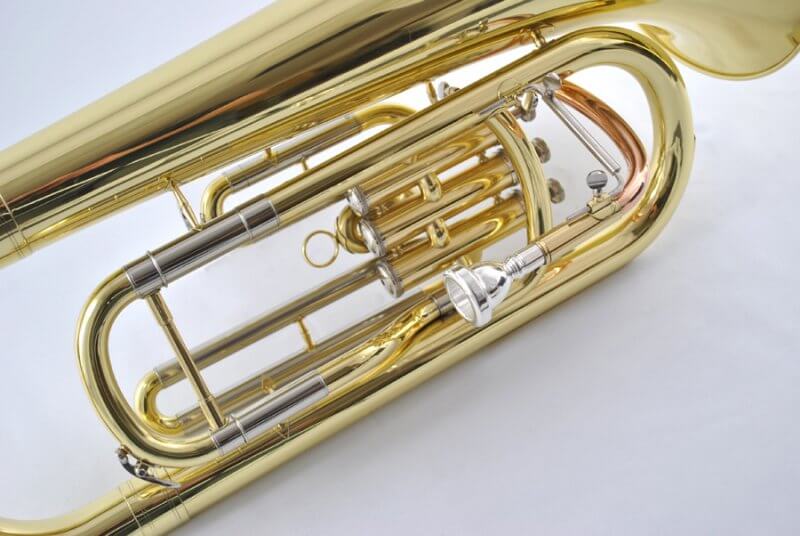
Introduction & Allegro Spiritoso - Jean Baptiste Senaille - Len Jenkins
Introduction and Allegro Spiritoso appears in many forms within the music compendium, frequently as a piece demonstrating a solo string, woodwind or brass instrument with Piano or other accompaniment. It was originally composed by the baroque composer Jean Baptiste Senaille, and includes the fast 2/4 movement from one of his 50 or so violin sonatas. It is probably one of his most recognised pieces. This arrangement for a brass quintet with optional Glockenspiel is presented in two formats. One is for Brass Band instruments, the other for Orchestral Brass, both with appropriate Parts to match that genre.
-
 £29.50
Appassionata - Richard Rock
From the pen of Richard Rock comes a solo that should belong in every bands library. The Baritone has long been the most underated instrument of the Brass Band movement, but on hearing this work, all that could change. "Appassionata" is a simply gorgeous melodic work that can show off the Baritone instrument in a light not often seen. With the parts not too demanding either, this really is a must for all Baritone players.
In Stock: Estimated dispatch 1-3 working days
-
£29.50
Dance of the Troglodytes - Naomi Styles
If your resident tuned percussionist hasn't had much to do of late, then why not present him or her with Dance of the Troglodytes? While not strictly a xylophone solo, it features this instrument strongly with fast arpeggios over a steady tune that gradually rises in intensity and excitement. 'Dance of the Troglodytes' is one of a modern day 'Carnival of the Animals' - a series of brass band tunes inspired by Christopher Lloyd's book 'What on Earth evolved?' which ranks the species which have most influenced planet Earth. The music celebrates Homo Sapiens, ranked by Lloyd as the 6th most influential species. Emerging from Africa about 160,000 years ago from Homo erectus stock, Homo Sapiens' quick thinking, manual dexterity and increasingly complex tool making skills made it the only surviving human species. Now we humans have spread to every corner of the globe, shaping it through agriculture, transportation and industry. Dance of the Troglodytes echoes the rise of humans as they emerge from primitive life and gradually create the complex world we live in today.
In Stock: Estimated dispatch 1-3 working days
-
 £35.00
Mr Bojangles (Bb Instrument Solo with Brass Band - Score and Parts) - Richards, J. J. - Griffiths, David
This arrangement by David Griffiths, made especially for Tom Hutchinson, is based around the version featured on the 2001 album, 'Swing When You're Winning' by the British pop singer Robbie Williams. Suitable for 2nd Section Bands and above
Estimated dispatch 7-14 working days
-
 £49.95
FLIGHT (Solo for B flat Instrument/Brass Band) - Wilby, Philip
Estimated dispatch 7-14 working days
-
 £40.99
Santa Claus is Comin' to Town (Bb Instrument Solo with Brass Band - Score and Parts) - Coots, Fred - Freeh, Mark
Santa Claus Is Comin' To Town, Mark Freeh's delightful arrangement of the this Christmas classic.Suitable for Advanced Youth/3rd Section Bands and aboveDuration: 3:00
Estimated dispatch 7-14 working days
-
 £14.95
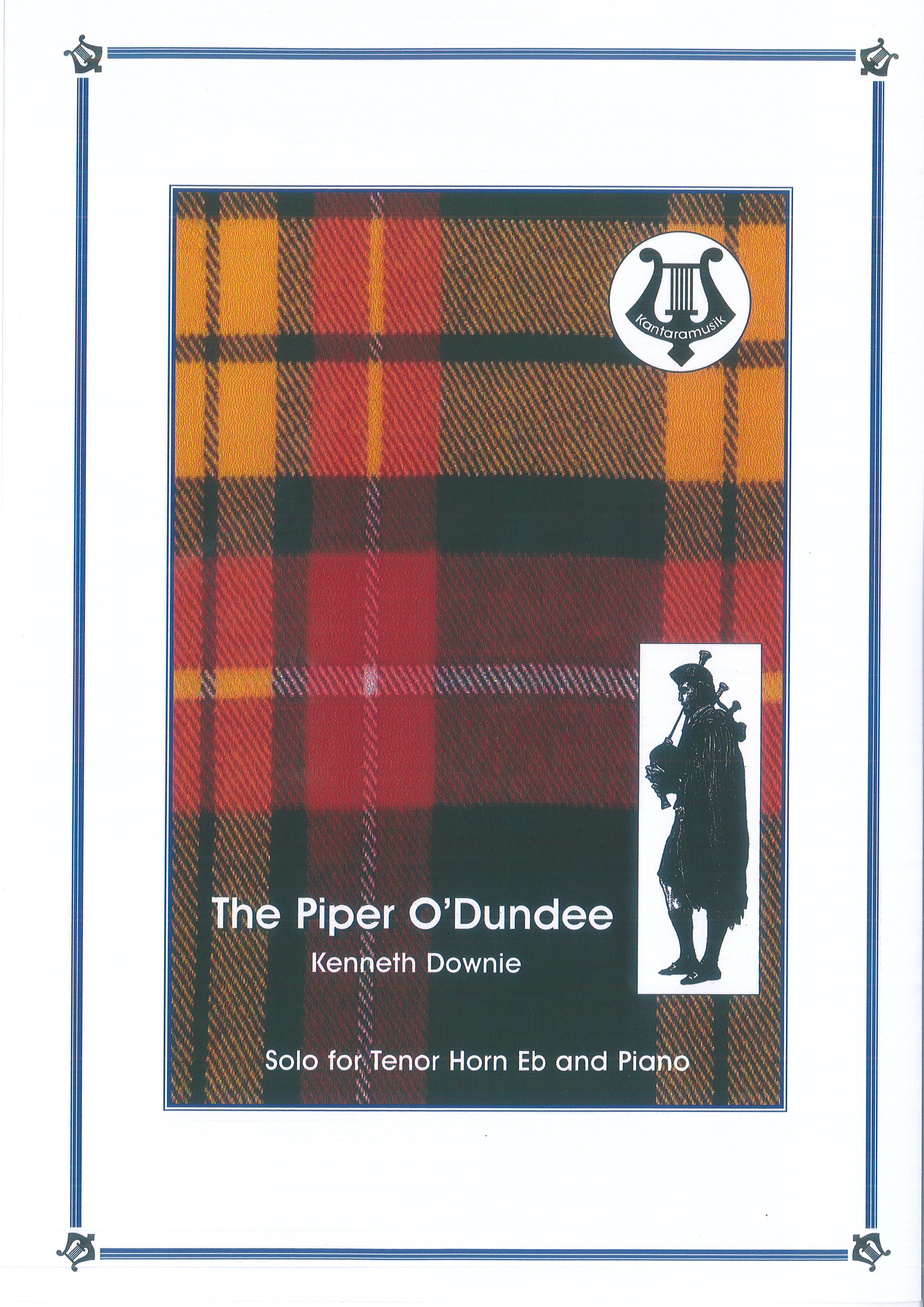
Piper of Dundee (Tenor Horn and Piano)
This tricky solo, commissioned for Sheona White, will provide a challenge to all aspiring soloists on this instrument. Exploring fully the wide range of the instrument and full of rhythm and jaunty humour.
Estimated dispatch 7-14 working days
-
£89.95
Trombone Concerto (Edward Gregson)
Gregson's Trombone Concerto falls into three main sections, played without a break, but conforming to the traditional pattern of concerto structure. The writing for trombone is virtuosic, encompassing the whole range of the instrument, but also exploiting the rather beautiful lyrical sound of which the instrument is capable.
Estimated dispatch 7-14 working days
-
 £6.95
£6.95Slow Melody Book No. 1 (for Bb Instruments and Piano)
Bb Instrument and Piano
Estimated dispatch 7-14 working days
 View Music
 Listen to MP3