
Results
-
 £7.35
£7.35King (Concertino for Solo Trombone & Brass Band) Brenton Broadstock - Solo Copy
King is a major new addition to the trombone repertoire, commissioned in 2024 by Brett Baker as a deeply personal homage to his mentor, the legendary David King. This compelling Concertino for Solo Trombone and Brass Band seeks to capture the multifaceted personality of its namesake through three distinct movements: i. Rhapsodic: A movement defined by fluid tempo shifts and evocative mood changes. ii. Introspective: A generous, lyrical section that highlights the expressive capabilities of the soloist. iii. Fast & Passionate: A high-energy finale characterized by determination, optimism, and rhythmic drive. The work is masterfully constructed with pitch material derived directly from the name 'David,' establishing a thematic core introduced by the soloist in the opening bars and woven throughout the entire ensemble texture. It is an essential work for soloists looking for a piece that combines technical brilliance with profound musical narrative. To listen to an excerpt featuring Brett Baker and Flowers Band please visit: https://youtu.be/i-px4OmjplQ Duration: Approx. 12.00 minutes Difficulty Level: 1st Section + This PDF download includes the solo part only. Full set available here. Sheet music available at www.brassband.co.uk (UK) or https://satradecentral.org (USA) Instrumentation:Trombone Soloist* Soprano Cornet Eb Solo Cornet Bb Repiano Cornet Bb 2nd Cornet Bb 3rd Cornet Bb Flugel Horn Bb Solo Horn Eb 1st Horn Eb 2nd Horn Eb 1st Baritone Bb 2nd Baritone Bb 1st Trombone Bb 2nd Trombone Bb Bass Trombone Euphonium Bb Bass Eb Bass Bb Timpani Percussion 1-3 *For bands with only 3 trombones where one is the soloist, the 1st trombone part is covered in other parts throughout the piece.
In Stock: Estimated dispatch 1-3 working days
-
 £55.00
Triumph Series Brass Band Journal, Numbers 1383 - 1386, March 2026
1383: Festival March - Lead On! (Andrew Wainwright)A dynamic march, commissioned by Majors Paul and Dawn McFarland during their appointment as Area Commanders of The Salvation Army's Dallas-Fort Worth Area, premiered at the 2023 Thanksgiving service at the Dallas Adult Rehabilitation Centre. Featuring the classic hymns Storm the forts of darkness (S.A.S.B. 980) and Lead on, O King eternal (S.A.S.B. 964), the piece captures the drive, hope, and mission at the heart of The Salvation Army's work in North Texas.1384: Confession (Kenneth Downie)This arrangement is based on the tune Lord of all (T.B. 440), one of the welcome additions to the 2015 Salvation Army tune book. Introduced to the arranger by Andrew Blyth, whose appreciation for the melody highlighted its gentle charm, the piece is dedicated to Andrew and the Peterborough Citadel Band, where he served as Bandmaster and continues to play.The music pairs the tune with the reflective words of We have not known thee as we ought (S.A.S.B. 630), a hymn often used in worship as a moment of confession and heart-searching before God. Its inclusion encourages both performers and listeners to approach worship with humility and sincerity.Although labelled simply as "German traditional," the tune's graceful simplicity is immediately evident. This arrangement preserves that character while introducing subtle harmonic colour and developing the tune's rising fourth motif as a unifying musical thread. The gentle nature of the melody remains central throughout, with a slightly heightened energy in the fifth phrase carefully drawn out without disrupting the overall serenity. The sharing of thematic material between Cornets and Horns calls for smooth, unobtrusive ensemble playing, allowing the tune's beauty to speak naturally.1385: God in good (Stephen Hull) This arrangement brings together two much'loved melodies: Goodness of God, a favourite from the final years of the arranger's service as Divisional Music Director in the Wisconsin/Upper Michigan Division, and the simple, enduring chorus God is so good. Heard often at summer camps, the song's message stayed with him, eventually inspiring this thoughtful musical pairing that highlights God's unwavering goodness throughout our lives.1386: A march in time (Martin Cordner)Written to celebrate the 130th anniversary of Thetford Corps (UKI Territory), this lively march pays tribute to a legacy of faithful witness, joyful service, and a community moving forward in God's light. Premiered by Cambridge Citadel Band during the anniversary weekend, the piece weaves together three cherished songs: Marching on in the light of God (S.A.S.B. 968), Jesus, precious Saviour (S.A.S.B. 501), and Light up the sunshine in your heart.
Estimated dispatch 7-14 working days
-
 £33.09
All Your Anxiety (Brass Band) Edward Joy arr. Jonathan Rowsell
All Your Anxiety is a reflective and expressive work for brass band inspired by Edward Joy's sacred song of the same name. Drawing deeply from the hymn's text and message, the piece explores the tension between human unease and the promise of peace found in faith. The work opens with a distinctive eighth-note figure in the euphonium that immediately establishes an unsettled character. Wide intervallic leaps and atypical slur groupings evoke a sense of fragility and uncertainty, musically portraying the weight of sorrow and care described in the opening verse of the hymn. This motivic material becomes the foundation of the entire arrangement, reappearing in varied forms as counter-melody, accompaniment, and featured solo lines across the ensemble. As the piece unfolds, the music gradually broadens and warms, reflecting the invitation of the text to "come to the cross" and leave one's burdens behind. Moments of lyricism and calm contrast with the earlier unease, leading toward a more settled and hopeful conclusion that mirrors the refrain's assurance: "Never a burden He cannot bear, never a friend like Jesus." To view a video of the Canadian Staff Band playing the piece please visit https://www.youtube.com/watch?v=5Ms8ubug4yA Sheet music available from www.brassband.co.uk or https://satradecentral.org Difficulty Level: 3rd Section + Length: 3.30 minutes Instrumentation: Soprano Cornet Eb Solo Cornet Bb 1st Cornet Bb 2nd Cornet Bb Flugel Horn Bb Solo Horn Eb 1st Horn Eb 2nd Horn Eb 1st Baritone Bb 2nd Baritone Bb 1st Trombone Bb 2nd Trombone Bb Bass Trombone Euphonium Bb Bass Eb Bass Bb Timpani Percussion
In Stock: Estimated dispatch 1-3 working days
-
 £119.99
The Lonesome Knight - Saskia Apon
The composition the Lonesome Knight was based on a fairytale. The piece was written by Saskia Apon for the National Brass Band Championships 2001. Once upon a time there was a knight who went to fight and defeat the dragon that had beenkilling the people of his town. There is a short but intense battle between the two and the knight is triumphant. However whilst persuing the dragon the knight has travelled far away from his home and now is lost. He roames around trying to findhis way home, but exhausted and weary he falls to the ground. He awakens startled by a Giant and a group of Goblins who are celebrating the death of the dragon. The knight joins in the festivities but after a long evening is once more leftalone. The sun rises the following morning and he sees a castle on the horizon. He enthousiastcally ventures towards the castle in the hope of meeting other people. However he becomes greatly disillusioned when there is none to be found. Inhis desperation the knight climbs the tower ready to jump off. Suddenly he hears a heavenly voice. Right before him is the most beautiful princess he has ever seen. She graciously thanks him for killing the dragon, a spark ingnites between themand they build a life together and.... live happily ever after! Saskia Apon studied harp at Rotterdam School of music. With this instrument she rounded of her studies by passing with credit, however it was her love of composition thatremained her focus. Self-taught, she began composing at the age of nine. Since then she has written pieces for The Dutch Brass Quintet, The Dutch Brass Ensemble, The Rotterdam Trombone Quartet and the brass band quintet Brass Ability. Atpresent she is the in-house arranger for The Rotterdam Philarmonic Brass Ensemble. Besides the customary attention for the real splashworks she endeavours to add value to the melodic function of the brass wind instruments in her music. Hercompositions and arrangements can be found on many diverse Cds.The composition the Lonesome Knight was based on a fairytale. The piece was written by Saskia Apon for the National Brass Band Championships 2001. Once upon a time there was aknight who went to fight and defeat the dragon that had been killing the people of his town. There is a short but intense battle between the two and the knight is triumphant. However whilst persuing the dragon the knight has travelled far awayfrom his home and now is lost. He roames around trying to find his way home, but exhausted and weary he falls to the ground. He awakens startled by a Giant and a group of Goblins who are celebrating the death of the dragon. The knight joins inthe festivities but after a long evening is once more left alone. The sun rises the following morning and he sees a castle on the horizon. He enthousiastcally ventures towards the castle in the hope of meeting other people. However he becomesgreatly disillusioned when there is none to be found. In his desperation the knight climbs the tower ready to jump off. Suddenly he hears a heavenly voice. Right before him is the most beautiful princess he has ever seen. She graciously thankshim for killing the dragon, a spark ingnites between them and they build a life together and.... live happily ever after! Saskia Apon studied harp at Rotterdam School of music. With this instrument she rounded of her studies by passing withcredit, however it was her love of composition that remained her focus. Self-taught, she began composing at the age of nine. Since then she has written pieces for The Dutch Brass Quintet, The Dutch Brass Ensemble, The Rotterdam Trombone Quartetand the brass band quintet Brass Ability. At present she is the in-house arranger for The Rotterdam Philarmonic Brass Ensemble. Besides the customary attention for the real splashworks she endeavours to add value to the melodic functionof the brass wind instruments in her music. Her compositions and arrangements can be found on many diverse Cds.
Estimated dispatch 5-14 working days
-
 £61.00
Recuerdos De Viajes - François Glorieux - Paul Voet
The Belgian piano virtuoso and composer Francois Glorieux (Kortrijk, 1932) has had a long international career as a concert pianist and conductor. As composer and arranger he worked, among others, with Stan Kenton and with the famous London brass ensemble 'Locke Brass Consort'. With that ensemble as well as with his own orchestra 'The Francois Glorieux Brass and Percussion Orchestra', he recorded many of his own compositions. His pupil trumpeter Paul Voet wrote an arrangement for brass band of these 'travel memories'. This is really a most fine original concert piece for brass band.
Estimated dispatch 5-14 working days
-
 £83.60
Los Hermanos de Bop - Mark Taylor - Sandy Smith
Los Hermanos De Bop is a composition by Mark Taylor (arr. Sandy Smith). In the Obrasso webshop are the Sheet Music for Brass Band with the article no. 16198 available. The sheet music is classified in Difficulty level C (medium). More Music for entertainment for Brass Band can be found using the flexible search function. Use the free trial score for Los Hermanos De Bop and get a musical impression from the audio samples and videos available for the Brass Band piece. With the user-friendly search function in the Obrasso webshop, you can find in just a few steps more sheet music from Mark Taylor for Brass Band. So that you can complete your concert program, show all music sheets can be displayed with one click on Music for entertainment in Difficulty level C (medium) . Los Hermanos De Bop is one of many brass music compositions that have been published by Musikverlag Obrasso. Next to Mark Taylor over 100 composers and arrangers work for the Swiss music publishing house. In addition to the notes for Brass Band you will also find literature in other formats such as Brass Band, Concert Band, Junior Band, Brass Ensemble, Woodwind Ensemble, Symphony Orchestra as well as CDs and Music Education. A large part of the publisher's own literature from top brass bands such as the Black Dyke Band, Cory Band, Brighouse & Rastrick Band or the Oberaargauer Brass Band was recorded on Obrasso Records. All sound carriers are also available digitally on the popular portals of Apple, Amazon, Google, Spotify and other providers worldwide. All Obrasso sheet music is produced on high quality paper. The slightly yellowish note paper offers a good contrast and is easy on the eyes in difficult lighting conditions. Delivery to private customers worldwide is free of shipping costs. Order your sheet music now directly from Obrasso Verlag.
Estimated dispatch 5-14 working days
-
£91.40
The Stars and Strips Forever - John Philip Sousa - Keith M. Wilkinson
The Stars And Stripes Forever is a composition by John Philip Sousa (arr. Keith M. Wilkinson). In the Obrasso webshop are the Sheet Music for Brass Band with the article no. 16535 available. The sheet music is classified in Difficulty level C (medium). More Marching music for Brass Band can be found using the flexible search function. Use the free trial score for The Stars And Stripes Forever and get a musical impression from the audio samples and videos available for the Brass Band piece. With the user-friendly search function in the Obrasso webshop, you can find in just a few steps more sheet music from John Philip Sousa for Brass Band. So that you can complete your concert program, show all music sheets can be displayed with one click on Marching music in Difficulty level C (medium) . The Stars And Stripes Forever is one of many brass music compositions that have been published by Musikverlag Obrasso. Next to John Philip Sousa over 100 composers and arrangers work for the Swiss music publishing house. In addition to the notes for Brass Band you will also find literature in other formats such as Brass Band, Concert Band, Junior Band, Brass Ensemble, Woodwind Ensemble, Symphony Orchestra as well as CDs and Music Education. A large part of the publisher's own literature from top brass bands such as the Black Dyke Band, Cory Band, Brighouse & Rastrick Band or the Oberaargauer Brass Band was recorded on Obrasso Records. All sound carriers are also available digitally on the popular portals of Apple, Amazon, Google, Spotify and other providers worldwide.
Estimated dispatch 5-14 working days
-
£83.60
Merry Christmas, Baby! - Peter Ratnik
Merry Christmas, Baby! is an arrangement by Peter Ratnik. In the Obrasso webshop are the Sheet Music for Brass Band with the article no. 17629 available. The sheet music is classified in Difficulty level B (easy). More christmas music for Brass Band can be found using the flexible search function. Use the free trial score for Merry Christmas, Baby! and get a musical impression from the audio samples and videos available for the Brass Band piece. With the user-friendly search function in the Obrasso webshop, you can find in just a few steps more sheet music from Peter Ratnik for Brass Band. So that you can complete your concert program, show all music sheets can be displayed with one click on christmas music in Difficulty level B (easy) . Merry Christmas, Baby! is one of many brass music compositions that have been published by Musikverlag Obrasso. Next to Peter Ratnik over 100 composers and arrangers work for the Swiss music publishing house. In addition to the notes for Brass Band you will also find literature in other formats such as Brass Band, Concert Band, Junior Band, Brass Ensemble, Woodwind Ensemble, Symphony Orchestra as well as CDs and Music Education. A large part of the publisher's own literature from top brass bands such as the Black Dyke Band, Cory Band, Brighouse & Rastrick Band or the Oberaargauer Brass Band was recorded on Obrasso Records. All sound carriers are also available digitally on the popular portals of Apple, Amazon, Google, Spotify and other providers worldwide.
Estimated dispatch 5-14 working days
-
 £70.95
Mars Hill Fantasia - Eric Ewazen
Says Ewazen, The work is scored for two combined ensembles ? an 8-part low brass ensemble of trombones, euphoniums, and tubas, and an 8-part percussion ensemble of both mallet and non-pitched percussion instruments. The music contains rich, sonorous, and joyful gestures, with stentorian fanfares, resonant chords, and lyrical melodies. It was given a truly exciting and festive premiere in October 2006 by the combined low brass and percussion ensembles of the music department of Mars Hill.
Estimated dispatch 5-14 working days
-
 £89.99
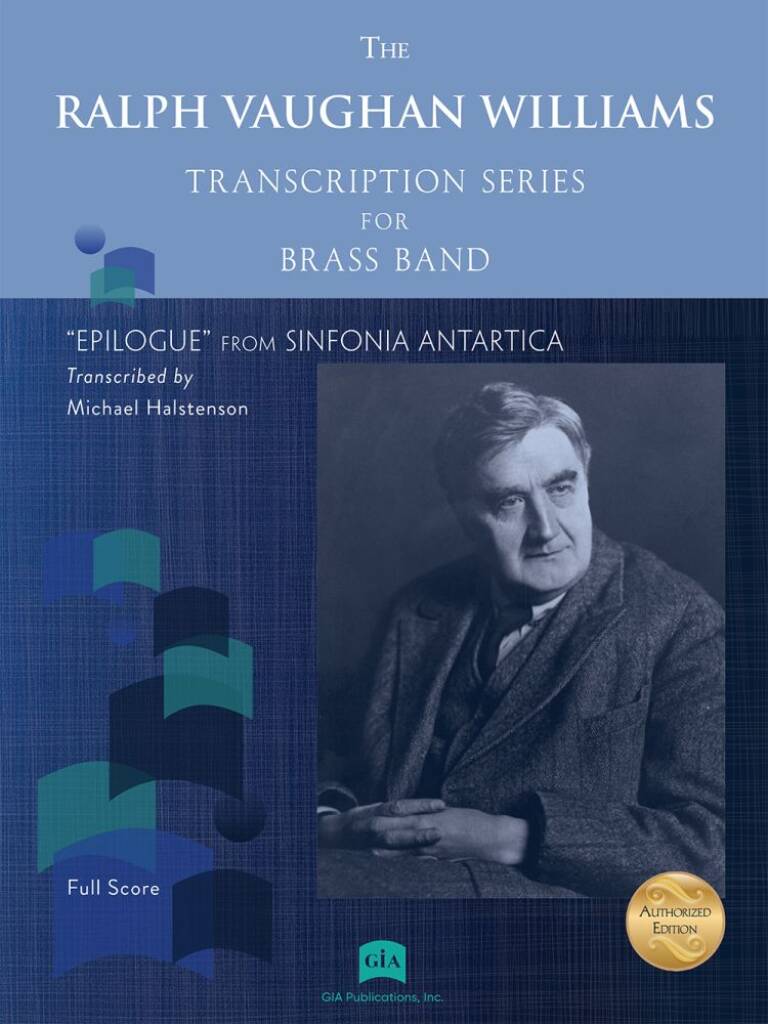
Epilogue from Sinfonia Antartica - Ralph Vaughan Williams - Michael Halstenson
In partnership with Oxford University Press and authorized by the Vaughan Williams Charitable Trust, this major new initiative brings the incredible catalog of Ralph Vaughan Williams to the wind band community, with scholarly transcriptions by leaders in wind band composition. As the name suggests, all titles in the Brass Band Series are scored for brass ensemble and may also include perucssion parts.To view other titles in the series, visit www.giamusic.com/RVW.
Estimated dispatch 5-14 working days
 View Music