
Results
-
 £59.99
David of the White Rock (Brass Band - Score and Parts) - Sparke, Philip
This is an ancient Welsh air that was first published in Relics of the Welsh Bards in 1794. Dafydd (David) Owain was a famous Welsh bard who lived on a farm called Gareg Wen (The White Rock) in Eifionydd, Carnarnvonshire, North Wales. Tradition has it that on his deathbed he called for his harp and composed this lovely melody, requesting that it be played at his funeral. Accordingly, it was later played at the parish church of Ynys-Cynhaiarn. Lyrics were later added by Ceiriog Hughes, which describe the melody's inspiration. This version for brass band retains all the beauty and simplicity of the original.Duration: 2:45
Estimated dispatch 7-14 working days
-
 £59.99
In the Bleak Mid-Winter (Brass Band - Score and Parts) - Holst, Gustav - Sparke, Philip
Christina Rossetti wrote the words to this famous Christmas carol in 1872 in response to a request from the magazine Scribner's Monthly for a Christmas poem. They were set to music by Gustav Holst (1874-1934) for inclusion in the first edition (1906) of The English Hymnal, edited by his life-long friend, Ralph Vaughan Williams. Philip Sparke has carefully arranged the beautiful melody into this delightful version for brass band. A must for any Christmas concert.Duration: 3:30
Estimated dispatch 7-14 working days
-
 £69.99
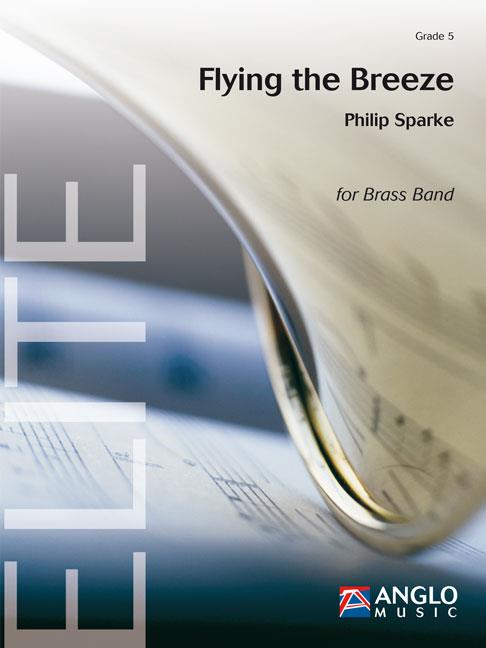
Flying the Breeze (Brass Band - Score and Parts) - Sparke, Philip
Flying the Breeze opens with three repeated B's (representing the initials of the Breeze Brass Band from Japan who commissioned this work). A short introduction leads to a robust theme from the baritones and euphoniums which is taken up by cornets and trombones. A restless bridge passage leads to a syncopated tune from the solo cornet and then to a third theme from a solo trombone. A graceful second subject leads back to a recall of the introductory material before a full-scale recapitulation. An intense allargando leads to a full-band version of the second subject under a running cornet passage, which leads to a short coda.Duration: 6:00
Estimated dispatch 7-14 working days
-
 £43.99
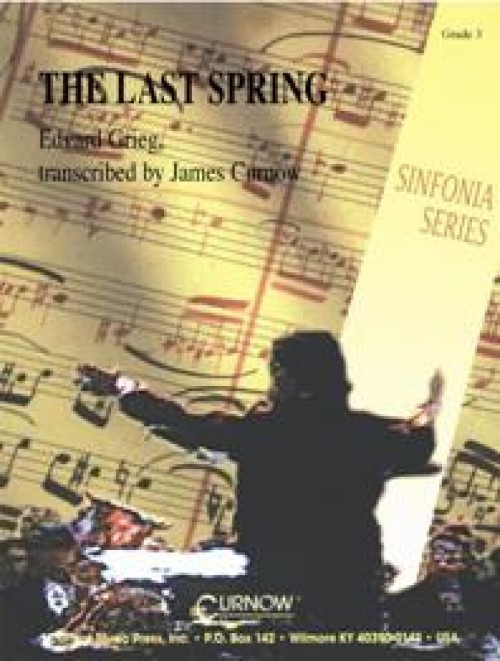
The Last Spring (Brass Band - Score and Parts) - Grieg, Edvard - Curnow, James
Edvard Grieg is probably the best known of all Norwegian composers. He was one of the most important figures during the nationalistic romantic period and his music always contained the essence of this beautiful Scandinavian country. The Last Spring comes from Two Elegiac Melodies for String Orchestra and this version for brass band retains all the beauty and solemnity of the original. Evoke the peaceful atmosphere of Grieg's native land with this beautiful haunting work.Duration: 4.30
Estimated dispatch 7-14 working days
-
 £60.99
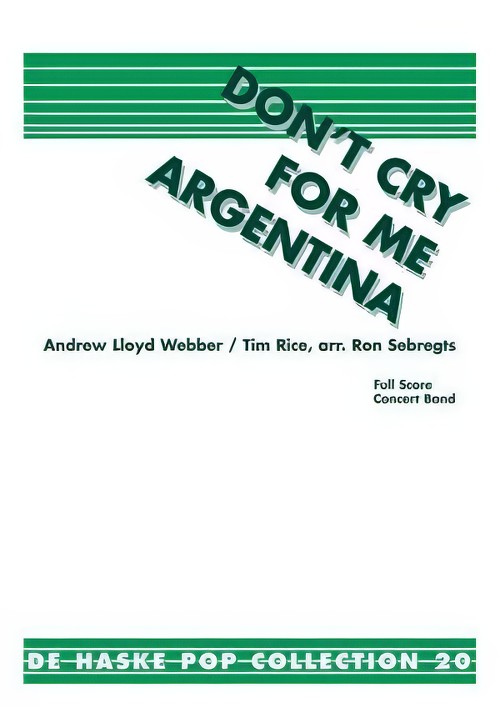
Don't Cry for Me Argentina (from Evita) (Brass Band - Score and Parts) - Lloyd Webber & Rice - Sebregts, Ron
Don't Cry for me Argentina is the best-known song from the 1976 musical Evita. It was sung by Eva Peron when she was addressing the crowds amassed in the square below her balcony. More recently it was a hit for Madonna, who sang it in the 1996 film version of Evita. This arrangement for brass band retains the broad emotive melody of the original together with its intense emotion.Duration: 4:45
Estimated dispatch 7-14 working days
-
 £47.50
Silent Night (Brass Band - Score and Parts) - Gruber, Franz - Gordon, William
Austrian composer and organist Franz Xaver Gruber composed the original version of this Christmas work in 1818. It is probably one of the most famous of all Christmas carols and should not be missed from any Christmas concert. American composer William Gordon has produced this arrangement for brass band.Duration: 4.45
Estimated dispatch 7-14 working days
-
 £60.99
Washington Grays (Brass Band - Score and Parts) - Grafulla, Claudio S. - Curnow, James
Claudio S Grafulla was born on the Spanish island of Minorca in 1818 and emigrated to the United States in 1838. Although he was a composer of many original works, the one that is still regarded as one of the finest marches ever written is his Washington Grays March. This arrangement strives to recreate the original lost version written for an American Civil War brass band.
Estimated dispatch 7-14 working days
-
 £40.00
Bolero (Brass Band - Score and Parts) - Ravel, Maurice - Littlemore, Phillip
Ravel's one-movement orchestral piece?Bolero?was written in 1928. It epitomises Ravel's preoccupation with restyling and reinventing dance movements. It was also one of the last pieces he composed before illness forced him into retirement. The original version has a duration of between 15 and 18 minutes, depending on the tempo set by the conductor. This brass band arrangement is significantly shorter, lasting a mere 4 minutes or so. There is also an 'extra' ending, first used in the musical sensation?Blast! which almost guarantees addtional applause at a concert! Duration: 4:30
Estimated dispatch 7-14 working days
-
 £60.99
Cantique de Noel (Brass Band - Score and Parts)
The French composer Adolphe Charles Adam's (1803- 1856) carol Cantique de No?l (better known in France as Minuit, Chr?tiens, and also widely known as O Holy Night) was initially criticised by church authorities who observed a lack of musical taste and the absence of religious perception. How wrong they were is now clear as the song is popular worldwide and is often performed in churches as well as carol concerts. Roland Kernen has produced this beautiful version of Cantique de No?l for brass band. 03:45
Estimated dispatch 7-14 working days
-
 £59.99
GOOD VIBRATIONS (Brass Band) - Wilson, Brian - Campbell, Don
The pop song Good Vibrations, which appeared as a single in 1966, is one of the most celebrated hits of The Beach Boys. The piece, composed and produced by Brian Wilson, has been called a mini symphony. Various covers versions have been made, including a marvellous a cappella version by the King's Singers. This arrangement for brass band, written by Don Campbell, is just as delightful as the original. Duration: 3:40.
Estimated dispatch 7-14 working days
 View Music