
Results
-
 £74.95
Eden (Score and Parts)
This work was commissioned by the Brass Band Heritage Trust as the test piece for the final of the 2005 Besson National Brass Band Championship, held at the Royal Albert Hall, London.The score is prefaced by the final lines from Milton's epic poem Paradise Lost (completed in 1663), in which Adam and Eve, expelled from Paradise, make their uncertain way into the outside world:"...The world was all before them, where to chooseTheir place of rest, and providence their guide:They hand in hand with wandering steps and slow,Through Eden took their solitary way."My work is in three linked sections. In the first, the characters of Adam, Eve and the serpent guarding the Tree of Knowledge are respectively represented by solo euphonium, cornet and trombone. The music opens in an idyllic and tranquil mood and leads into a duet between euphonium and cornet. Throughout this passage the prevailing mood darkens, though the soloists seem to remain oblivious to the increasingly fraught atmosphere. A whip-crack announces the malevolent appearance of the solo trombone who proceeds to engage the solo cornet in a sinister dialogue.The second section interprets the Eden story as a modern metaphor for the havoc mankind has inflicted upon the world, exploiting and abusing its resources in the pursuit of wealth. Though certainly intended here as a comment on the present-day, it is by no means a new idea: Milton himself had an almost prescient awareness of it in Book I of his poem, where men, led on by Mammon:"...Ransacked the centre and with impious handsRifled the bowels of their mother earthFor treasures better hid. Soon had his crewOpened into the hill a spacious woundAnd digged out ribs of gold."So this section is fast and violent, at times almost manic in its destructive energy. At length a furious climax subsides and a tolling bell ushers in the third and final section.This final part is slow, beginning with an intense lament featuring solos for tenor-horn, flgel-horn and repiano cornet and joined later by solo baritone, soprano cornet, Eb-bass and Bb-bass.At one stage in the planning of the work it seemed likely that the music would end here - in despair. Then, mid-way through writing it, I visited the extraordinary Eden Project in Cornwall. Here, in a disused quarry - a huge man-made wound in the earth - immense biomes, containing an abundance of plant species from every region of the globe, together with an inspirational education programme, perhaps offer a small ray of hope for the future. This is the image behind the work's conclusion and the optimism it aims to express is real enough, though it is hard-won and challenged to the last.John Pickard 2005
Estimated dispatch 7-14 working days
-
 £29.50
Eden (Score Only)
This work was commissioned by the Brass Band Heritage Trust as the test piece for the final of the 2005 Besson National Brass Band Championship, held at the Royal Albert Hall, London.The score is prefaced by the final lines from Milton's epic poem Paradise Lost (completed in 1663), in which Adam and Eve, expelled from Paradise, make their uncertain way into the outside world:"...The world was all before them, where to chooseTheir place of rest, and providence their guide:They hand in hand with wandering steps and slow,Through Eden took their solitary way."My work is in three linked sections. In the first, the characters of Adam, Eve and the serpent guarding the Tree of Knowledge are respectively represented by solo euphonium, cornet and trombone. The music opens in an idyllic and tranquil mood and leads into a duet between euphonium and cornet. Throughout this passage the prevailing mood darkens, though the soloists seem to remain oblivious to the increasingly fraught atmosphere. A whip-crack announces the malevolent appearance of the solo trombone who proceeds to engage the solo cornet in a sinister dialogue.The second section interprets the Eden story as a modern metaphor for the havoc mankind has inflicted upon the world, exploiting and abusing its resources in the pursuit of wealth. Though certainly intended here as a comment on the present-day, it is by no means a new idea: Milton himself had an almost prescient awareness of it in Book I of his poem, where men, led on by Mammon:"...Ransacked the centre and with impious handsRifled the bowels of their mother earthFor treasures better hid. Soon had his crewOpened into the hill a spacious woundAnd digged out ribs of gold."So this section is fast and violent, at times almost manic in its destructive energy. At length a furious climax subsides and a tolling bell ushers in the third and final section.This final part is slow, beginning with an intense lament featuring solos for tenor-horn, flgel-horn and repiano cornet and joined later by solo baritone, soprano cornet, Eb-bass and Bb-bass.At one stage in the planning of the work it seemed likely that the music would end here - in despair. Then, mid-way through writing it, I visited the extraordinary Eden Project in Cornwall. Here, in a disused quarry - a huge man-made wound in the earth - immense biomes, containing an abundance of plant species from every region of the globe, together with an inspirational education programme, perhaps offer a small ray of hope for the future. This is the image behind the work's conclusion and the optimism it aims to express is real enough, though it is hard-won and challenged to the last.John Pickard 2005
Estimated dispatch 7-14 working days
-
 £10.00
Swedish Festival Music (Study Score)
This three-movement suite was commissioned by the Swedish Brass Band Association as the test piece for the Championship Section of their 2008 National Contest. The first movement is inspired by the magnificent Swedish hymn 'How Great Thou Art'. Indeed the influence of that hymn can be traced in all three movements. The declamatory style of the opening gives way to other, more reflective expressions of awe and wonder. A more animated section develops before a final, triumphant statement of the 'How Great' idea returns to finish the movement. The slow second movement features another much-loved Swedish hymn. The music provides plenty of scope for expressive playing, and a feeling of intimacy should be created by the use of several short solo passages. The third movement Allegro brings a totally different, dance-like mood with frequent references to a reel from the region of Uppland. This eventually brings a return to the opening subject and a final, triumphant reference to 'How Great Thou Art'.
Estimated dispatch 7-14 working days
-
 £40.87
A Carol Rhapsody (Brass Band) Geoffrey Nobes
Capture the mystery, wonder, and joy of the festive season with A Carol Rhapsody (Geoffrey Nobes). This dynamic and brilliantly orchestrated medley weaves together a selection of much-loved Christmas carols, balancing timeless audience favorites with beautiful, lesser-known melodies. Perfect as a centerpiece or finale for your festive concert, this rhapsody provides an engaging musical journey that highlights the full tonal palette of your band.Thoughtfully scored with accessible range demands, standard time signatures, and comfortable keys, A Carol Rhapsody is exceptionally approachable. It serves as an ideal performance piece for 4th Section bands and above, as well as Youth and Training Bands looking for a rich, full-sounding festive work. Higher-section bands will also appreciate its quick rehearsal turn-around during a busy Christmas season.The Musical JourneyAtmospheric Opening: The piece begins with an evocative introduction, featuring subtle echoes of Coventry Carol and Hark, the Herald Angels Sing.Rhythmic & Bright: The tempo shifts into a lively rendition of the old French folk carol O Leave Your Sheep, cleverly interwoven with motifs from Joy to the World and the sweeping refrain of Angels from the Realms of Glory.A Lush, Lyrical Heart: The centerpiece of the work is an extended, beautifully textured setting of another French folk carol, Whence Is That Goodly Fragrance. This section serves as a wonderful showcase, passing the melody throughout various sections of the ensemble in turn.Triumphant Finale: The pacing accelerates into a joyful romp through the traditional English carol I Saw Three Ships Come Sailing in. Excitement builds through a series of key changes, weaving several themes together before culminating in a triumphant Glory to the New-born King - complete with the ringing bells of Ding, Dong! Merrily on High echoing across the band.To view a rolling score video of this piece please visit www.youtube.com/watch?v=hYehd0CGaA8Duration: approx. 6.30 minutesDifficulty Level: 4th Section +This PDF download includes the full score and parts.Sheet music available at www.brassband.co.uk (UK) or https://satradecentral.org (USA)Instrumentation:Soprano Cornet EbSolo Cornet Bb1st Cornet Bb2nd Cornet BbFlugel Horn BbSolo Horn Eb1st Horn Eb2nd Horn Eb1st Baritone Bb2nd Baritone Bb1st Trombone Bb2nd Trombone BbBass TromboneEuphonium BbBass EbBass BbPercussion 1-3
In Stock: Estimated dispatch 1-3 working days
-
 £33.43
A Christmas Canon (Brass Band) Traditional arr. William Gordon
Seamlessly merging the traditional English carol The First Nowell with Johann Pachelbel's beloved Canon in D, A Christmas Canon is a captivating arrangement designed to bring rich texture and emotional depth to your band's winter concert repertoire.Suitable for intermediate to advanced bands, the piece opens Adagio sostenuto with a gently rolling, scalic ostinato in the euphonium and lower brass, establishing the unmistakable harmonic ground bass of Pachelbel's masterpiece. Over this foundation, expressive solo lines in the flugel and horns gracefully weave the familiar melody of The First Nowell into the texture.As the arrangement unfolds, the scoring gradually builds density and counterpoint. Intricate muted cornet passages give way to flowing arpeggios, bell-like glockenspiel accents, and cascading lines across the band, driving a gradual crescendo into a rich, full-ensemble statement of the carol theme.The work reaches its dramatic climax at an expanded Allargando section, where the full band, supported by percussion, delivers a majestic, fortissimo declaration of the melody before resolving into a warm, lingering final chord.To view a rolling score video of the Amsterdam Staff Band performing this piece please visit: www.youtube.com/watch?v=dr9hMLhAvRMDifficulty Level: 3rd Section +Duration: 3.30 minutesThis PDF download includes the full score and parts.Sheet music available at www.brassband.co.uk (UK) or https://satradecentral.org (USA)Instrumentation:Soprano Cornet EbSolo Cornet Bb1st Cornet Bb2nd Cornet BbFlugel Horn BbSolo Horn Eb1st Horn Eb2nd Horn Eb1st Baritone Bb2nd Baritone Bb1st Trombone Bb2nd Trombone BbBass TromboneEuphonium BbBass EbBass BbTimpaniPercussion 1-2
In Stock: Estimated dispatch 1-3 working days
-
 £48.30
Peace in Our Time (Brass Band) Andrew Wainwright
Commissioned by Armonico Consort to mark the 85th anniversary of the Coventry Blitz, Peace in Our Time is a profoundly moving reflection on humanity's enduring quest for reconciliation amidst turmoil. Originally scored for choir, orchestra, and organ, this masterful brass band transcription beautifully captures the emotional weight of John Oxenham's evocative poetry and the timeless plea of Psalm 122.The work opens in hushed reverence, where distant muted cornets, a dark bass pedal, and a fragile, militaristic snare drum set a shadowed, contemplative scene. Out of this delicate landscape emerges a poignant cornet solo that yields to the expressive voice of the solo flugel horn, carrying the opening text with quiet conviction before introducing the solemn reminder: "O pray for peace, peace in Jerusalem."As the piece progresses, the setting turns darker and more restless. Harmonic tension builds through rich brass textures to reflect the fears, divisions, and heavy costs of historical and modern conflict.From this emotional turbulence rises a bold, ceremonial fanfare that marks a dramatic turning point, ushering in a glorious, expansive setting of the poem's final verse. Yet rather than ending in simple triumph, the music gently recedes into a serene and tender stillness. The final bars leave performers and audiences alike with a quiet, lingering echo - a persistent hope for peace that resonates just as deeply today as it did 85 years ago.This substantial work is an extraordinary addition to any brass band library, serving as an ideal centerpiece for Remembrance Sunday, historical commemorations, church services or serious concert programming.To view a multimedia presentation of the piece with audio please visit www.youtube.com/watch?v=Y2BKI_GCegwThe multimedia presentation is available on request withe purchase of this work - please email [email protected] to receive a link to download it.To view a video performance of the original work for choir, orchestra and organ please visit www.youtube.com/watch?v=m6o6PJJVKCoDuration: approx. 8.45 minutesDifficulty Level: 2nd Section +This PDF download includes the full score and parts.Sheet music available at www.brassband.co.uk (UK) or https://satradecentral.org (USA)Instrumentation:Soprano Cornet EbSolo Cornet BbRepiano Cornet Bb2nd Cornet Bb3rd Cornet BbFlugel Horn BbSolo Horn Eb1st Horn Eb2nd Horn Eb1st Baritone Bb2nd Baritone Bb1st Trombone Bb2nd Trombone BbBass TromboneEuphonium BbBass EbBass BbTimpaniPercussion 1-2
In Stock: Estimated dispatch 1-3 working days
-
 £37.15
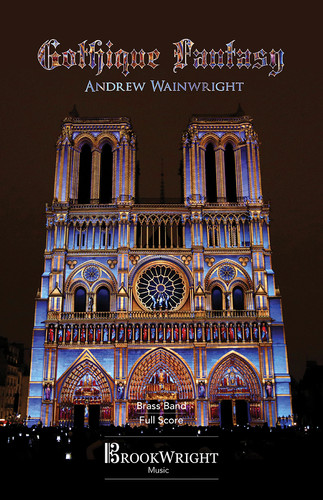
Gothique Fantasy - On a theme by Boellmann (Brass Band Score) Andrew Wainwright
This magnificent work was commissioned by The Illinois Brass Band for the 2024 North American Brass Band Championships. It is also the title track of the 2026 CD by Black Dyke Band, featuring the music of Andrew Wainwright. Please note this PDF download is for the full score. The full set can be purchased here.Based on Leon Boellmann's epic organ work Suite Gothique, the 3rd movement of which is entitled Priere a Notre-Dame (A Prayer for Notre Dame), it pays tribute to the nearly 700-year-old Notre-Dame de Paris after the fire which did so much damage to this iconic building.Notre-Dame stands out for its three pipe organs (one historic) and its immense church bells, which are referenced at various times in Gothique Fantasy. Two of the other movements from Boellmann's work also provide inspiration for the piece, firstly the Introduction - Choral, and the famous Toccata, snippets of which appear at various times in the piece.Gothique Fantasy opens with the Choral, a solo offstage cornet sounding the opening statement. A quintet, stood to the side of the stage, takes up the Choral, while the rest of the band enters on held muted notes, creating a sustained effect evoking the harmonies spreading across the vast cathedral. Colossal organ-like sounds announce themselves as the full band takes on the theme.A lively Animato follows. Here there are continued references to the Choral, while the famous Toccata motif starts to appear.A Misterioso section ensues, which leads into a poignant Prayer for Notre Dame featuring a euphonium duet, where the music reflects upon the devasting fire and centuries of history and artefacts that were lost. A lone euphonium the sounds, representing the remaining remnants of the cathedral.A chaotic and rhythmic Presto, based on the Toccata, then follows and tests the technique of the band from top to bottom, whilst moving through various time signatures, the pulse lacking any sense of stability. A return to the Choral theme leads into a further reflective section, this time featuring the secondary theme from the Toccata with a flugel and solo horn duet.Next the music arrives at an aleatory section (Senza Misura), which depicts the remnants of the fire, followed by the grand cathedral emerging out of the ashes. Various motifs from earlier in the piece are heard across the band. At this point, various parts enter at different times on the conductor's signal, before building towards a 6/8 Presto. Here the music gathers momentum as it leads to a Grandioso finale featuring the Choral in all its glory. However, to conclude the work, the final strains of the Toccata sound, bringing the work to a glorious conclusion as Notre-Dame rises again!To view a video of The Illinois Brass Band performing the work please visit www.youtube.com/watch?v=xG3JB6Ye5aUDuration: 15.00 minutes approx.Difficulty Level: Championship SectionSheet music available from www.brassband.co.ukInstrumentation:Soprano Cornet EbSolo Cornet BbRepiano Cornet Bb2nd Cornet Bb3rd Cornet BbFlugel Horn BbSolo Horn Eb1st Horn Eb2nd Horn Eb1st Baritone Bb2nd Baritone Bb1st Trombone Bb2nd Trombone BbBass TromboneEuphonium BbBass EbBass BbPercussion 1-4
In Stock: Estimated dispatch 1-3 working days
-
 £48.30
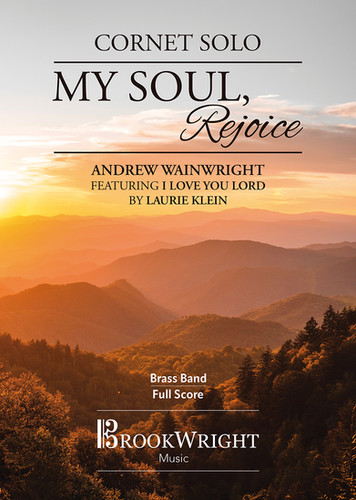
My soul, rejoice (Cornet Solo with Brass Band) Andrew Wainwright
My soul, rejoice (Andrew Wainwright) was commissioned in 2022 by Elizabeth Malovance, principal cornet of the Chicago Staff Band. A spirited and celebratory work, it is designed to showcase the dual nature of the cornet: its sparkling technical agility and its rich, vocal lyricism. The music begins in meditative fashion before transitioning into a joyful caprice featuring playful syncopations which are handed around the band. This is followed by a reflective section based on the much-loved worship song I love you Lord by Laurie Klein.The work concludes with a reprise of the original theme, building in momentum and intensity. Through a series of brilliant runs and virtuosic flourishes, the soloist leads the charge toward a majestic and triumphant finale, bringing the work to a ringing, glorious close.The solo was recorded by Richard Marshall on the 2026 CD Gothique Fantasy - The Music of Andrew Wainwright, which was his last solo recording of his 20-year tenure as principal cornet of Black Dyke Band.Technical Requirements & Electroacoustic IntegrationThis work features an optional digital delay effect for the soloist, indicated in the score by "pedal on" and "pedal off" markings. If the required equipment is unavailable, the piece can be performed entirely acoustically.To listen to Beth Malovance performing the work with the Chicago Staff Band please visit https://on.soundcloud.com/c8IoU3CF3srTD4z0wXDuration: approx. 8 minutesDifficulty Level (Band): 2nd Section +Soloist: AdvancedThis PDF download includes the full score and parts.Sheet music available at www.brassband.co.uk (UK) or https://satradecentral.org (USA)Instrumentation:Soprano Cornet EbSolo Cornet Bb1st Cornet Bb2nd Cornet BbFlugel Horn BbSolo Horn Eb1st Horn Eb2nd Horn Eb1st Baritone Bb2nd Baritone Bb1st Trombone Bb2nd Trombone BbBass TromboneEuphonium BbBass EbBass BbTimpani & Bass DrumPercussion 1-3
In Stock: Estimated dispatch 1-3 working days
-
 £33.43
Classical Concert! (Brass Band) Various arr. Alex Scaife McGee
Classical Concert! by Alex Scaife McGee is a high-energy concert medley that celebrates the enduring appeal of the classical canon while paying tribute to the legendary Harold Walters, whose Instant Concert and Hootenanny set the standard for this exciting style of programming.Drawing on some of the most recognisable themes in classical music, this arrangement weaves familiar melodies into a fast-paced, audience-pleasing showcase. The journey begins with the unmistakable excitement of Rossini's William Tell Overture, flowing seamlessly into Bizet's Carmen Overture. The intensity builds with Grieg's In the Hall of the Mountain King before lifting into the brightness of Vivaldi's Spring.Momentum continues through a thrilling sequence featuring Beethoven's Ode to Joy from Symphony No. 9, the dramatic fate theme from Tchaikovsky's Symphony No. 5, and the majestic power of Saint-Saens's Organ Symphony. A triumphant statement from Handel's Hallelujah Chorus sets the stage for rapid-fire appearances by Mozart's Horn Concerto No. 3 and Tchaikovsky's Swan Lake.The medley concludes with two crowd-favorite finales: Rossini's The Barber of Seville and the rousing, cannon-ready excitement of Tchaikovsky's 1812 Overture.Ideal for concerts, entertainment contests, and audience outreach, Classical Concert! delivers non-stop excitement, instant recognition, and a joyful celebration of classical music at its most entertaining.To view a rolling score video please visit www.youtube.com/watch?v=gIqvoA1Rh40Duration: Approx. 4.00 minutesDifficulty Level: 2nd Section +This PDF download includes the full score and parts.Sheet music available at www.brassband.co.uk (UK) or https://satradecentral.org (USA)Instrumentation:Soprano Cornet EbSolo Cornet BbRepiano Cornet Bb2nd Cornet Bb3rd Cornet BbFlugel Horn BbSolo Horn Eb1st Horn Eb2nd Horn Eb1st Baritone Bb2nd Baritone Bb1st Trombone Bb2nd Trombone BbBass TromboneEuphonium BbBass EbBass BbTimpaniDrum KitPercussion
In Stock: Estimated dispatch 1-3 working days
-
 £33.43
Les Chasseresses from 'Sylvia' (Brass Band) Delibes arr. Rob Bushnell
Clement Philibert Leo Delibes was a French composer, best known for his ballets and operas, including works such as Lakme (with its famous "Flower Duet"), Coppelia and Sylvia (both key works in the development of modern ballet). The latter started as a play, Aminta, by the Italian poet Torquato Tasso, which Delibes set to music. It was then adapted for the Paris Opera with rehearsals starting in August 1875. The premiere took place on 14 June 1876 and was the first ballet to be shown at the newly-built Opera Garnier. Whilst the scenery and costumes were created by top artists and designers (Cheret and Lacoste), it was Delibes's music that shown thrown, being said to have saved the production, preventing the ballet from drifting into obscurity.Sylvia is said to be one of the first modern ballets, with Tchaikovsky remarking to composer Sergei Taneyev upon its ingenuity: "... the first ballet, where the music constitutes not only the main, but the only interest. What charm, what elegance, what richness of melody, rhythm, harmony." Although Swan Lake, a contemporary to Sylvia, is considered one of the best ballets there is, Tchaikovsky preferred Sylvia to his own work, saying Swan Lake was "poor stuff in comparison". Tchaikovsky said to Taneyev, "I was ashamed. If I had known this music early then, of course, I would not have written Swan Lake". The music to Sylvia, rather than setting only the mood, also sets the action and is noted for its use of leitmotifs - Delibes was an admirer of Wagner - and more dominant use of brass and wind. The most famous piece from this ballet is the Pizzicati in the third act.Act I of the ballet takes place in sacred wood, where creatures are worshipping before Eros when Sylvia arrives with her huntresses to mock the god of love. Aminta, a lowly shepherd and infatuated with Sylvia, protects the deity and Sylvia is wounded by Eros's arrow. The hunter Orion kidnaps Sylvia, whilst Eros revives Aminta. Act II takes place in Orion's Island cave, where Sylvia tries to bribe Orion with jewels and wine. Unsuccessful, she appeals to Eros for help, who arrives and takes her to the temple of Diana (where the final act takes place). Orion and Aminta fight, Sylvia and Orion cause the goddess of the hunt, Diana, to be outraged, smiting Orion and denying the love of Aminta and Sylvia. Eros shows Diana a vision, which changes her mind and the couple finally come together.This brilliant and lively fanfare that introduces the huntresses in the first act is arranged here for the UK-style brass band, with alternative parts for horns in F and bass-clef lower brass. The piece has been lowered by a tone compared to the original.A recording of the original composition can be found here https://youtu.be/6yoGrUH38PI?si=0L0bFa1qXnYNvkR3Duration: Approx. 3.10 minutesDifficulty Level: 1st Section +This PDF download includes the full score and parts. Includes alternative parts for soloist in Eb, horns in F and lower brass in bass clef.Sheet music available at www.brassband.co.uk (UK) or https://satradecentral.org (USA)Instrumentation:Soprano Cornet EbSolo Cornet BbRepiano Cornet Bb2nd Cornet Bb3rd Cornet BbFlugel Horn BbSolo Horn Eb1st Horn Eb2nd Horn Eb1st Baritone Bb2nd Baritone Bb1st Trombone Bb2nd Trombone BbBass TromboneEuphonium BbBass EbBass BbTimpaniPercussion - Triangle, Cymbal & Bass Drum
In Stock: Estimated dispatch 1-3 working days