
Results
-
 £37.50
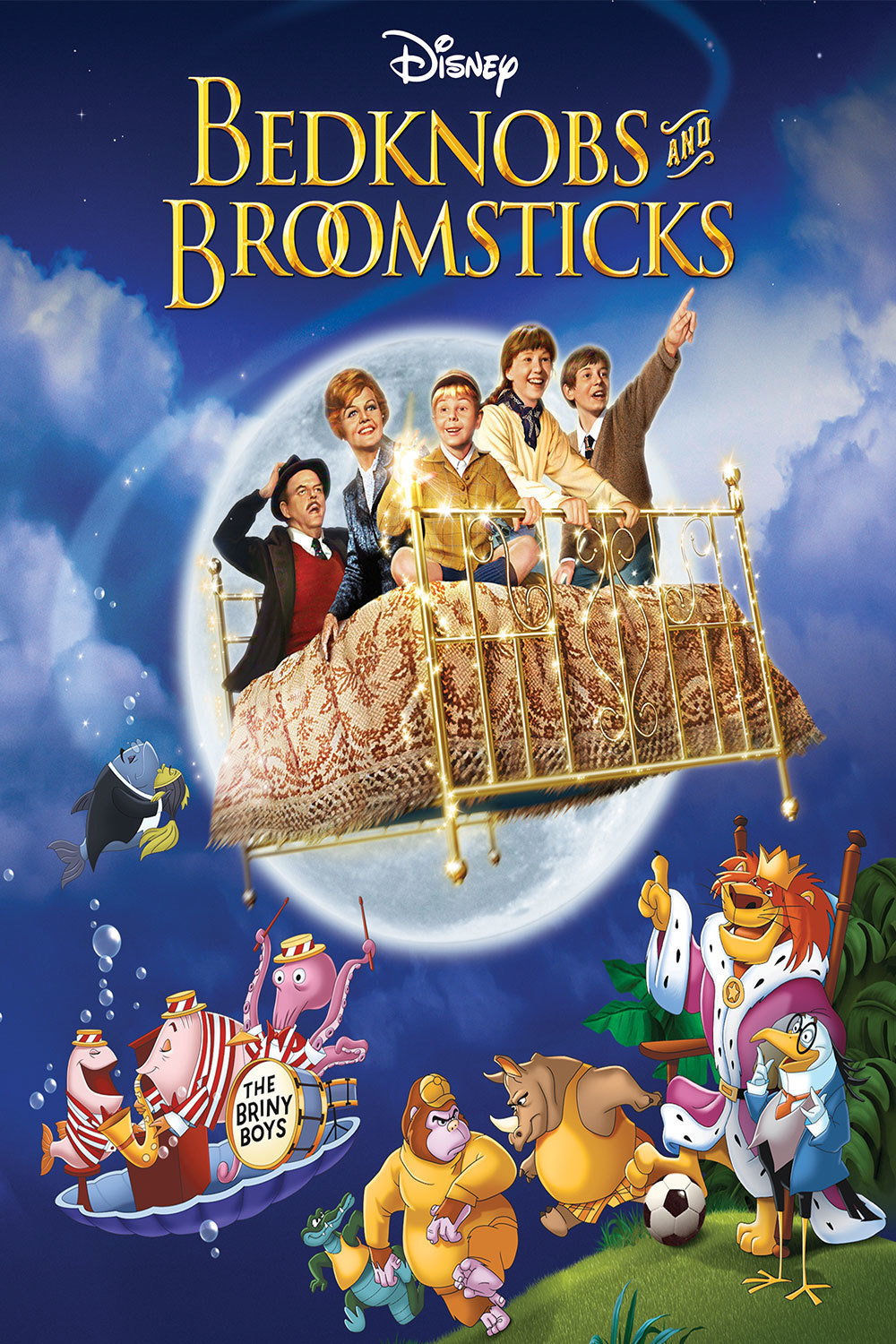
Bedknobs & Broomsticks - Sherman & Sherman - Gavin Somerset
After the success of Mary Popping in 1964, Disney once again had a hit on their hands seven years later with the release of 'Bedknobs & Broomsticks'. Set in 1940, the film told the story of Eglantine Price, a spinster who was learning the ways of witchcraft to help Britain with the War effort. Richard & Robert Sherman provided another excellent score, with memorable songs that now for the first time, are available for Brass Band. This toe-tapping new work features The Old Home Guard, The Age of Not Believing, Portabello Road and, The Beautiful Briny Sea (with added bubbles!). Audiences of all ages will appreciation this title and is a great addition to any concert programme. Whilst rehearsals are suspended due to Covid-19, we are making some parts available to download FREE for home use and practice, alongside a downloadable backing track to play along to. To download the Solo Cornet part, please CLICK HERE . To download the Solo Horn part, please CLICK HERE . To download the Solo Euphonium part, please CLICK HERE . To download the Eb Bass part, please CLICK HERE . To download the playback audio to play along to, please RIGHT CLICK HERE & Save As .
In Stock: Estimated dispatch 1-3 working days
-
£24.50
Triumphant - Bill Willis
TriumphantThis is a bright concert march in a traditional style and should pose no problems for the majority of bands.The first half of the march moves between the related keys of A min and C majThe march starts with a bold opening 2 bar statement in A min. At B the rhythm from the middle of the band should not be allowed to slow the pace of the march. C sees a majestic bass melody from Baritones downwards moving to D where a repeat of the original theme is presented before moving to the TRIO section. This moves between the related keys of F maj and D min. The melody heard at E is repeated at G with a florid counter-melody heard from 1st Baritone and Euphonium leading to the finish.
In Stock: Estimated dispatch 1-3 working days
-
£24.50
Mallyan - Alan Beaumont
Mallyan is an area in Gaothland (Heartbeat Country) and at the bottom of a lovely walk is a 70ft waterfall called Mallyan Fall. This is a standard 6/8 march with a bass solo in 2/4 time.
In Stock: Estimated dispatch 1-3 working days
-
£29.50
Busy Line - Murry Semos - Gavin Somerset
Originally a hit for Rose Murphy before being re-recorded by Peter Skellern on his 1982 album "A String Of Pearls", this arrangement is based on the Skellern recording which has a 'trad-jazz' feel throughout. The piece gives your band a chance to show off the soloists, including solo cornet, flugel, solo horn, solo trombone & bass section (however an optional cut is included which removes the soloists section). You may also remember the piece from the BT television adverts in 1990 with its unique use of the 'brr brr brr' sound! If you're looking for something new and entertaining for your concert program this year, look no further!
In Stock: Estimated dispatch 1-3 working days
-
£24.50
RONDO from "ABDELAZAR" - Henry Purcell - Wilfried Weiland
Used as the opening theme from Britten's 'Young Person's Guide to the Orchestra', The RONDO is part of the ABELAZAR-Suite which the English composer Henry Purcell wrote for the drama of the same name by Aphra Behn in 1695. This is a 6-piece arrangement for 2 cornets/trumpets, horn/flugel , baritone/trombone, euphonium and bass with timpani and drumset accompaniment.
In Stock: Estimated dispatch 1-3 working days
-
£24.50
Panis Angelicus - Franck - Stephen Tighe
Arranged as a Soprano Solo, this is possibly the most famous song that Cesar Franck every composed. This soothing piece has been recorded by everyone from Luciano Pavarotti to Charlotte Church. Composed in 1872, originally for Organ, Harp, Cello, Double Bass and Tenor Voice, the piece was later interpolated into a 3 voice mass. A popular piece for any concert occasion
In Stock: Estimated dispatch 1-3 working days
-
 £199.95
Tunes and Toasts for all Times (Brass Band Value Set) - Barsotti, Roger
Brass Band set includes:Eb Soprano Cornet x1Solo Bb Cornet x4Repiano Bb Cornet x12nd Bb Cornet x23rd Bb cornet x2Bb Flugel Horn x1Solo Eb Horn x11st Eb Horn x12nd Eb Horn x11st Bb Baritone x12nd Bb Baritone x11st Bb Trombone (TC) x12nd Bb Trombone (TC) x1Bass Trombone x1Bb Euphonium (TC) x2Eb Bass x2Bb Bass x2The Piano Conductor Score and Drums are available separately.Titles:ENGLISH AIRSA fine old English GentlemanA-hunting we will goBritish GrenadiersCherry ripeClementineCome, lassies and ladsDrink to me onlyDulce DomumDrunken sailor (The)For he's a jolly good fellowFarmer's boy (The)Floral DanceFrothblowers' AnthemGirl I left behind me (The)Here's a health to all good ladiesHere's a health unto her MajestyHere's to the maidenJohn PeelKeel row (The)Love's old sweet songMarch of the Fire BrigadesMistletoe bough (The)On Ilkla MoorPrincess Royal's Red Cross marchRoast beef of old EnglandSir Roger de CoverleySee the conquering hero comesSoldiers of the QueenThere is a tavern in the townNAUTICALHeart of oakHornpipeLife on the ocean waveShenandoahRed, white and blue (The)Rule, BritanniaSCOTTISH AIRSAnnie LaurieAuld lang syneBonnie banks of LochBonnie DundeeBlue-bells of ScotlandCampbells are coming (The)Charlie is my darlingFlowers of the forestHundred pipers (The)Highland LaddieRobin AdairScotch ReelScots wha haeWill ye no come back againYe banks and braesIRISH AIRSCome back to ErinDanny boy (Londonderry air)Harp that once through Tara's hallIrish Washerwoman (The)KillarneyMinstrel boy (The)Oft in the stilly nightOff to PhiladelphiaSt. Patrick's DayWELSH AIRSAll through the nightAsh grove (The)Bells of AberdoveyDavid of the white rockLand of my fathersMen of HarlechAMERICAN AIRSCarry me back to old VirginnyDixieGood-night (shine, shine, moon)John Brown's bodyMarching thro' GeorgiaOld folks at home (The)Star Spangled BannerTramp, tramp, tramp, the boys are marchingWhen Johnny comes marching homeYankee doodleCANADA AlouetteMaple leaf (The)O CanadaAUSTRALIAWaltzing MatildaSACRED AIRS & CAROLS Abide with meEternal Father strong to saveO God our help in ages pastFirst Nowell (The)Good King WenceslasO come all ya faithfulWhile shepherds watchedJerusalemSupreme sacrifice (The)Dead march in SaulPARADES (All organisations)General saluteSlow march or troop "Scipio"Troop "May-blossom"FANFARES, etcDeclamatory No. 1Occasoinal Fanfare No. 2"Reveille""Retrear""Last Post"Galop from "Orpheus in the Underworld"God save the Queen (in B flat)God save the Queen (in F)
Estimated dispatch 7-14 working days
-
 £35.00
Humming Chorus (from Madam Butterfly) (Flugel Quartet with Brass Band - Score and Parts) - Puccini, Giacomo - Littlemore, Phillip
In Puccini's opera, Madam Butterfly, the Coro a bocca chiusa (Humming Chorus) is performed by an off-stage chorus which hums a wordless, melancholy tune, whilst Butterfly, her maid Suzuki, and her child begin the long wait for husband Pinkerton to return after many years away. As night falls, Suzuki and the child are soon asleep, but Butterfly keeps her vigil. This arrangement features four flugel horns, each of which plays into the bell of a bass whilst the bass player moves the valves - creating a unique humming sound. Puccini actually wrote five versions of the opera,?Madam Butterfly. After a disastrous premiere in early 1904, Puccini withdrew the opera and substantially rewrote it creating a very successful second version. However, he continued to tinker with the orchestration, not being satisfied until the fifth, and now standard, version dating from 1907.?Duration: 2:40
Estimated dispatch 7-14 working days
-
 £44.95
Princethorpe Variations (Brass Band - Score and Parts) - Downie, Kenneth
Colourful harmony, rhythmic flair and melodic invention are the hallmarks of this excellent set of variations by Kenneth Downie, based on the well known church tune, Princethorpe.This major work demonstrates the well-known characteristics of the composer: colourful harmony, rhythmic flair and melodic invention, all encapsulated in scoring which is engulfing both to players and listeners alike. Following a presentation of the theme there are five variations culminating in what can be described as either a finale or coda.Theme. The composer shows his originality in the harmonic sense of this introduction. Perhaps it could be suggested that over-indulgence of rubato may be a temptation to be avoided.Sections A to F. Relentless rhythmic drive is of paramount importance in this first variation. Conscientious observance of dynamics is of course an essential requirement in conveying the exciting quality of the music; there are moments of sudden contrast of which all will need to be aware. Moving between the time-signatures of 5/4 and 6/4 these sections are built from strong easily-identifiable fragments of the theme. These is a significant increase in temp at letter F which will further the exciting impact of the music.Sections G & H. In a pastorale style this short, gentle variation affords a contrast in style between the previous and succeeding ones. The gentle undulating character of the melodic lines is governed by the Allegretto grazioso directive.Sections I to M. Commencing two bars before letter I the music is now exuberant and the tempo and style is that of a march in compound time. In this exhilarating movement there are moments of contrast and indeed of delicacy which are a foil to the more energetic moments. Rhythmic control will be essential to maintain a consistent tempo. As elsewhere in the work, the percussion section will contribute much to the success of the performance there are bars where this section alone is heard and there are important entries for glockenspiel.Sections N & O. With emotional content this Adagio variation has the first two notes of the melody as its melodic impetus. Apart from just over two bars at O (where there is an interpolatory phrase from Cornets and Trombones), the melodic line is entrusted to the plaintive sounds of the horn section. Cornets and Trombones provide a change of tone colour at the beginning of section O. Under a poco rall, this very expressive variation is concluded; there is an important link supplied by Eb Bass.Sections P & Q. A lively march-tempo is launched immediately and these sections are in the nature of an introduction to the final variations. There is a quickening of pace at Q which assists the generation of excitement which should be an essential part of the performance. Solo Cornets introduce a melodic line at Q which anticipates the compound time of the following section.Sections R & S. The Solo Cornet theme of the previous section is now a contrapuntal line accompanying the theme tune. With an elongation of the notes in the melody, the conductor will need to call on the sustaining powers of the band and at no time should the interesting accompanying lines be allowed to detract from the sonorous presentation of the basic theme.Sections T, U & V. Following a poco rit, the finale begins at letter T with the directive, molto vivace. There is much detail to be rehearsed, not least being the dynamic contrasts which are encountered. As throughout the work, the listener should have no difficulty in identifying the thematic sources of the composer's music.
Estimated dispatch 7-14 working days
-
£22.50
Princethorpe Variations (Brass Band - Score only) - Downie, Kenneth
Colourful harmony, rhythmic flair and melodic invention are the hallmarks of this excellent set of variations by Kenneth Downie, based on the well known church tune, Princethorpe.This major work demonstrates the well-known characteristics of the composer: colourful harmony, rhythmic flair and melodic invention, all encapsulated in scoring which is engulfing both to players and listeners alike. Following a presentation of the theme there are five variations culminating in what can be described as either a finale or coda.Theme. The composer shows his originality in the harmonic sense of this introduction. Perhaps it could be suggested that over-indulgence of rubato may be a temptation to be avoided.Sections A to F. Relentless rhythmic drive is of paramount importance in this first variation. Conscientious observance of dynamics is of course an essential requirement in conveying the exciting quality of the music; there are moments of sudden contrast of which all will need to be aware. Moving between the time-signatures of 5/4 and 6/4 these sections are built from strong easily-identifiable fragments of the theme. These is a significant increase in temp at letter F which will further the exciting impact of the music.Sections G & H. In a pastorale style this short, gentle variation affords a contrast in style between the previous and succeeding ones. The gentle undulating character of the melodic lines is governed by the Allegretto grazioso directive.Sections I to M. Commencing two bars before letter I the music is now exuberant and the tempo and style is that of a march in compound time. In this exhilarating movement there are moments of contrast and indeed of delicacy which are a foil to the more energetic moments. Rhythmic control will be essential to maintain a consistent tempo. As elsewhere in the work, the percussion section will contribute much to the success of the performance there are bars where this section alone is heard and there are important entries for glockenspiel.Sections N & O. With emotional content this Adagio variation has the first two notes of the melody as its melodic impetus. Apart from just over two bars at O (where there is an interpolatory phrase from Cornets and Trombones), the melodic line is entrusted to the plaintive sounds of the horn section. Cornets and Trombones provide a change of tone colour at the beginning of section O. Under a poco rall, this very expressive variation is concluded; there is an important link supplied by Eb Bass.Sections P & Q. A lively march-tempo is launched immediately and these sections are in the nature of an introduction to the final variations. There is a quickening of pace at Q which assists the generation of excitement which should be an essential part of the performance. Solo Cornets introduce a melodic line at Q which anticipates the compound time of the following section.Sections R & S. The Solo Cornet theme of the previous section is now a contrapuntal line accompanying the theme tune. With an elongation of the notes in the melody, the conductor will need to call on the sustaining powers of the band and at no time should the interesting accompanying lines be allowed to detract from the sonorous presentation of the basic theme.Sections T, U & V. Following a poco rit, the finale begins at letter T with the directive, molto vivace. There is much detail to be rehearsed, not least being the dynamic contrasts which are encountered. As throughout the work, the listener should have no difficulty in identifying the thematic sources of the composer's music.
Estimated dispatch 7-14 working days
 View Music
 Listen to MP3