
Results
-
 £59.95
A Moorside Suite (Holst) - Brass Band Score & Parts
A MOORSIDE SUITE (Brass Band Set)
In Stock: Estimated dispatch 3-5 working days
-
 £30.00
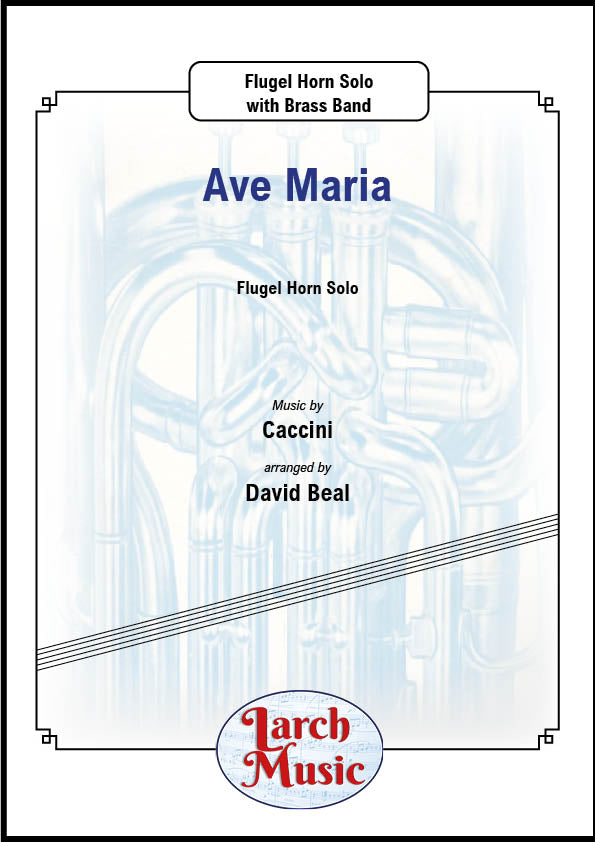
Ave Maria (Caccini arr. by David Beal) - Flugel Horn & Brass Band Sheet Music Full Score & Parts - LM002 - Caccini - David Beal
COMPOSER: CacciniARRANGER: David BealBrass Band Sheet Music Full Score & PartsA delightful arrangement of this timeless classic.The haunting melody arranged here for flugel hornLM002 - ISMN : 9790570000029
In Stock: Estimated dispatch 3-5 working days
-
 £30.00
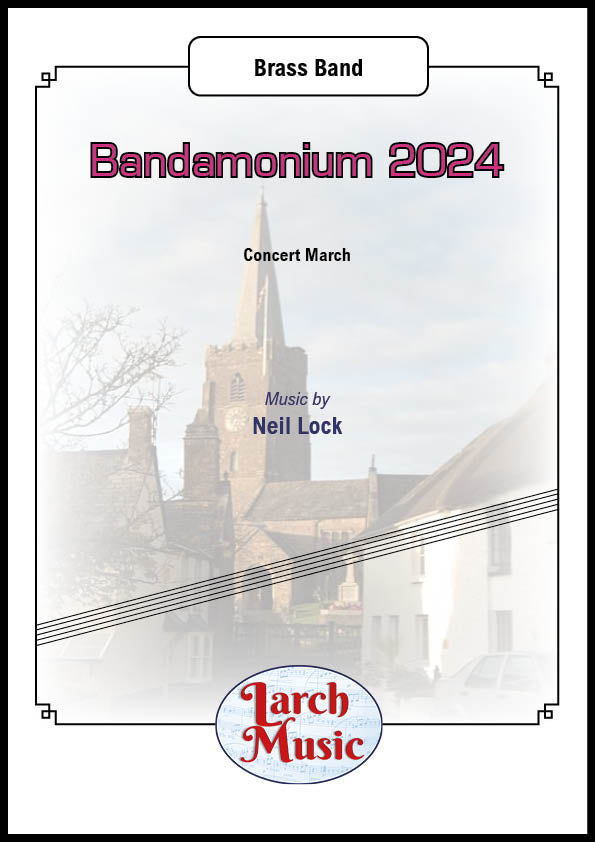
Bandamonium 2024 (Neil Lock) - Brass Band Sheet Music Full Score & Parts - LM541
COMPOSER: Neil LockThis march was submitted to the march composers' competition for "Bandamonium 3"in Hatherleigh, Devon in July 2024. The winning march was played by massed bands at the conclusion of the celebrations on Saturday 27th July 2024. Unfortunately, this march took second place in the competition, behind the march of Paul Pennicotte-Henrie, conductor of Okehampton Silver Band.The march can be played with or without the singing. (Even at the Whit Friday marches, begad!) I suggest that it should be introduced by 3-beat rolls.When played with singing, the "Bandamonium" lyrics (bars 10-13 and 56-57) are to be sung by all players, keeping to their own parts, with appropriate octave adjustment for their individual singing voices. Conductor and percussionists should sing with the main theme (Db and C at bars 10-13, F at 56-57). Listen to the 3rd cornet players!There is an additional part for Singers, in which the trio melody (bars 58 onwards) can be sung by Soprano and Tenor singers at a moderate choir standard. An octave-down option is also provided in the higher bars. This part can be given to "spare" singers within the band, or to singers external to the band if opportunity permits. The lyrics are:We are in Devon,We're in Hatherleigh,Whit Friday heaven,But we're marching free!Now it's past seven,Time to party,At BandamoniumIn Hatherleigh!LM541 - ISMN : 9790570005413
In Stock: Estimated dispatch 3-5 working days
-
 £39.95
All I Ask of You (Score and Parts) - Andrew Lloyd Webber arr. Peter Graham
The official authorized brass band arrangement one of the hit from Andrew Lloyd Webber's The Phantom of the Opera. Arranged by Peter Graham for full band.
Estimated dispatch 7-9 working days
-
 £39.95
All I Ask of You (Score and Parts) - Andrew Lloyd Webber arr. Chris Mowat
The official authorized brass band arrangement one of the hit from Andrew Lloyd Webber's The Phantom of the Opera. A very sophisticated arrangement by Christopher Mowat for solo trombone and brass band. Lush!
Estimated dispatch 7-9 working days
-
 £39.95
As If We Never Said Goodbye (Score and Parts) - Andrew Lloyd Webber arr. Bill Geldard
The official authorized brass band arrangement one of the hits from Andrew Lloyd Webber's Sunset Boulevard. Expertly arranged as a solo for trombone and brass band by Bill Geldard.
Estimated dispatch 7-9 working days
-
 £39.95
Pie Jesu (Score and Parts) - Andrew Lloyd Webber arr. Ray Steadman-Allen
The official authorized brass band arrangement of the 'Pie Jesu' movement of Andrew Lloyd Webber's Requiem. Ray Steadman-Allen has expertly transcribed the piece for soprano cornet and solo cornet or flugelhorn and brass band. Ideal for concert or devotional use.
Estimated dispatch 7-9 working days
-
 £32.00
Confluence (Score only) - William HImes
Confluence was commissioned by the River City Brass Band for a series of concerts entitles Always a River, dedicated to the musical heritage of the American states linked by the Ohio River: Pennsylvania, Ohio, West Virginia, Kentucky, and Illinois (the state where William Himes resides). The title relates to the fact that the Ohio River is created by the confluence of two rivers - the Allegheny and the Monongahela - at Pittsburgh, the home of the River City Brass Band conducted at the time of writing by Robert Bernat.
Estimated dispatch 7-9 working days
-
 £52.00
Introduction and Allegro on a bass by Max Reger (Score only) - Robert Simpson
The fourth work for brass band to come from Robert Simpson's pen has enriched the repertory still further. Introduction and Allegro on a Bass by Max Reger was composed between the end of June and the beginning of November 1986 at the request of Howard Snell and was commissioned by the Desford Colliery Dowty band. The Introduction is mainly mysterious and deliberate while the Allegro is full of energy. The Bass is question is taken from Reger's Fantasia and Fugue in D Minor, opus 135b, and at one point, near the end of the work, Reger's own treatment of the bass is used. The rest is pure Simpson. Duration: 16:00
Estimated dispatch 7-9 working days
-
 £42.00
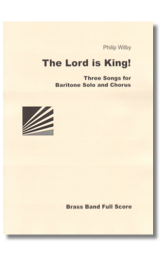
The Lord is King! (Score only) - Philip Wilby
The Lord is King! for baritone solo, Chorus, Organ (ad lib.) and brass band was rst performed by the North Yorkshire Chorus with the Grimethorpe Colliery Band in 1999. It is also available with solo trumpet and organ accompaniment. It is made up of three colourful song settings: The Trumpet, Come Down, O Love Divine, and Psalm 96.
Estimated dispatch 7-9 working days

