
Results
-
 £64.95
The Dark Side Of The Moon (Score and Parts)
This piece was commissioned by Dr. Nicholas Childs and Black Dyke Band on behalf of Rotary International and received its world premire performance at St. David's Hall, Cardiff on Saturday 27th January 2007. It is dedicated to the composer's father, Harry Cooper.The music was selected by the National Contesting Council as the 3rd section test piece for the 2008 Regional Brass Band Championships of Great Britain. A Note from the Composer...Have you ever thought of a holiday destination, tourist attraction, event, place, site or period in history and thought 'I wonder what it would be like?' - somwhere you have never been and can only let your imagination run wild on. What would the place be like, and all the things surrounding it such as the mood, feelings you get experiencing it, the temperature? Who would be there and what you would see? This piece is my musical imagination of the dark side of the moon. I know from news reports, the internet and other footage that the moon is a very desolate place, very barren and rugged. So from the start the piece gives the listener a musical picture of the rugged landscape with little light and warmth.However, the one place that has had me thinking about is the side of the moon that we don't see in our night skies, the side of the moon with no sun and no light pollution from civilisation. I can only imagine the eeriness one would feel being stood in complete darkness on the moon's surface looking around.As you slowly explore the surroundings and your eyes drift up to the night sky, there is an awesome sight unfolding in front of you - countless stars and galaxies, planets and different solar systems and all right in front of you glistening from the light of the sun beaming from the other side of the moon. The Dark Side of the Moon portrays a musical picture of the whole experience as seen in my imagination taking the listener from the rugged landscape to the awesome beauty that sits endlessly in front of you.Paul Lovatt-Cooper, September 2007
Estimated dispatch 7-14 working days
-
 £31.95
The Dark Side Of The Moon (Score Only)
This piece was commissioned by Dr. Nicholas Childs and Black Dyke Band on behalf of Rotary International and received its world premire performance at St. David's Hall, Cardiff on Saturday 27th January 2007. It is dedicated to the composer's father, Harry Cooper.The music was selected by the National Contesting Council as the 3rd section test piece for the 2008 Regional Brass Band Championships of Great Britain. A Note from the Composer...Have you ever thought of a holiday destination, tourist attraction, event, place, site or period in history and thought 'I wonder what it would be like?' - somwhere you have never been and can only let your imagination run wild on. What would the place be like, and all the things surrounding it such as the mood, feelings you get experiencing it, the temperature? Who would be there and what you would see? This piece is my musical imagination of the dark side of the moon. I know from news reports, the internet and other footage that the moon is a very desolate place, very barren and rugged. So from the start the piece gives the listener a musical picture of the rugged landscape with little light and warmth.However, the one place that has had me thinking about is the side of the moon that we don't see in our night skies, the side of the moon with no sun and no light pollution from civilisation. I can only imagine the eeriness one would feel being stood in complete darkness on the moon's surface looking around.As you slowly explore the surroundings and your eyes drift up to the night sky, there is an awesome sight unfolding in front of you - countless stars and galaxies, planets and different solar systems and all right in front of you glistening from the light of the sun beaming from the other side of the moon. The Dark Side of the Moon portrays a musical picture of the whole experience as seen in my imagination taking the listener from the rugged landscape to the awesome beauty that sits endlessly in front of you.Paul Lovatt-Cooper, September 2007
Estimated dispatch 7-14 working days
-
 £33.62
The Hewer's Prayer (Brass Band) Steve Gibson
This music was inspired by stories of those working in the dark and dangerous conditions of the coal mines, and particularly those hewers right at the coal face. Based around an original theme, the music captures a hymn-like setting of a miner's prayer for safety. Depictions of industry and difficult times follow, but resolve into a triumphant conclusion where dark imagery give way to light. The music is the composer's proud tribute to the industrial heritage of his forebears. Sheet music available from: UK - www.brassband.co.uk USA - www.solidbrassmusic.com Difficulty Level: 4th Section + Instrumentation: Soprano Cornet Eb Solo Cornet Bb Repiano Cornet Bb 2nd Cornet Bb 3rd Cornet Bb Flugel Horn Bb Solo Horn Eb 1st Horn Eb 2nd Horn Eb 1st Baritone Bb 2nd Baritone Bb 1st Trombone Bb 2nd Trombone Bb Bass Trombone Euphonium Bb Bass Eb Bass Bb Timpani Percussion Glockenspiel
In Stock: Estimated dispatch 1-3 working days
-
.png) £29.95
£29.95Ghost of Christmas Past, The - Jonathan Bates
DURATION: 2'30". DIFFICULTY: 2nd+. Composed for Strata Brass in 2020 as part of their COVID-19 induced, virtually recorded 'A Christmas Carol' (a new suite for brass bandlasting around 30 minutes in total), 'The Ghost of Christmas Past' is a lively and virtuosic cornet solo portraying the visions Scrooge is shown of his childhood. Beginning in a jovial mood, the ghost then shows Scrooge his early love life, before showing how Scrooge's unsympathetic and callous ways lead to his loss of love and friendship throughout the years as the music gets gradually darker and darker with each passing section. .
In Stock: Estimated dispatch 1-3 working days
-
 £29.95
Ghost of Christmas Yet To Come, The - Jonathan Bates
DURATION: 3'00". DIFFICULTY: 2nd+. Composed for Strata Brass in 2020 as part of their COVID-19 induced, virtually recorded 'A Christmas Carol' (a new suite for brass bandlasting around 30 minutes in total), 'The Ghost of Christmas Yet To Come' is a jagged and virtuosic solo for Euphonium portraying what Ebenezer Scrooge sees when he is shown how his Christmases in the future will occur by the Ghost of Christmas Yet To Come. Having already been shown how is mean and uncaring ways have impacted his life this far by the previous two visions, this 3rd and final vision is enough to force Scrooge to become a changed man and embrace the Christmas spirit with all his heart. Throughout this solo, you may hear small references to Camille Saint-Saens' 'Danse Macabre'. .
In Stock: Estimated dispatch 1-3 working days
-
 £29.95
The Pearl Fishers Duet (Deep Inside the Sacred Temple) - Georges Bizet - Robert Childs
Bizet's opera, The Pearl Fishers, has the exotic setting of a quiet fishing village on the island of Ceylon in the time of antiquity. The plot revolves around best friends Zurga and Nadir, who swear an oath of friendship, vowing...
Estimated dispatch 5-7 working days
-
£40.00
Love is all around - Presley, R - Barry, D
Recorded by the English band 'The Troggs' it was written by lead singer Reg Presley. The song was first released as a single in the UK in October 1967, peaking at number 5.It has been covered by many artists over the years, from REM to Wet Wet Wet. Famously used as the cover song for the 1994 film 'Four Weddings & a Funeral' it became an international hit and remained at number 1 in the UK for 15 consecutive weeks.A hit with all ages!
In Stock: Estimated dispatch 1-3 working days
-
 £29.95
Ghost of Christmas Present, The - Jonathan Bates
DURATION: 3'00". DIFFICULTY: 3rd+. Composed for Strata Brass in 2020 as part of their COVID-19 induced, virtually recorded 'A Christmas Carol' (a new suite for brass bandlasting around 30 minutes in total), 'The Ghost of Christmas Present' is a sorrowful and reflective solo for Tenor Horn depicting the visions shown by the Ghost of Christmas Present to Scrooge as he sleeps on Christmas eve. Lonely, cold and disliked, Scrooge begins to see how he is viewed by others and realises how he must change his ways. .
In Stock: Estimated dispatch 1-3 working days
-
 £8.50
£8.50ABOUT & AROUND CHARLIE BROWNS from Redbridge Sketches (score) - Wilcox, Chris
From Redbridge Sketches, composed for the Redbridge Music Service and first performed at Ilford Town Hall on 2nd February 2006 with a massed band of over 80 players.
In Stock: Estimated dispatch 1-3 working days
-
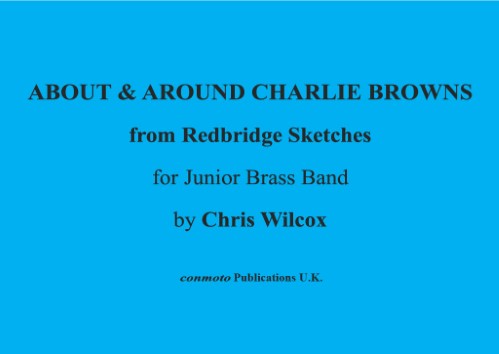 £32.50
ABOUT & AROUND CHARLIE BROWNS from Redbridge Sketches (score & parts) - Wilcox, Chris
From Redbridge Sketches, composed for the Redbridge Music Service and first performed at Ilford Town Hall on 2nd February 2006 with a massed band of over 80 players.
In Stock: Estimated dispatch 1-3 working days
 Watch video
 View Music