
Results
-
£70.00
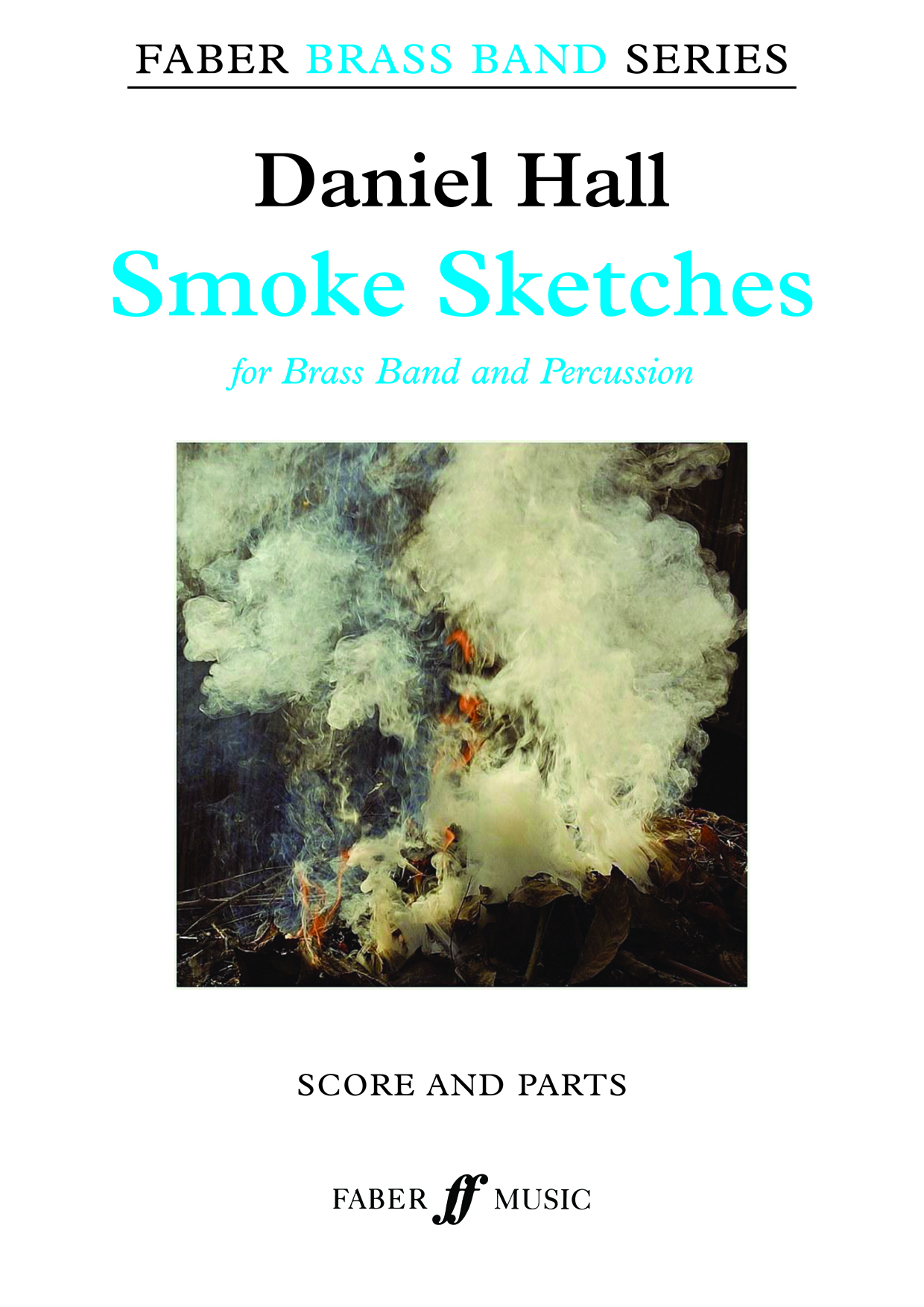
Smoke Sketches - Daniel Hall
Smoke Sketches is Daniel Hall's first original work to be published in the Faber Music Brass Band Series. Daniel is one of the most gifted of the rising generation of composers writing for brass bands. Smoke Sketches was composed at the invitation of Brass Bands England for the Intermediate Section of the 2017 National Youth Brass Band Championships of Great Britain. This colourful, jazzy suite draws inspiration from the ancient art of gazing into smoke from fire to find stories through the act of divination. Into the Blaze suggests someone briskly fire-walking, barefoot, with unexpected sparks fizzling from the ground. A Lonesome Ember captures the fleeting life of a small ember, beginning insignificantly and gradually evolving into a larger being before disappearing into ash, while Spark of Light bristles with life and energy. Band Grade 3/4, duration 8 minutes.
In Stock: Estimated dispatch 1-3 working days
-
 £29.95
Boy King, The - Jonathan Bates
DURATION: 3'00". DIFFICULTY: 4th+. . 'THE BOY KING' is a short concert work for brass band inspired by the life and times of the ancient Egyptian Pharoah, . Tutankhamun. It was believed he was between the ages of 8 and 9 years old when ascending to the throne of Egypt and. reigned for a decade until his premature death aged only 18 or 19. The music utilises a number of typical middle-eastern. modes and scales accompanying a heavy yet lively rhythmic pulse driven by the percussion. .
In Stock: Estimated dispatch 1-3 working days
-
£71.00
Between Light and Dark (Bra) - Arend Gerds
'Between light and dark' is inspired by the early baroque opera L'Orfeo, composed by Claudio Monteverdi in 1609. This opera tells the story of the greek legend Orpheus and his attempt to bring his dead bride Eurydice back to the living world. The composition contains some musical quotes from L'Orfeo. These quotes have a ritornello function in the form of this work. Other (because of the opera's libretto) related topics, come from Ancient Greek music and the opera's story (libretto); resulting in the use of tetrachord structured gestures, polymeric functions and tone clusters.
Estimated dispatch 7-14 working days
-
£98.00
MonsterThrash (Bra) - Paul Saggers
Prepare for the fright of a lifetime as MonsterThrash takes you to the murky depths of the ocean where all sorts of unsavoury creatures lurk, waiting to devour you! From Ancient Greek mythology, Hydra a Serpentine creature with many heads guards the underworld. You can try and chop its head off but two will grow back! Be sure to escape this first monster quickly as its poisonous breath and blood will kill you instantly! Next up to thrash you are the wickedly enchanting sirens, who aim to seduce you with their looks and mesmerising singing, but will carve you up for their dinner! If you've made it this far... be prepared to face your final threat, The Leviathan! Often described as an Dragon dwelling in the watery abyss. Enormous in size, the Leviathan is said to represent the forces of chaos. When the Leviathan is hungry he sends forth from his mouth a heat so great it makes the water of the deep boil. Only the bravest of sailors can withstand these wicked beasts, if your not up to the MonsterThrash, be prepared to spend the rest of your days in the depths of Davy Jones' Locker!
Estimated dispatch 7-14 working days
-
£76.00
Spartakiade (Bra) - Serge Prokofieff - David Byles
March for a Spartakiade was written for a Russian athletic festival, the Sartakiad, which was inspired by the highly disciplined warriors of ancient Sparta.
Estimated dispatch 7-14 working days
-
£96.00
Celtic Warriors (Bra) - Jim Paterson - Mike Kilmartin
Imagine those epic movies set in historical times or films like The Lord of the Rings and Conan the Barbarian. The piece is about a band of Legendry Mystical Celtic Warriors answering an ancient cry for help the "Call to Arms" coming of a town whom are being attack from an Evil Sorcerer King. The whole idea behind this is to show that there are people willing sacrifice everything even their own life in the protections of others. Arranged by Mike Kilmartin on original themes by Jim Paterson.
Estimated dispatch 7-14 working days
-
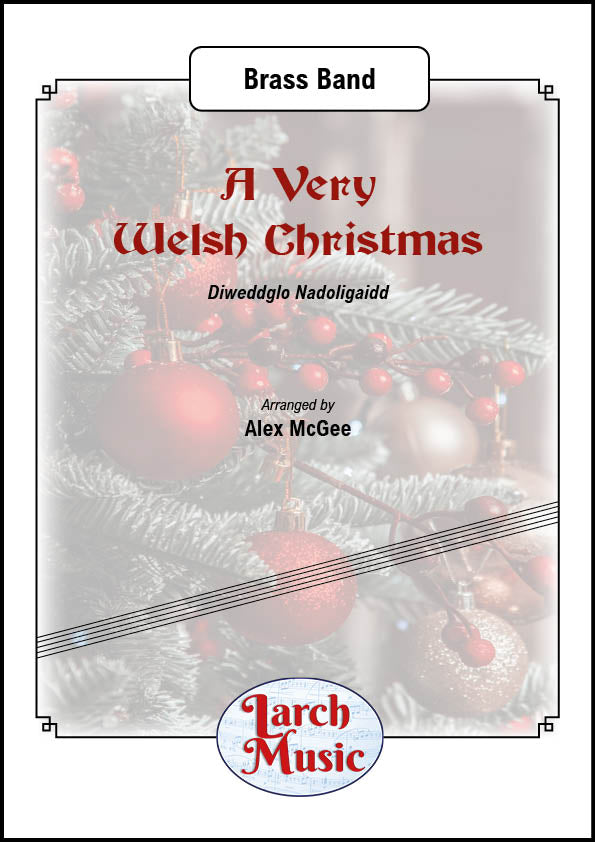 £30.00
A Very Welsh Christmas - Brass Band Sheet Music Score & Parts - LM949
ARRANGER: Alex McGeeA Very Welsh ChristmasDiweddglo NadoligaiddA grand collection of Christmas carols carefully selectedand arranged by Alex McGeeCan you spot all of the carols below...Contains :Deck the Halls - originally Nos GalenCoventry CarolTua Bethlem Dref - we are going to Bethlehem townY gorau o'r boreua - ancient Welsh Plygian tune - translation The Best Of MorningsAngles from the Realms of GloryGood King WenceslasJoy to the worldO Come all Ye FaithfulSuitable for Most Bands - Duration 6 mins (Approx.)LM949 - ISMN : 9790570009497
In Stock: Estimated dispatch 3-5 working days
-
 £62.00
Caro Mio Ben - T. Giordano/Willy Hautvast
Here we have one of the most famous 'Arie antiche' (ancient aria's) from the 18th century, written in the style of Handel. For many years it has been attributed to Giuseppe Giordani, opera and sacred music composer of the Neapolitan school. However, recent investigations clearly established that this song had actually been composed by his son Tommaso (1733-1806). This delicate wind band arrangement by Willy Hautvast can also be performed with a vocal soloist or a mixed choir.
Estimated dispatch 10-14 working days
-
 £24.95
Eg Veit I Himmerik Ei Borg (Castle in the Sky) - Traditional - Simon Kerwin
Eg Veit I Himmerik Ei Borg (Castle in the Sky) is an ancient Norwegian folk-tune, originating from the Hallingdal area of the country. The words however, are German. They were translated into Norwegian by Bernt Stoylen in 1905, and set...
Estimated dispatch 5-7 working days
-
 £64.95
Suite from Gloria - Karl Jenkins - Arranged & Edited Childs & Wainwright
The Latin text of the Gloria is an ancient hymn of praise from the Christian tradition derived from the song of the angels who announce the birth of Jesus, as recorded in the Gospel according to St Luke. The Gloria...
Estimated dispatch 5-7 working days


 View Music
